95.00 €
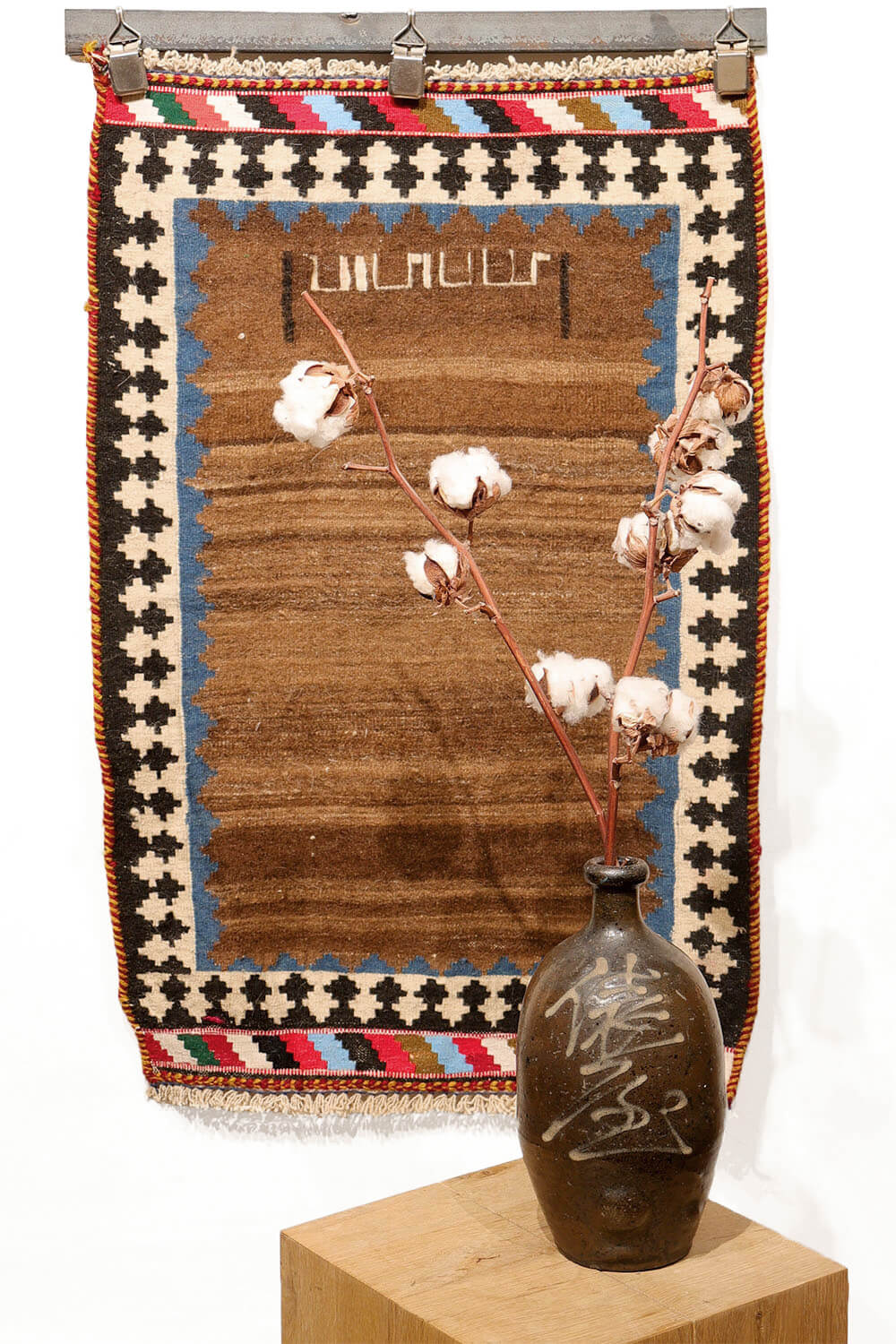
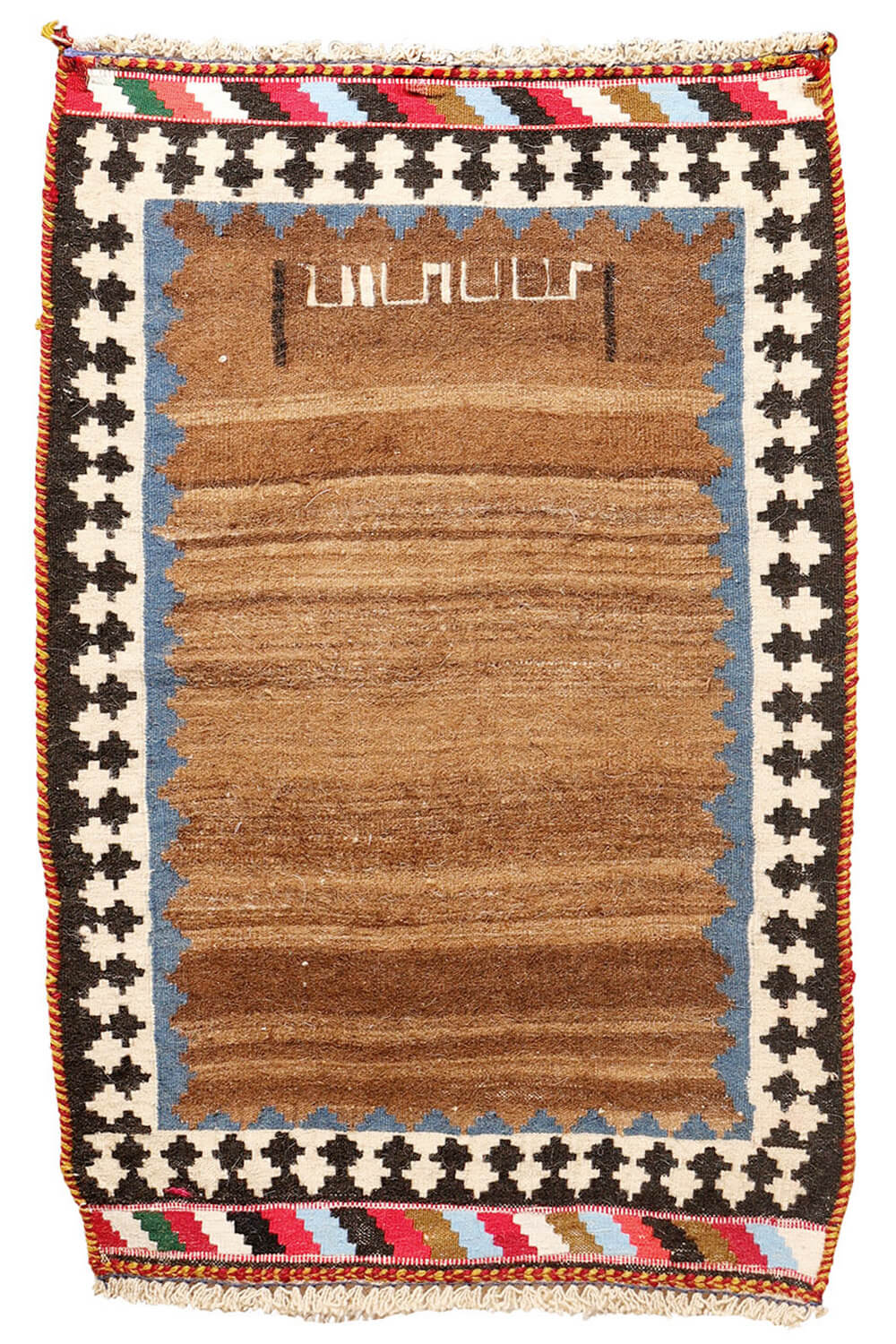
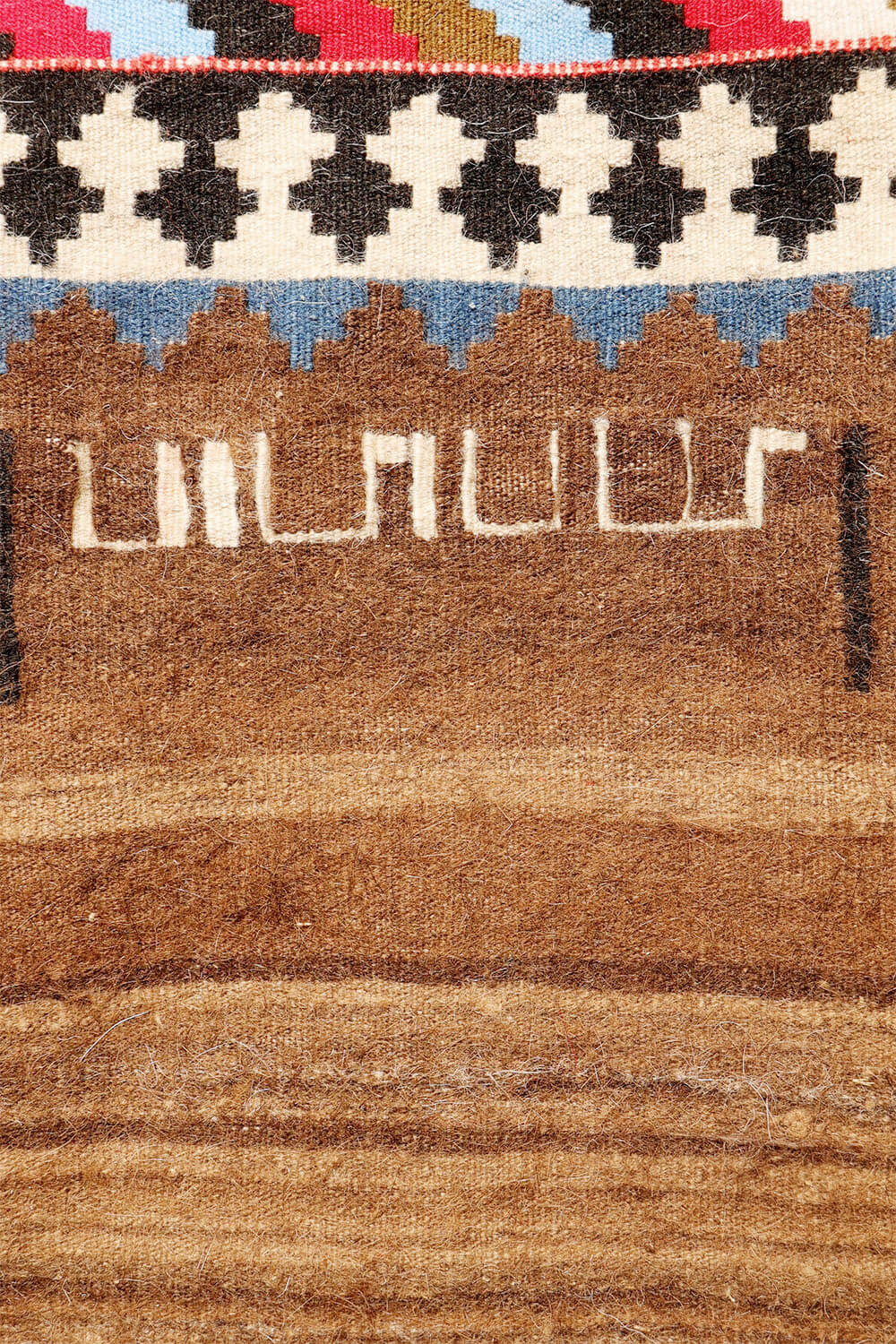
A vintage Shia prayer kilim (janamaz) featuring the characteristic empty field typical of Shia prayer rugs. The design includes the phrase “La ilaha illa Allah” (“There is no god but God” or “There is no deity except Allah”), one of the most important declarations in Islam and part of the shahada (the Muslim declaration of faith), which expresses the belief in the oneness of God (tawhid). The inscription is woven into the area where the devotee places their forehead, traditionally the space where the mohr is positioned.
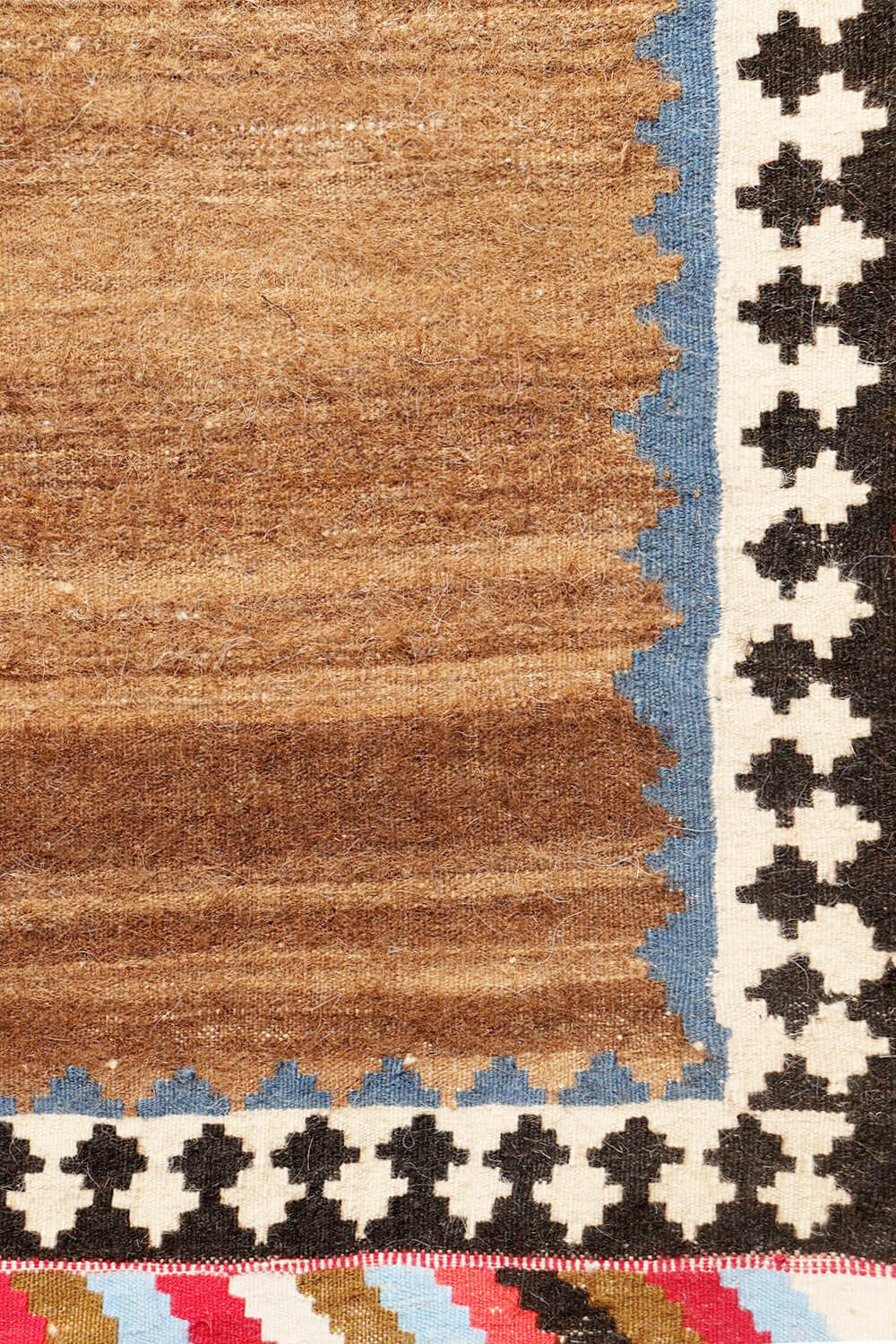
The background of the kilim is woven from undyed natural camel wool, creating a beautiful abrash effect with subtle variations in tone throughout the brown field. The camel wool retains a soft, fluffy surface, indicating that this janamaz was never used after it was woven.
The colourful kilim border has been woven with machine-spun wool, in contrast to the rest of the piece, which has been made using hand-spun wool.
Material: 100% hand-spun camel and sheep wool
Size: 83×56 cms
Origin: Qashqai tribe, Iran
Date of weaving: 2010
A janamaz is a prayer rug or mat used by Muslims to define a clean space for prayer. The word janamaz combines Persian/Urdu terms meaning place of prayer.
Within Shia practice, the emphasis in prayer is often on placing the forehead on natural earth or clay (turbah) rather than on a conventional textile rug.
It is generally accepted that Shia Muslims, unlike Sunnis, do not use specifically designed kilims or prayer rugs as they pray directly on any rug, cloth, the ground, a stone or on a Turbah (or Mohr in Persian).
However, during the last 27 years on my frequent trips to southern Iran, I have repeatedly found that Shia Muslims in southern Iran use a type of small kilim that acts as a Janamaz or prayer kilim. I have acquired some of these tiny kilims directly from the person who used them for prayer and have been confirmed on numerous occasions that this type of kilim is used during prayer.
The small size of these prayer kilims is due to their function of covering the ground only in the area where the faithful will rest their head. The material used is always wool, which, in most cases, is left in its natural undyed colour, representing the earth. It is also significant that many of these kilims have been woven from camel wool in the central field.
1 in stock
Additional information
| Weight | 0.7 kg |
|---|