1,500.00 €
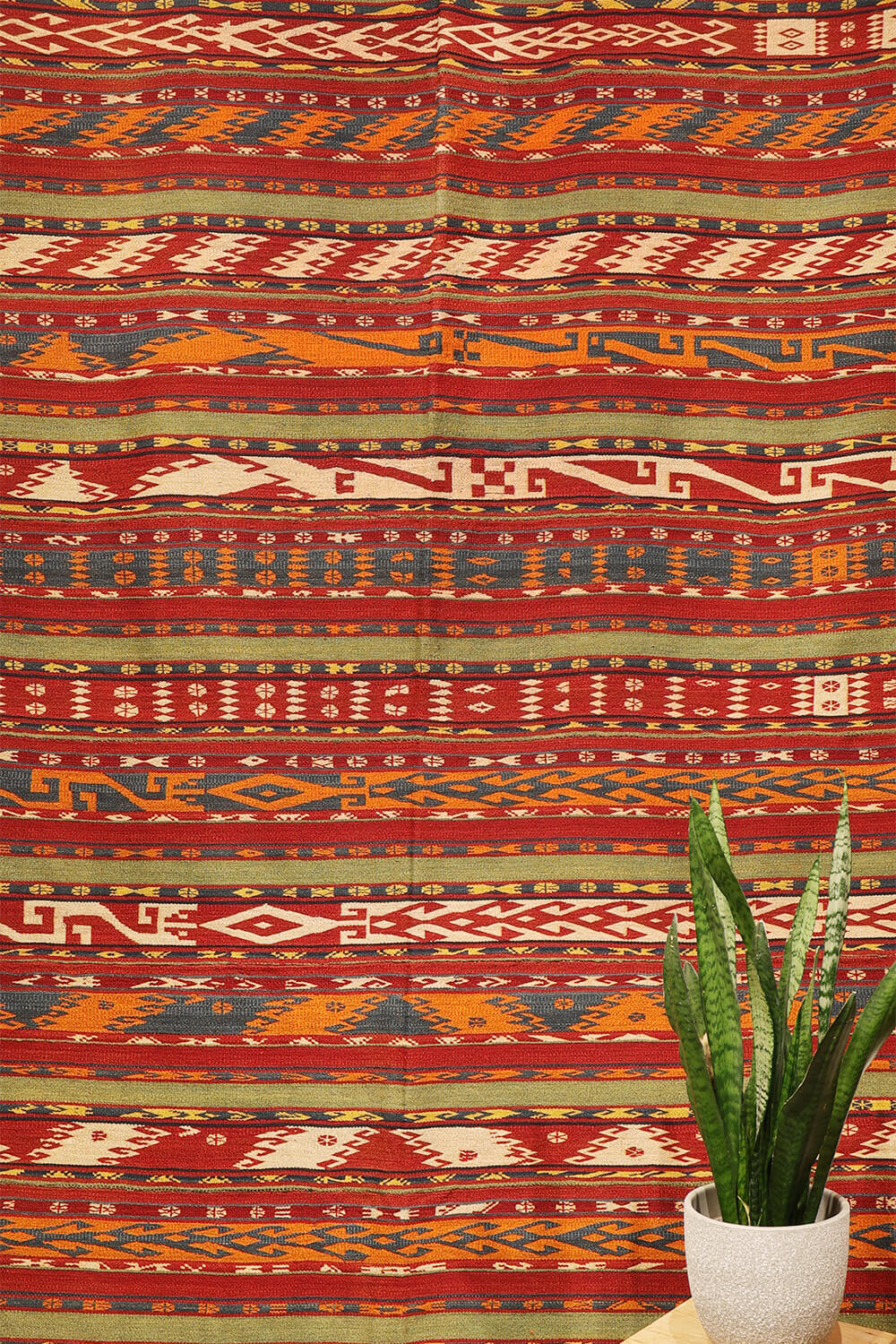
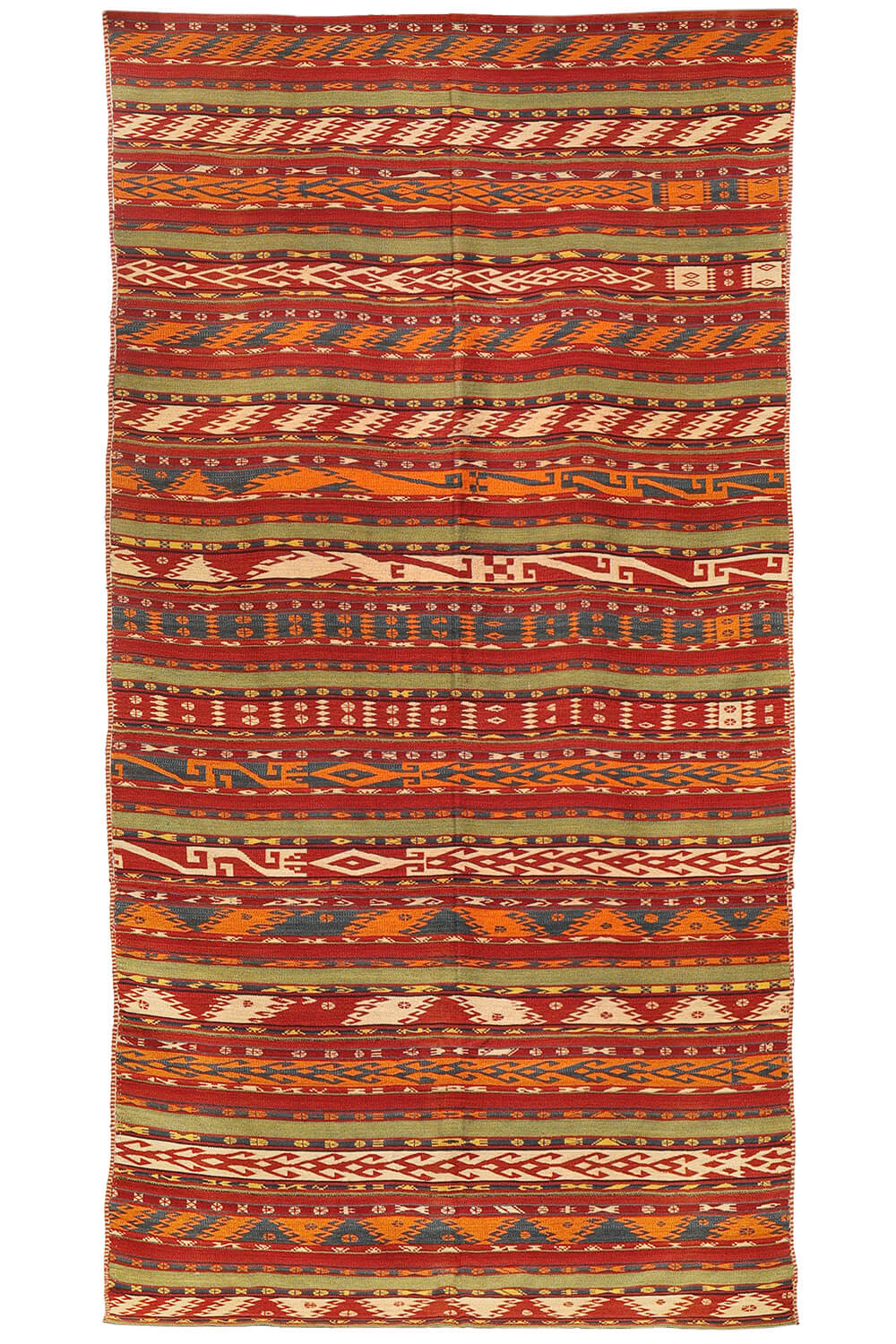
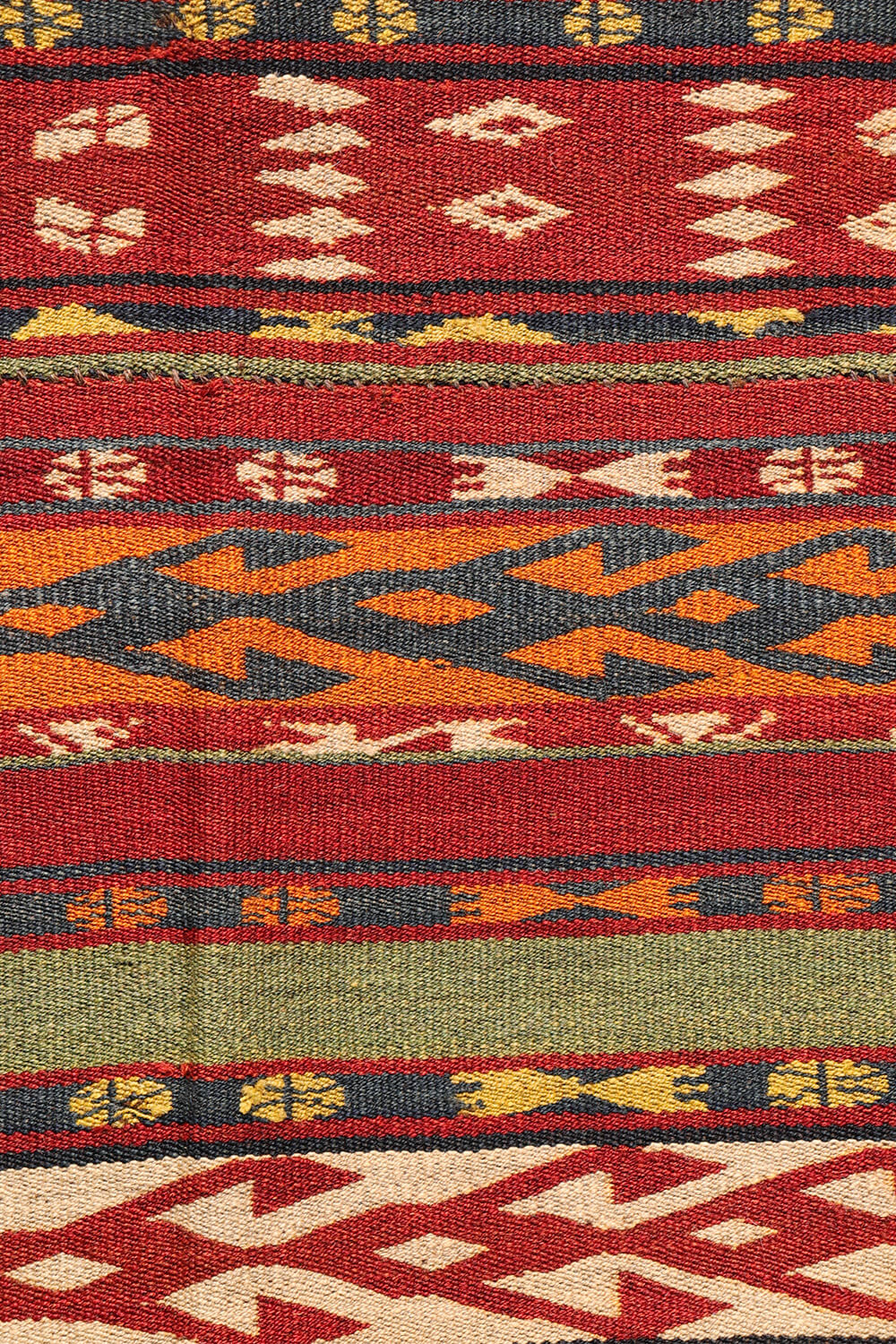
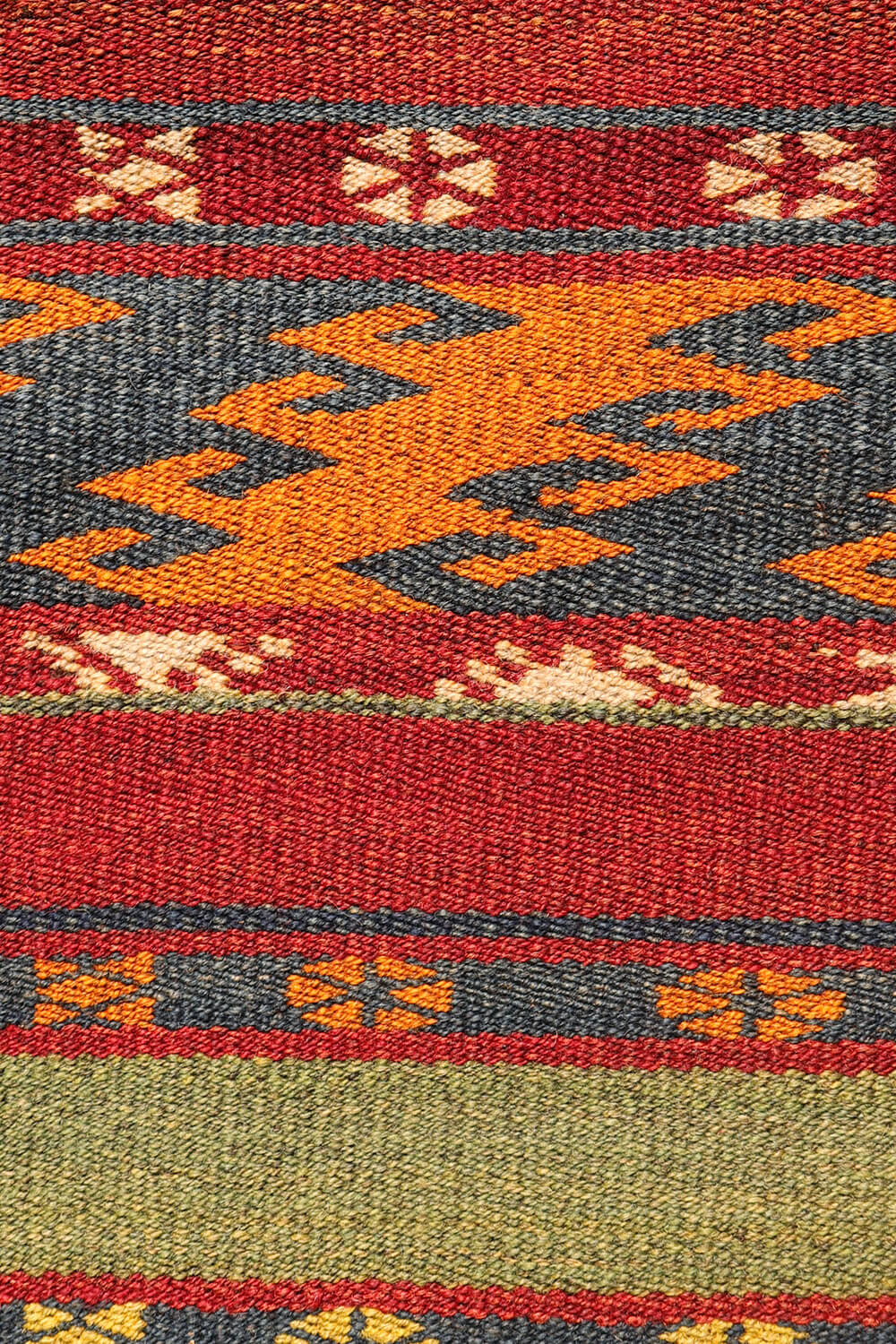
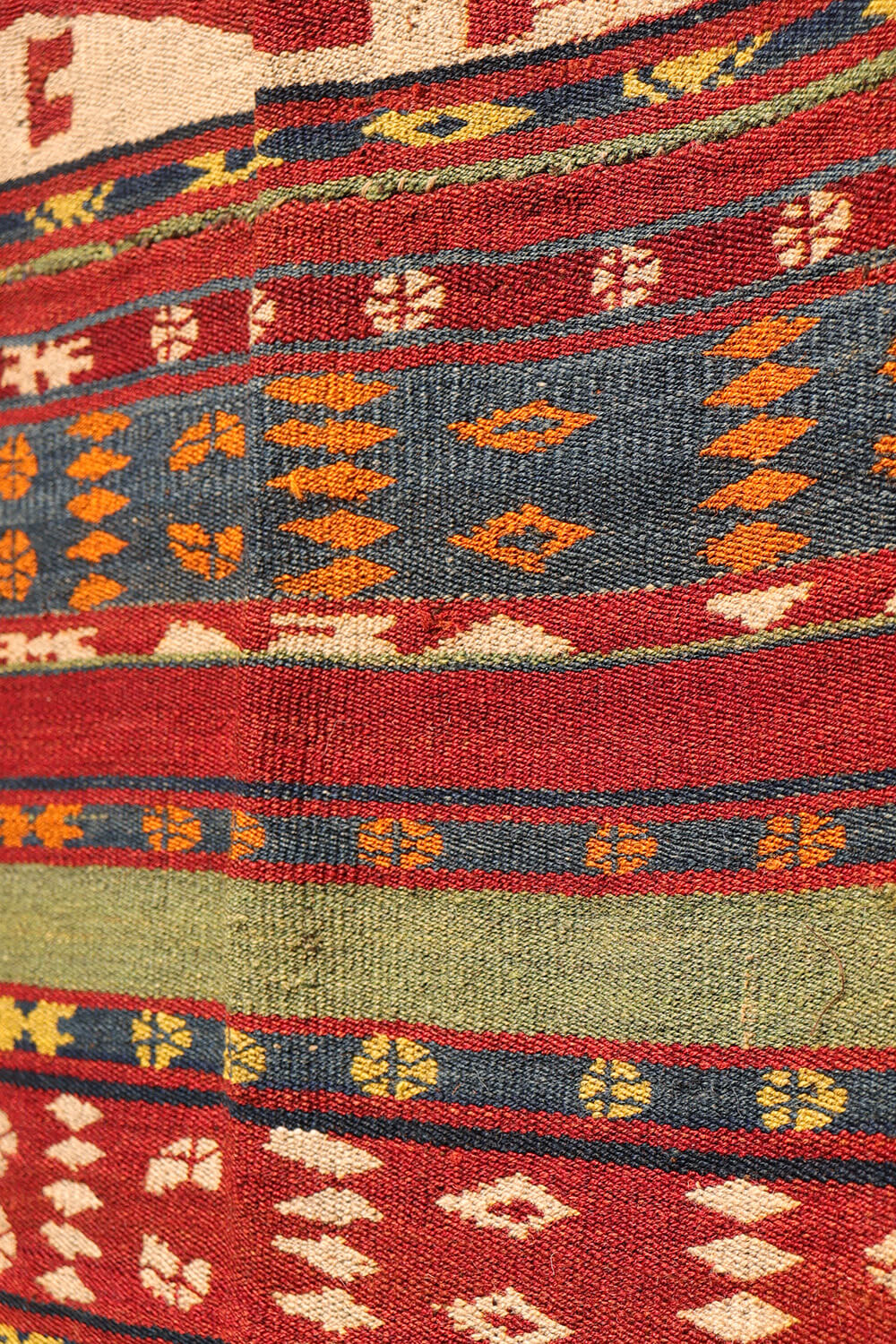
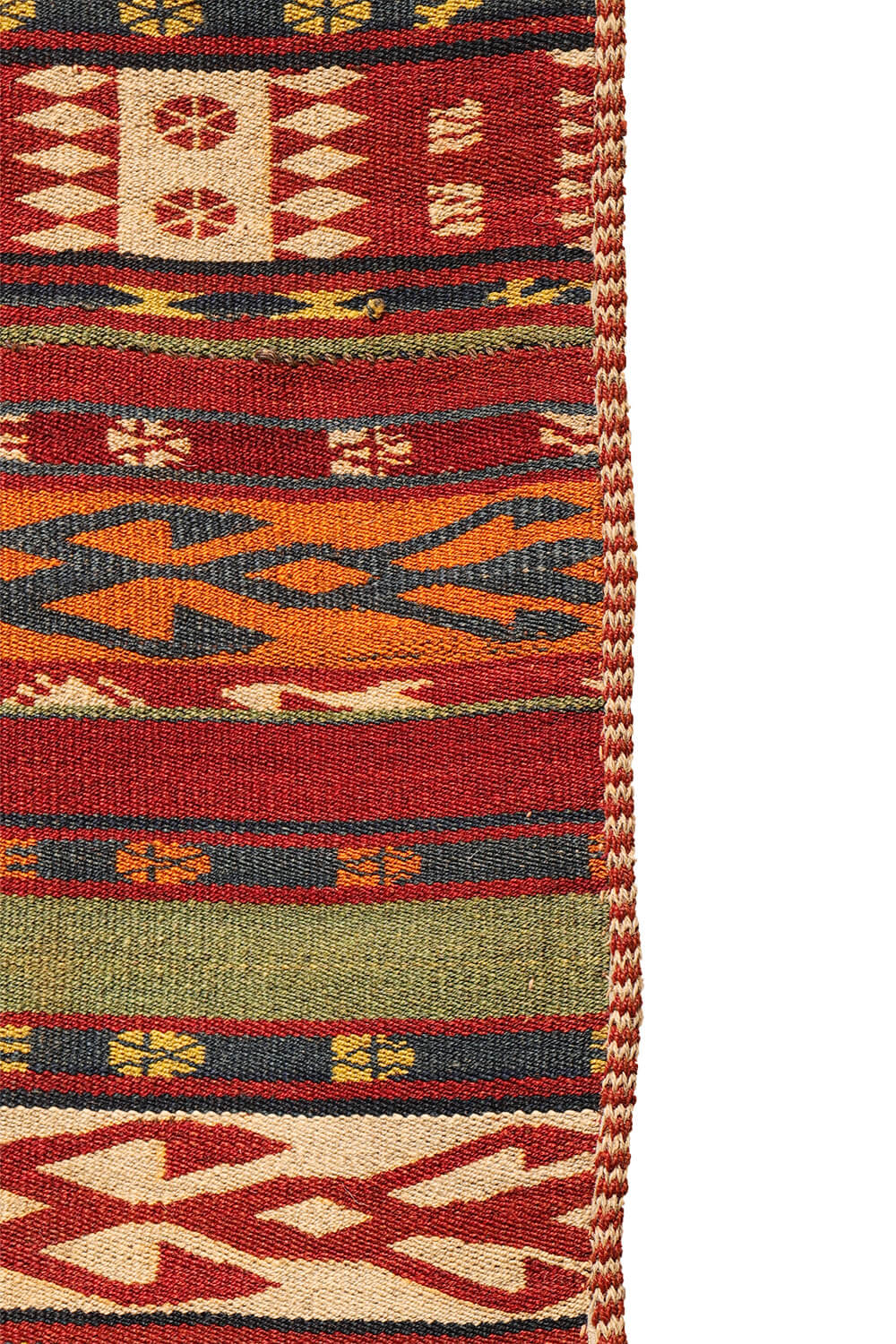
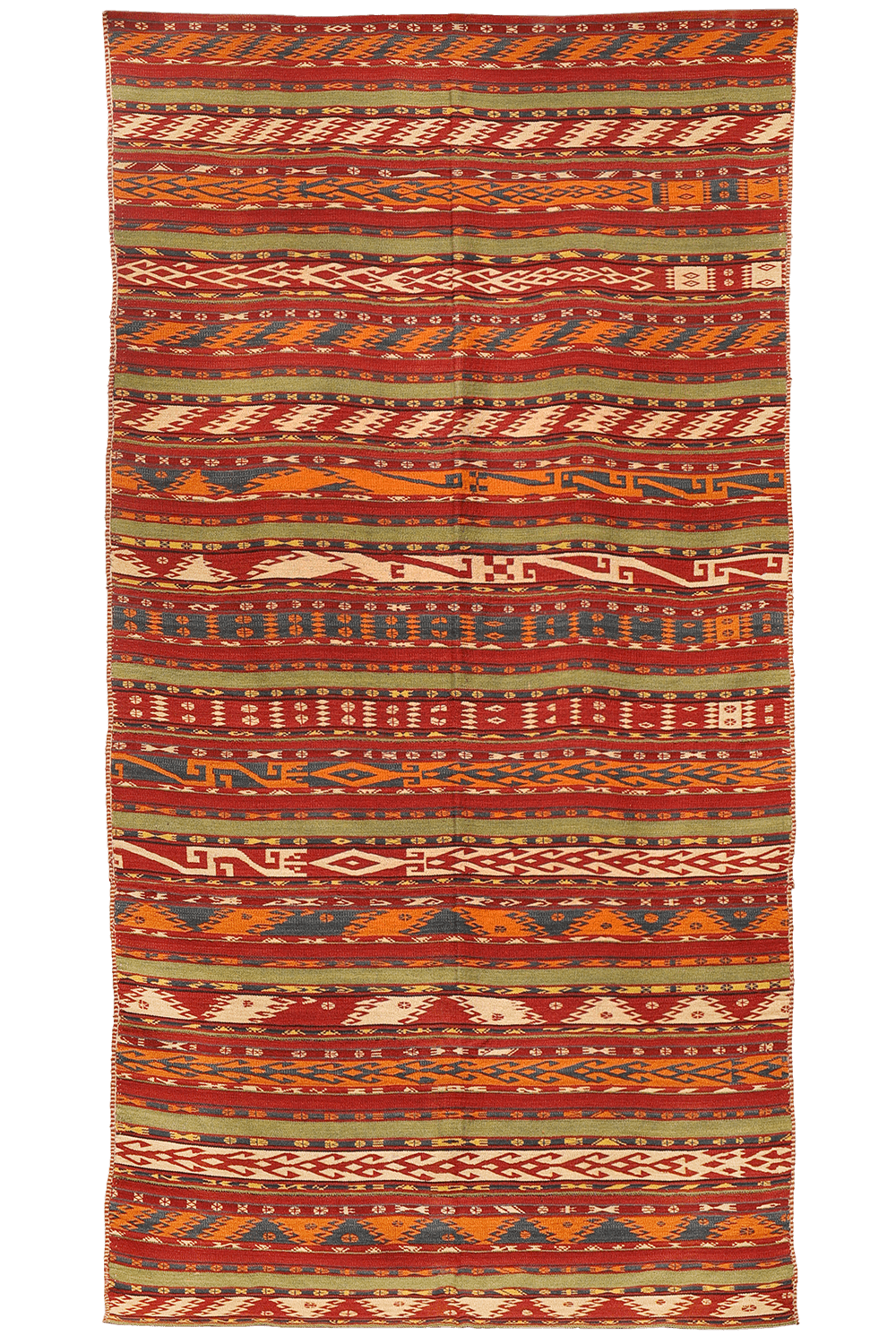
A collectable antique Uzbek gudjeri kilim from Afghanistan woven with extremely finely spun wool. This gadjeri kilim is representative of the very fine detail and wide range of colours used by the Uzbek weavers, including indigo blue and a lovely pistachio green. The stripes of warp-faced patterning demostrate the wide variety of traditional motifs and patterns available to the weaver.
Material: 100% hand-spun sheep wool
Size: 302×160 cms
Origin: Uzbek tribes, Afghanistan
Date of weaving: 1900s
Gudjeri or Ghudjeri kilims
The Uzbek Ghudjeri is a textile distinguished by its horizontal bands of tight and ornate patterning. It is produced in various sizes and shapes and made from fine wool. Its structure consists of warp-faced patterning woven in narrow bands, with a varied and vibrant colour palette dominated by strong tones such as red, blue, and yellow. It has no fringe, and the cut ends are either bound with cloth or turned under and stitched to form the selvedge.
Traditionally, Uzbek Ghudjeri kilims are made on narrow tripod looms, where very long strips—approximately 8 cm (3″) to 23 cm (9″) wide—are woven. These strips are densely filled with complex, ancient motifs, then cut into equal lengths and sewn selvedge to selvedge to create textiles of the required dimensions. This time-consuming technique results in highly detailed and finely patterned surfaces.
The Uzbeks produce ghudjeri in various communities, particularly in villages west of Mazar-i-Sharif, near Balkh and Aq Chah. The Arabi people from Mazar-i-Sharif also weave ghudjeri, though theirs tend to feature more limited patterns and colours and are often used as small eating cloths or horse blankets.
Traditionally, Uzbek Ghudjeris were used as covers and horse blankets, reflecting their durability and practical function in everyday nomadic and rural life.
The Uzbeks
These are Turkic people, who are reputed to be of Uigur extraction: the Vigui are, historically, a Mongolian tribe, now absorbed by the surrounding Mongol, Chinese and Tartar populations. In the sixth century the Uigui settled in Kashgaria, Sin-Kiang Province, East Turkestan, as Buddhist monks, but soon after were converted to Christianity by Nestorian missionaries. The Vigur language, still current in Kashgaria, is a very pure and somewhat archaic form of Turki.
On the steppes of Central Asia, during the tempestuous years of the fourteenth century, the Uzbeks, at this time a sub-tribe of the Uigui, became political refugees and migrated to West Turkestan, close to the territory occupied by the Turkomen. Under the leadership of Uzbek Khan they abandoned their pagan, shamanistic and Christian beliefs and embraced Islam. Unlike the Turkomen, reputed nomadic plunderers and slave traders, the Uzbeks settled in the Kyzyl Kum Desert, around the great Muslim cultural centre of Bokhara, and in north Afghanistan, where they maintained their independence from Bokhara, Persia and the Russians.
1 in stock
Additional information
| Weight | 7.9 kg |
|---|