1,350.00 €
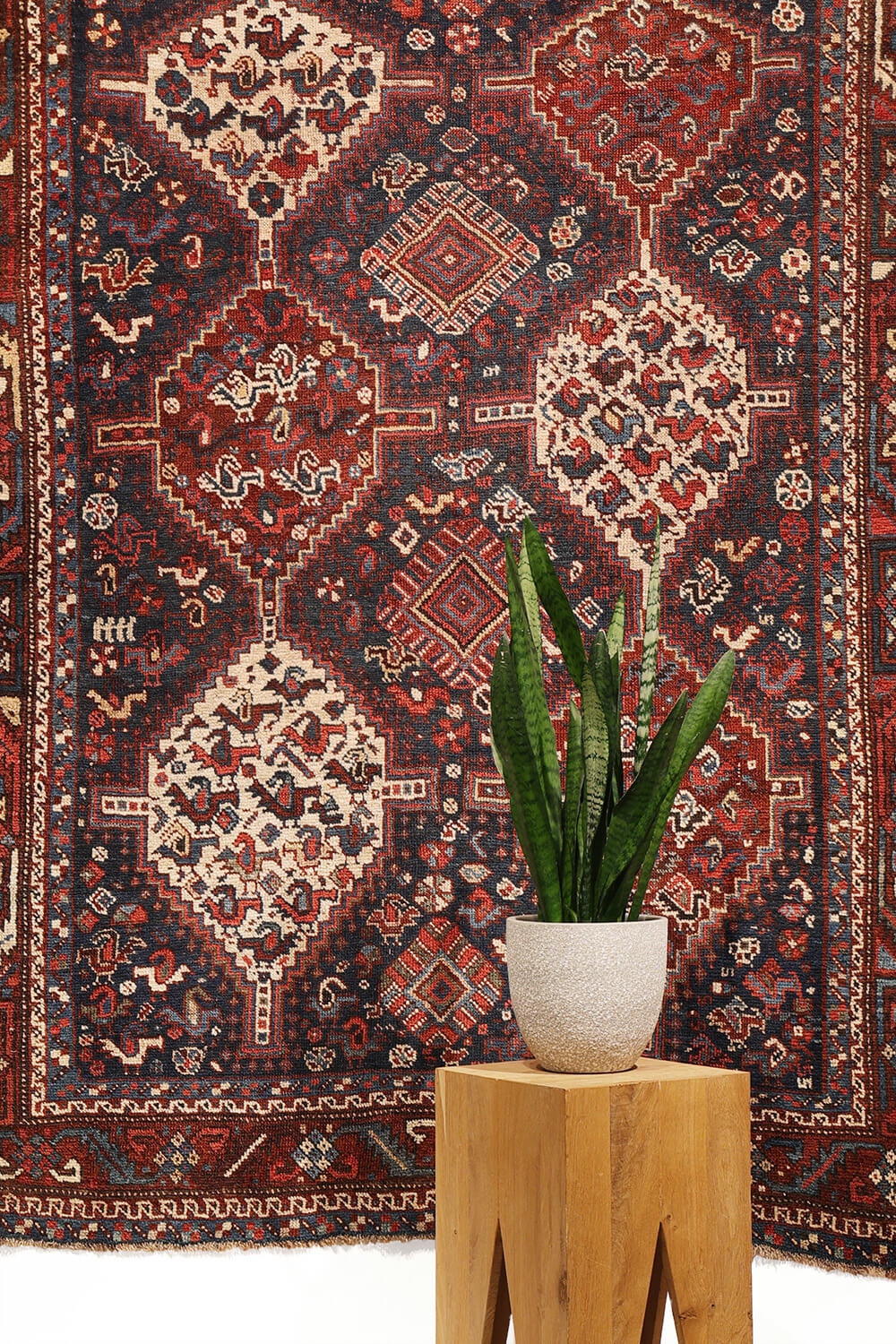
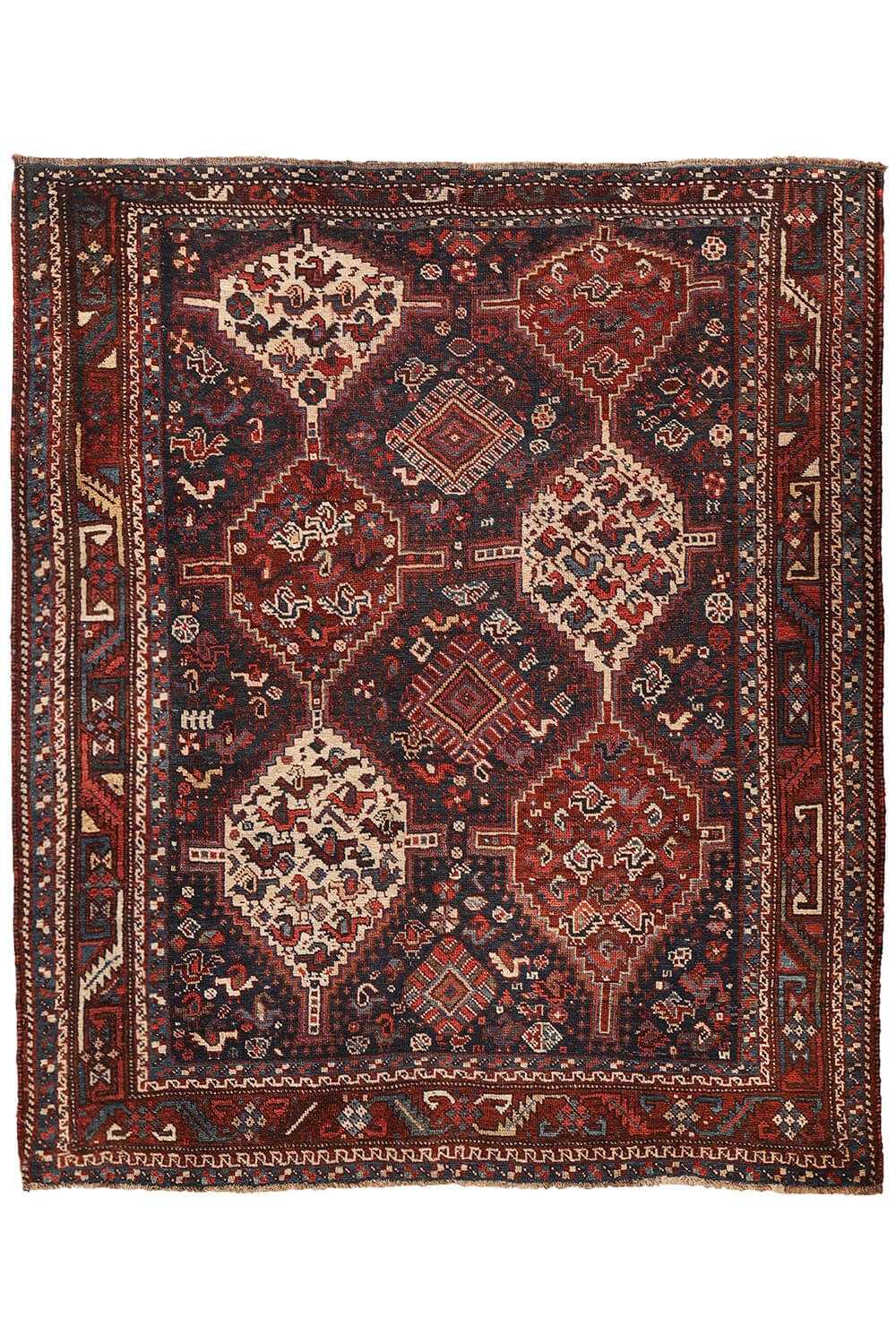
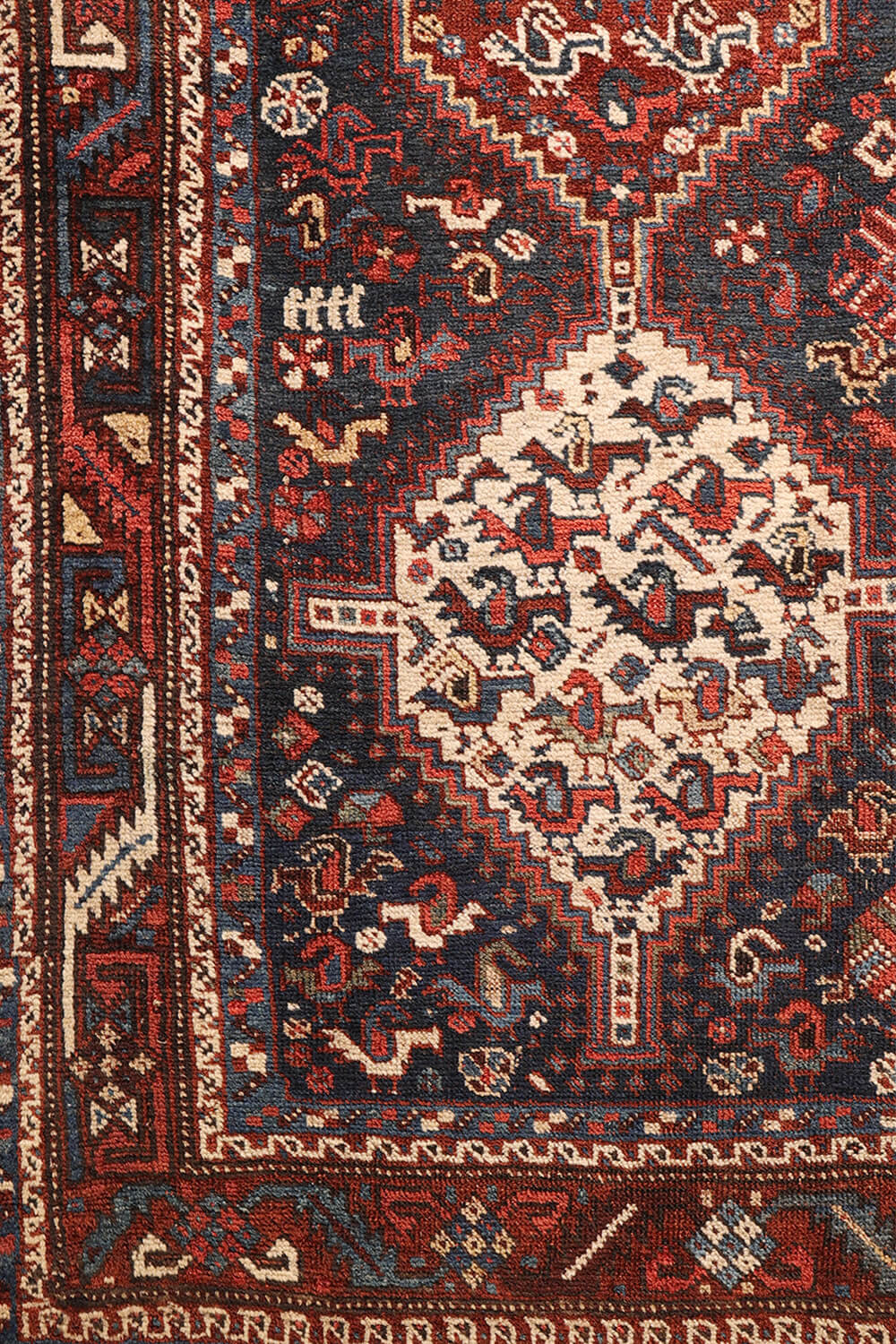
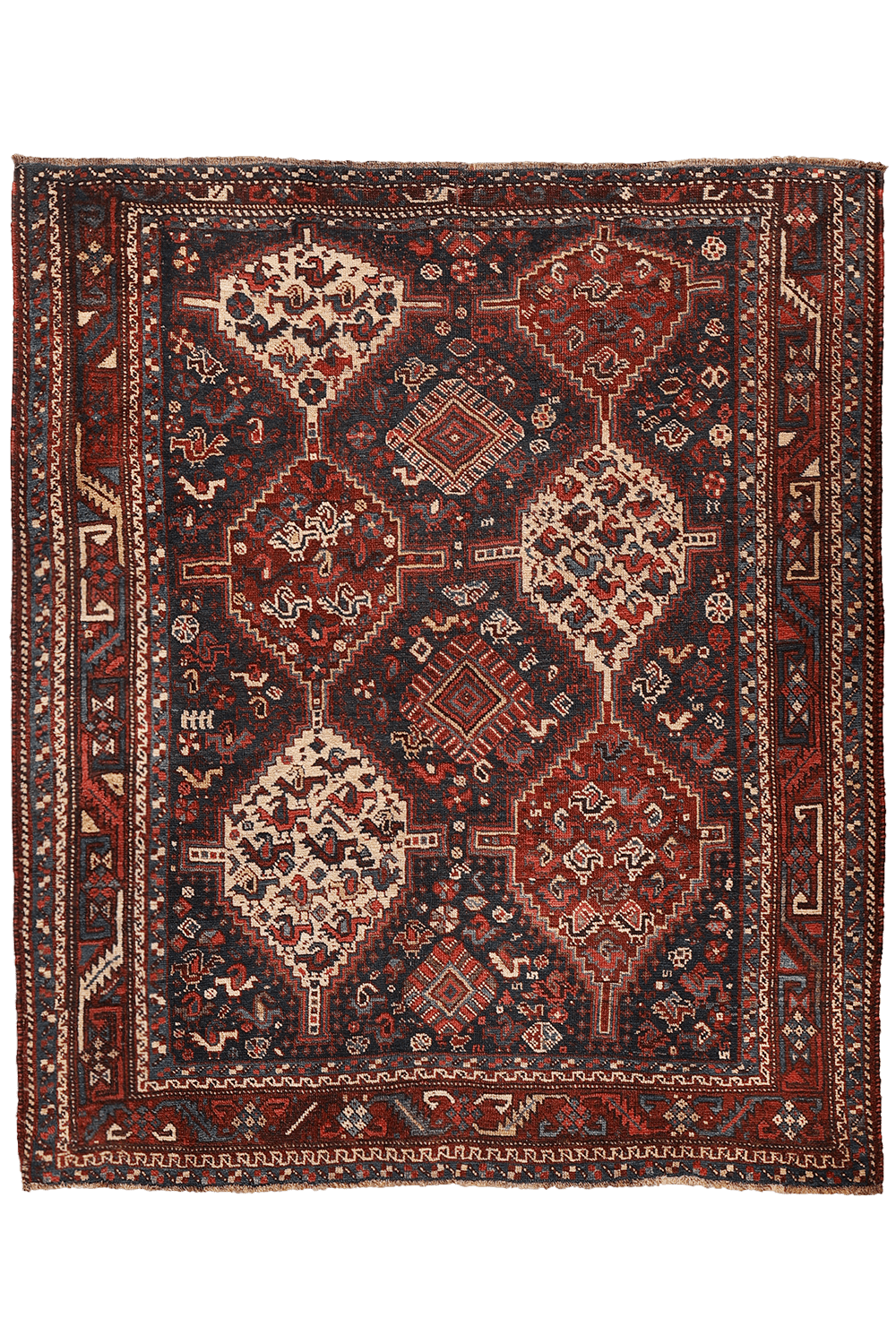
An antique Khamseh rug with a wonderful design and a very practical, almost square size.
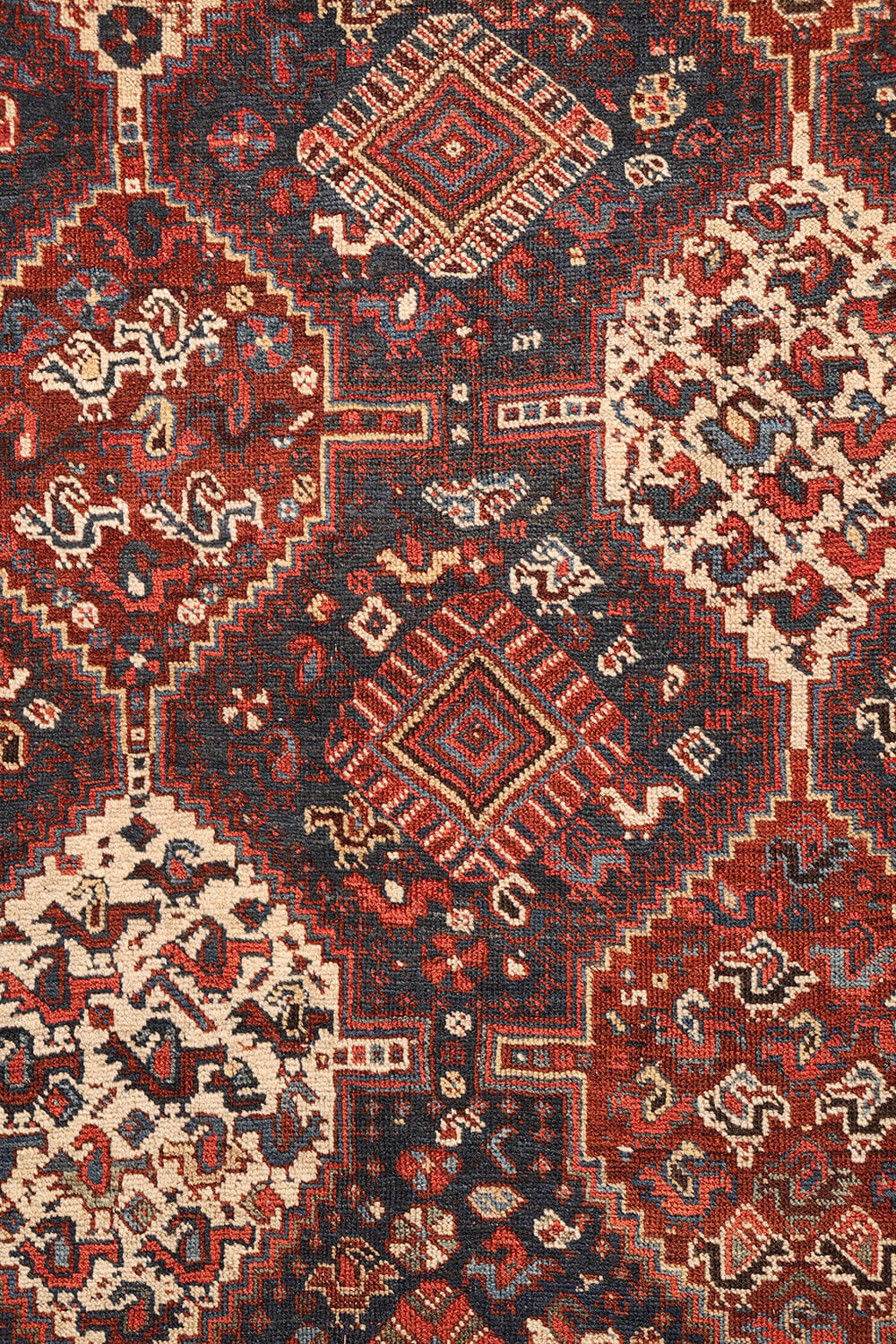
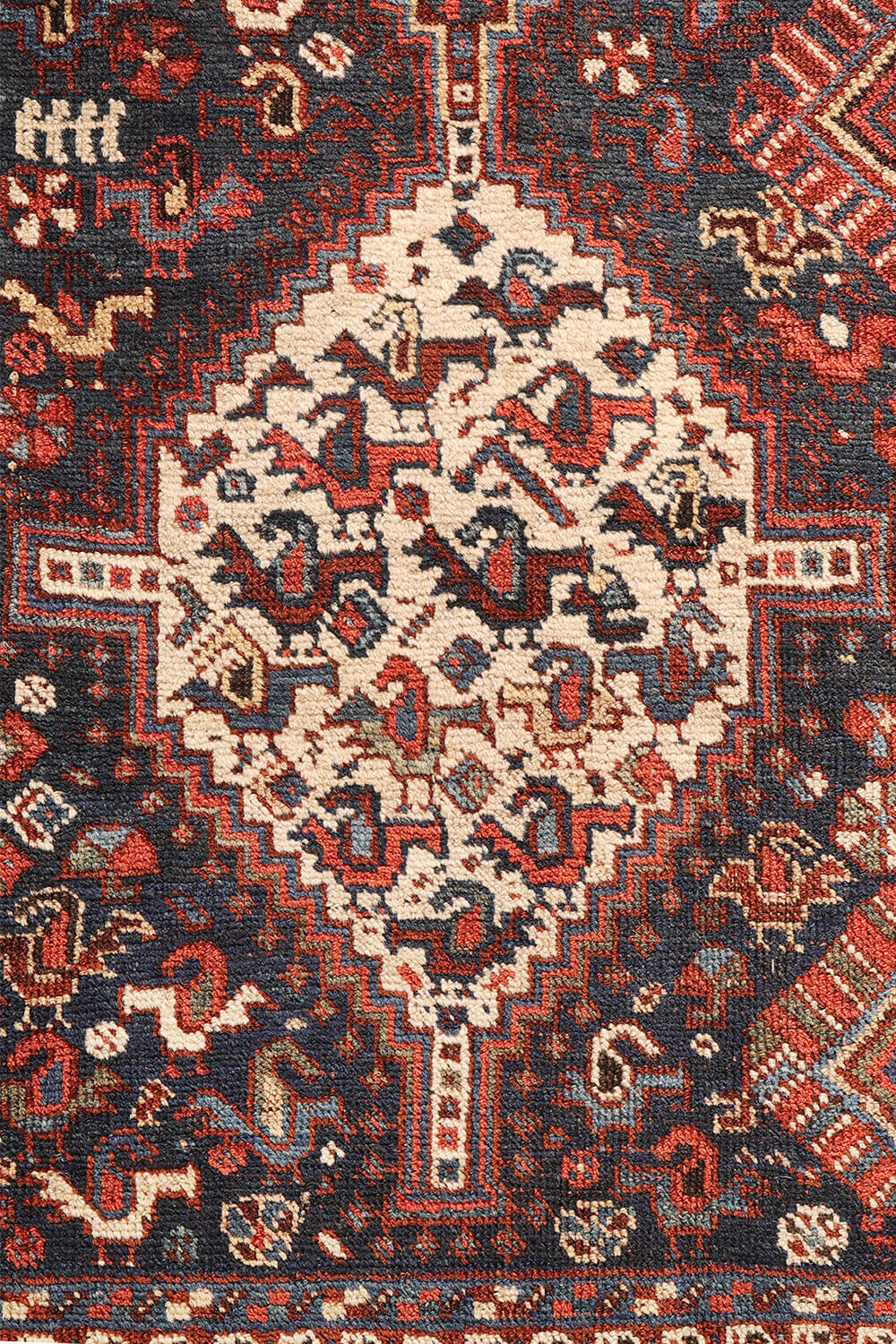
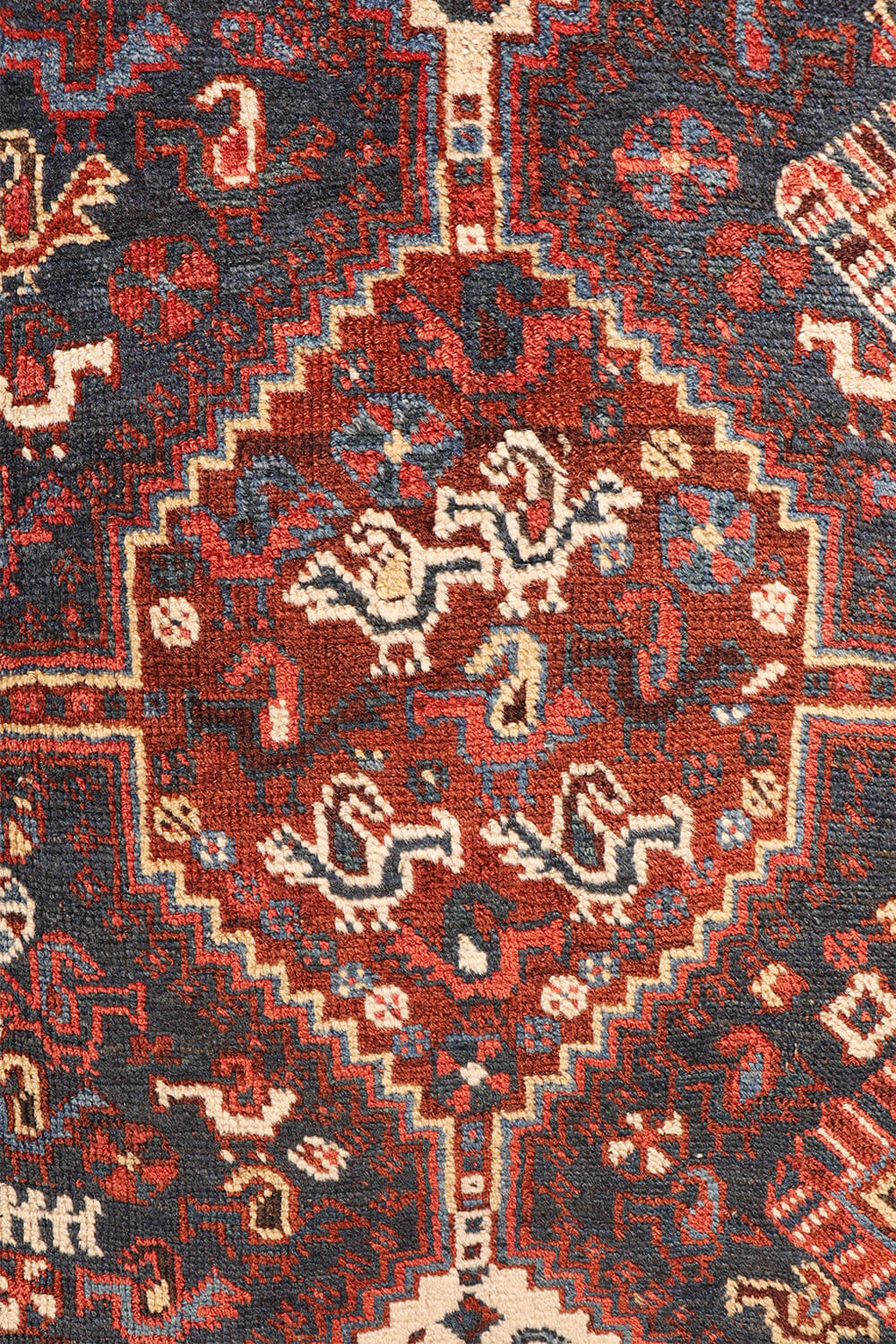
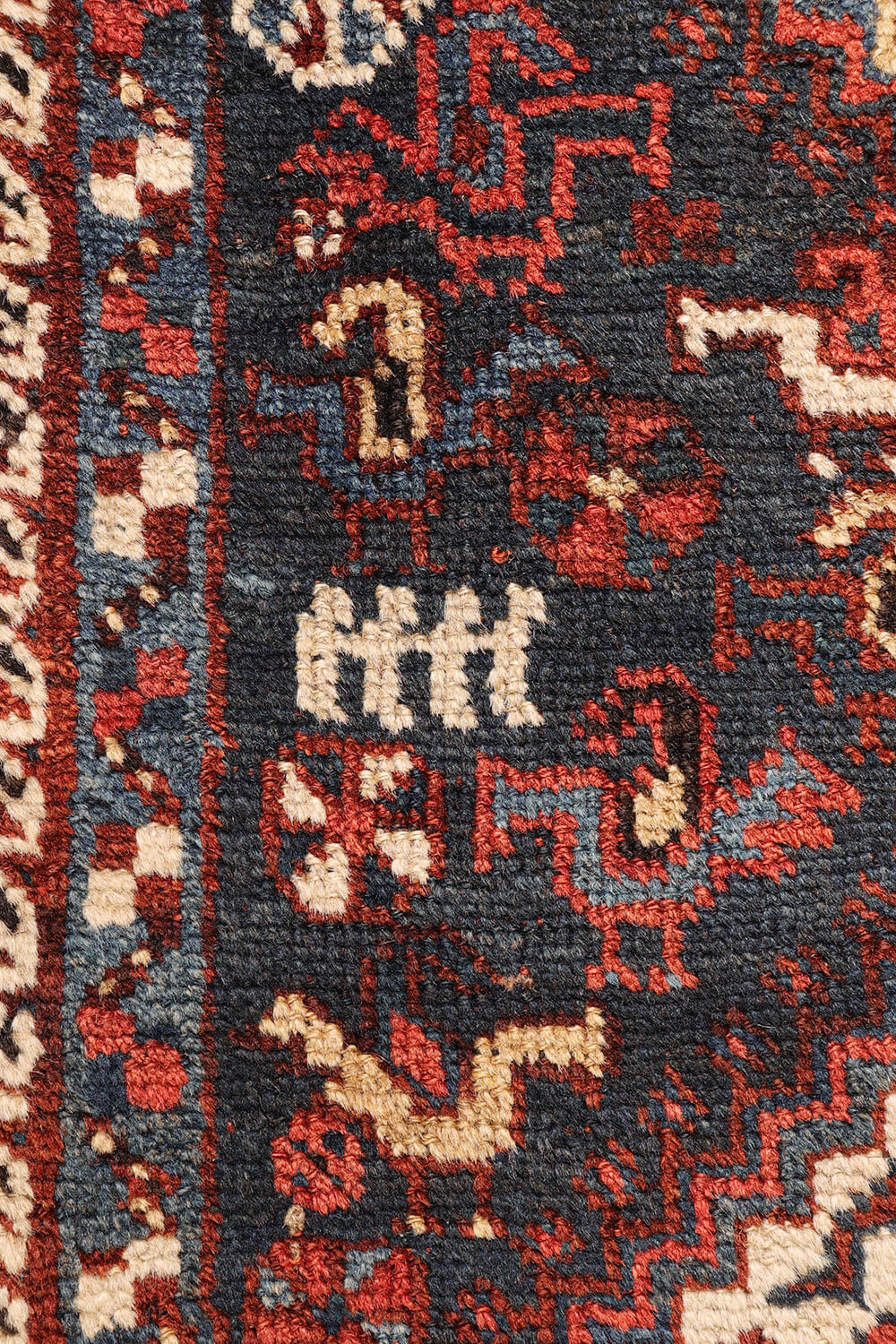
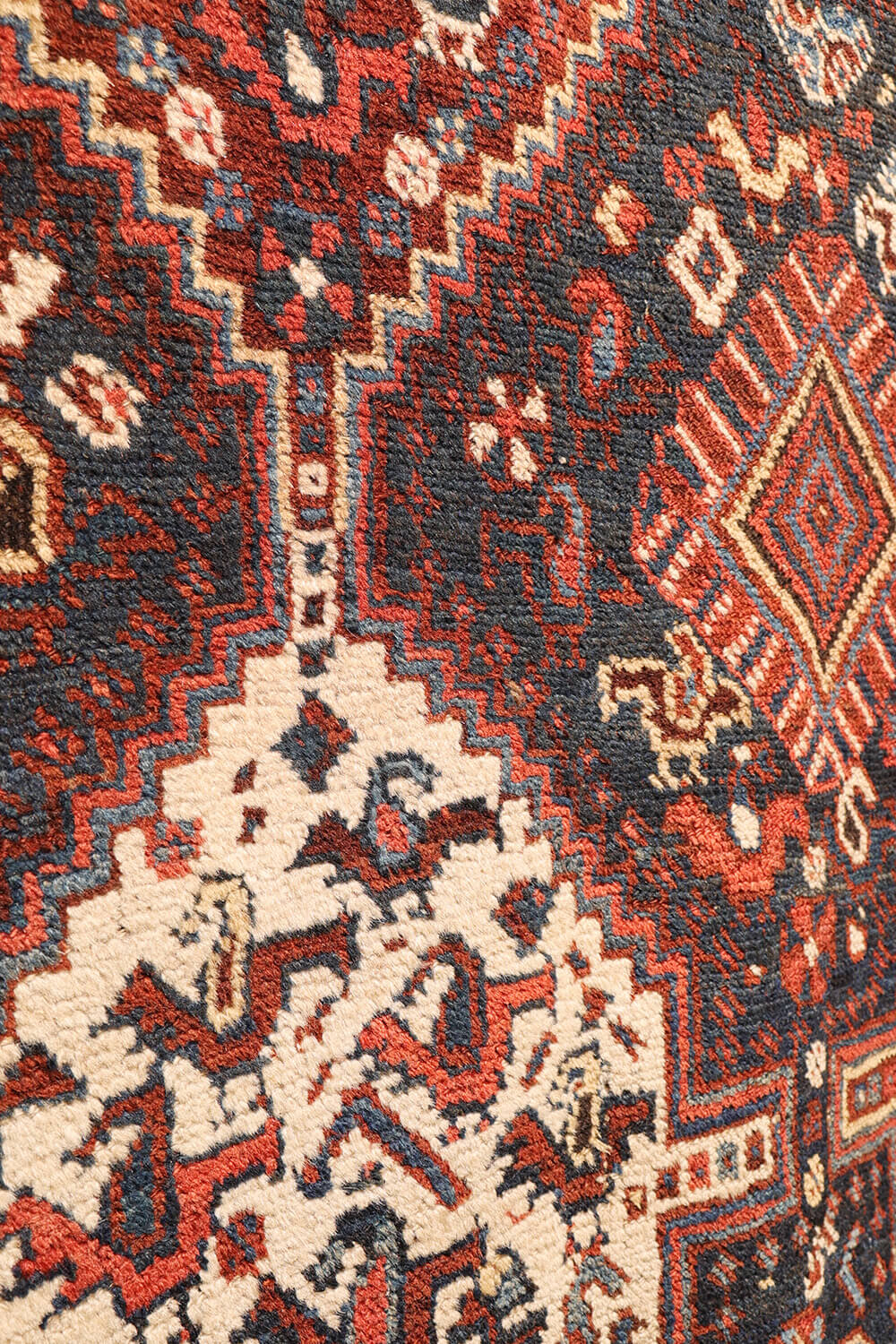
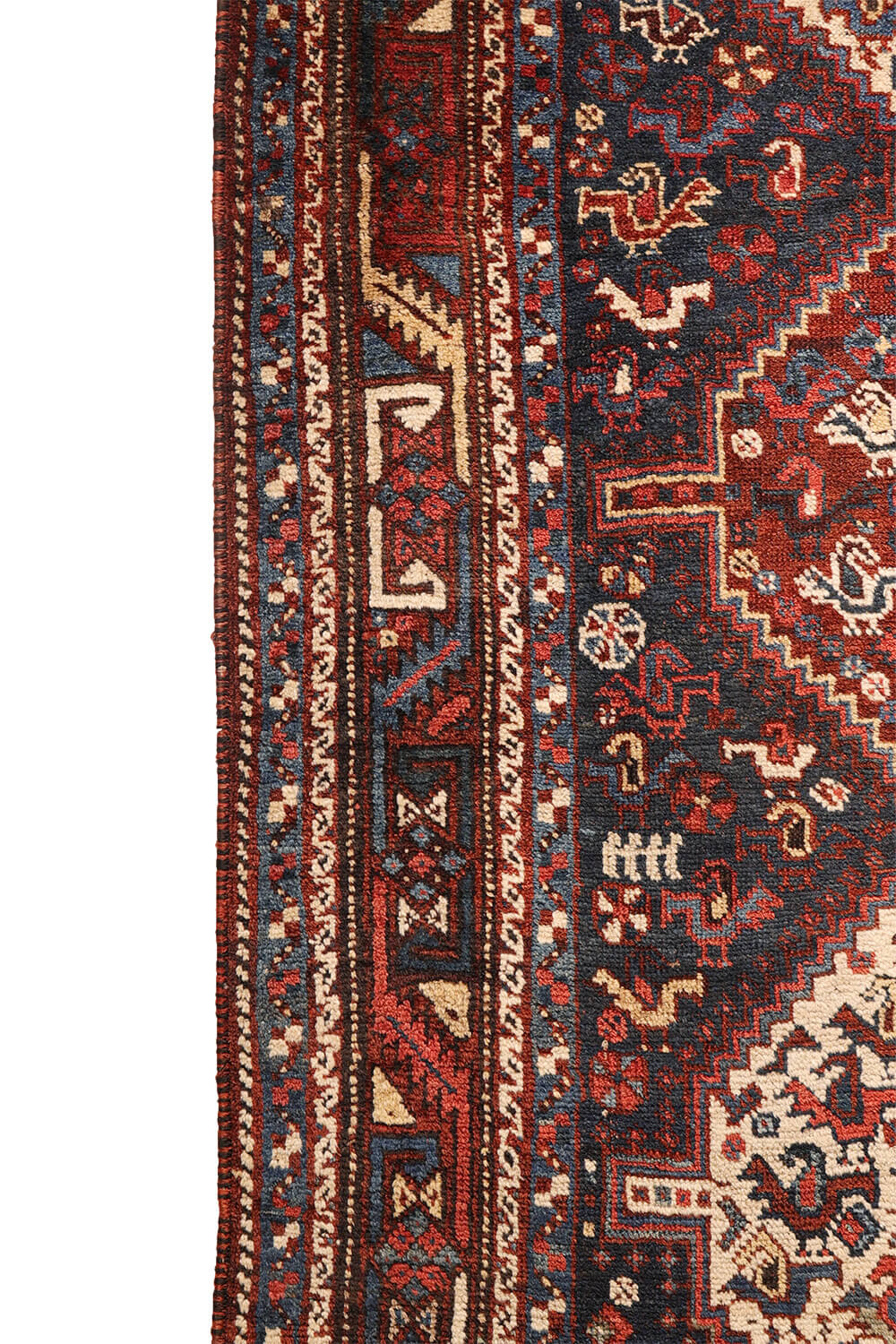
The rug features two sets of medallions, each filled with numerous birds. These birds are repeated throughout the blue field, where the weaver has also incorporated plants, flowers, and geometric motifs. One of the most fascinating details of this rug is the birds’ wings, which are formed by large boteh motifs, also known as the “Paisley” motif.
In contrast to the lively and seemingly spontaneous arrangement of the motifs, the border is wide and spacious, creating an interesting sense of balance. There are two possible explanations for this unusual composition: it seems that the weaver may have miscalculated the dimensions, or perhaps, towards the end of the weaving, decided to make the rug shorter. This can be seen in the reduced size of the upper medallions and the narrower width of the upper border.
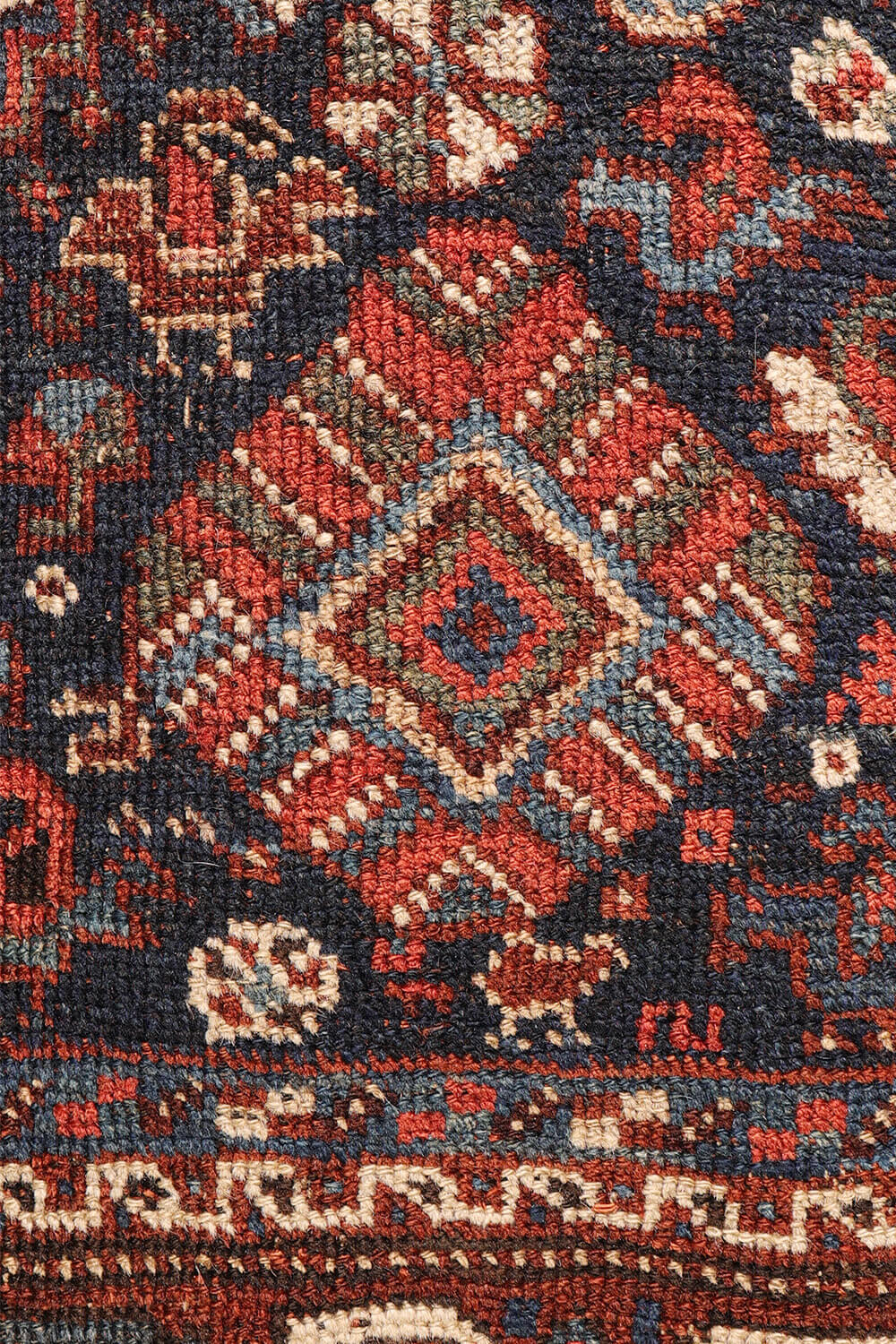
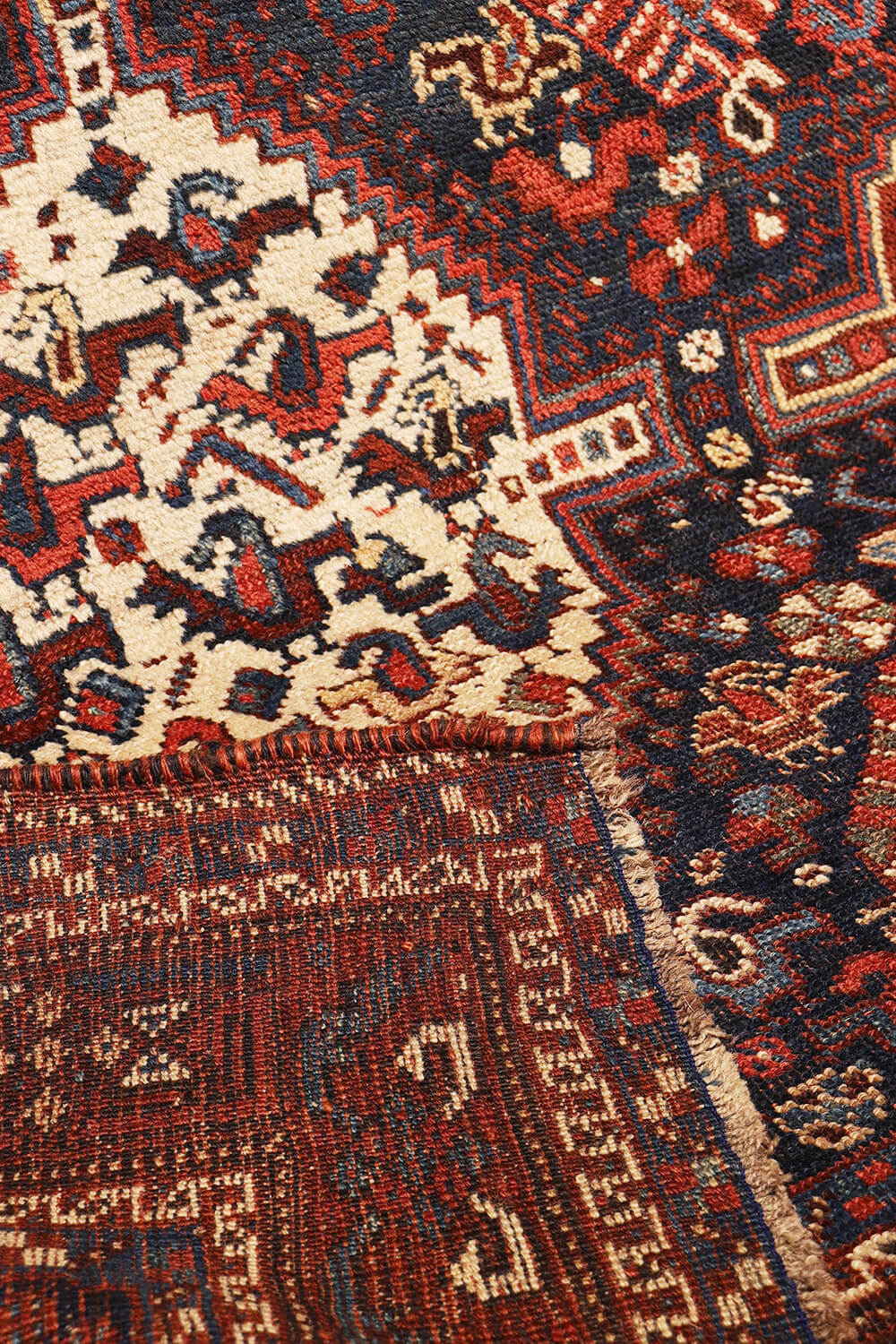
All the dyes used in this rug are natural. The pile is medium to low, and the side cords are original.
A superb example of a Khamseh rug, full of character and fascinating details.
Material: 100% hand-spun sheep wool
Size: 180×153 cms
Origin: Khamseh, Iran
Date of weaving: 1850-80 s
The Arab and Turkic Tribes of Fars referred to as ‘The Khamseh Confederacy’
The so-called ‘Khamseh Confederacy’ title bestowed on a mixed group of Arab and Turkic tribes in the 1860s is a misnomer, but the name continues to be used to describe a group of weavings from these tribes and, for the time being, I will continue to attribute this group of weavings to the Khamseh Confederation.
Khamseh, which means ‘five’ in Arabic, refers to the Arab tribe, the Baharlu and Ainalu tribes (both Turkic) and the Nafar and Basseri (both ethnically mixed tribes). This confederacy was formed in the 1860s in response to the growing power of a neighbouring confederation, the Qashqa’i. The 1860 confederation of five tribes was created by the Ghavam family of Shiraz, in order to counteract the growing influence of the Qashqa’i. The Qashqa’i posed a threat not only to the Ghavam family’s strong political interests in the region, but to their commercial interests as well. On their passage from the Ghavam head- quarters in Shiraz to the Persian Gulf, caravans bearing goods were subject to Qashqa’i raids. To establish a new force in the area that could counter-balance the power of the Qashqa’i, Ali Muhammed Ghavam-ul-Mulk assembled the ‘confederation of five’, the Khamseh Confederacy, with himself as Il Khan. The confederacy was eventually disbanded by the late Shah, Mohammad Reza in the 1950s and is no longer active as a political entity. Some of the constituent tribes no longer exist in their nomadic form, having settled long ago into village life. Only the Basseri has remained almost entirely nomadic into the 1990s.
The largest and most powerful tribal group within the Khamseh Confederacy is the Arab tribe, who are believed to have entered Fars shortly after the Arab conquest in the seventh century and the advent of Islam. The Arab nomads are descended from tribes of Najd, Yammameh and Oman and are comprised mainly of two tribes, the Jabbareh and Sheibani, of which only the Jabbareh are weavers. They learned their weaving skills, it is thought, from the indigenous Lori and Farsi natives. Some sections of the tribe have retained their own language whilst others, both nomadic and sedentary, speak Persian or even Turki.
The early rugs of the Arab Jabbareh tribe have stunning colours, incor- porating intense blues as well as reds. A popular design is the chicken, which appears to predominate in certain pieces. The majority of weavings from this tribe feature asymmetrical knotting although some can be found with the sym- metrical knot. Sides or selvedges are overbound with segments of varying colours – all found in the weaving itself.
It is generally believed that the Baharlu tribe are descendants of the Turkic Karakoyunlu tribe which left Turkistan probably during the eleventh century mass migrations. During the thirteenth century the Karakoyunlu were recorded in Bahar, in the Hamadan region of north-west Persia, before eventually migrating south into Fars province. The Ainalu tribe is also of Turkic stock. Their forefathers came south into Fars in the eighteenth century after leaving their west Turkistan homeland.
“Tribal rugs” by Brian MacDonald
1 in stock
Additional information
| Weight | 6.4 kg |
|---|