750.00 €
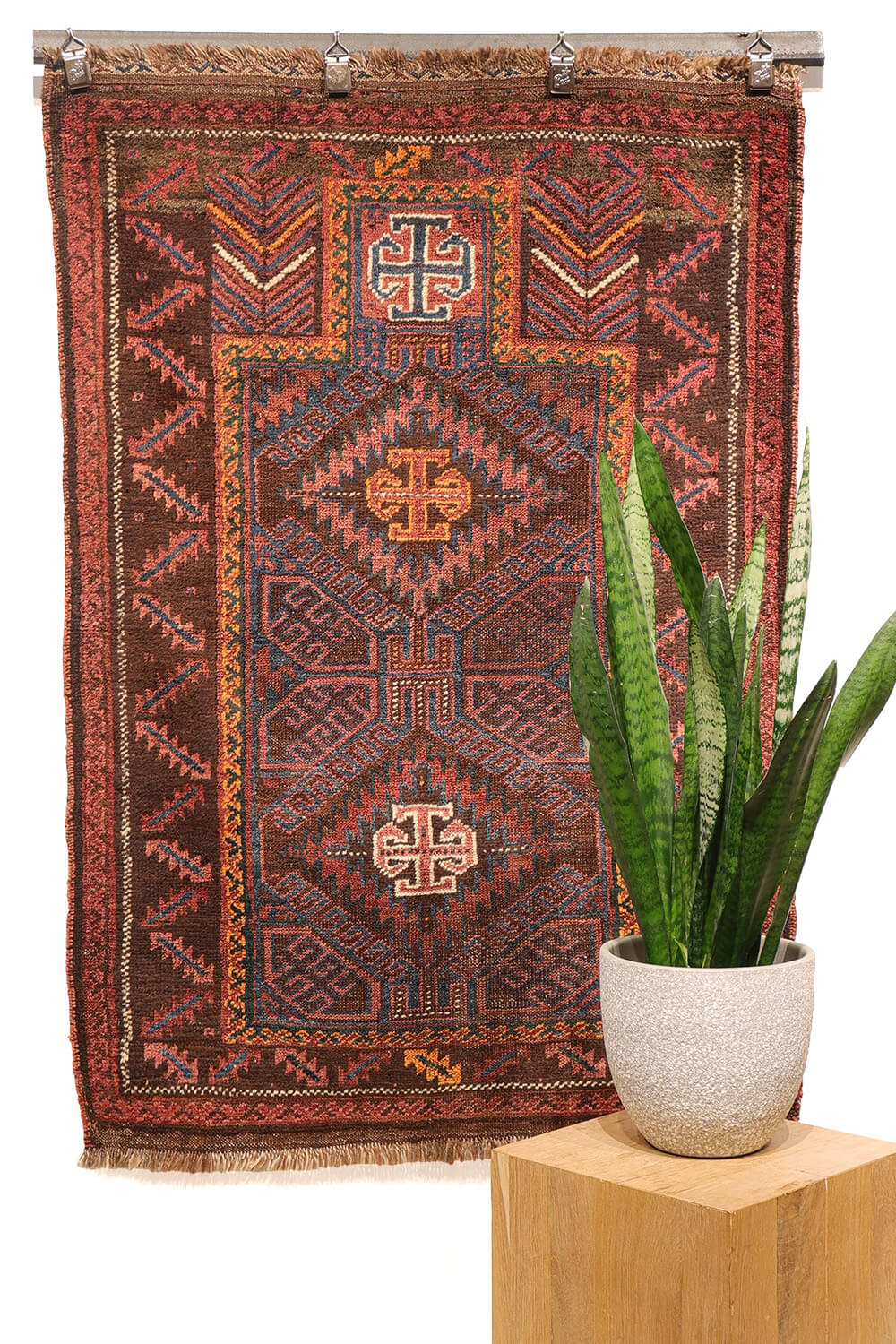
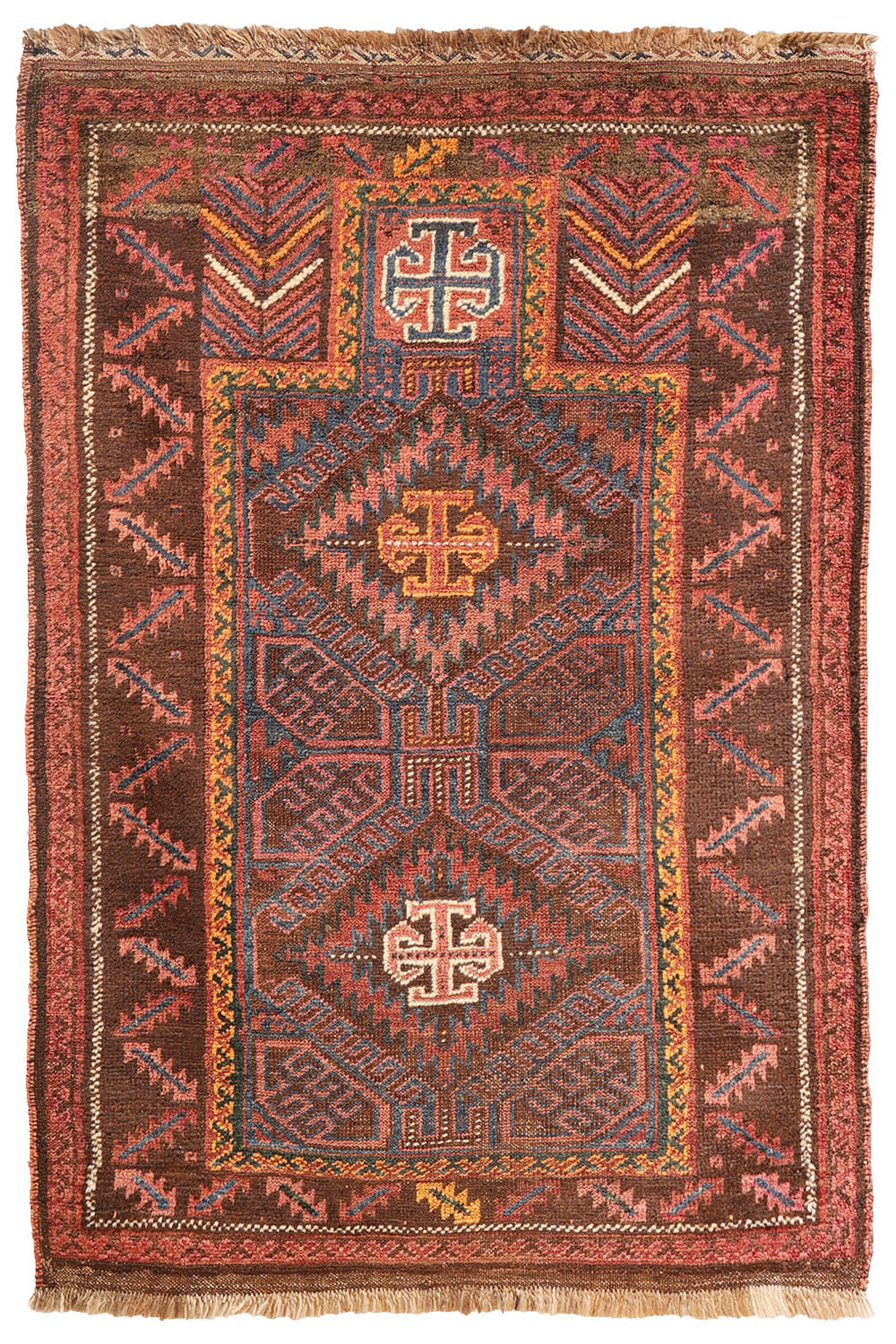
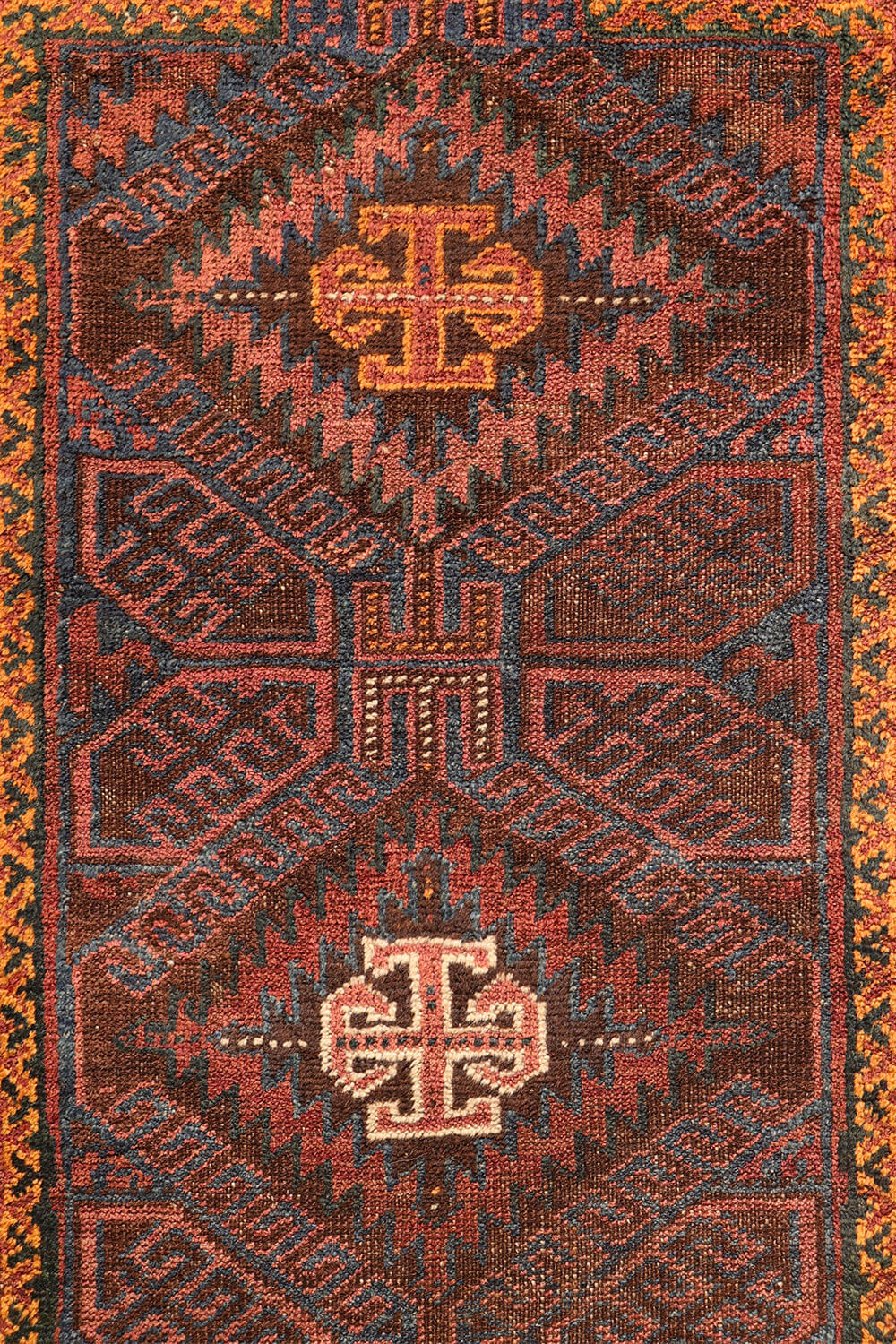
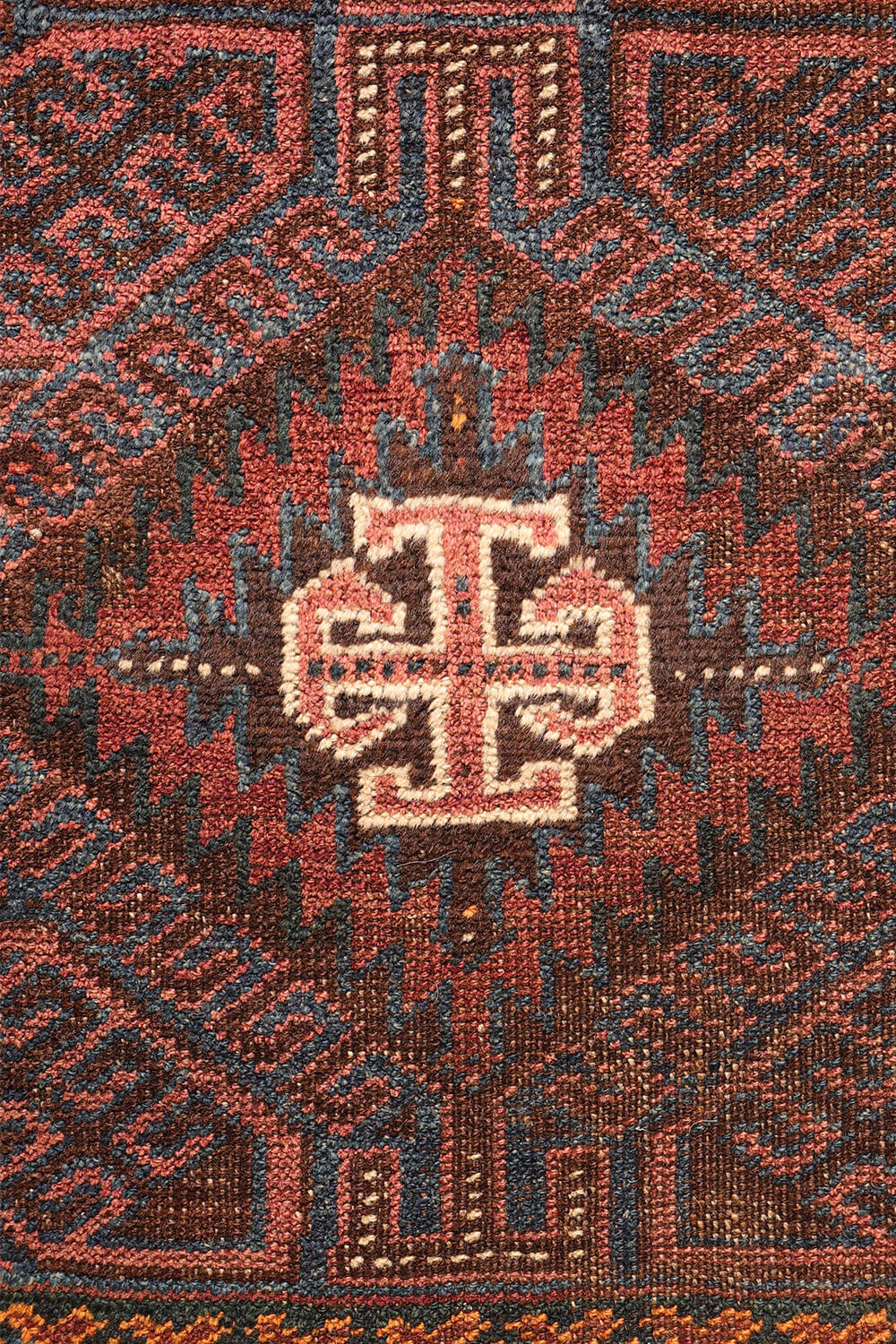
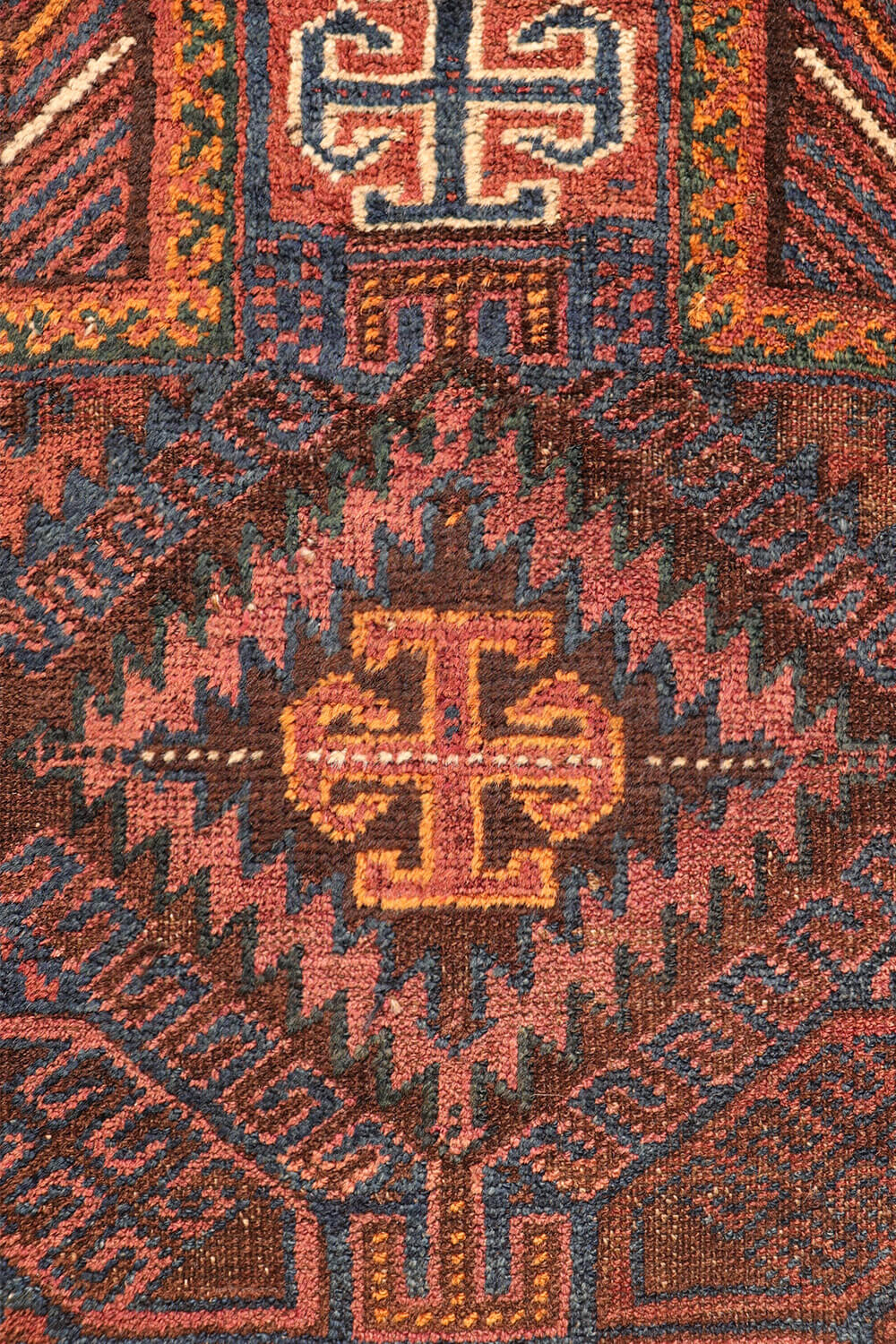
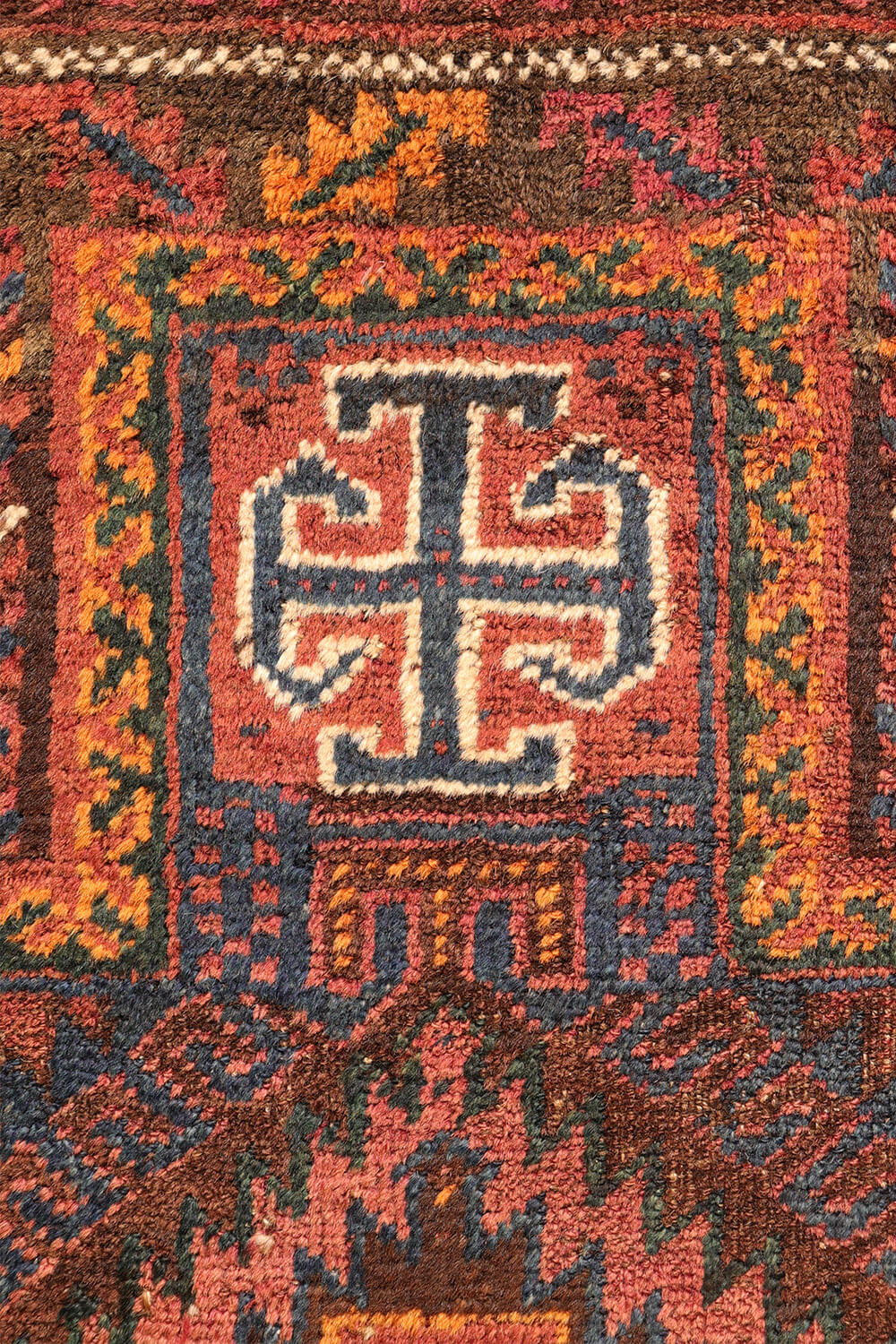
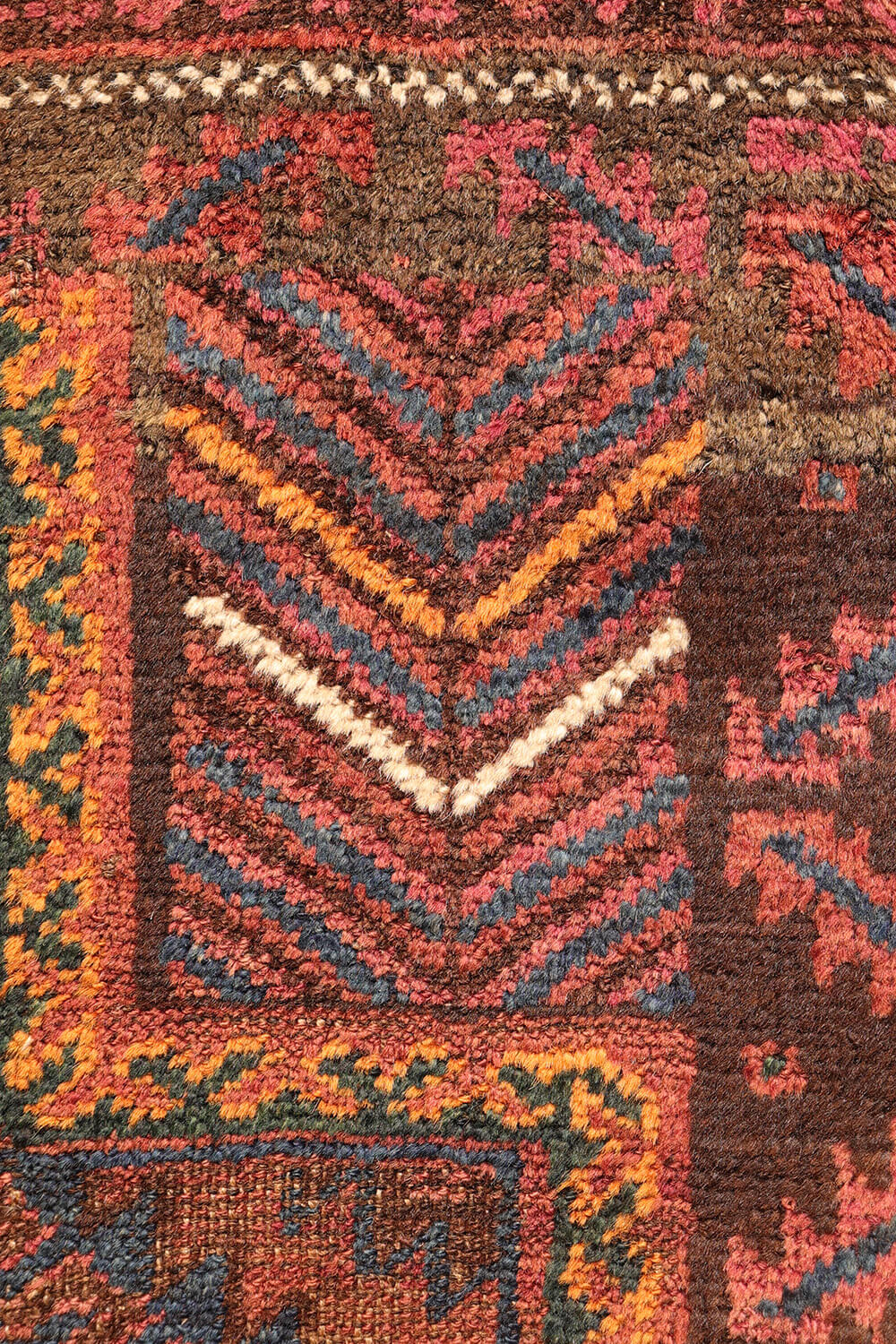
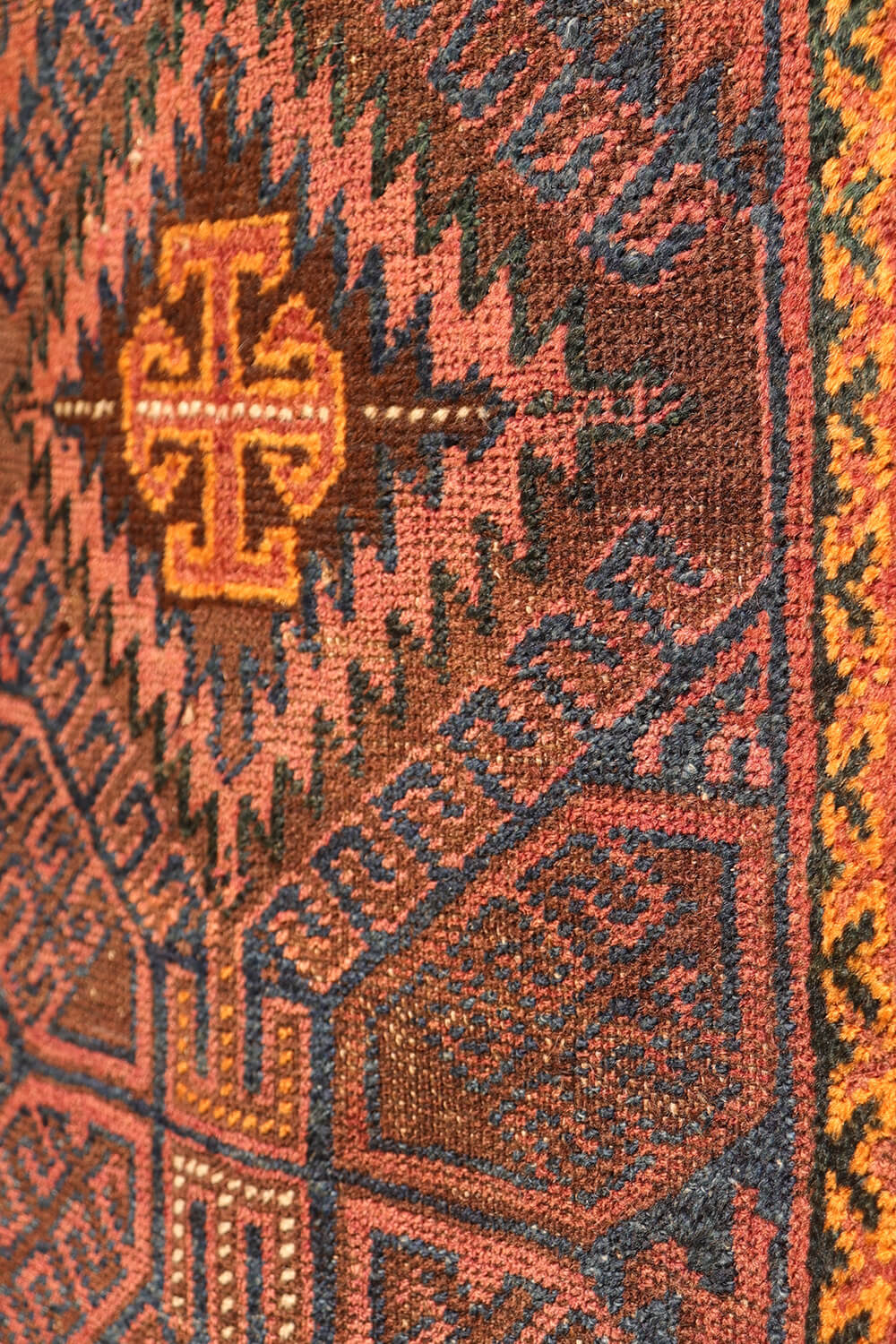
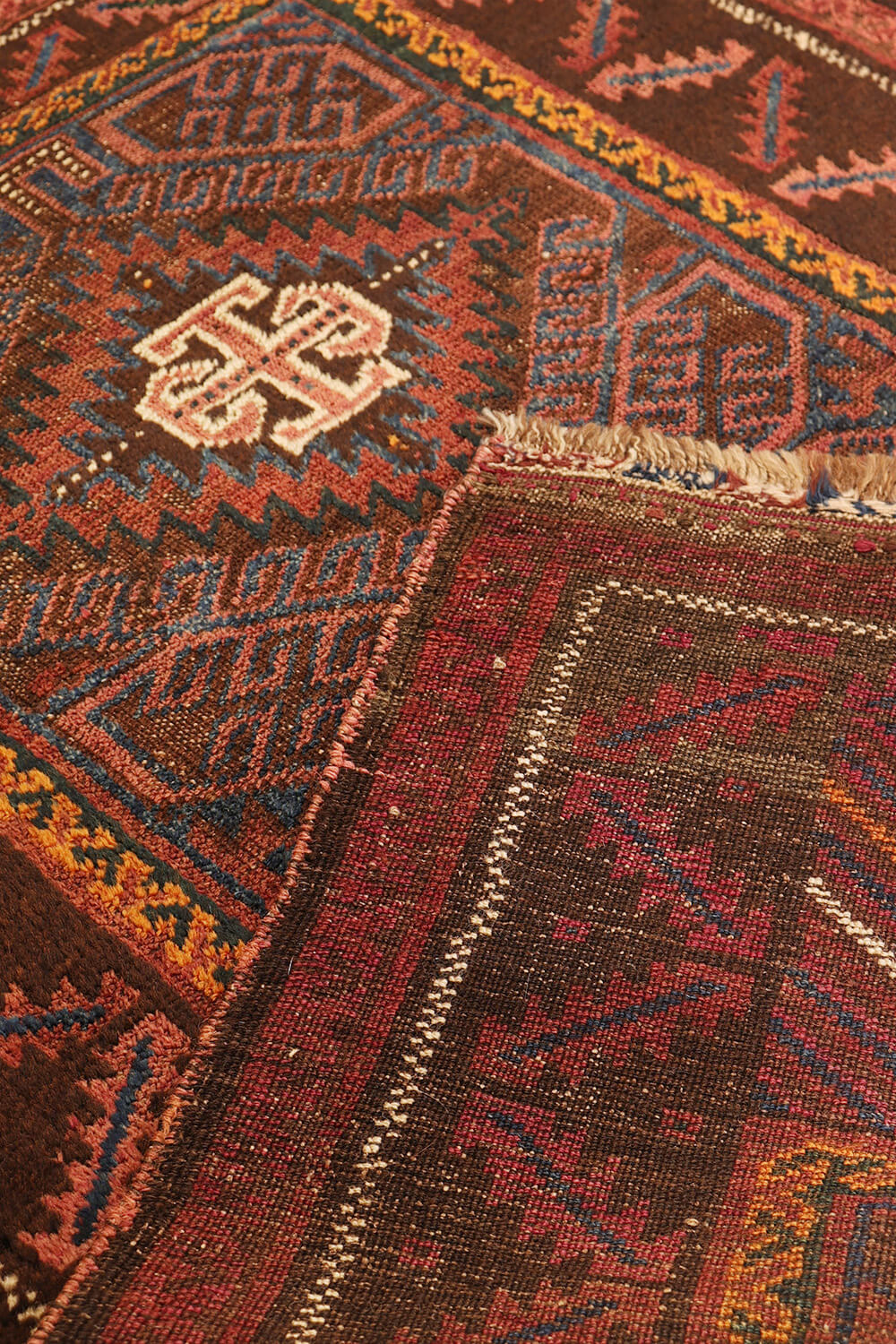
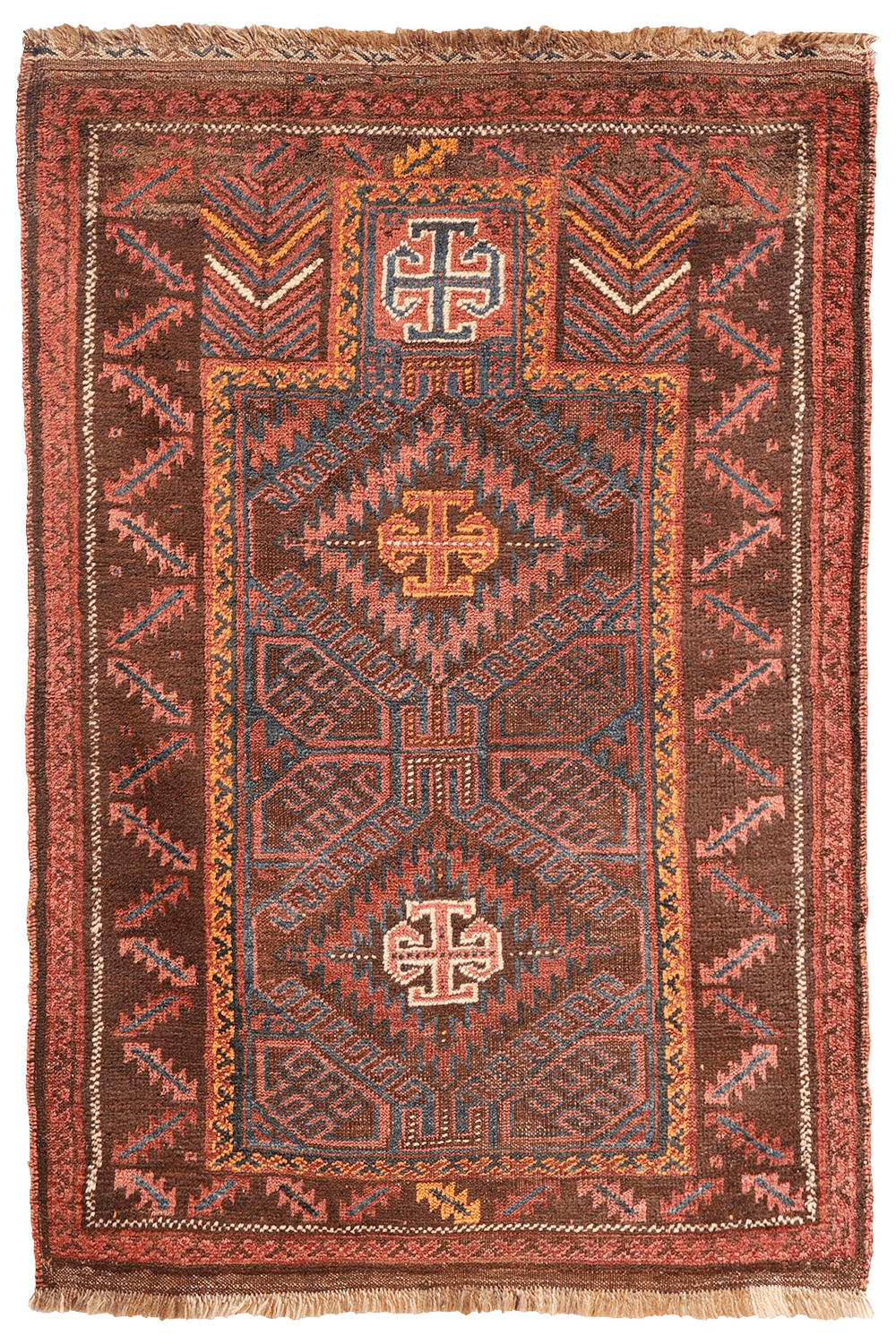
A superb antique Baluch prayer rug from Afghanistan, featuring an elegant, dark palette of natural dyes, including a deep indigo blue. The field contains two medallions, whose distinctive cross-shaped interior motif is echoed within the Mihrab. On either side of the Mihrab, a pair of schematically rendered trees has been woven.
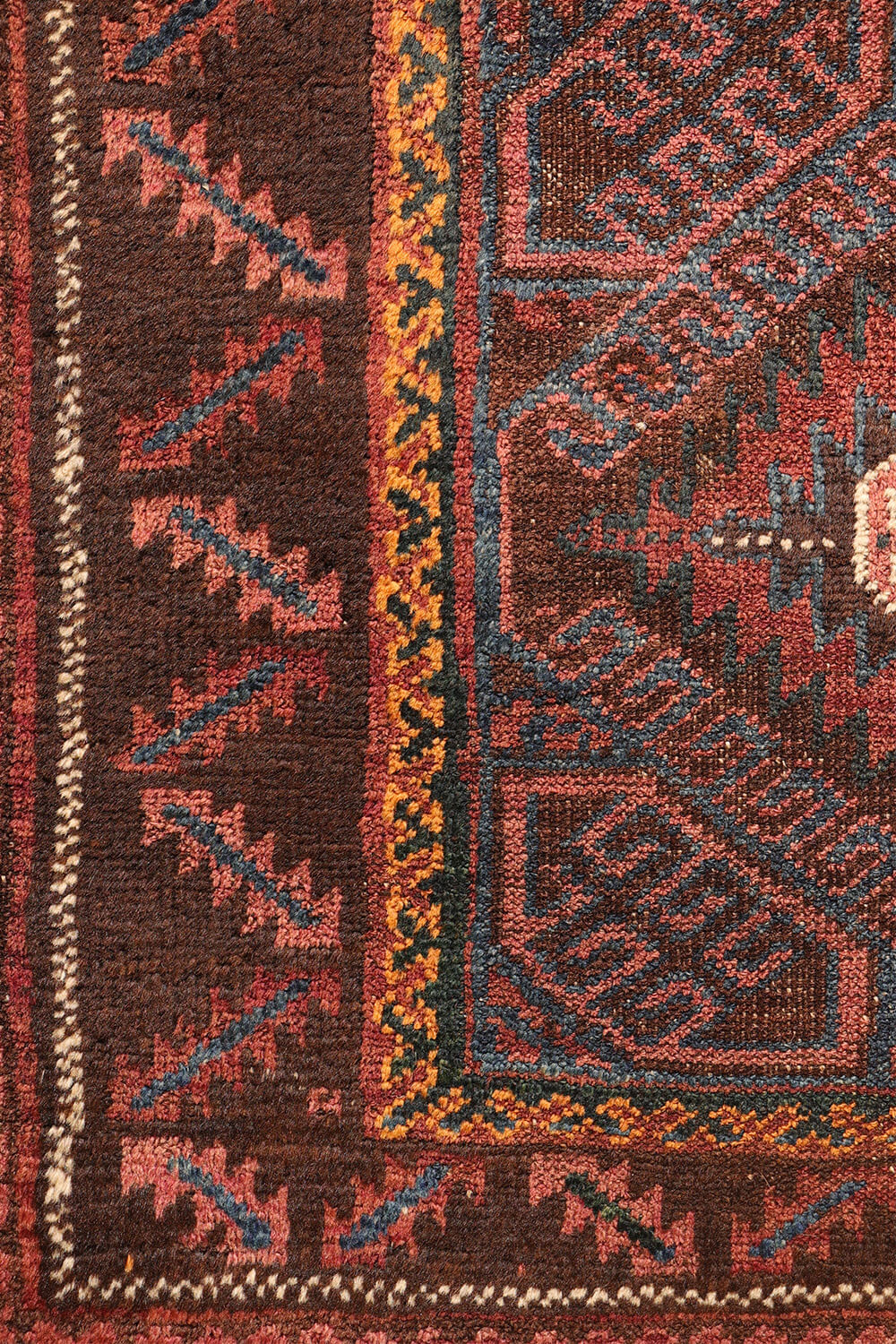
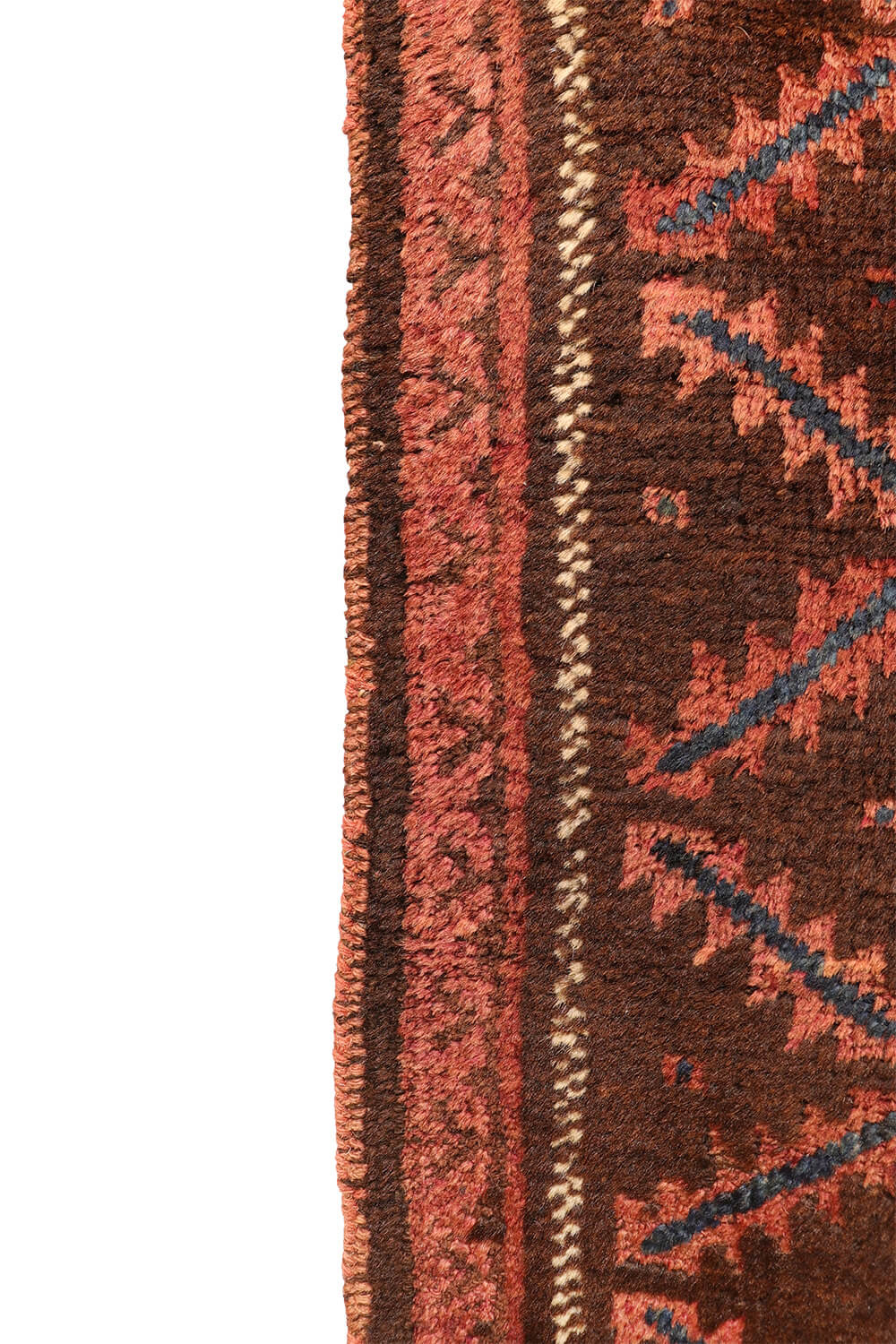
The main border is broad and striking, decorated with a sequence of large serrated leaves that frame the design beautifully.
The rug retains mostly full pile, with some areas of medium pile, and remains in very good condition for its age. It also preserves part of its original kilim ends, particularly at the upper end, where traces of the original woven design can still be appreciated.
Material: 100% hand-spun sheep wool
Size: 118×83 cms
Origin: Baluch tribe, Afghanistan
Date of weaving: 1920s
The Beluch or Baluch are an Iranian people who live mainly in the Balochistan region, located at the southeasternmost edge of the Iranian plateau, encompassing the countries of Pakistan, Iran and Afghanistan. There are also Baloch diaspora communities in neighbouring regions, including in India, Turkmenistan and the Arabian Peninsula.
The Mihrab
This word refers to the niche in mosques that indicates the direction of the Kaaba, toward which believers must prostrate themselves. This might suggest that the symbol of the same name is an Islamic creation. Adapted to weaving, it characterizes prayer kilims and rugs, which believers lay out on a clean surface, taking care to orient the pointed end of the mihrab toward Mecca. There are also multi-niche prayer kilims, called saf, intended for collective practices.
However, we favor the hypothesis that the mihrab predates Islam and symbolizes the sacred mountain, a concept present in all mythologies. The various representations of the motif would then be progressive adaptations influenced by contact with new cultures.
A Protective Motif with Exorcising Power
Inaccessible peaks have always stirred the imagination with their majesty—and, when volcanic, with their activity.
Identifying the mihrab with the sacred mountain leads us to classify this motif among protective symbols with exorcising power, as well as among those symbolizing fertility. Yet we cannot rule out the possibility that the mihrab is a product of later beliefs, which would give woven textiles bearing this motif a cultic or religious function.
“Symbolique des kilims”, Ahmet Diler
1 in stock
Additional information
| Weight | 2.3 kg |
|---|