1,150.00 €
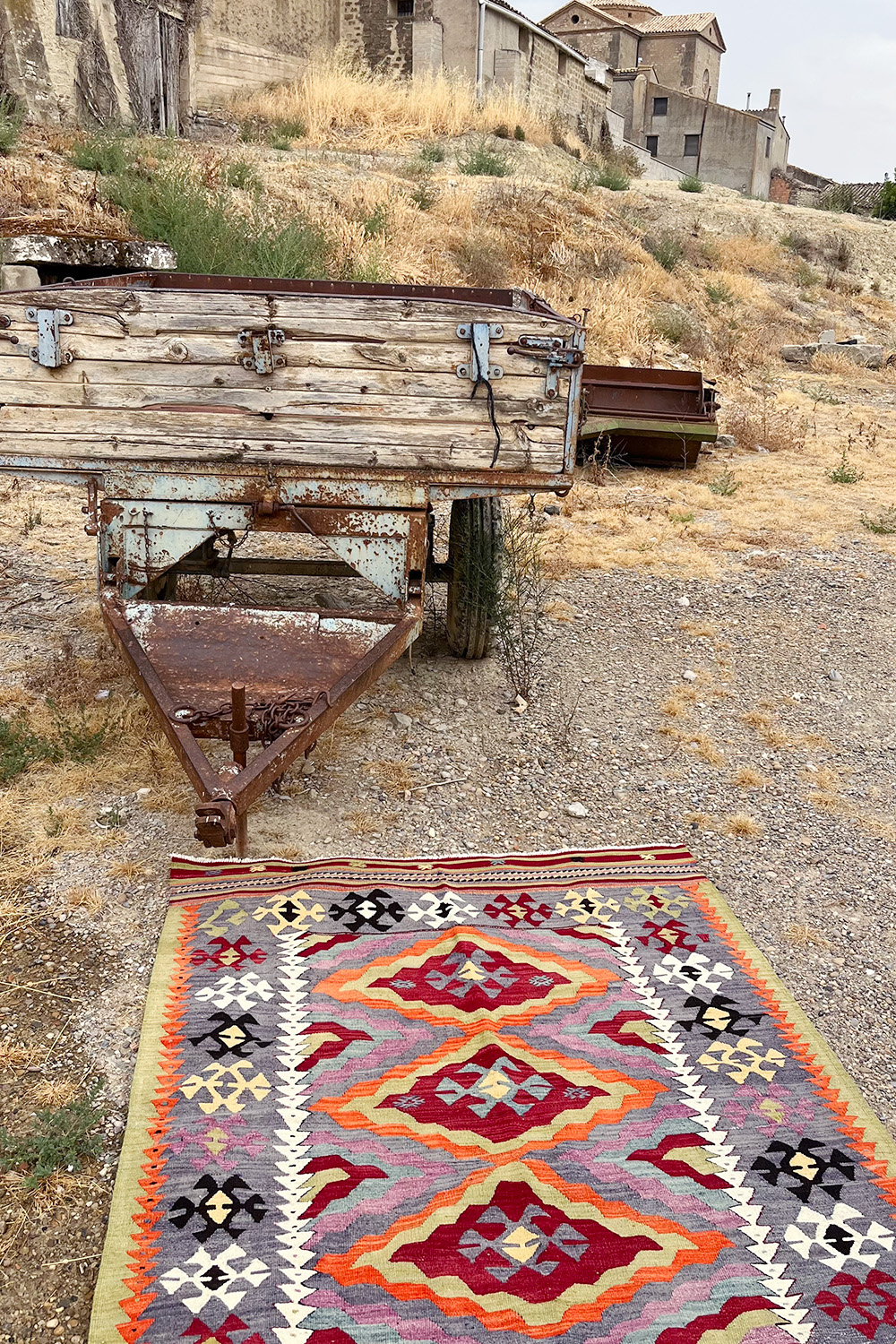
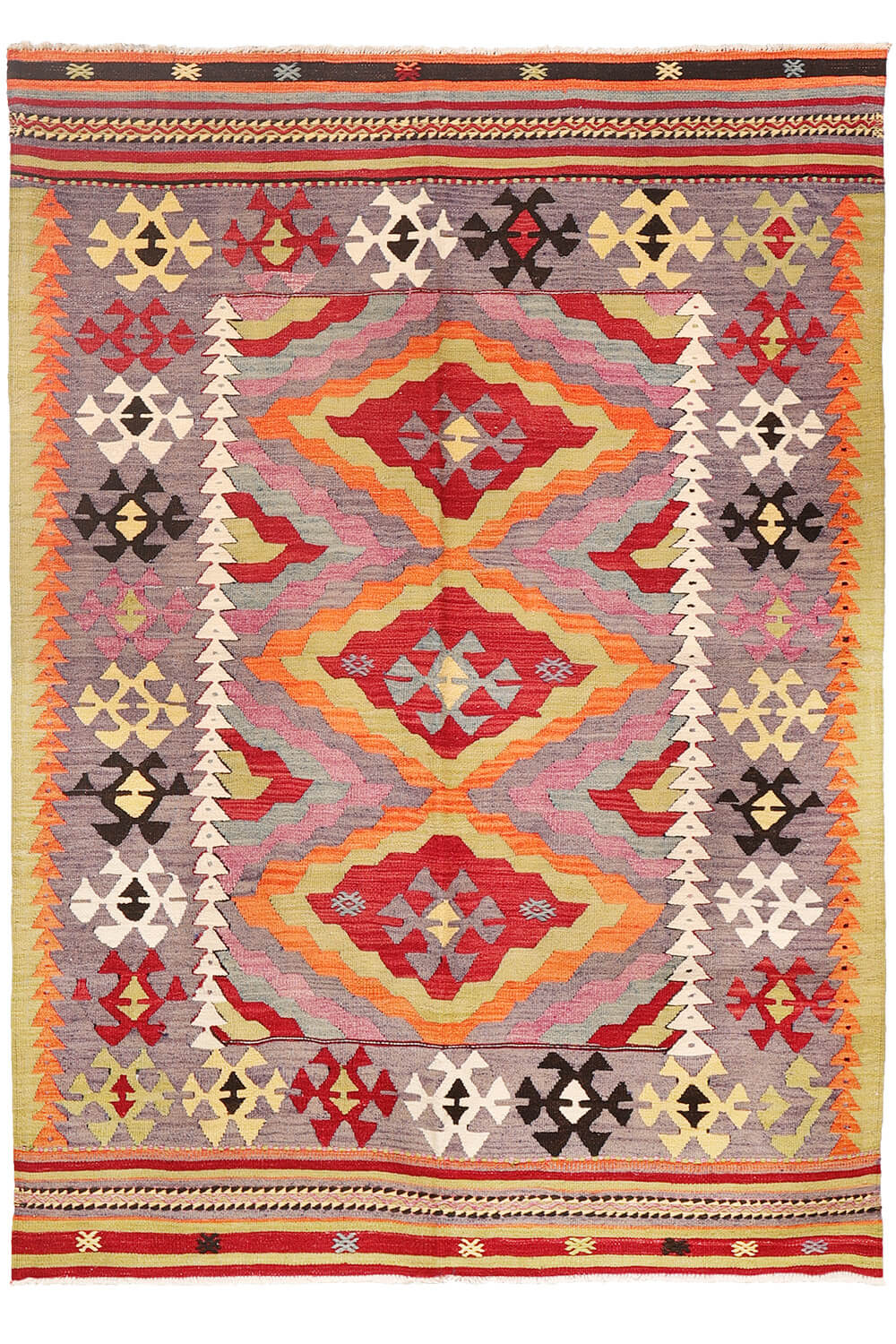
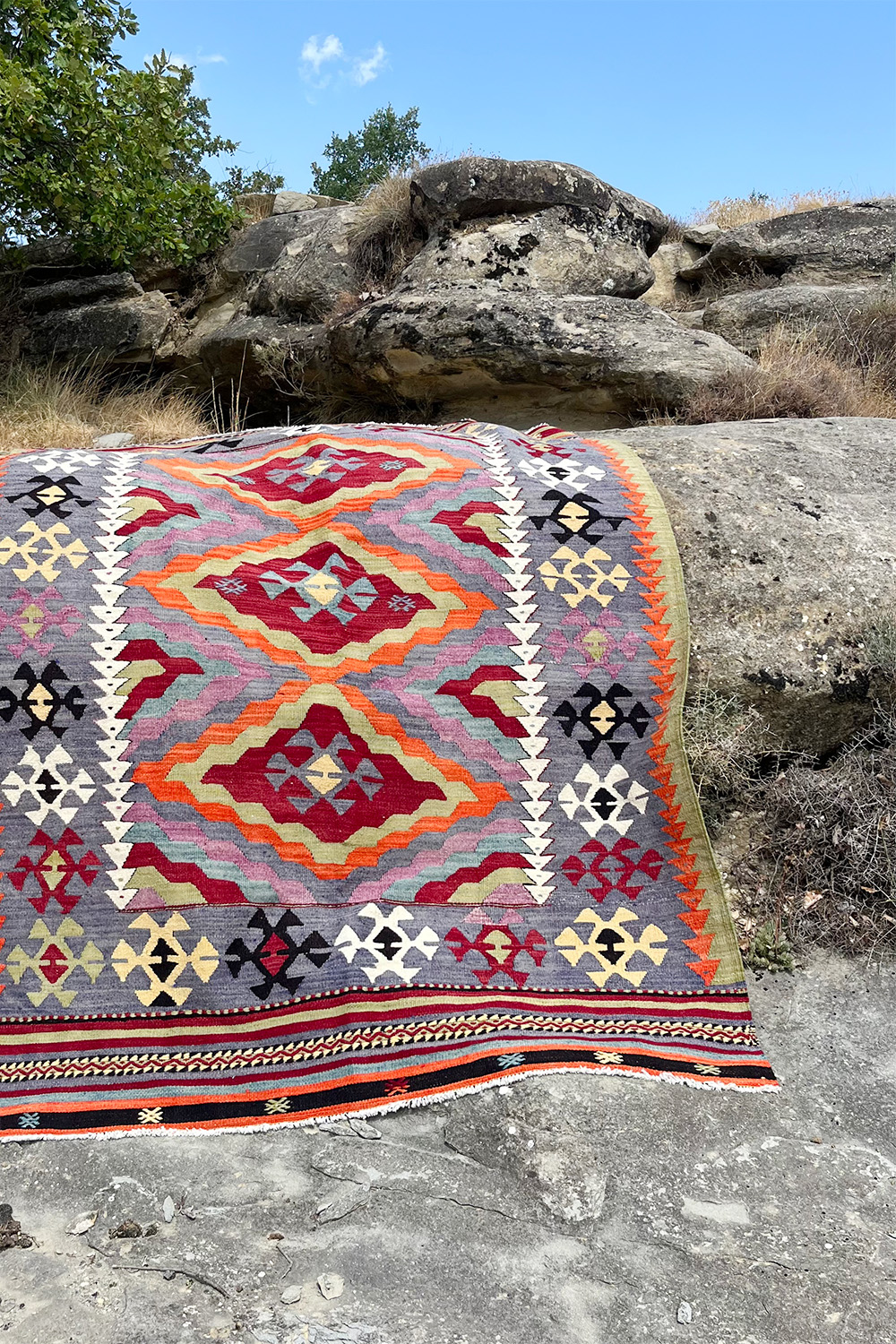
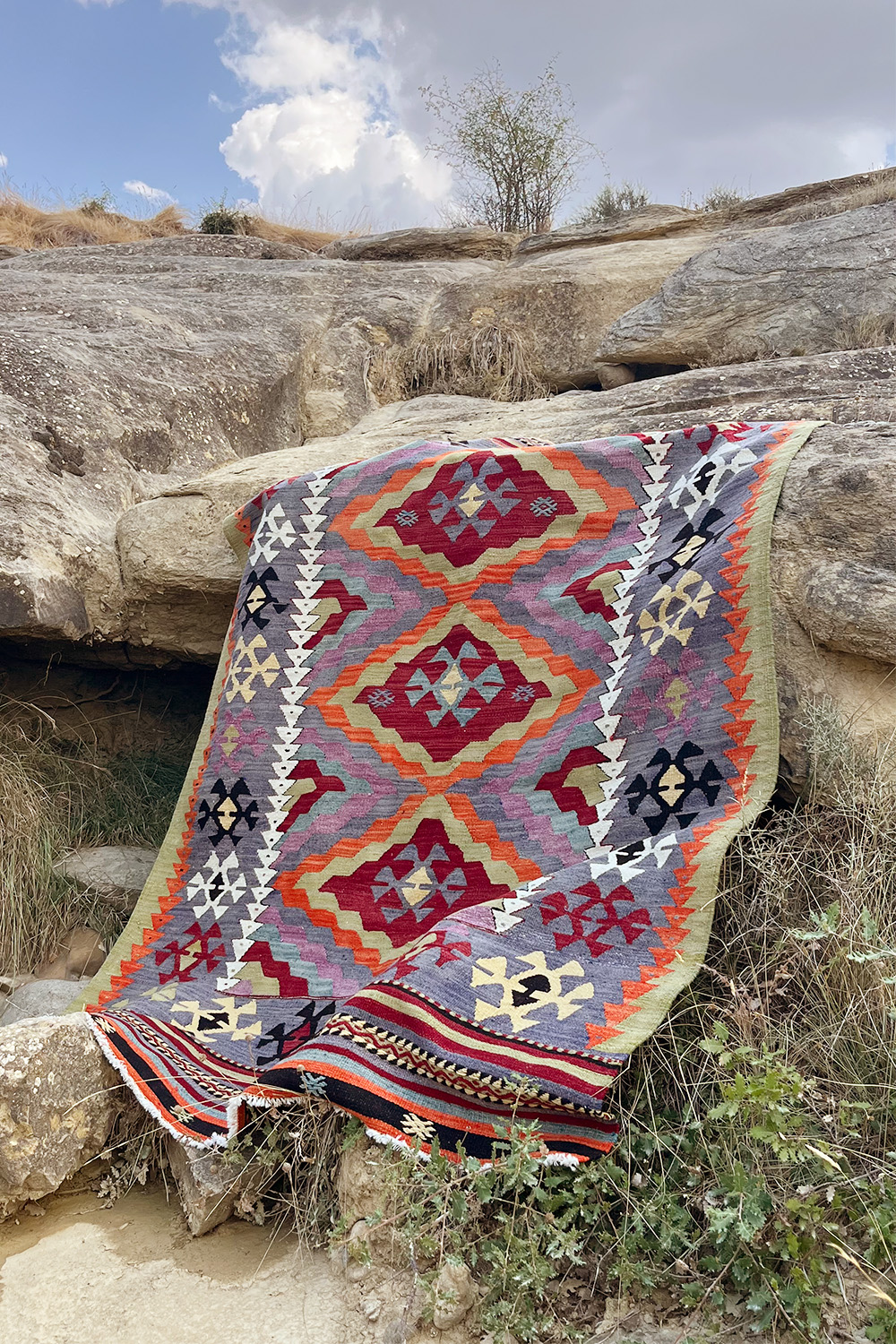
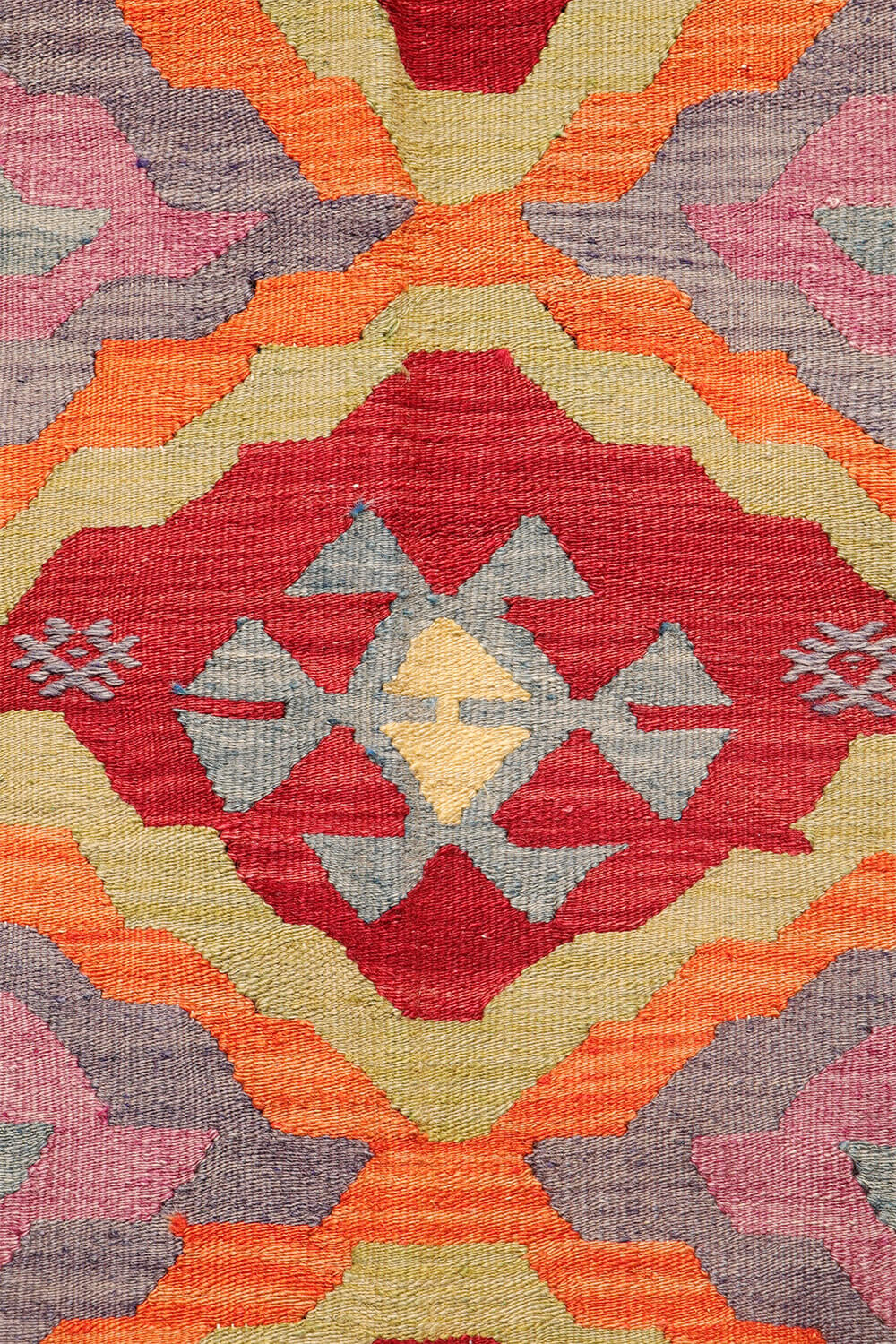
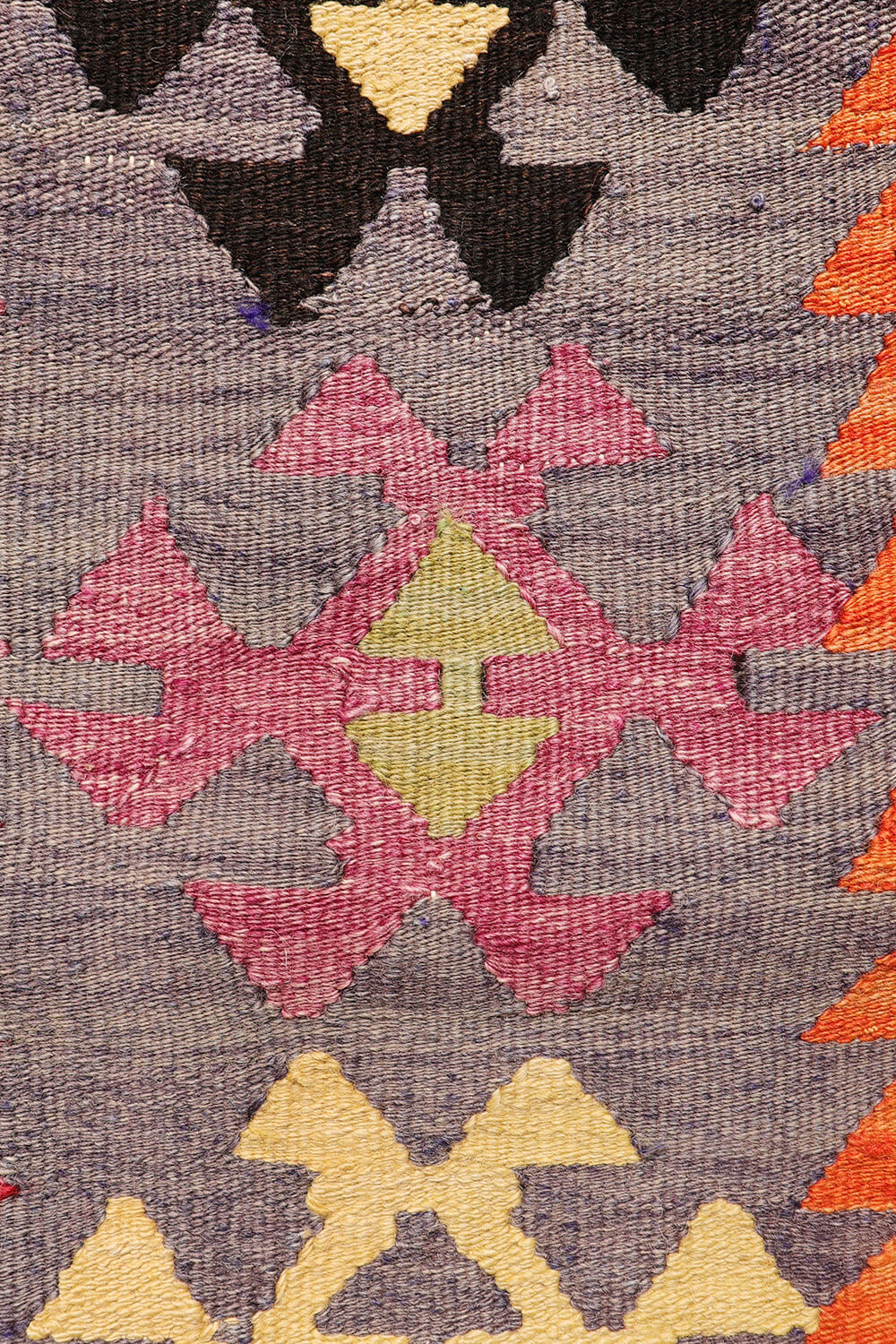
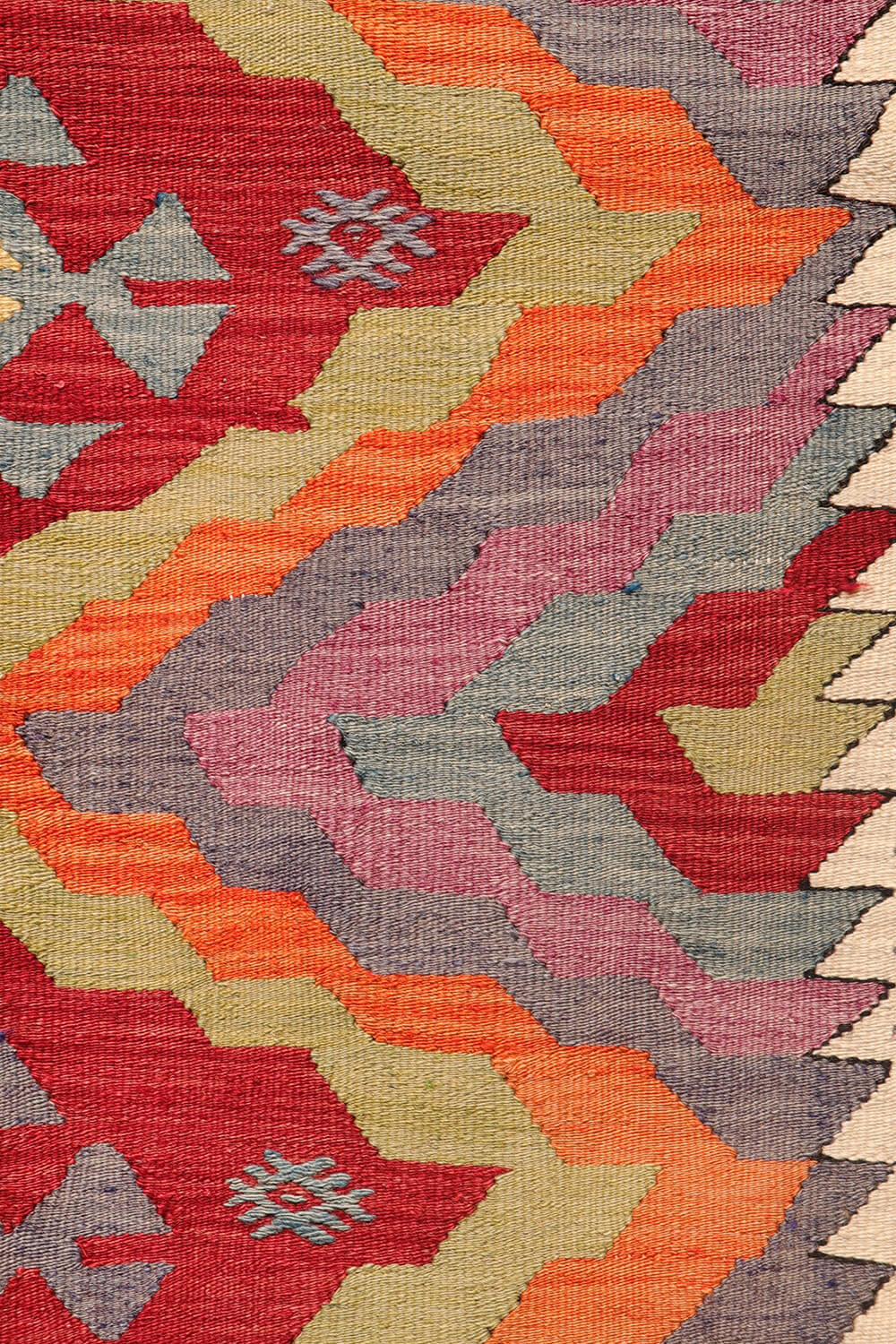
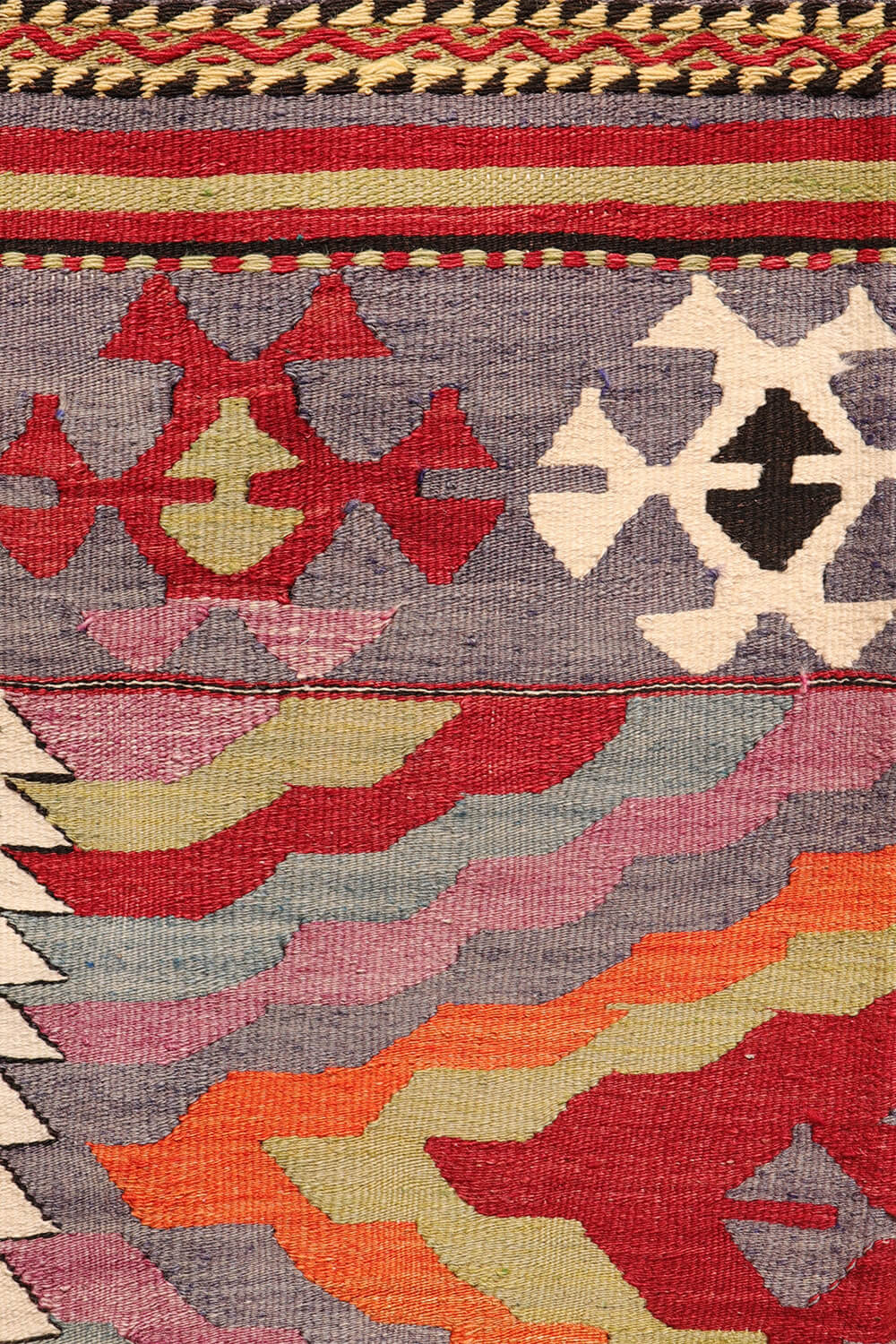
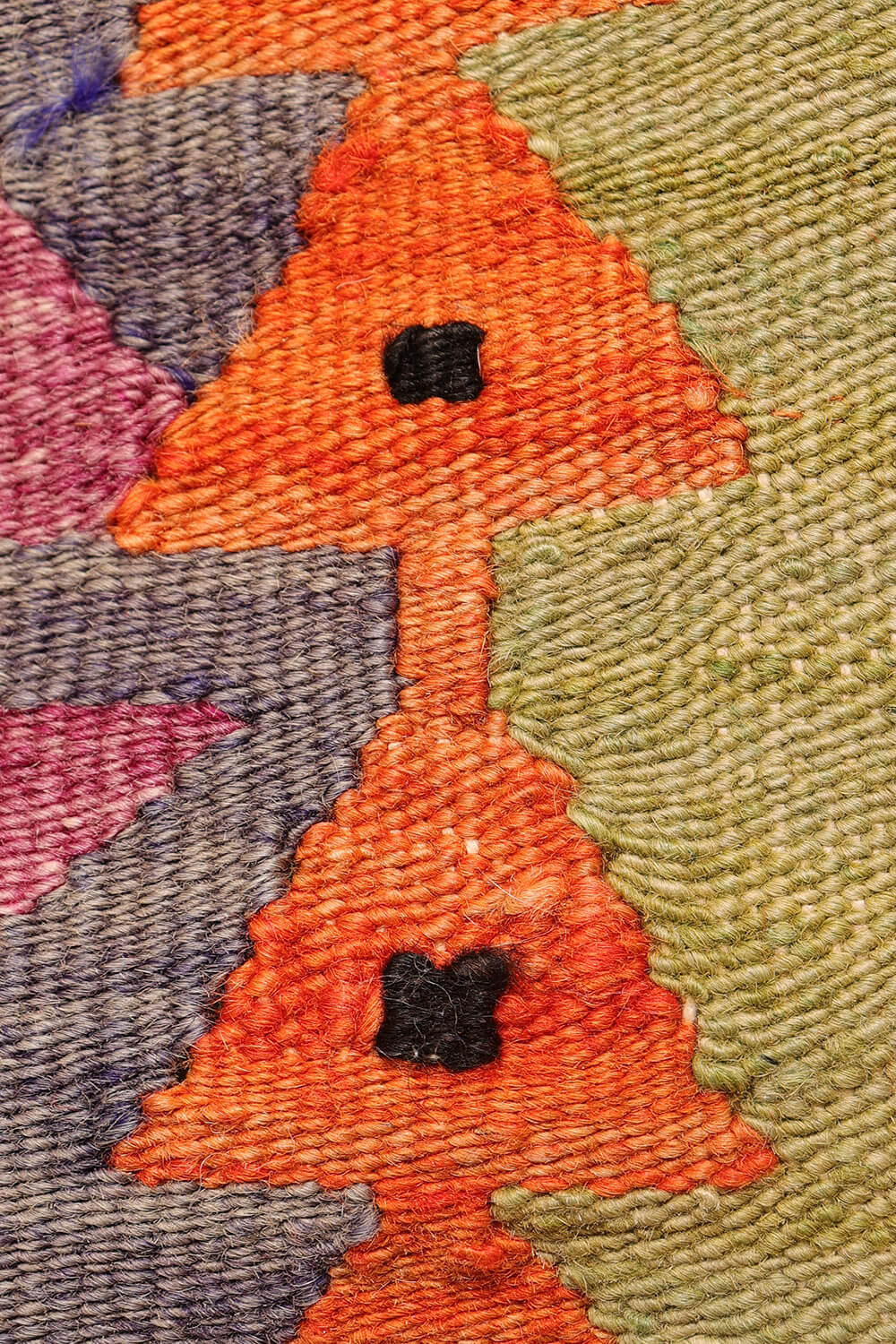
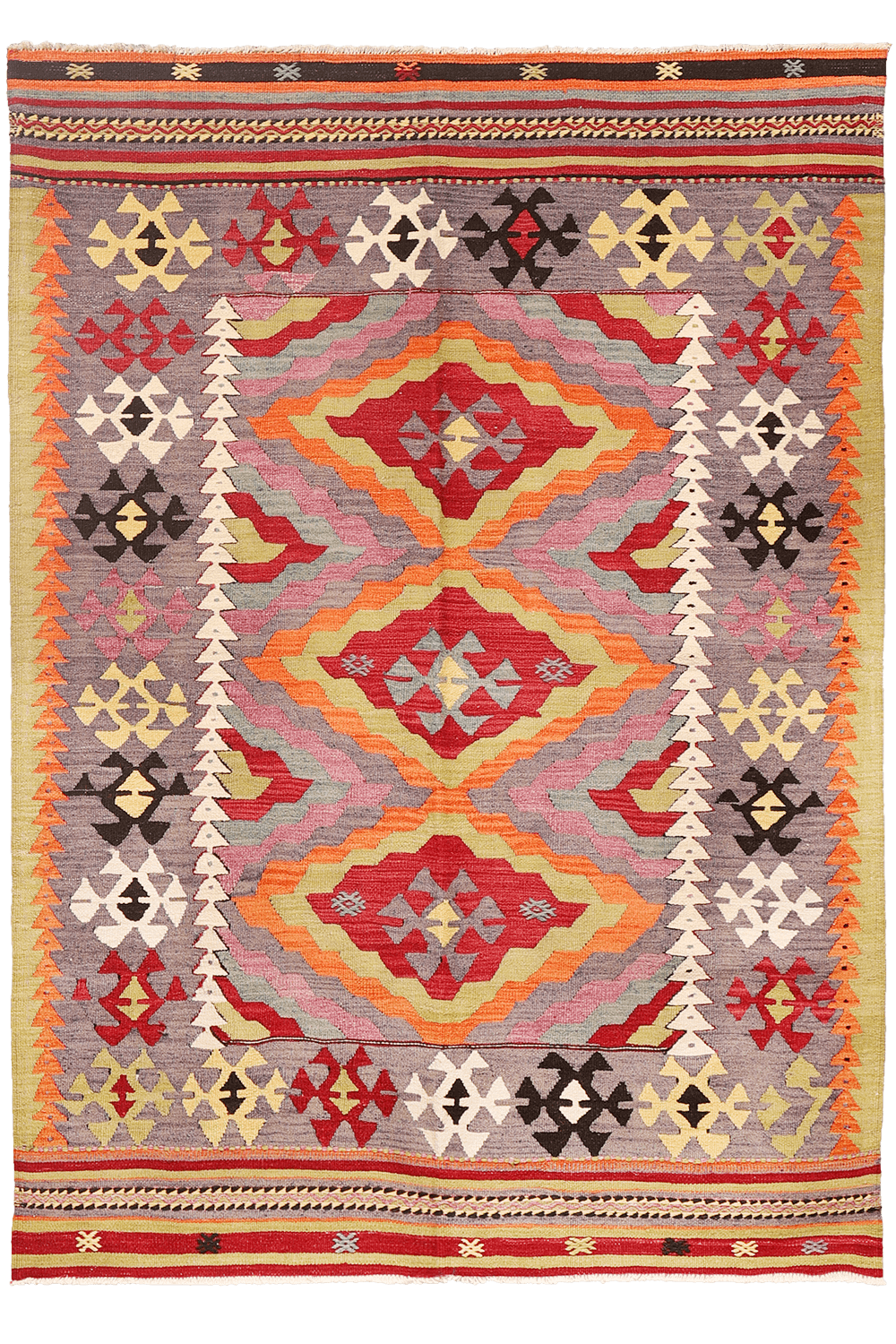
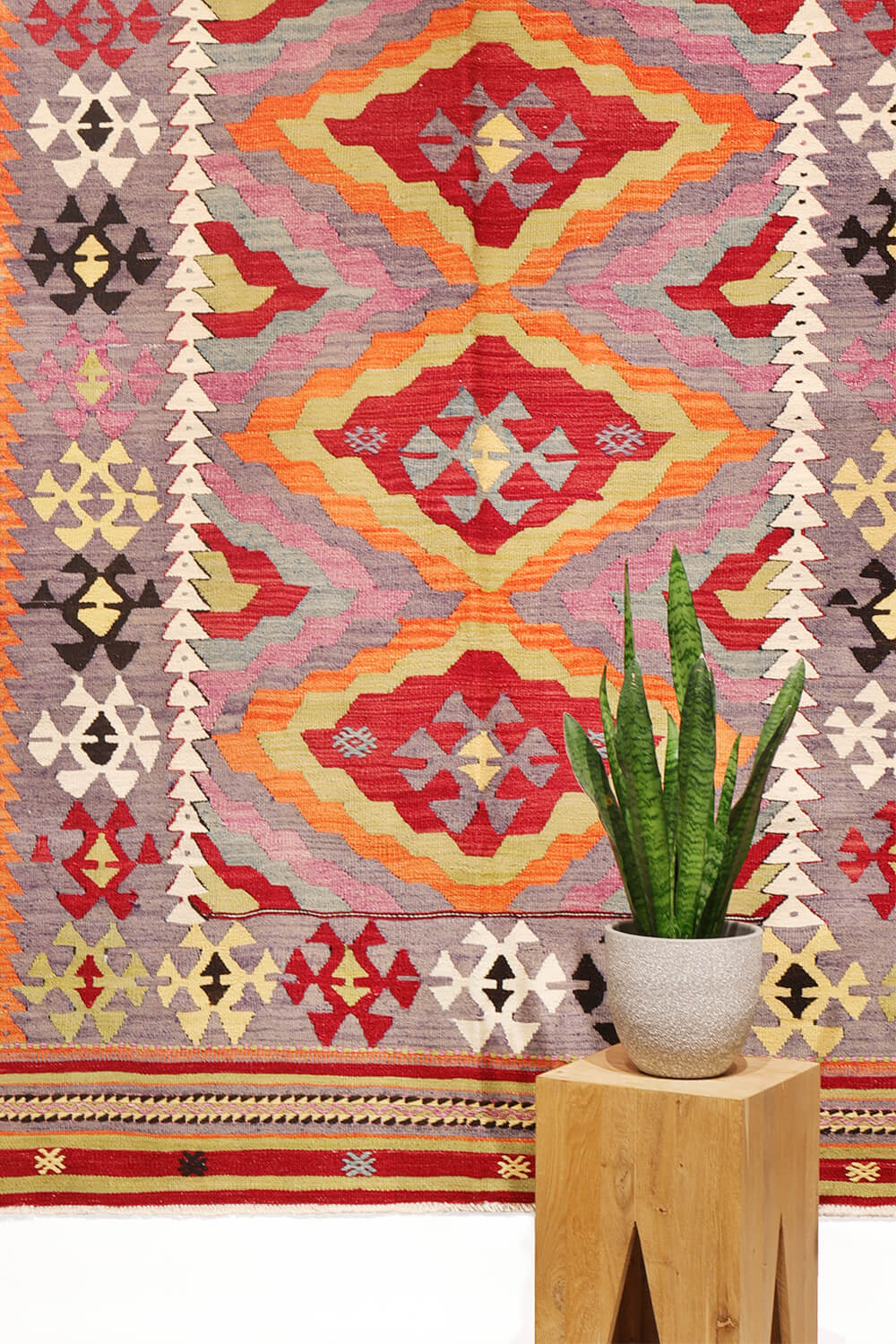
An unusual vintage Uşak kilim from Turkey, distinctive in both color and design. The palette is especially uncommon, combining shades of purple, pink, pistachio, and lemon yellow. The central field is dominated by three large medallions composed of wavy, sinuous lines, departing from the more traditional use of vertical, horizontal, and diagonal structures.
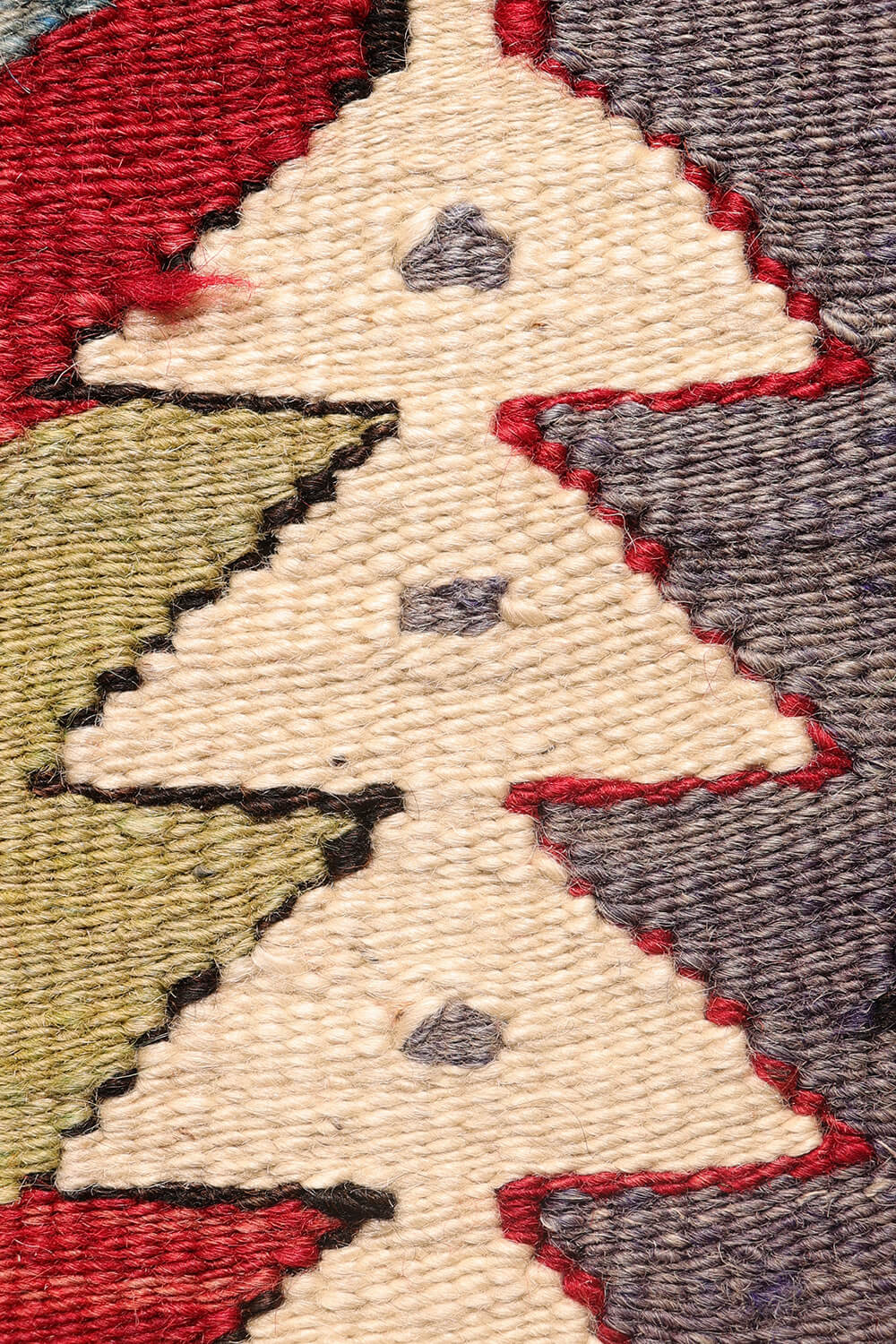
The oversized border, while sharing the same unconventional color range as the main field, adheres more closely to traditional border compositions.
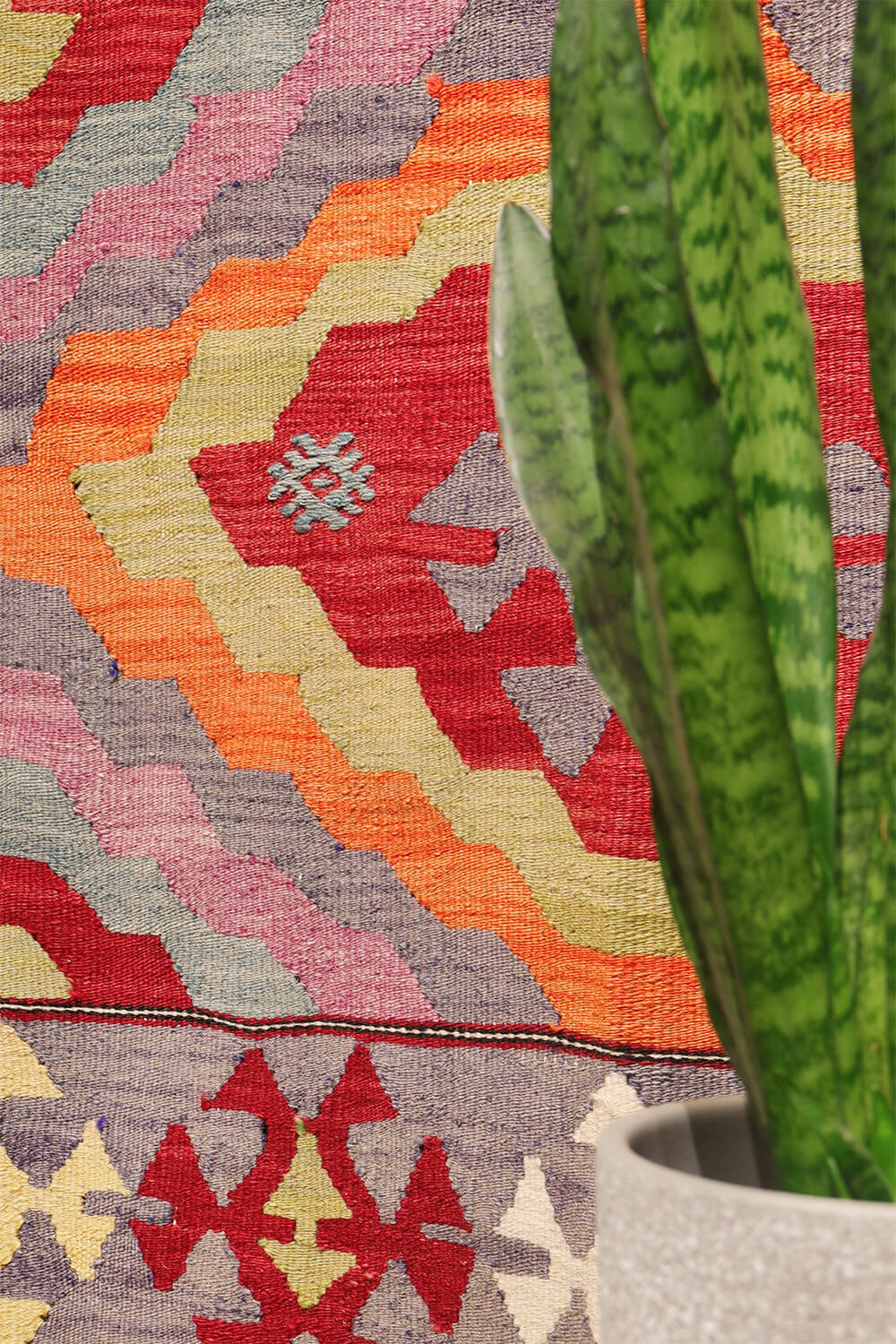
Additionally, four pıtrak motifs are woven using the cicim technique within the two lower medallions.
Material: 100% hand-spun sheep wool
Size: 215×158 cms
Origin: Uşak, Turkey
Date of weaving: 1980s
In Turkish, pıtrak is a motif whose origin is said to derive from an ideogram stylizing the sun, without which plants could not grow. However, this origin has been forgotten over the centuries, and the motif has been transmitted orally under a name inspired by an element familiar to pastoral peoples: the small thistle well known to weavers, who spend hours removing it from the wool before spinning it. Does this mean that pıtrak, which refers to a plant whose burrs cling to clothing and, above all, to animal hair—particularly sheep’s fleece—is not connected to an ancient myth or belief? In rural contexts, the Turkish expression “pıtrak gibi”, literally “like thistle,” implicitly meaning “abundant like thistle,” seems to support this idea: the thistle would be nothing more than the representation of the plant from which it takes its name, symbolizing fertility, like the ear of wheat or the pomegranate, solely because of its vegetal nature.
A solar and feminine representation
This other observation, which brings us back to the sun, suggests otherwise: very near Ankara, at the Hittite site of Alacahöyük, ritual bronze solar standards have been unearthed. Dating from the second half of the 3rd millennium BC, they display a “thistle” similar to that found on kilims. Now, as we have noted in relation to the diamond symbol, the Anatolians regarded the sun as a feminine celestial body. Pıtrak would therefore indeed be a solar representation: the lozenge-shaped center of the motif would express its feminine nature, while the lines radiating from it would depict its scintillation—an effect to which a woman’s radiance is often compared.
“Symbolique des kilims” by Ahmet Diler
1 in stock
Additional information
| Weight | 6.5 kg |
|---|