950.00 €
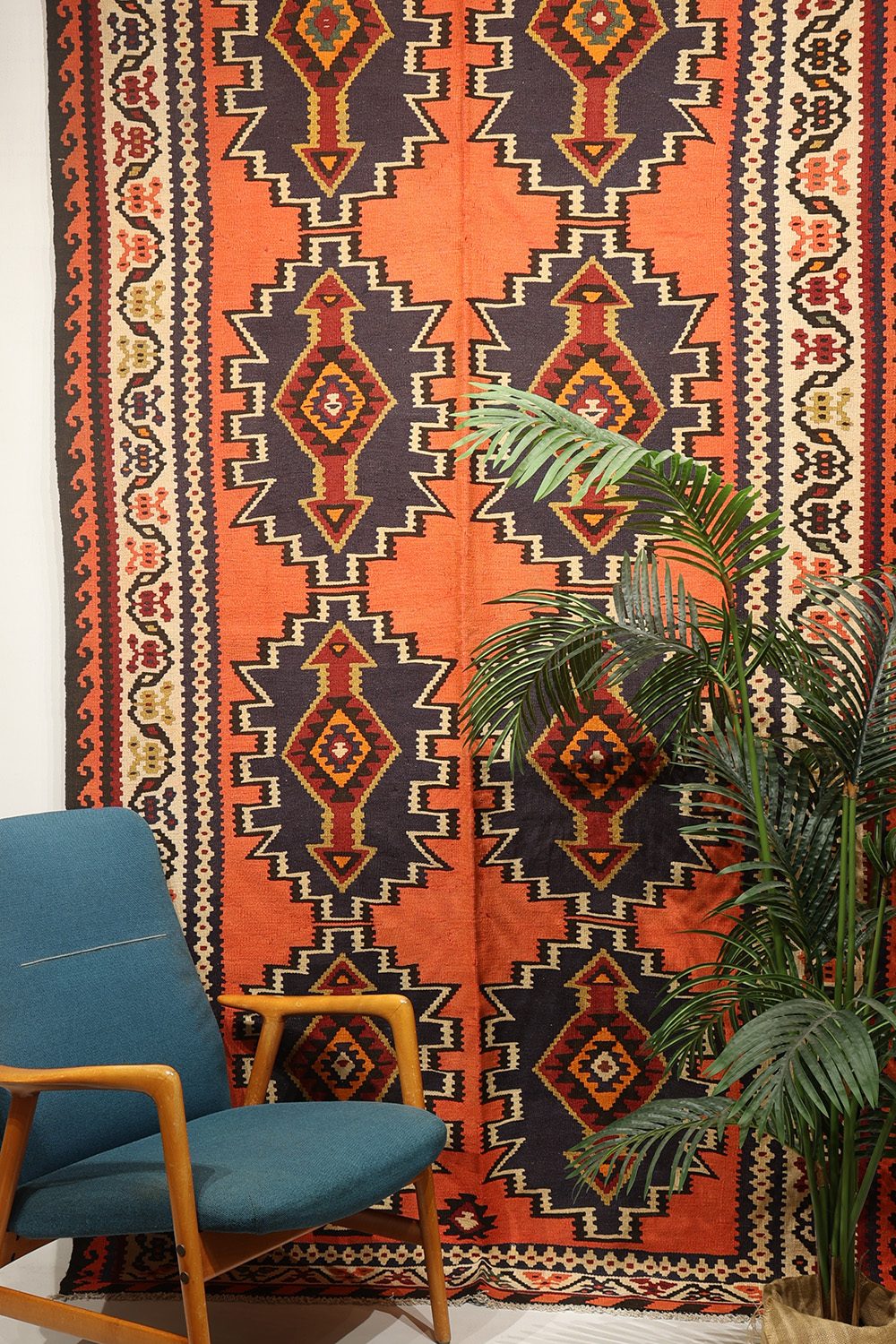
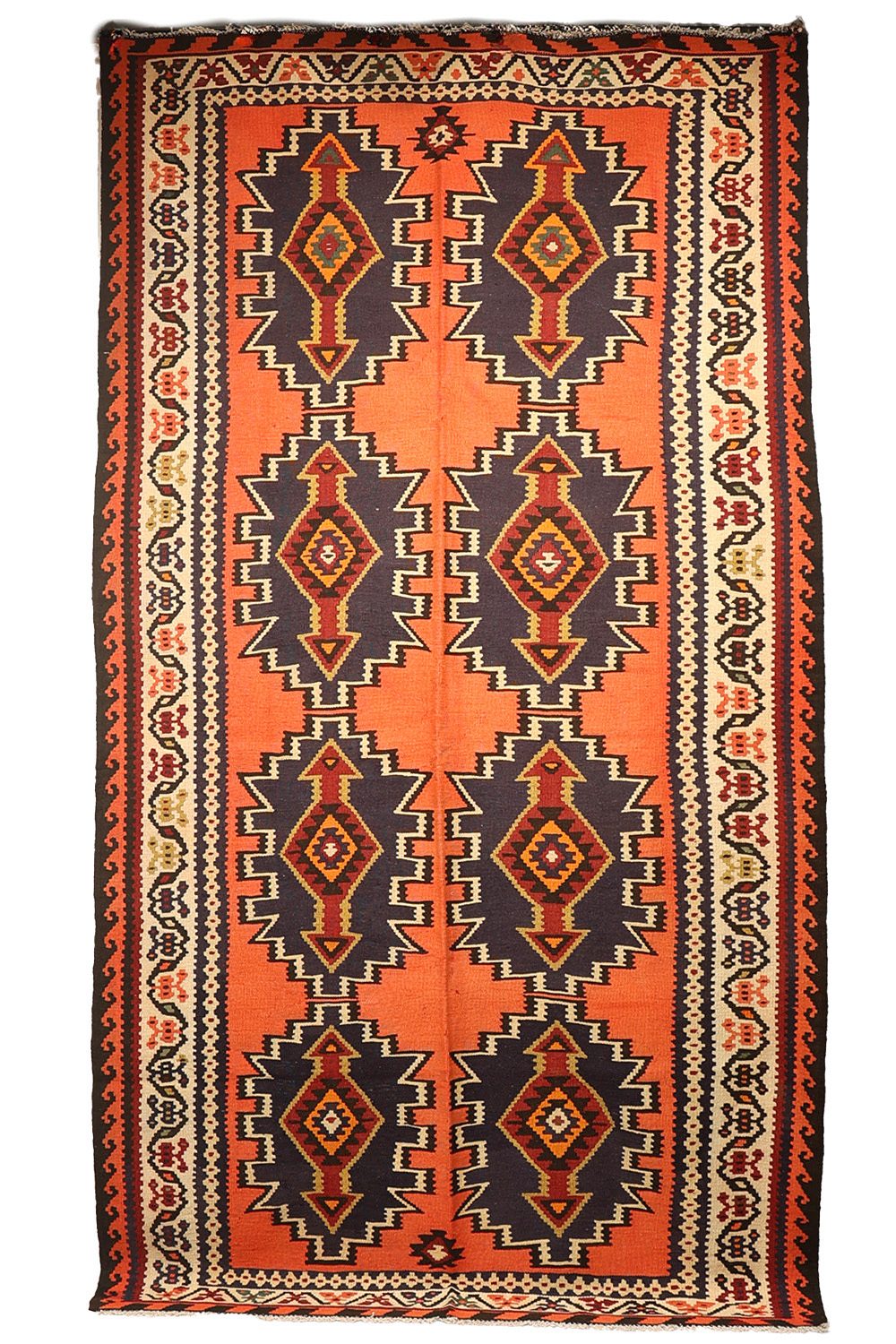
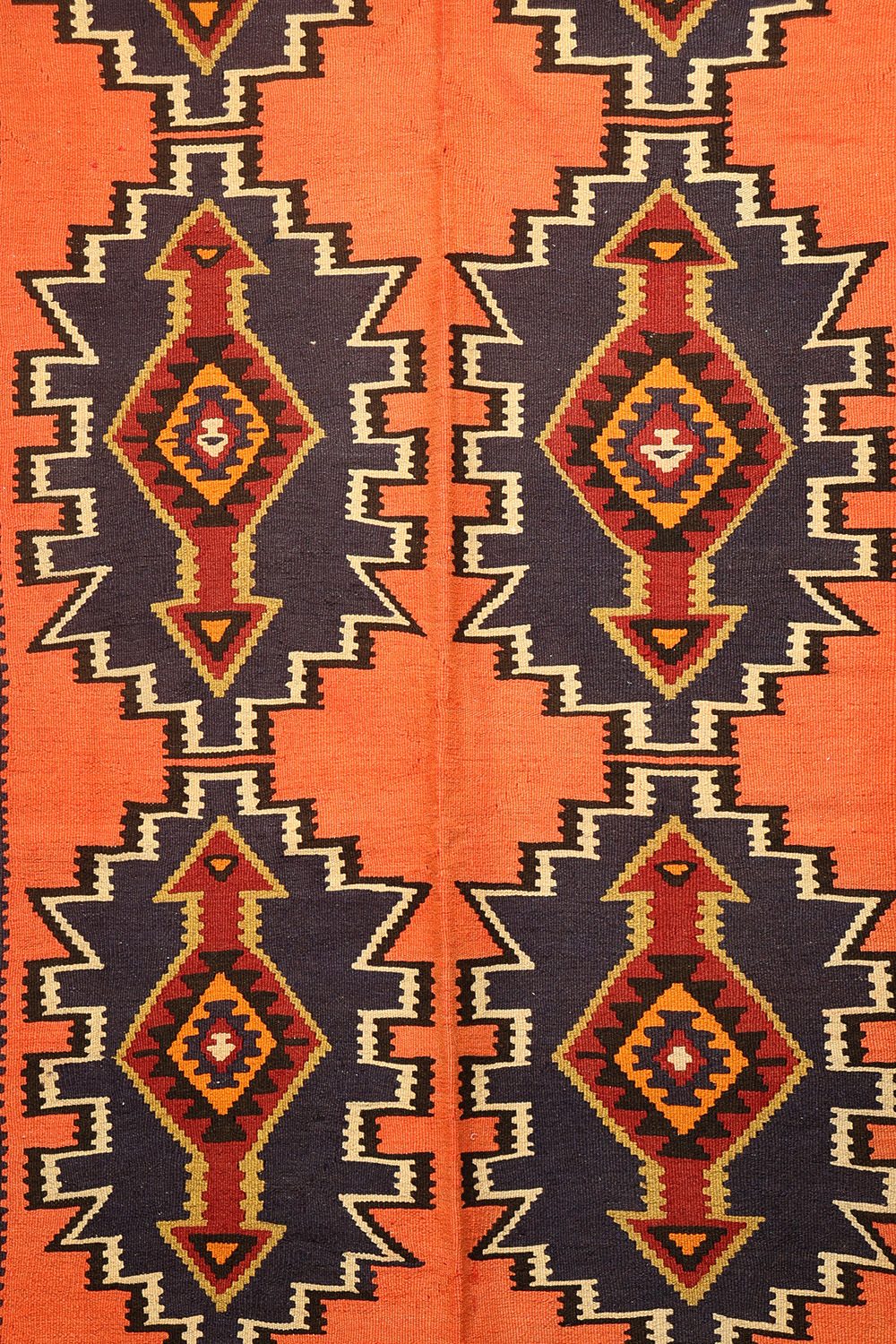
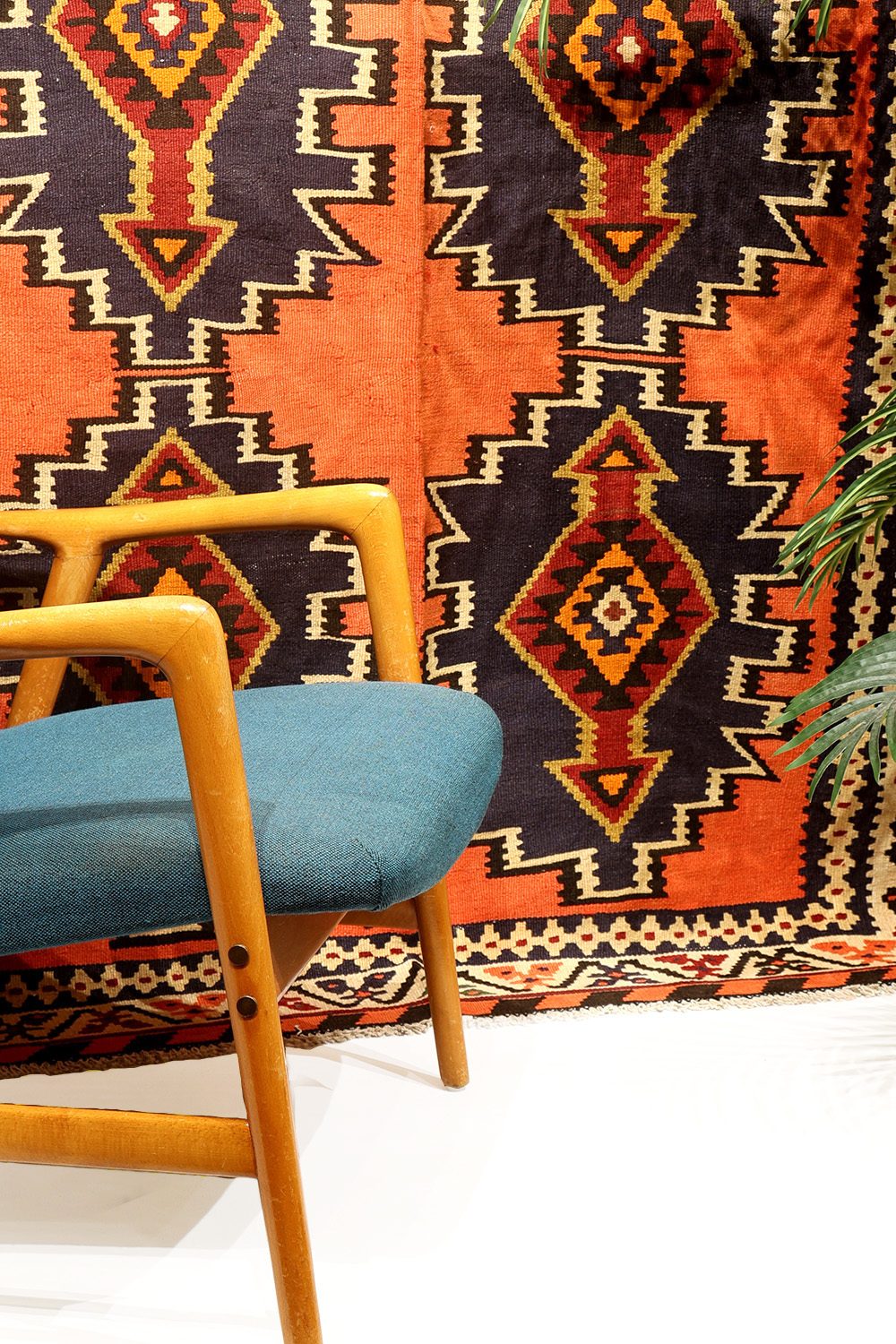
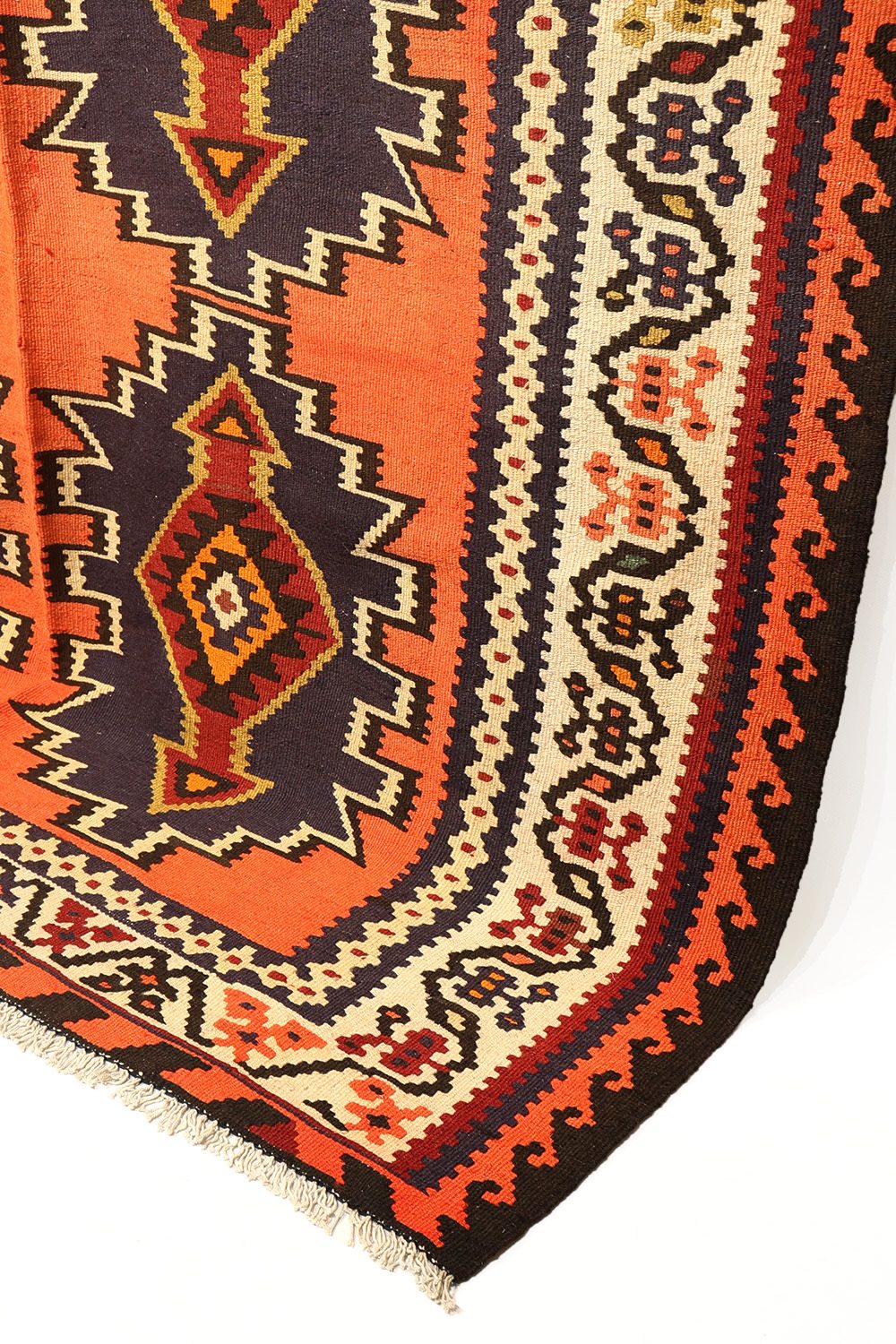
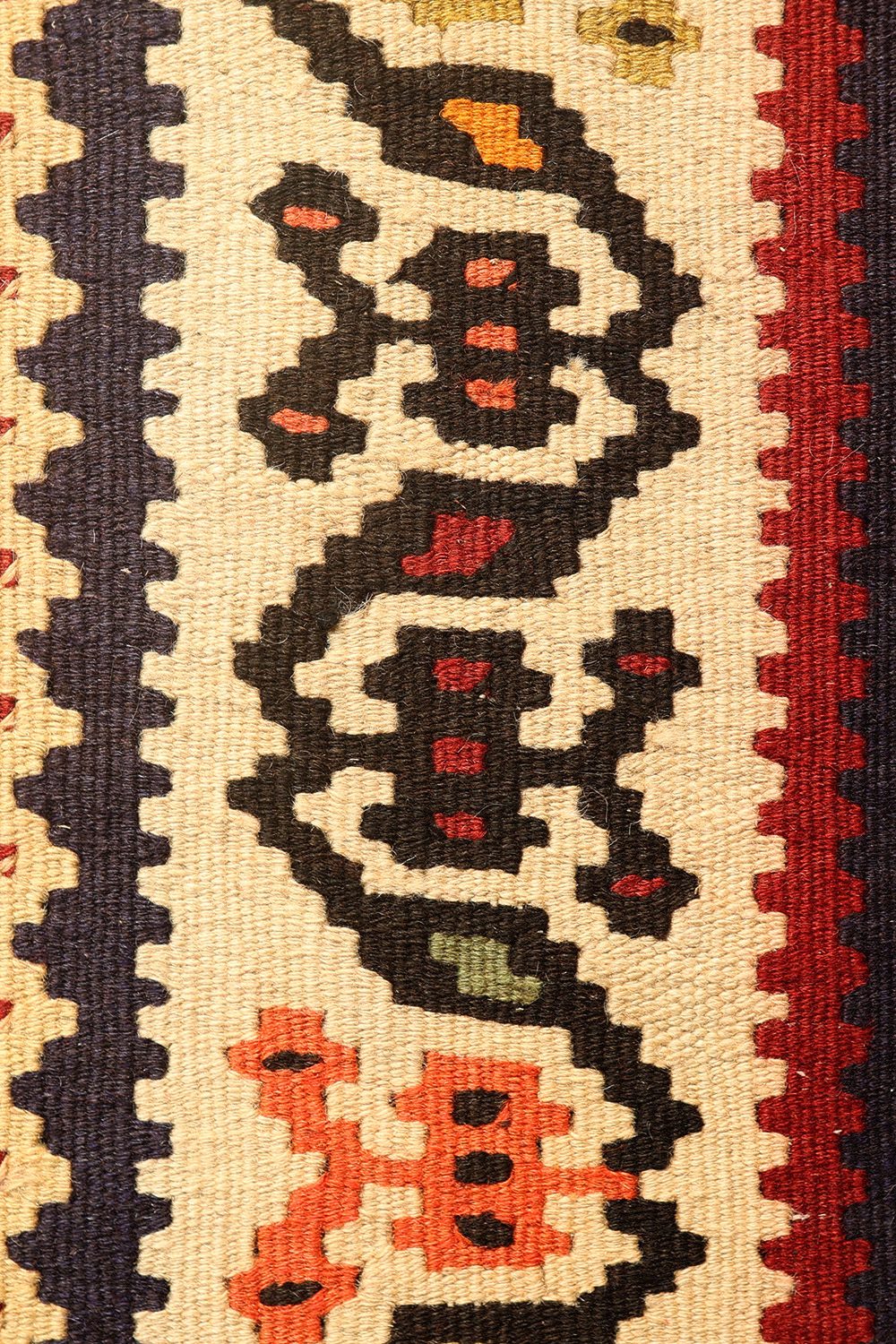
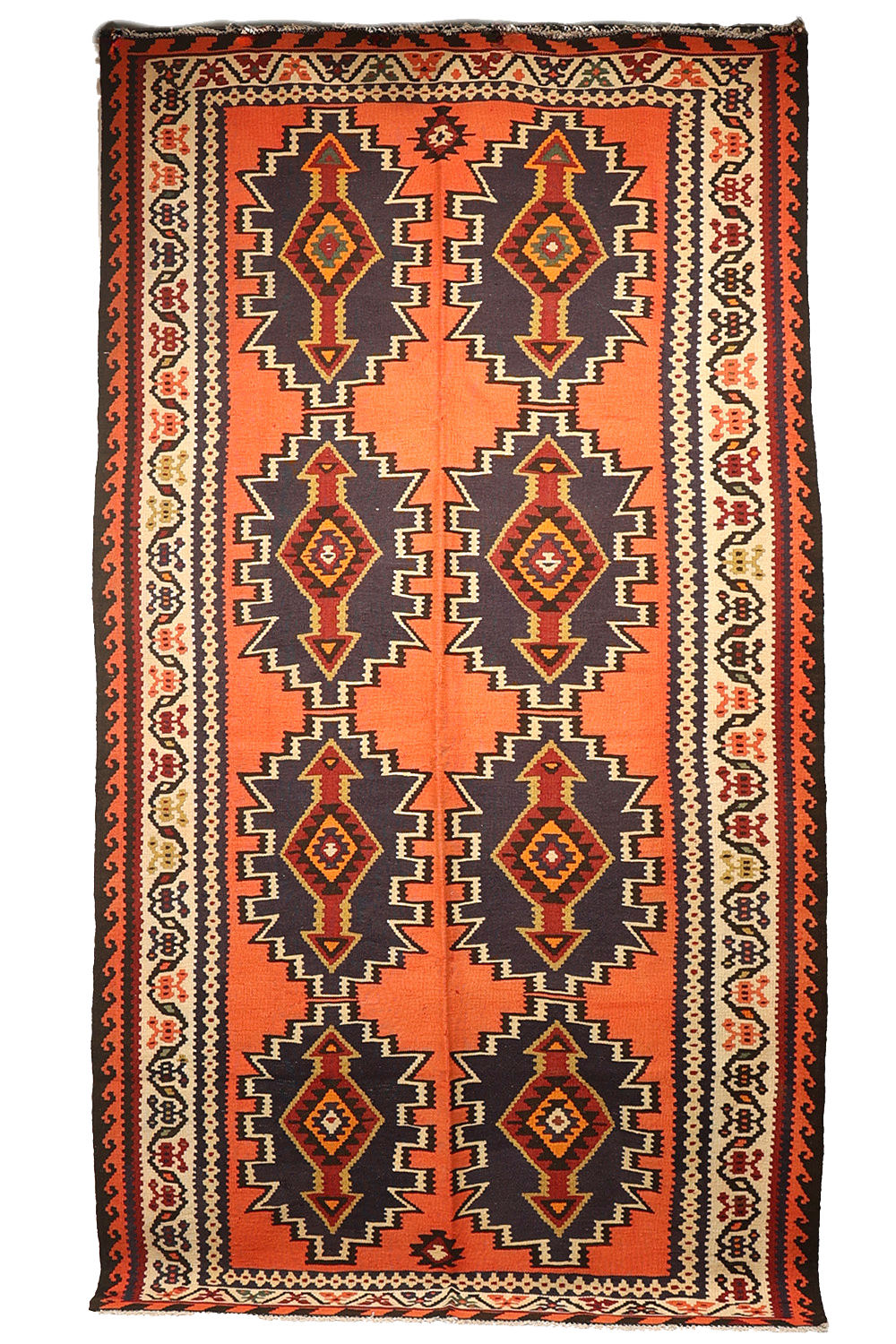
Semi-antique Shahsevan Kilim, woven in northwest Iran around the 1960s. The more rounded and sinuous motifs in the borders contrasts with the more geometric motifs of the central field. This kilim has an unusual background color and is woven with thick wool, so it will hold up well in high-traffic places.
Material: 100% hand-spun sheep wool
Size: 291×158 cms
Origin: Shahsavan, Iran
Date of weaving: 1960s
The most famous confederation of north-west Iran are the Shahsavan, of whom the majority are a Turkic tribe. The remainder are of Kurdish, Tadjic and Georgian origin. ‘Shahsavan’ means ‘those who are loyal to the shah’ and the group was created by Shah Abbas to counter the powers of the Shi’a armies, the Kyzylbash.
Shah Abbas created a new volunteer army, loyal to himself, who, roused by the Shahsavani rallying call, successfully disbanded the Kyzylbash chiefs.
Many tribes from north-west Persia joined the Shahsavan, and non-Muslims such as Georgians, Circassians and Armenians were also employed; there was no cultural or tribal link at first, other than a common Turkic language. Shahsavan group. Subsequently some migrated to Khorassan.
The Shahsavan’s power declined with that of the Safavids, and its members soon reverted to tribal and nomadic conformations.
The Shahsavan, depleted in numbers, became outlaws. Angered at the loss of two thirds of their territory, they attempted repeatedly to migrate back to the Mogan pastures. On one disastrous occasion the Russians ambushed the caravan, stripped all the nomads of their possessions and livestock and distributed them amongst local Persian government officials. This event is sacred in the history of the Shahsavan people, and all tribal events are placed historically before or after ‘the distribution’.
The various clans of the Shahsavan are now spread across north-west Iran.
Some have settled amongst the Bakhtiari tribes, some in the Khamseh region of Fars, and others, who have totally integrated with the people of Khorassan, have been absorbed into groups as far east as Kashmir. The Shahsavan produce a large quantity of kilims, as these are their most common floor coverings. They are very traditional people, so their kilims are relatively limited in design and composition.
Similar designs and compositions are used by all the Shahsavan groups, and yet there are subtle differences to be found mainly in the coloration, the weave and the finishing that distinguish the work of each sub-tribe.
The compositions are commonly of large and striking motifs, running across the kilim in rows separated by narrow bands of finer patterning and more complicated weft-patterned weaving. The large motifs, up to four in each band, usually feature a star design. The star ranges from a simple symbol made up of eight pointed triangular shapes, dictated by the structure of the weave, to a more complex, but most characteristic crab shape of hooked lozenges, which is found in many Turkic weavings from Central Asia to Anatolia. This star can also be built up out of small triangles of different colours to make a diamond shape and sunburst, or the weave and colours crenellated to form a comb pattern. Between the bands of large motifs are contrasting rows of weft twining and narrow stripes of smaller star motifs, often simplified, or bands of motifs derived from the ‘S’ form. This ‘S’ form is either simplified from, or developed into, a much more complex dragon motif found on bags and maffrash in weft-wrapping technique.
“Kilim: the complete guide” by Alastair Hull
1 in stock
Additional information
| Weight | 9 kg |
|---|