875.00 €
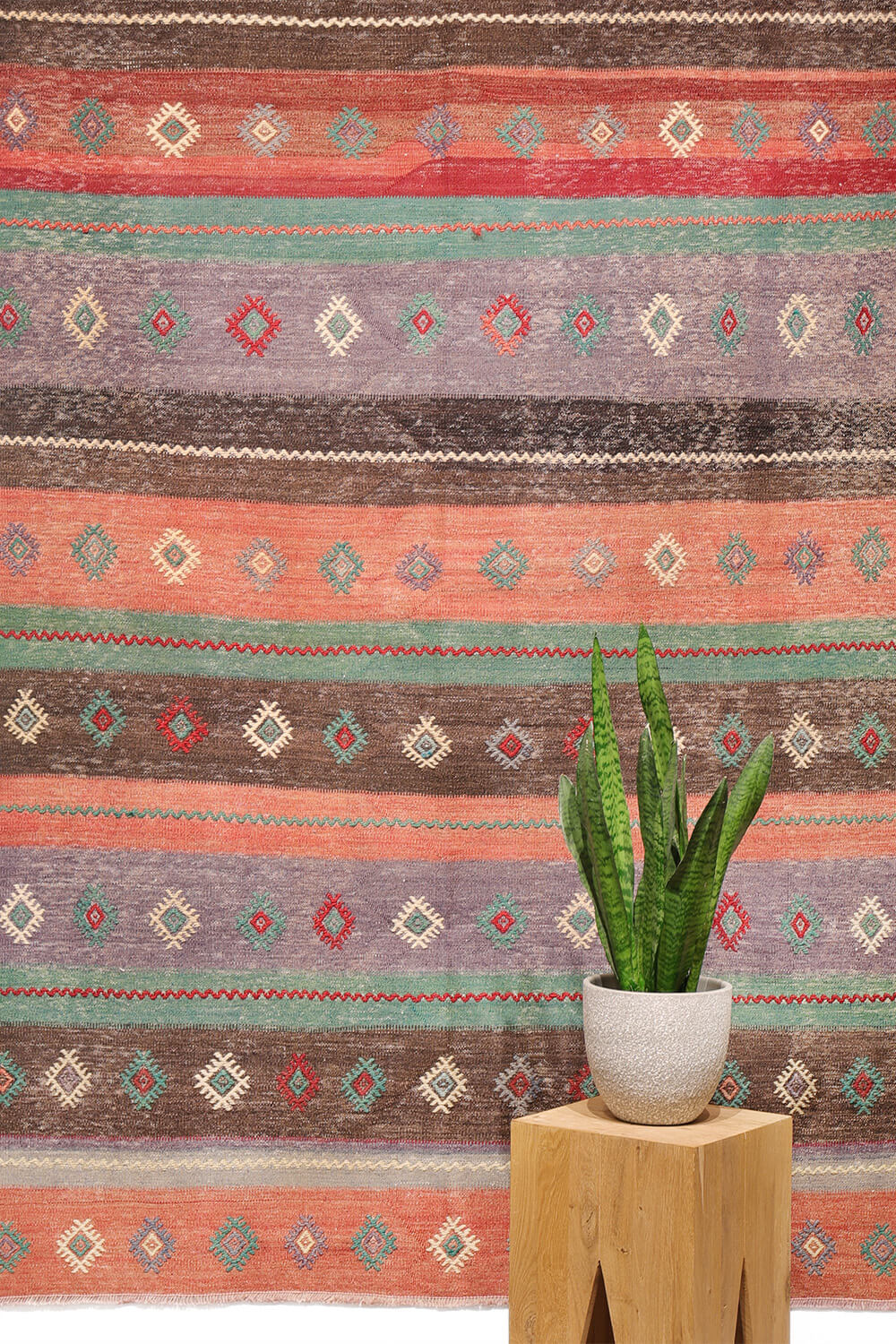
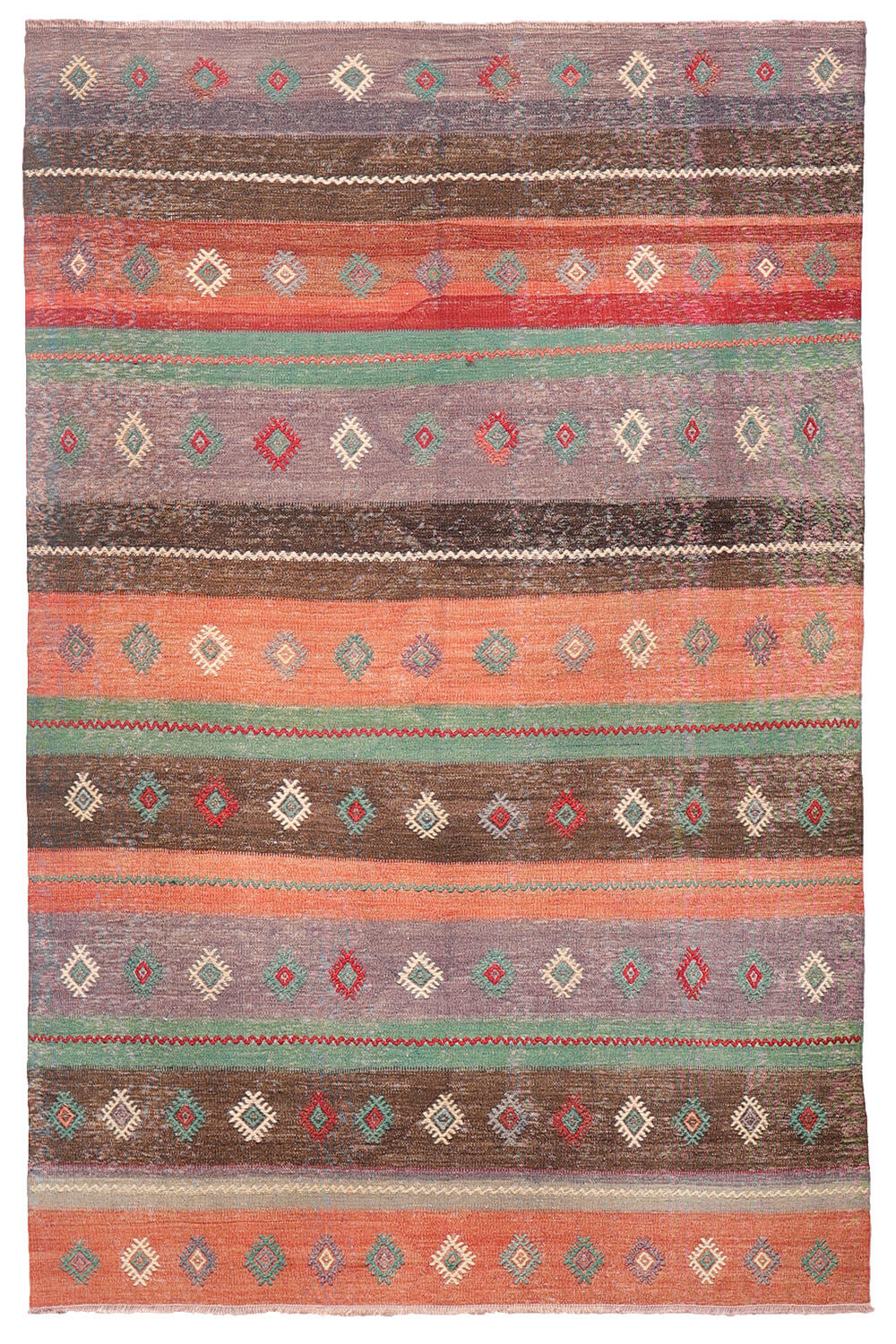
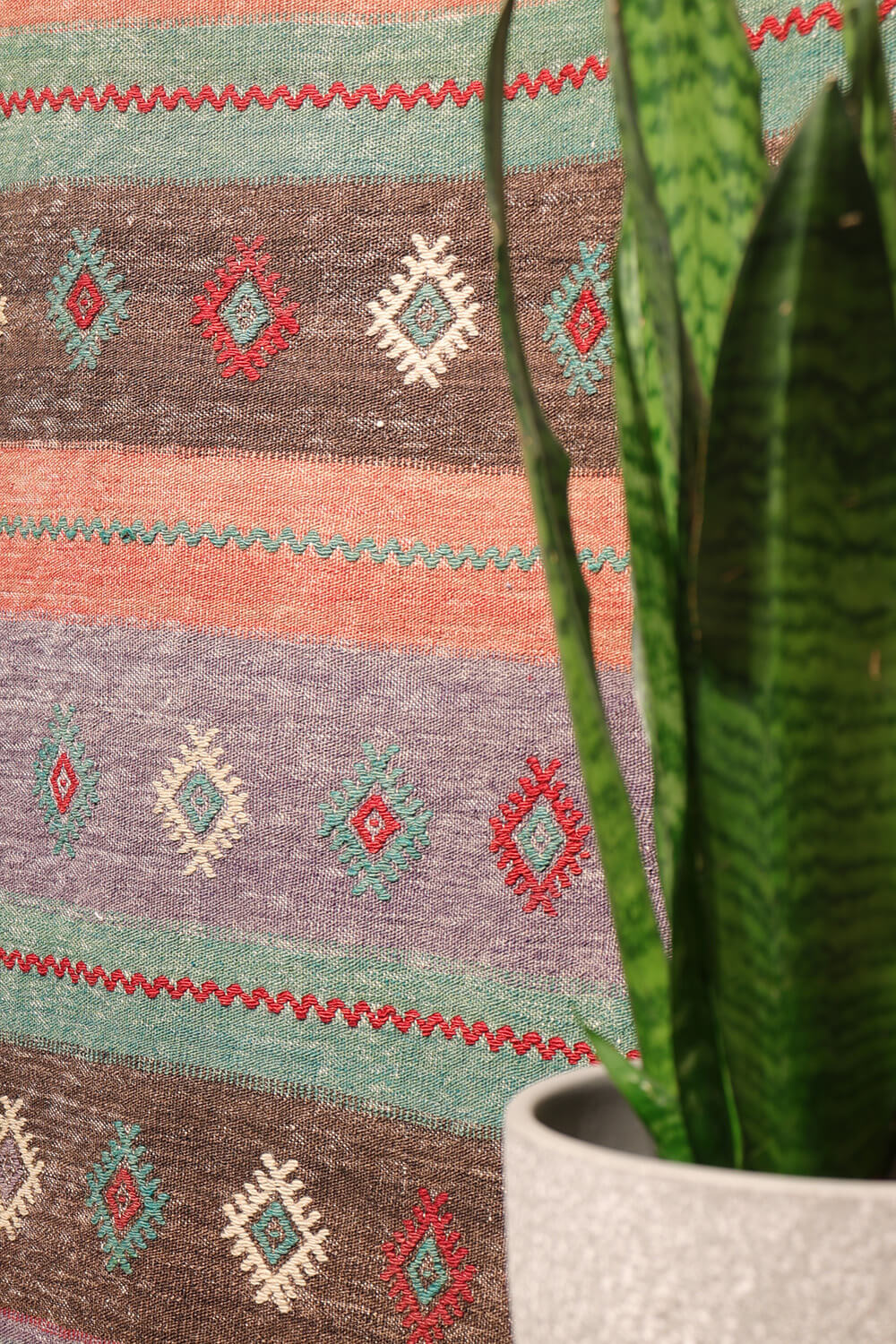
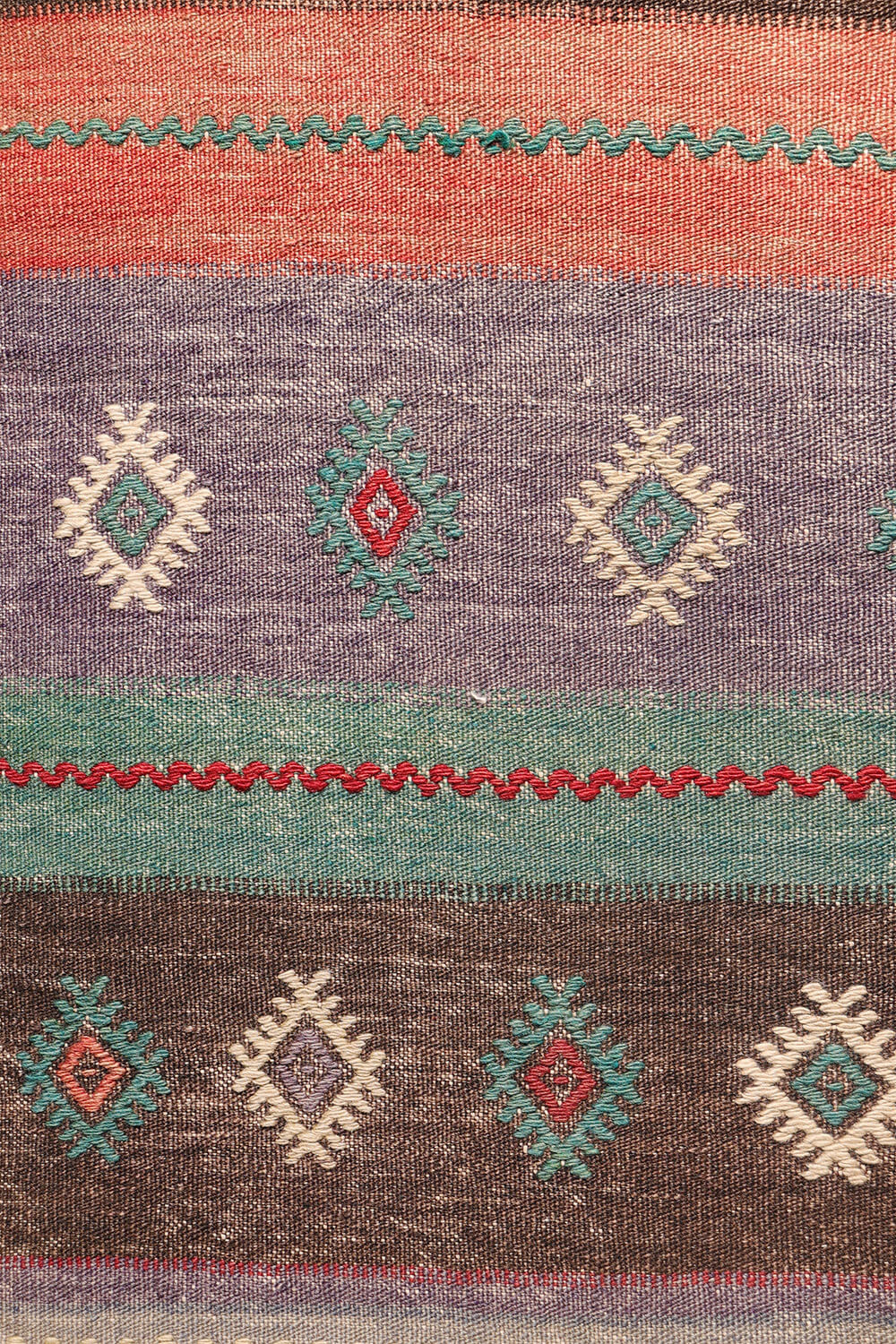
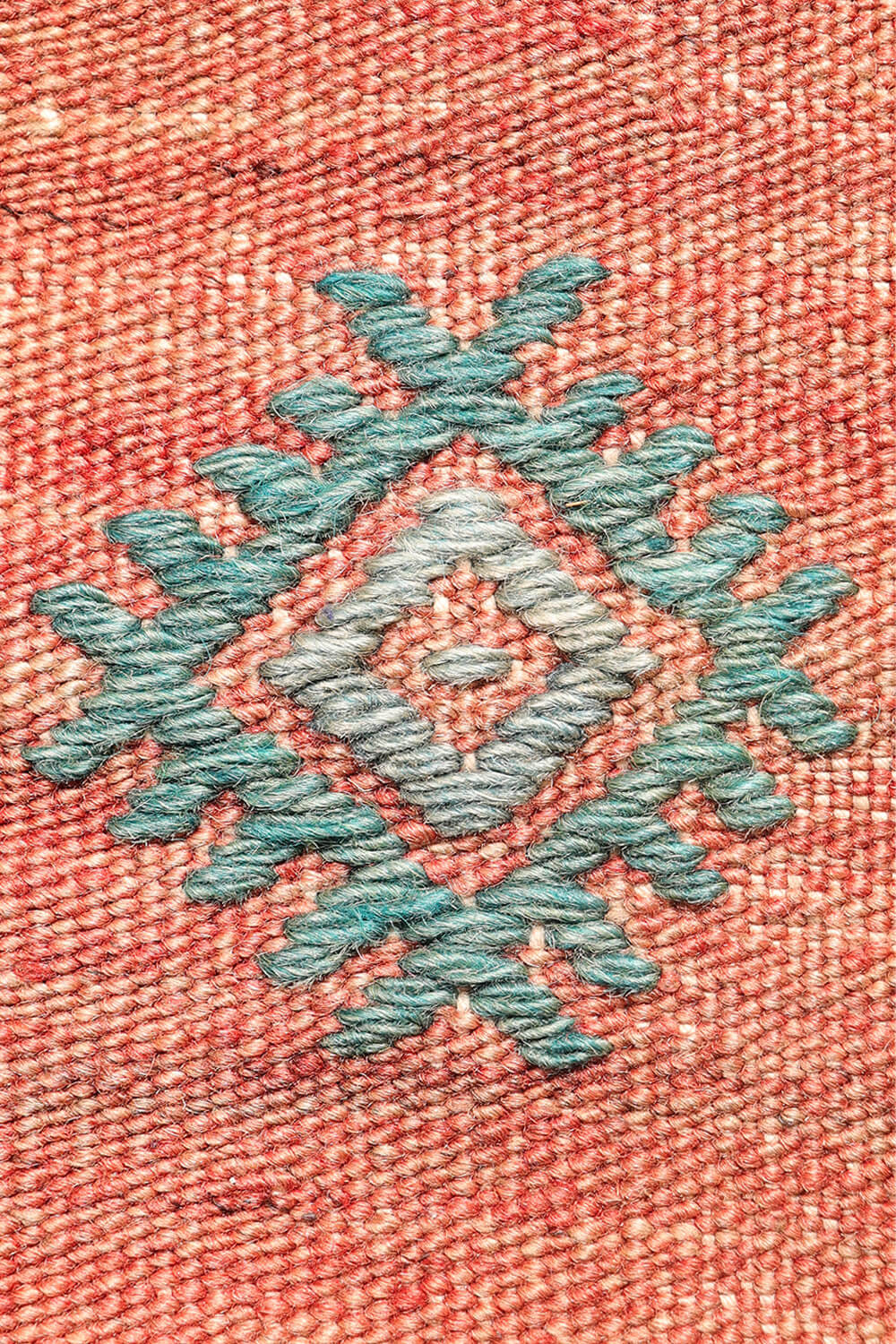
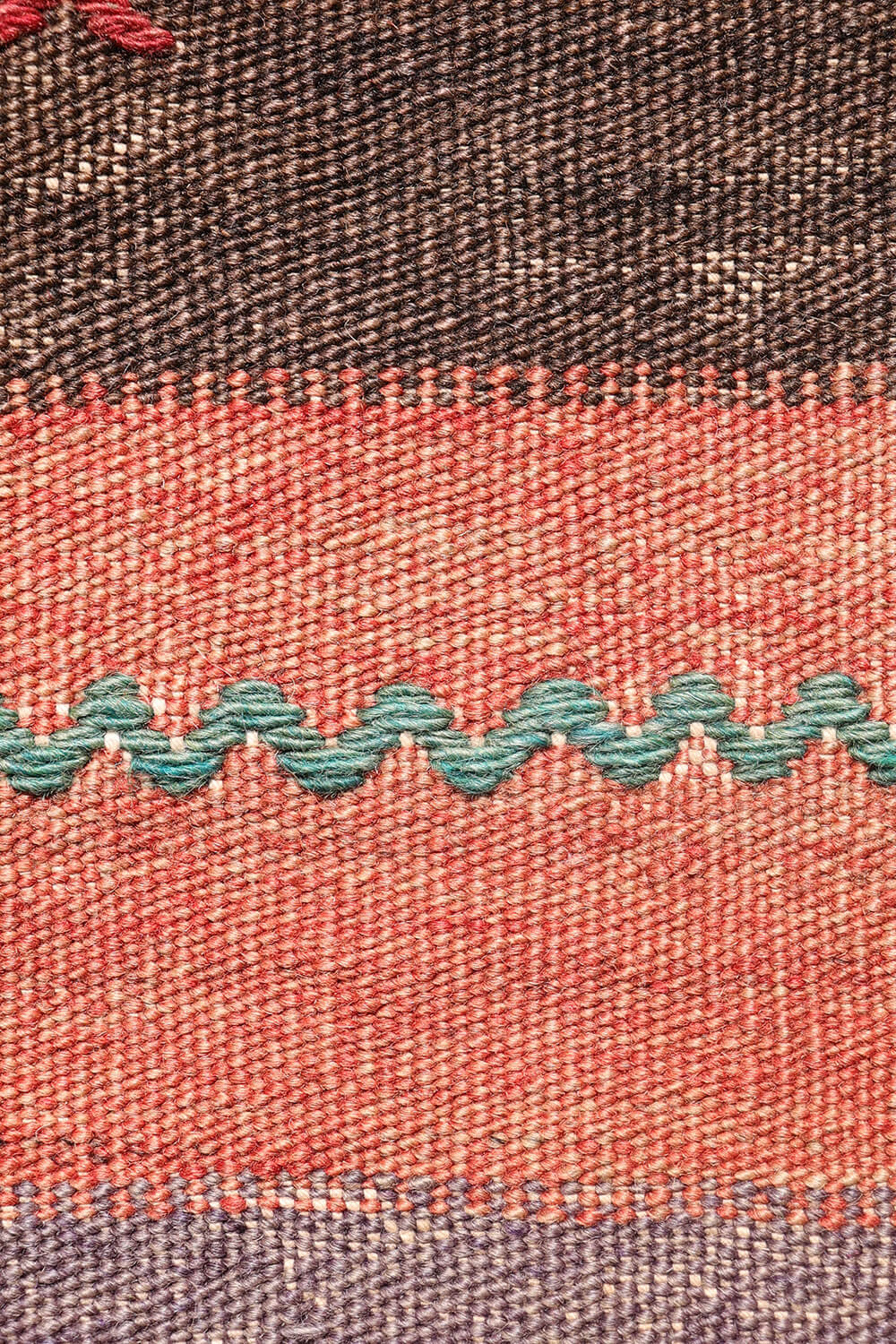
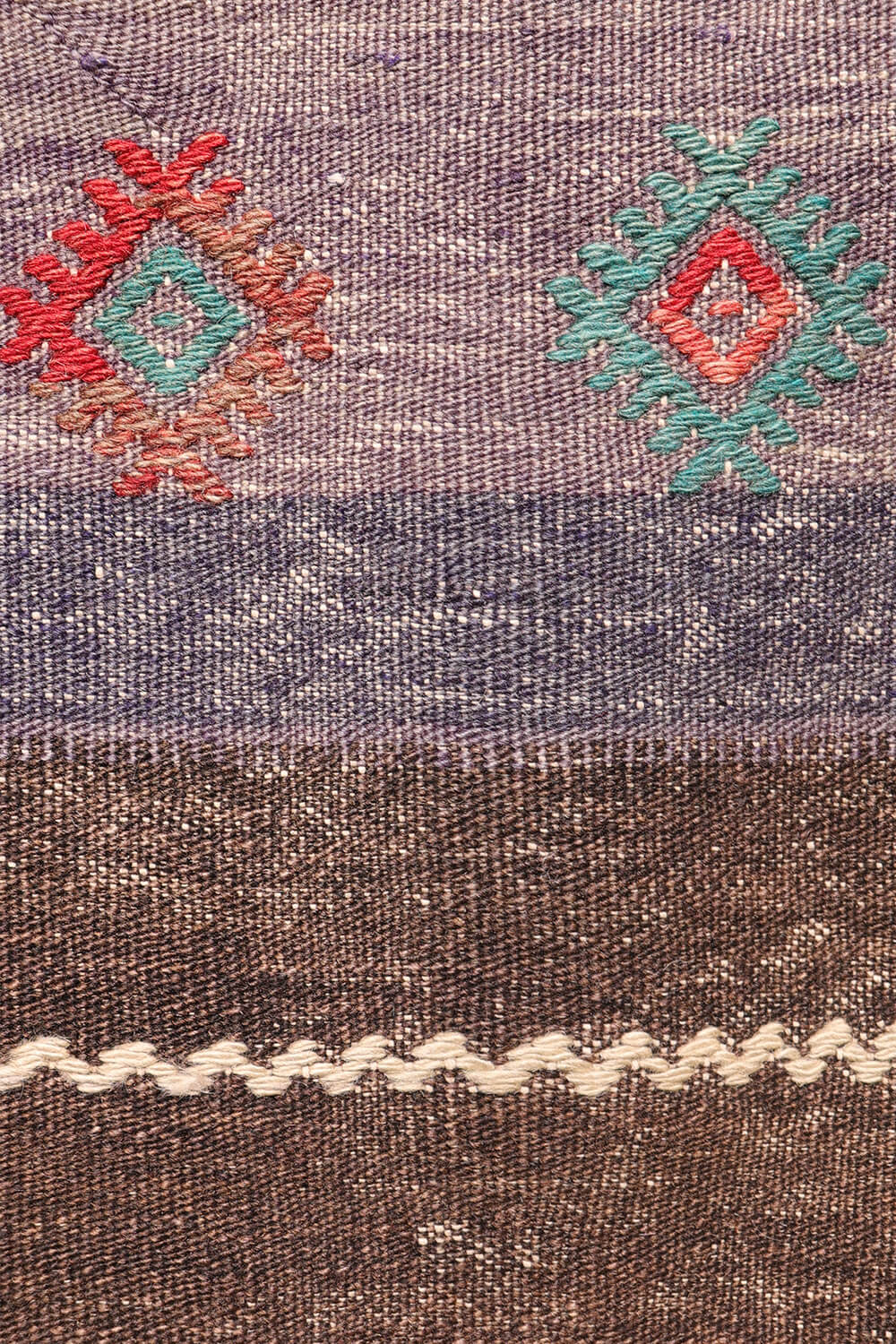
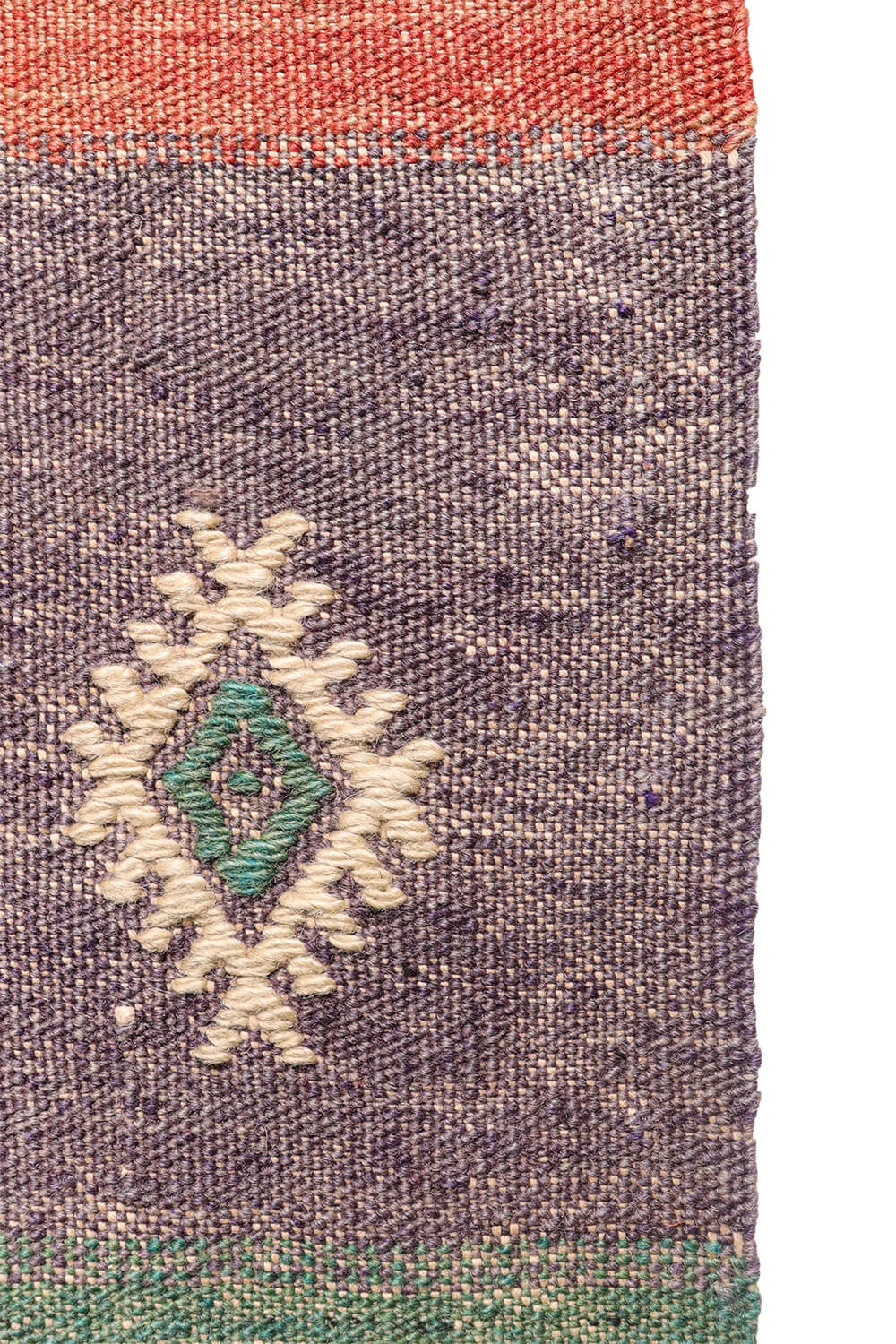
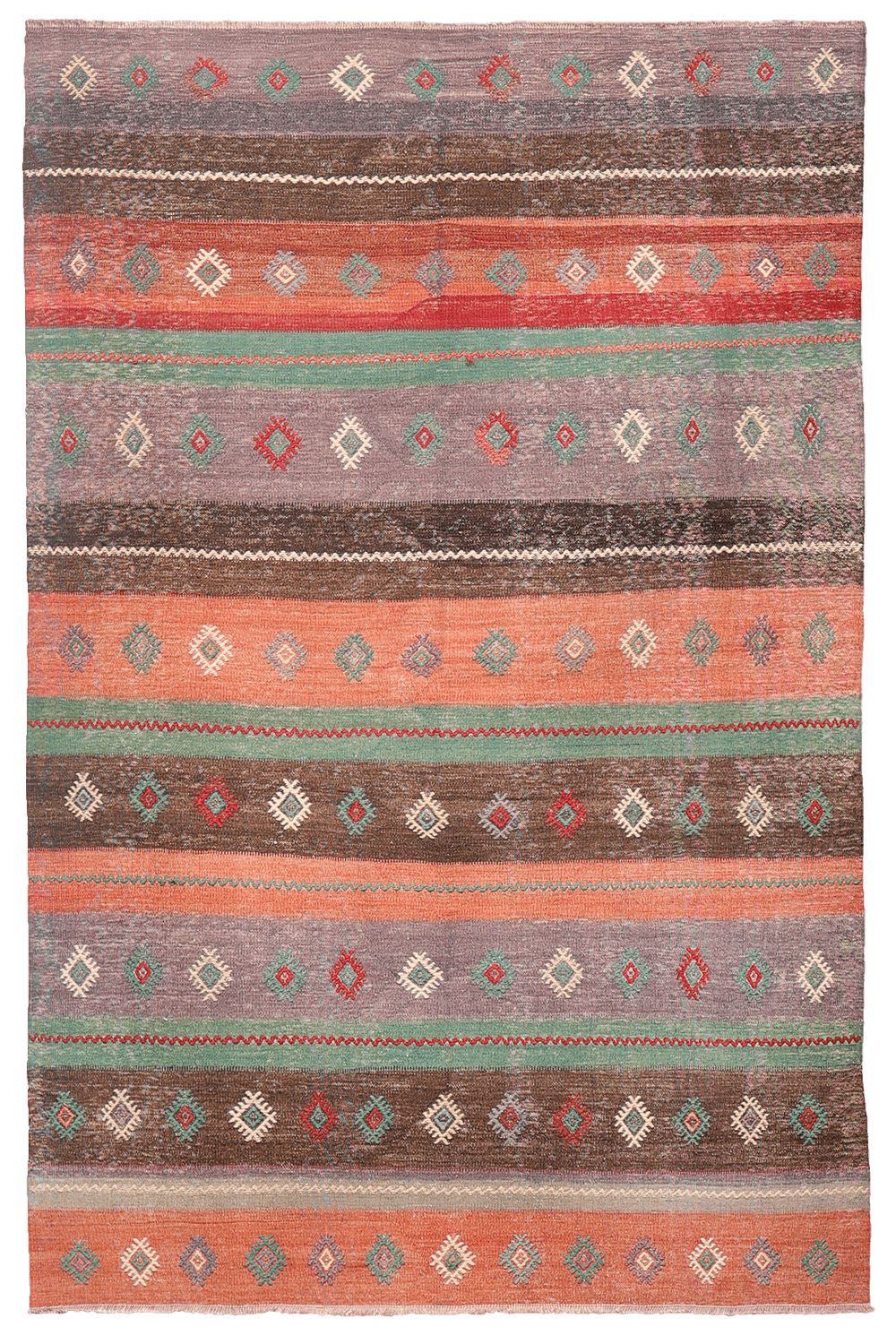
An unusually coloured semi-antique Selendi kilim, distinguished by its bold yet balanced composition. The design is arranged in broad horizontal bands that alternate the Su yolu (watercourse) motif with bands featuring the pıtrak (thistle) motif. Both symbols are traditionally associated with fertility and are executed using the intricate cicim technique, which adds texture and subtle relief to the surface.
Notably, this kilim has no enclosing borders, allowing the motifs to extend visually beyond the edges and creating a more open, expansive effect.
The softly mottled appearance — where small white specks can be seen — results from the warps showing through between the wefts.
With its cool colour palette, understated design, and practical size, this kilim integrates effortlessly into contemporary interiors.
Material: 100% hand-spun sheep wool
Size: 210×143 cms
Origin: Selendi, Turkey
Date of weaving: 1960s
Su yolu
Su yolu, in Turkish, or water course. Like the sun and the earth, water is indispensable to life.
Its representation is therefore among the symbols associated with fertility. The first sedentary communities settled near rivers in order to overcome periods of drought through crop irrigation. However, proximity to these waterways could sometimes prove dangerous.
Floods trigger inundations that devastate harvests, destroy homes, and cause the death of those living along the riverbanks.
We are thus in the presence of a protective motif with an exorcistic function.
pıtrak (thistle)
In Turkish, pıtrak is a motif believed to originate from an ideogram stylizing the sun, without which plants could not grow. However, this origin was forgotten over the centuries, and the motif was transmitted orally under a name inspired by something familiar to pastoral peoples: the small burdock thistle, well known to weavers who spend hours removing it from wool before spinning.
Does this mean that pıtrak — which refers to a plant whose burrs cling to clothing and, above all, to animal hair, especially sheep’s fleece — is not connected to an ancient myth or belief? In rural settings, the Turkish expression “pıtrak gibi,” literally “like thistle,” meaning “as abundant as thistle,” seems to support this idea: the thistle would be nothing more than the representation of the plant from which it takes its name, symbolizing fertility — like the ear of wheat or the pomegranate — simply because of its vegetal nature.
A Solar and Feminine Representation
However, another observation — which brings us back to the sun — suggests otherwise: near Ankara, at the Hittite archaeological site of Alacahöyük, ritual bronze solar standards dating from the second half of the 3rd millennium BC were unearthed, bearing a “thistle” similar to the one depicted on kilims.
As mentioned previously in relation to the lozenge symbol, the Anatolians regarded the sun as a feminine celestial body. Pıtrak would therefore indeed be a solar representation: the diamond-shaped center of the motif would express its feminine nature, while the radiating lines would symbolize its shimmering light — often compared to the radiance of a woman.
“From the Symbolique of kilims” by Ahmet Diller
1 in stock
Additional information
| Weight | 4.6 kg |
|---|