950.00 €
A Rare Dated Obruk Prayer Kilim (Turkey)
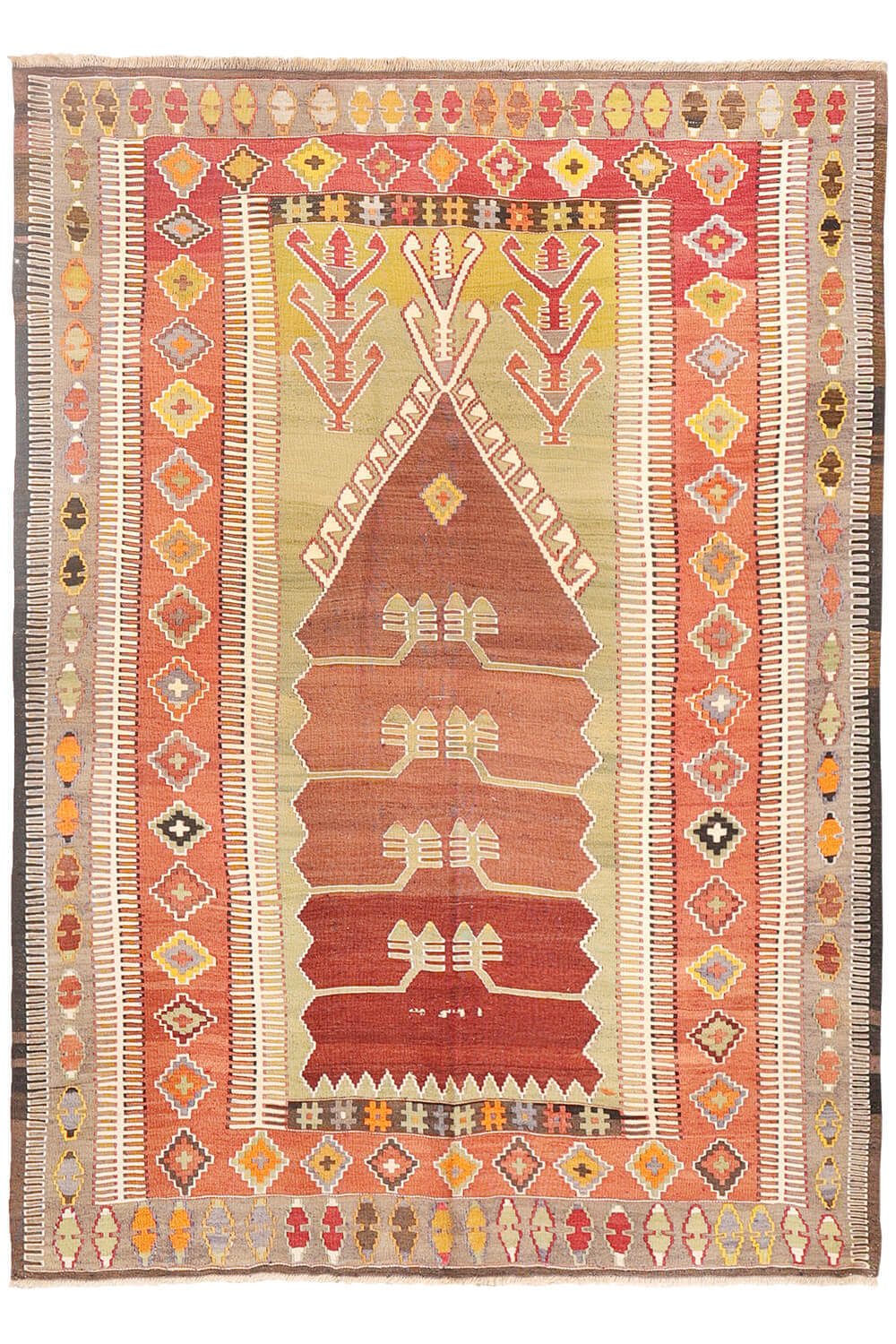
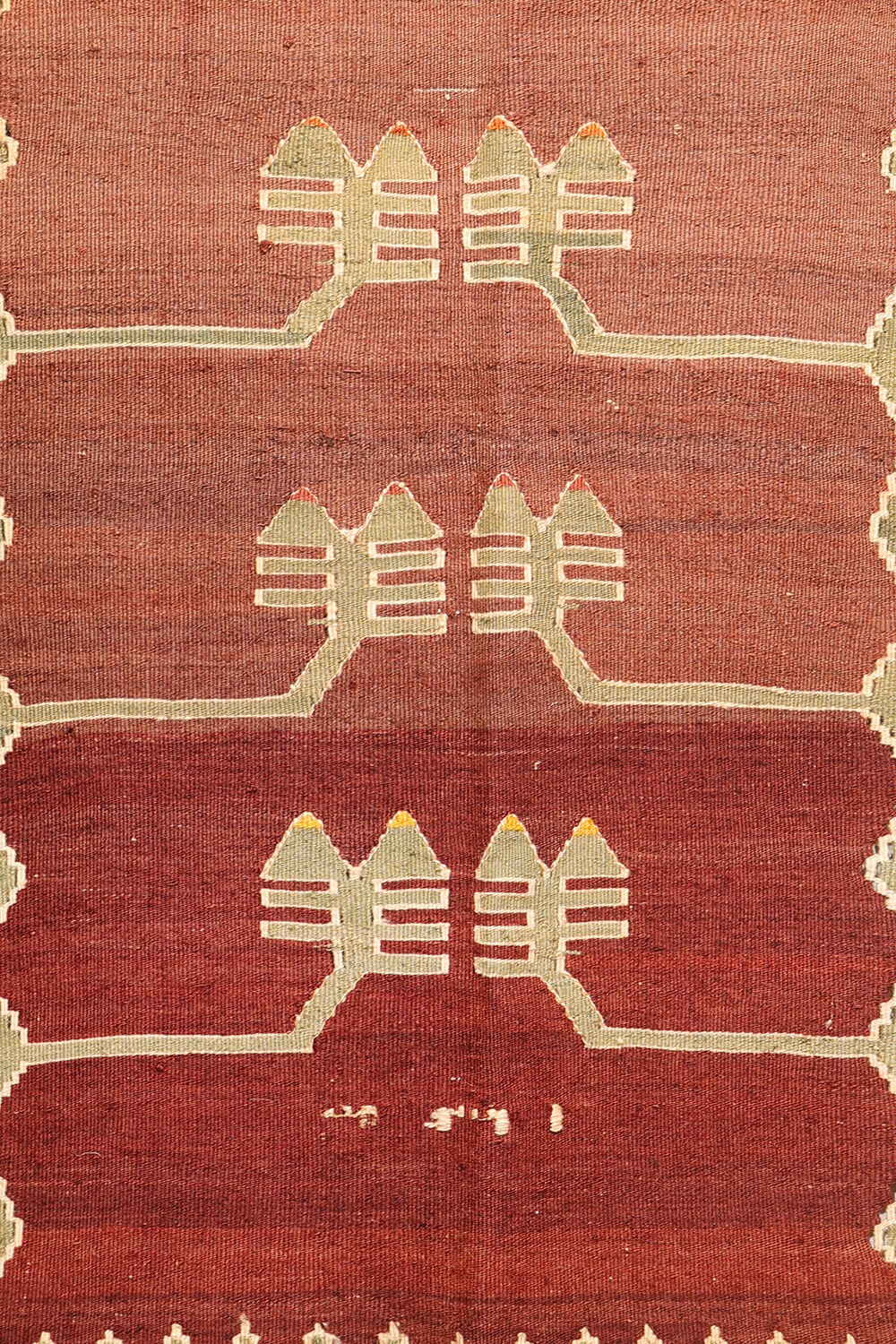
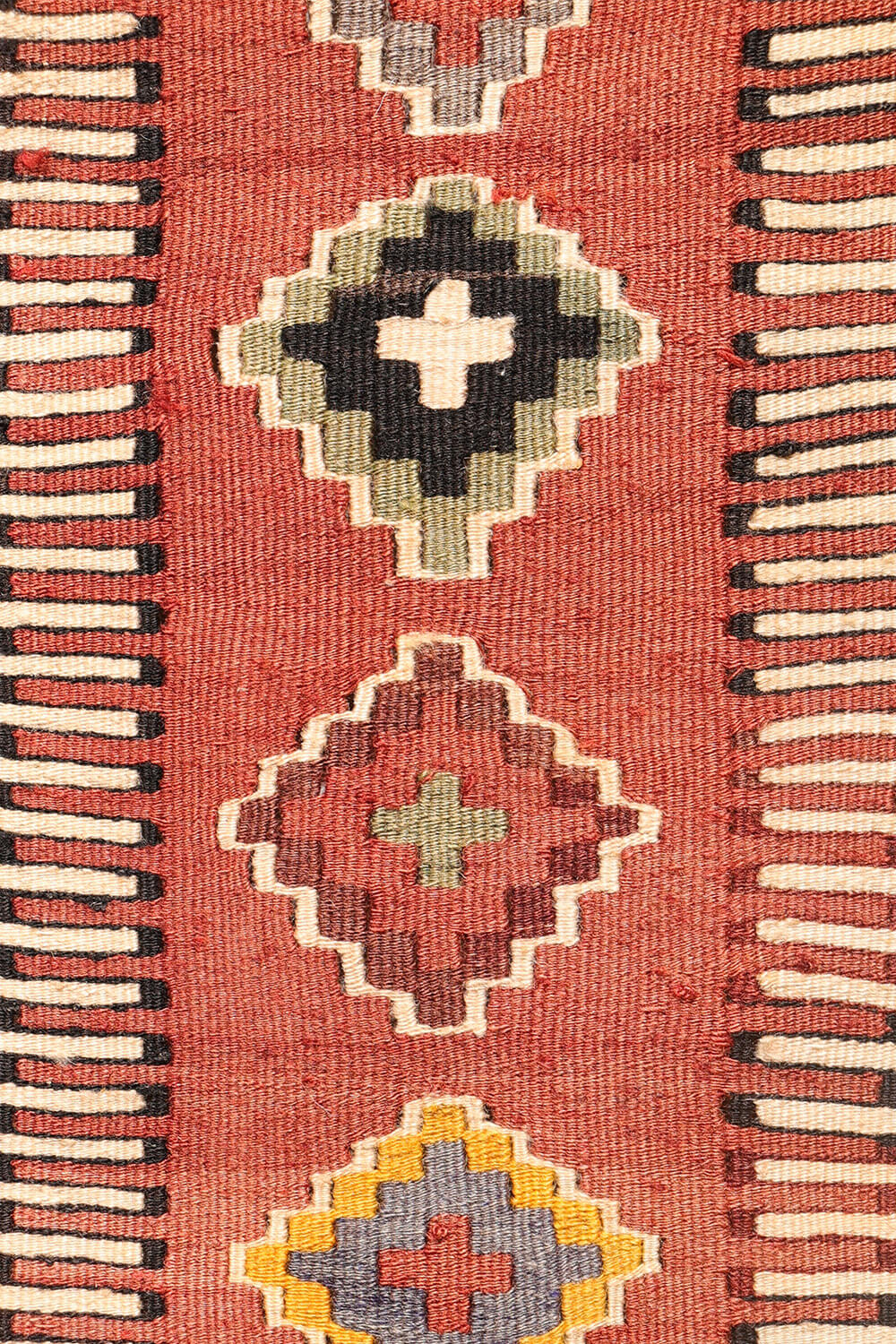
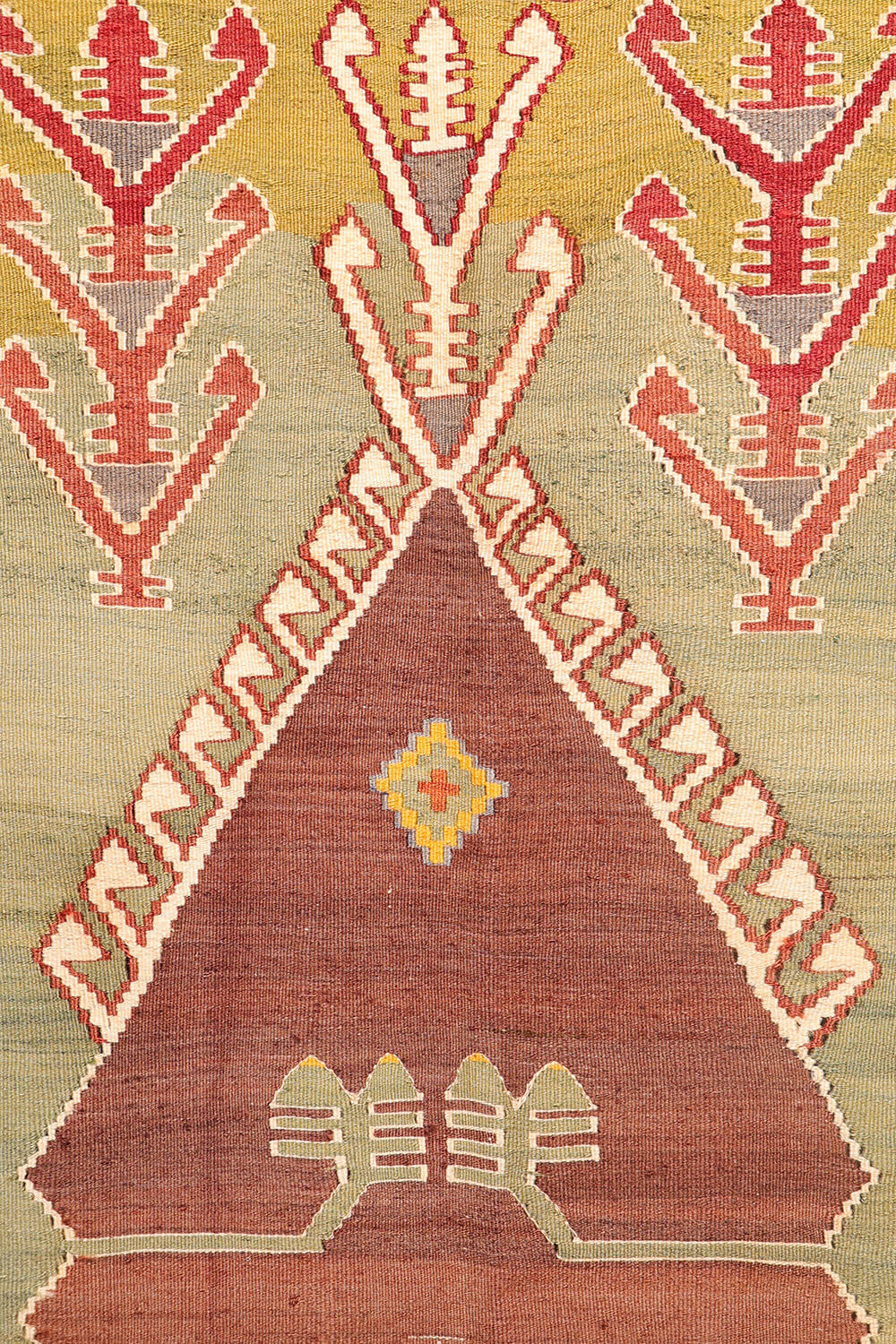
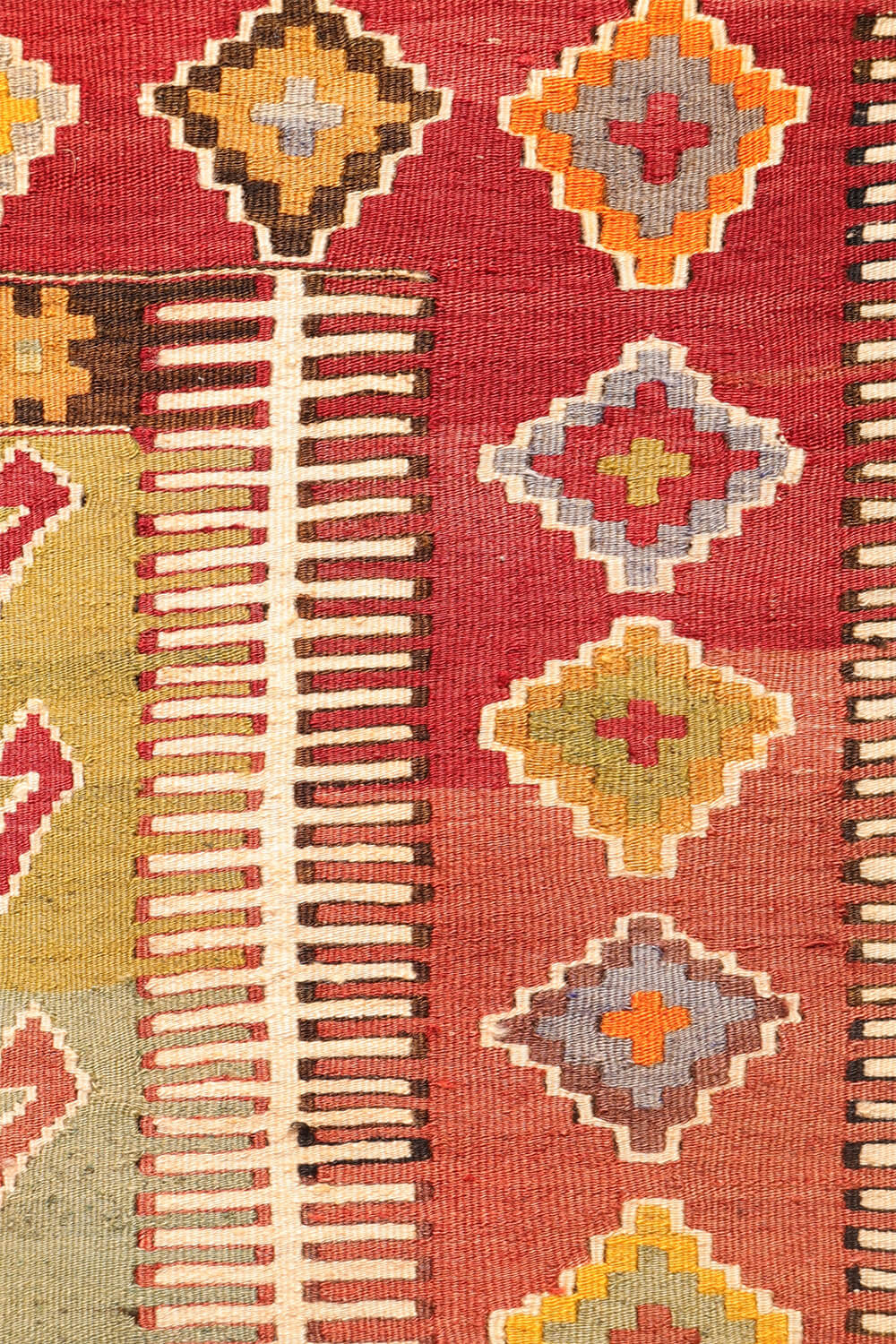
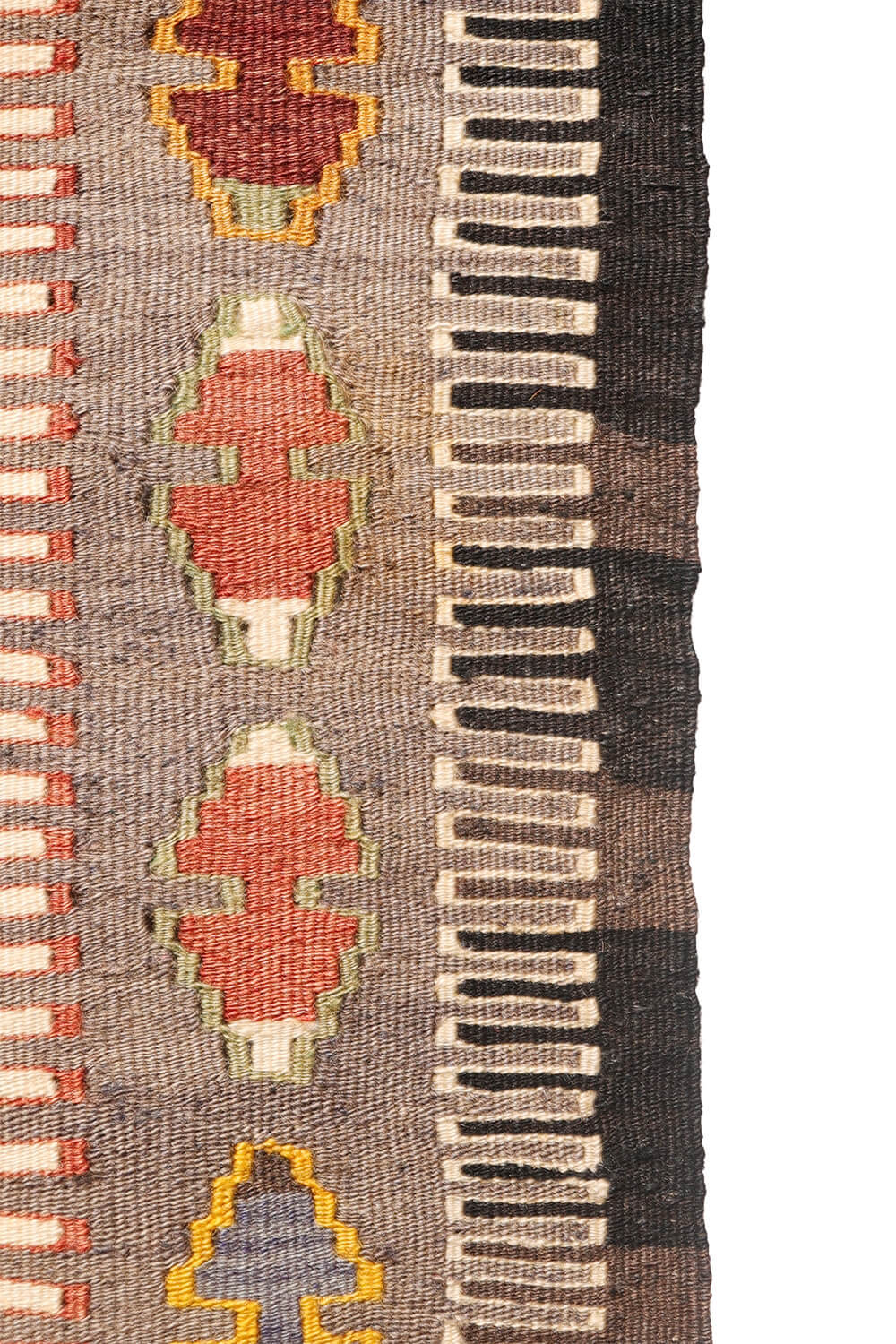
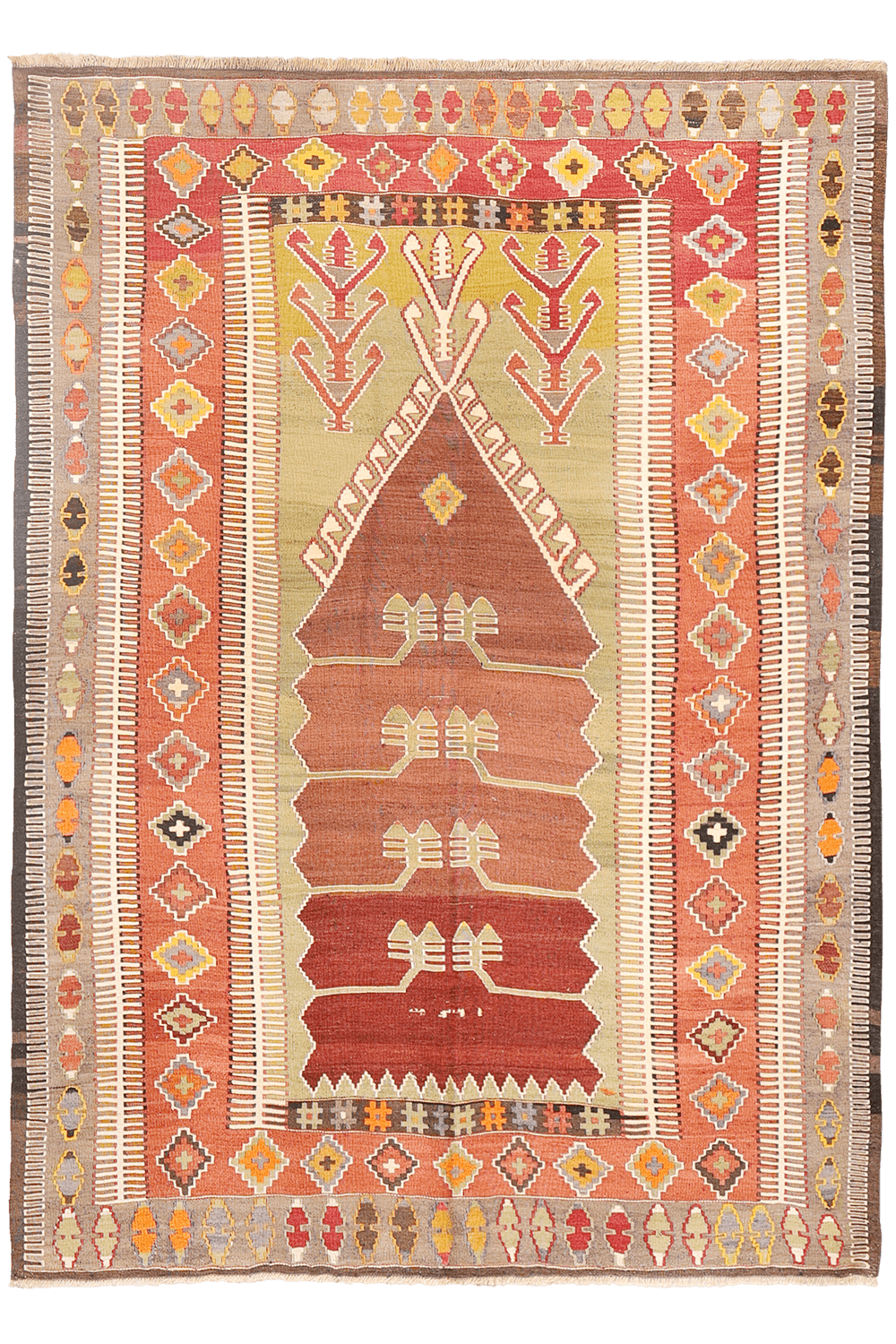
This rare and intriguing antique Obruk prayer kilim from Turkey bears a woven date—an unusual and compelling feature, particularly for an Obruk piece. Dated Obruk prayer kilims are seldom encountered, and even more exceptional is that the date appears to be written using Arabic numerals and according to the Islamic (Hijri) calendar.
Stylistically and structurally, the kilim appears to date from the 1960s. However, the use of Arabic numerals raises an intriguing historical question. Turkish was written using the Arabic script from approximately 900 until 1928, when the newly founded Turkish Republic adopted the Latin alphabet as part of its modernization and literacy reforms. Similarly, Turkey officially adopted the Gregorian calendar on 1 January 1926, replacing the Islamic calendar for civil use.
This leaves us with two plausible explanations for the Arabic and Islamic dating on this kilim. The piece may be older than it appears stylistically, or it may have been woven by an elderly woman who never learned the new alphabet and calendar reforms and therefore continued to use traditional Arabic numerals and the Islamic dating system.
Was the use of Arabic numerals and the Islamic calendar simply a reflection of the weaver’s background and education—or was it a deliberate choice, intentionally preserved because this was a prayer kilim? We will never know the full story. It is precisely this ambiguity that enhances the charm and historical fascination of this exceptional and unusual textile.
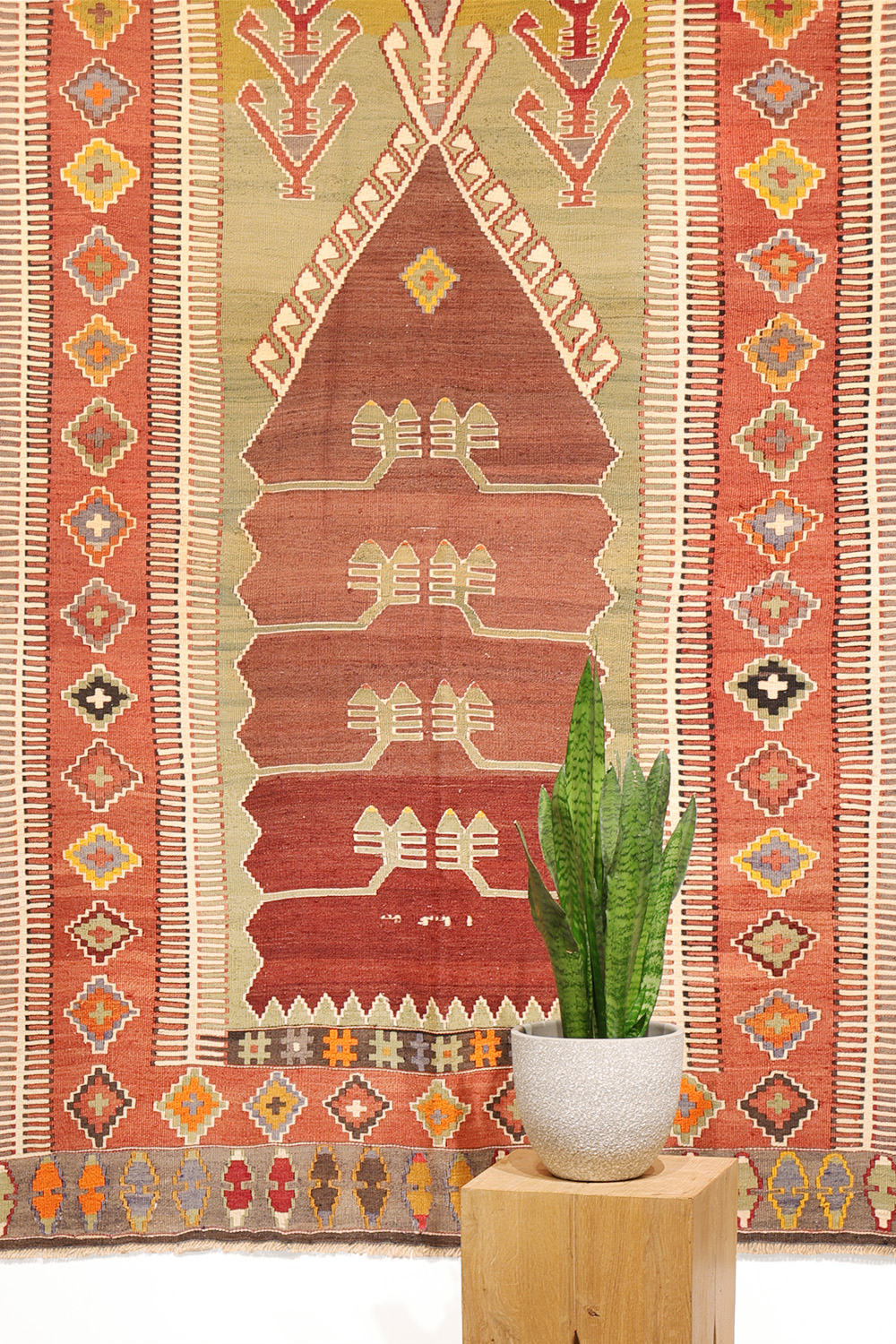
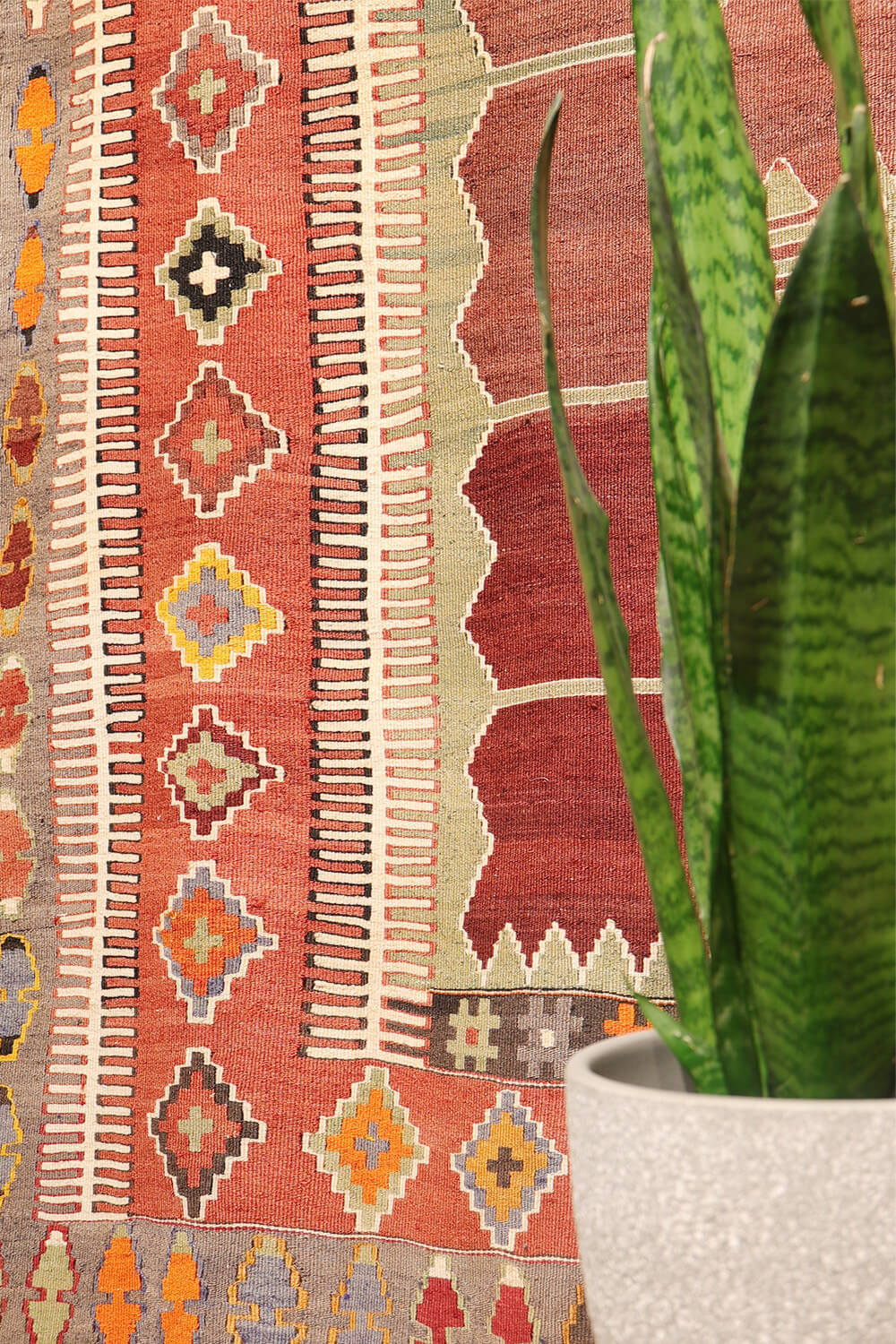
The kilim is very finely woven and displays a wonderful abrash, or color variation, particularly noticeable in the green areas.
Material: 100% hand-spun sheep wool
Size: 204X146 cms
Origin: Obruk, Turkey
Date of weaving:1940s?
OBRUK PRAYER KILIMS
This settlement has shrunk in size since the demise of the renserai; however, its traditionally patterned prayer kilims are known wolteve.
Obruk patterning is very easily recognized, and once seen never forgotten. It incorporates a hooked prayer arch with a tree of life situated at the apex of the niche and with two floating trees placed on either side. The tree design is often repeated in the centre of the prayer niche, sometimes alone, otherwise in pairs and triplets. The field is at times left plain and undecorated. Two or three main borders are present, with smaller, less important borders. There is another main design format that comes from Obruk, which is found in long runner-size kilims. This consists of a squarish medallion with extending arms at the four corners, and triangular protrusions filling the empty spaces it has been said that the motif.
represents a mirror-image bull’s head. This pattern is repeated down the field of the kilim, surrounded by one main border and small infill motifs. Old Obruk kilims are woven in reds, blues, greens, and browns. More modern kilims still feature the same traditional compositions, but the colours have become very harsh and dark, and now include orange. They are made in medium and medium-fine slitweave work, as well as in supplementary-weft-wrapping technique. Prayer kilims are generous in size.
From “kilims: The Complete Guide” by Alastair Hull and José Luczyc-Wyhowska
Out of stock
Additional information
| Weight | 3.8 kg |
|---|