225.00 €
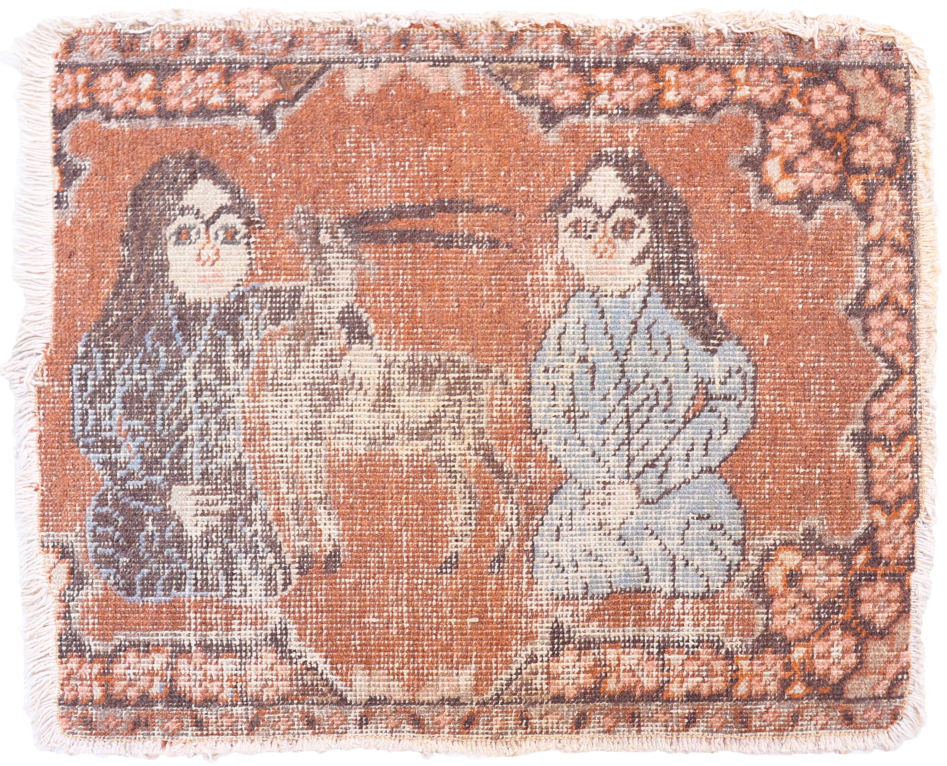
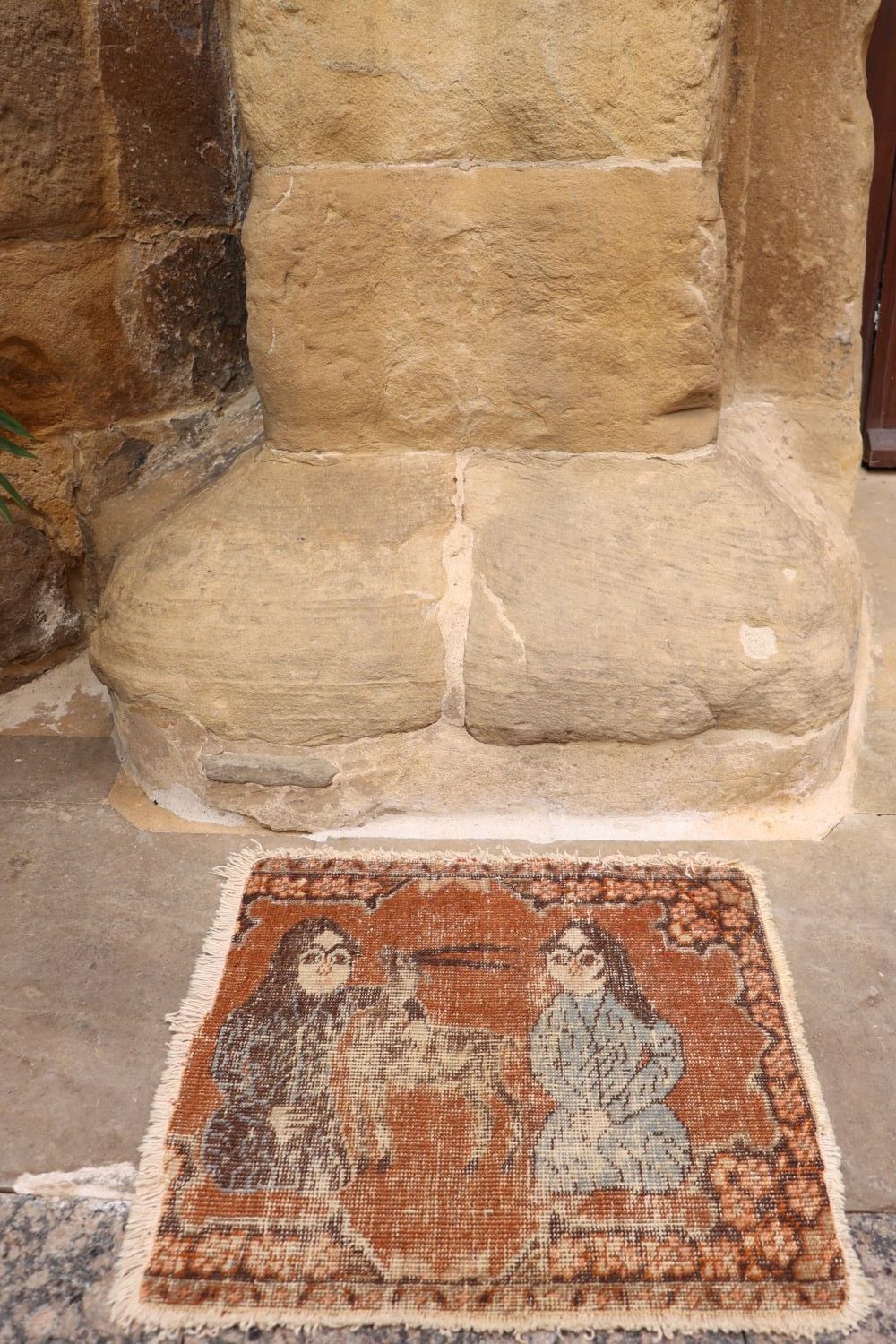
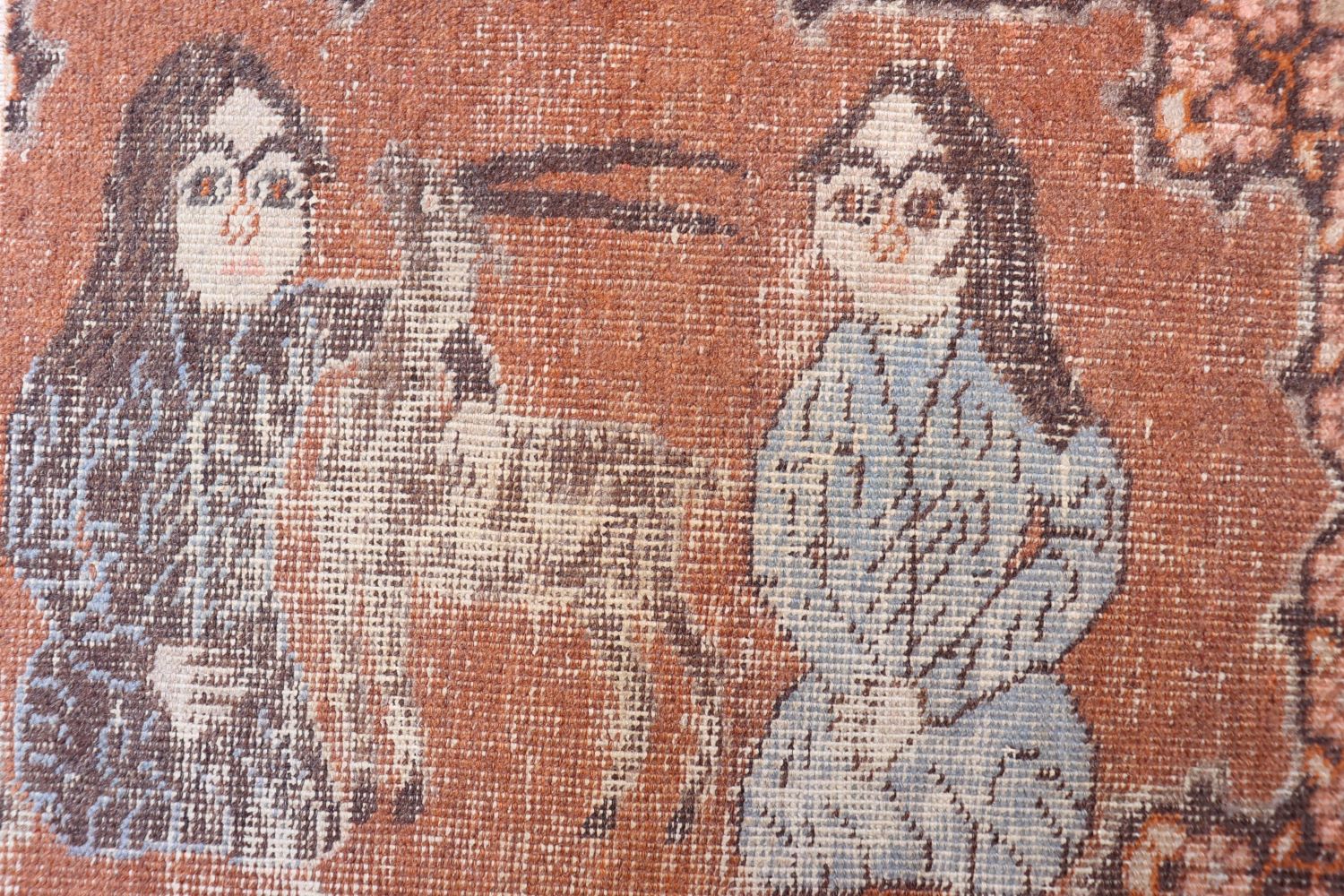
An antique rug portraying Layla and Majnun, the Romeo and Juliette of the East. The story of Layla and Majnun is one of the most famous tales of tragic and mystical love in world literature, often compared to Romeo and Juliet, but with a much more spiritual and symbolic meaning.On the right we can see Majnun, with long hair.
In the original versions of the story of Layla and Majnun, there is no clear or consistent description stating that Majnun definitely had long hair. The earliest poetic sources focus much more on his emotional state and spiritual transformation than on his physical appearance.
However, in later Persian, Ottoman, and illustrated manuscript traditions, Majnun is very often depicted with long, unkempt hair as part of his visual identity. This artistic choice is symbolic rather than historical, representing his abandonment of society, his life in the desert, and the intensity of his madness driven by love. The image of Majnun with wild hair, ragged clothes, and a fragile, wandering appearance became a standard way to express how completely he had detached from normal life. He is caressing a gazelle. On the right hand we can see Layla. Both are framed by an elaborate border, appearing to be in a rug within a rug!
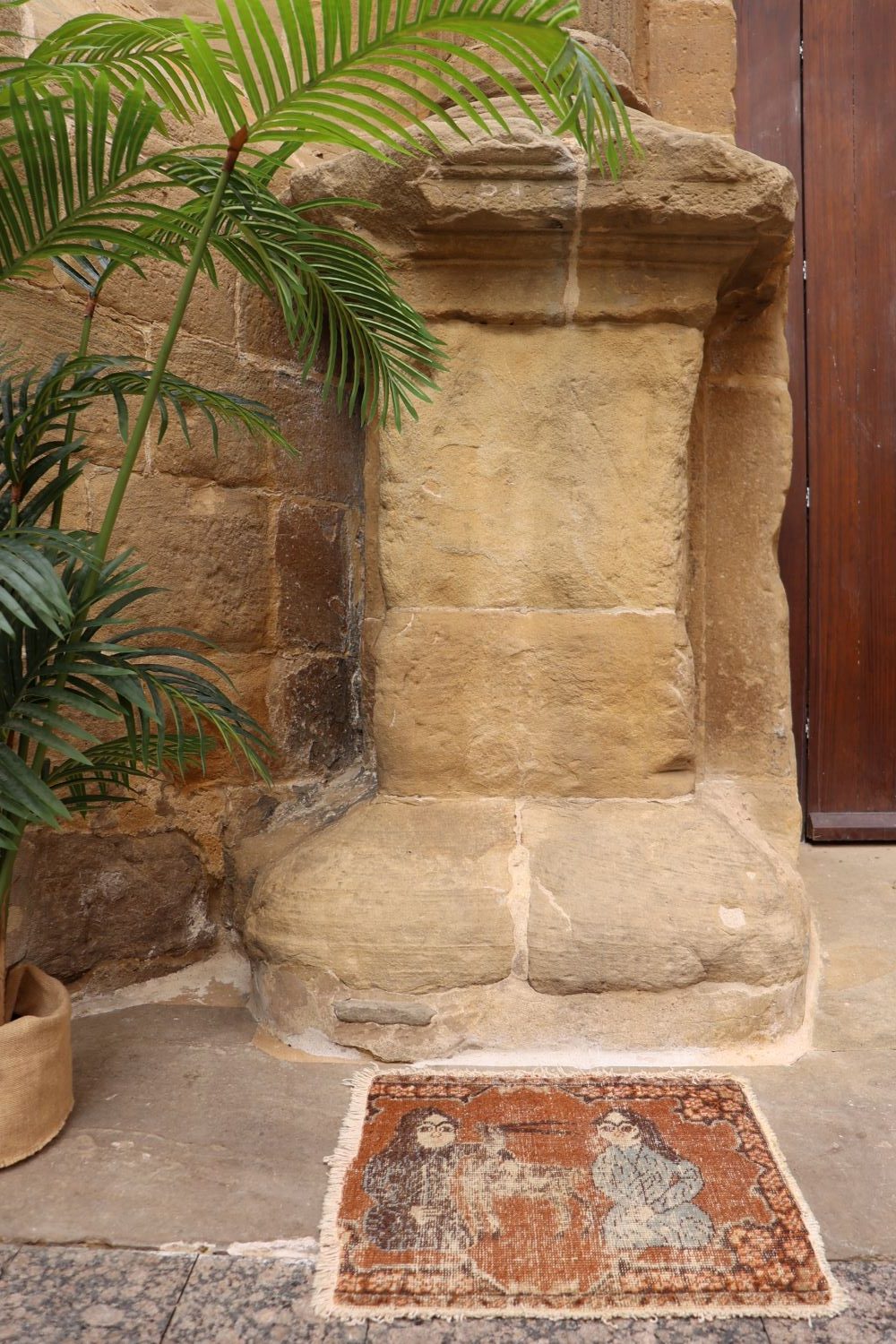
The pile is worn, and this unusual piece appears to be a cutting from a bigger rug. A really charming little fragment ideal to give to your lover or for mystical poetry lovers!
Material: 100% hand-spun sheep wool and cotton warp and weft
Size: 54×49 cms
Origin: Iran
Date of weaving: late 19th century
The story of Layla and Majnun is one of the most famous tales of tragic and mystical love in world literature, often compared to Romeo and Juliet, but with a much deeper spiritual meaning.
It originates from early Arabic tradition but was immortalized in the 12th century by the Persian poet Nizami Ganjavi in his epic poem Layla and Majnun. The story follows a young man named Qays, a gifted poet who falls deeply and purely in love with Layla while they are still in school. His love becomes so intense and consuming that he begins to write poetry about her constantly, losing himself in his emotions. Because of this overwhelming obsession, people begin to call him “Majnun,” meaning “the mad one” or “the one possessed by love.”
Layla’s family, however, does not approve of the relationship and forces her to marry another man. Devastated and unable to cope with the separation, Majnun withdraws completely from society and escapes into the desert. There he lives in isolation, surrounded by animals that do not fear him, and continues to express his love through poetry. Over time, his connection to Layla becomes symbolic and spiritual rather than physical, as he begins to see her presence everywhere in nature itself.
In most versions of the story, Layla eventually dies without ever being reunited with Majnun, and he dies soon after in the desert, alone. Only in death are they finally united, not in a physical sense, but on a spiritual level.
The story is often interpreted beyond romance, especially in Sufi tradition, where Majnun’s love represents absolute devotion and the loss of the self in the face of overwhelming love, while Layla symbolizes an unattainable ideal or even divine beauty.
Symbolisim of gazelles
In the story of Layla and Majnun, especially in later Persian and Sufi retellings by poets like Nizami Ganjavi, gazelles symbolize beauty, innocence, and the wild freedom of love.
One well-known episode describes Majnun living in the desert in his state of madness caused by his love for Layla, where he becomes deeply connected to animals, especially gazelles and deer. Hunters often try to capture them, but Majnun protects the gazelles because he sees in them a reflection of Layla herself. Their graceful eyes remind him of her eyes, their gentleness reflects her beauty, and their freedom represents the unattainable nature of his love.
In some versions, Majnun even pleads with hunters to release trapped gazelles, saying they resemble Layla and should not be imprisoned, and in certain retellings he frees them himself.
In this sense, the story of the gazelles shows how Majnun treats them as sacred symbols of Layla and defends them from being harmed or captured. This episode highlights his transformation from an ordinary lover into a mystical figure completely absorbed by love and detached from the world.
1 in stock
Additional information
| Weight | 1 kg |
|---|