Sale!


Original price was: 1,150.00 €.862.50 €Current price is: 862.50 €.
Gemini said
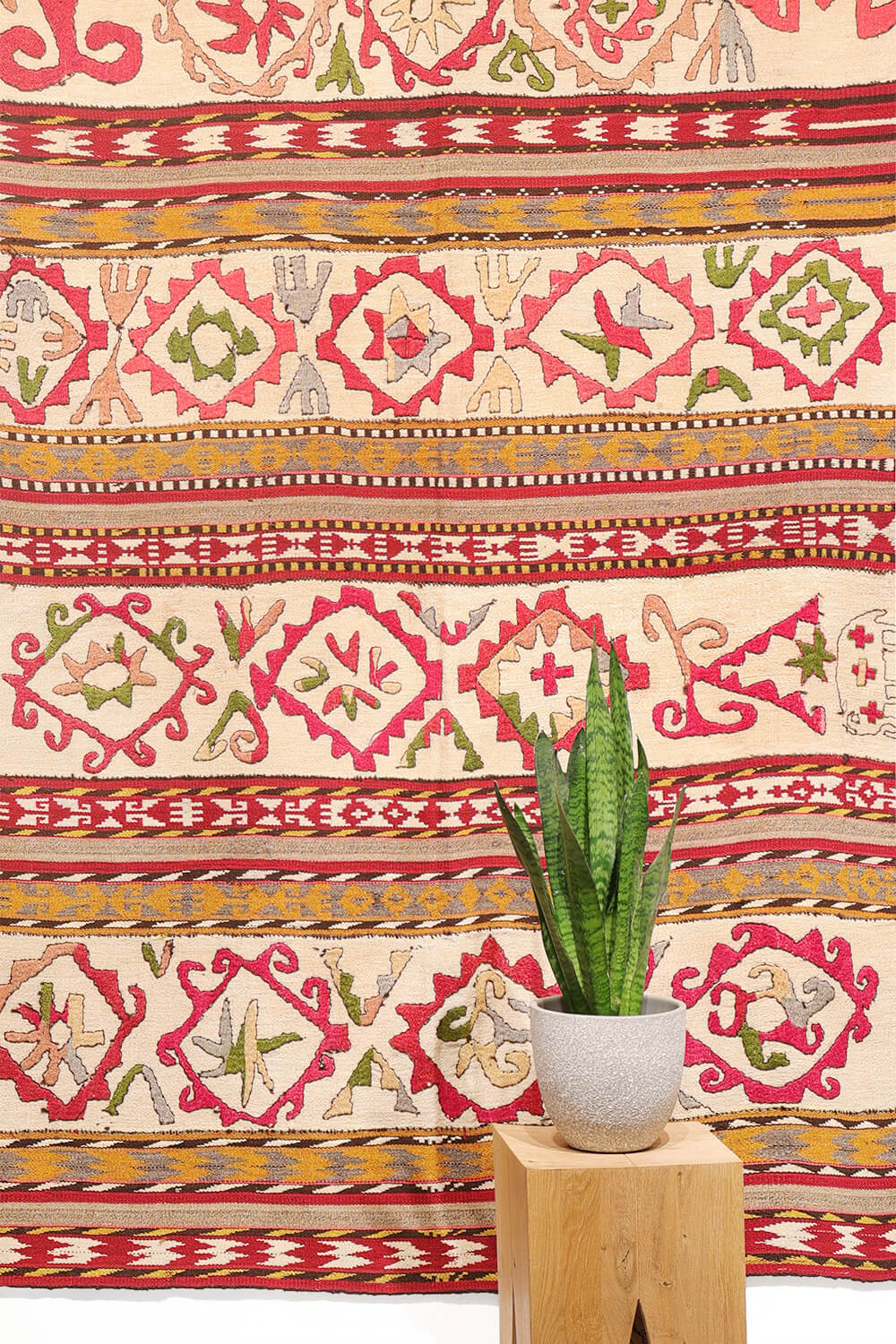
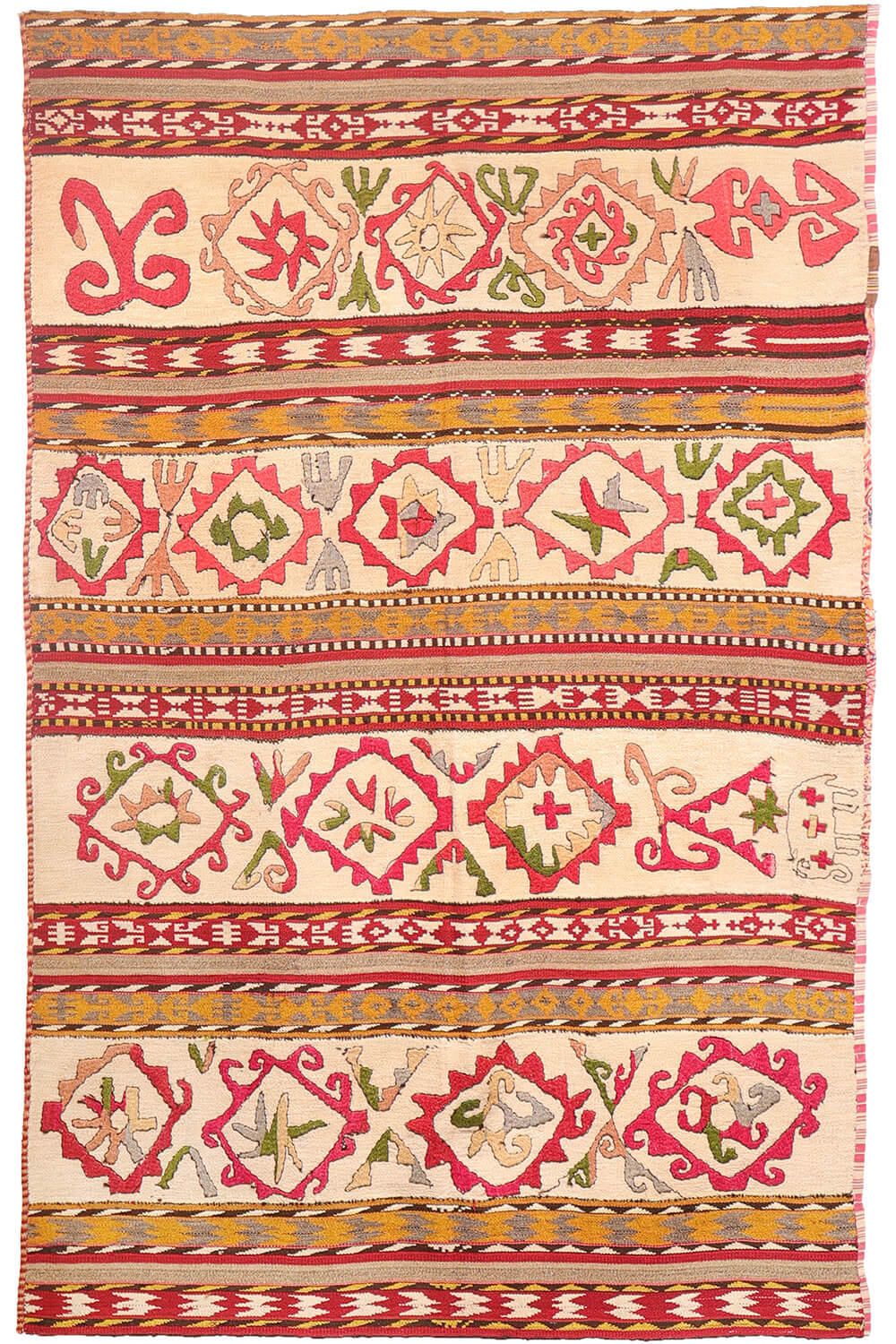
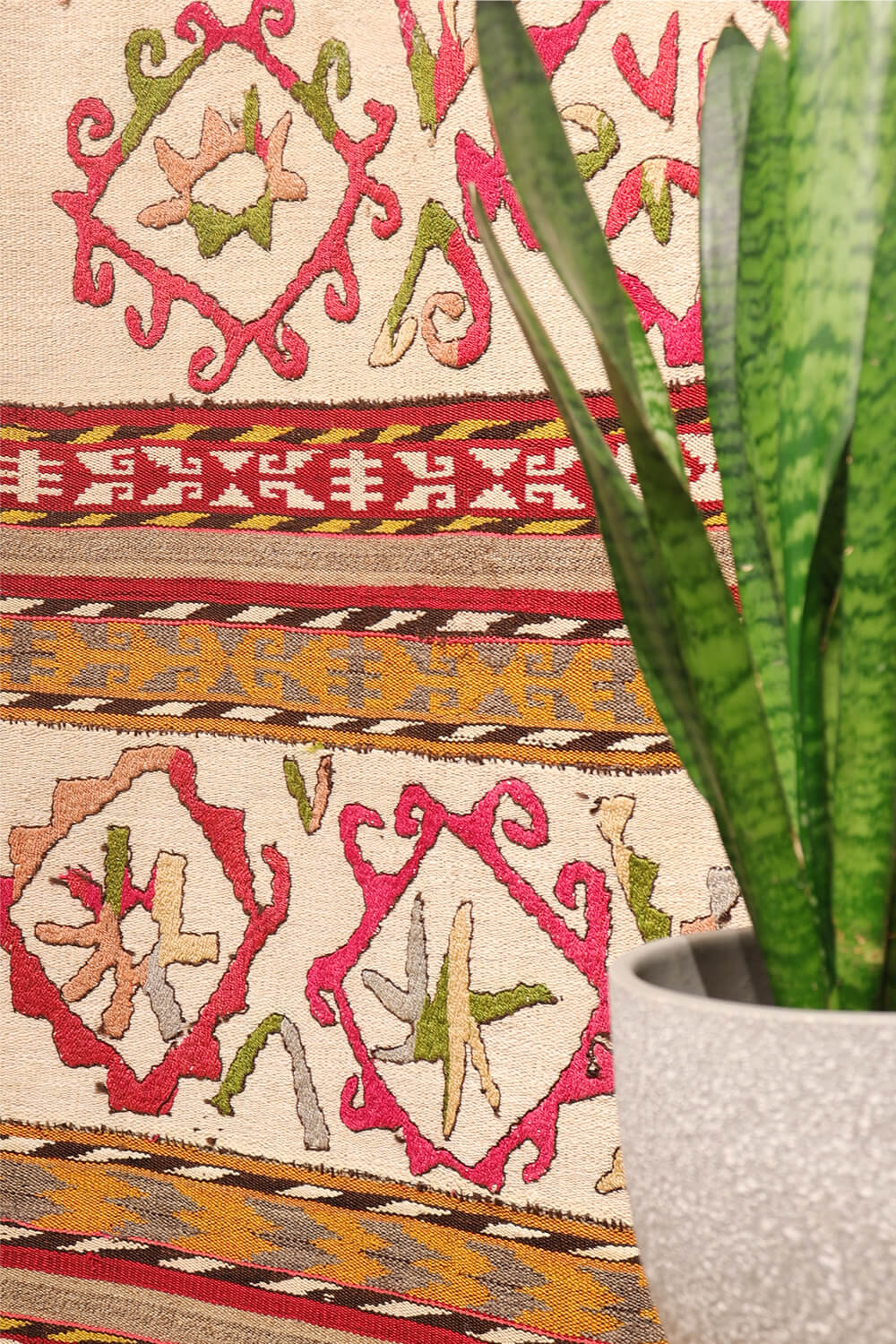
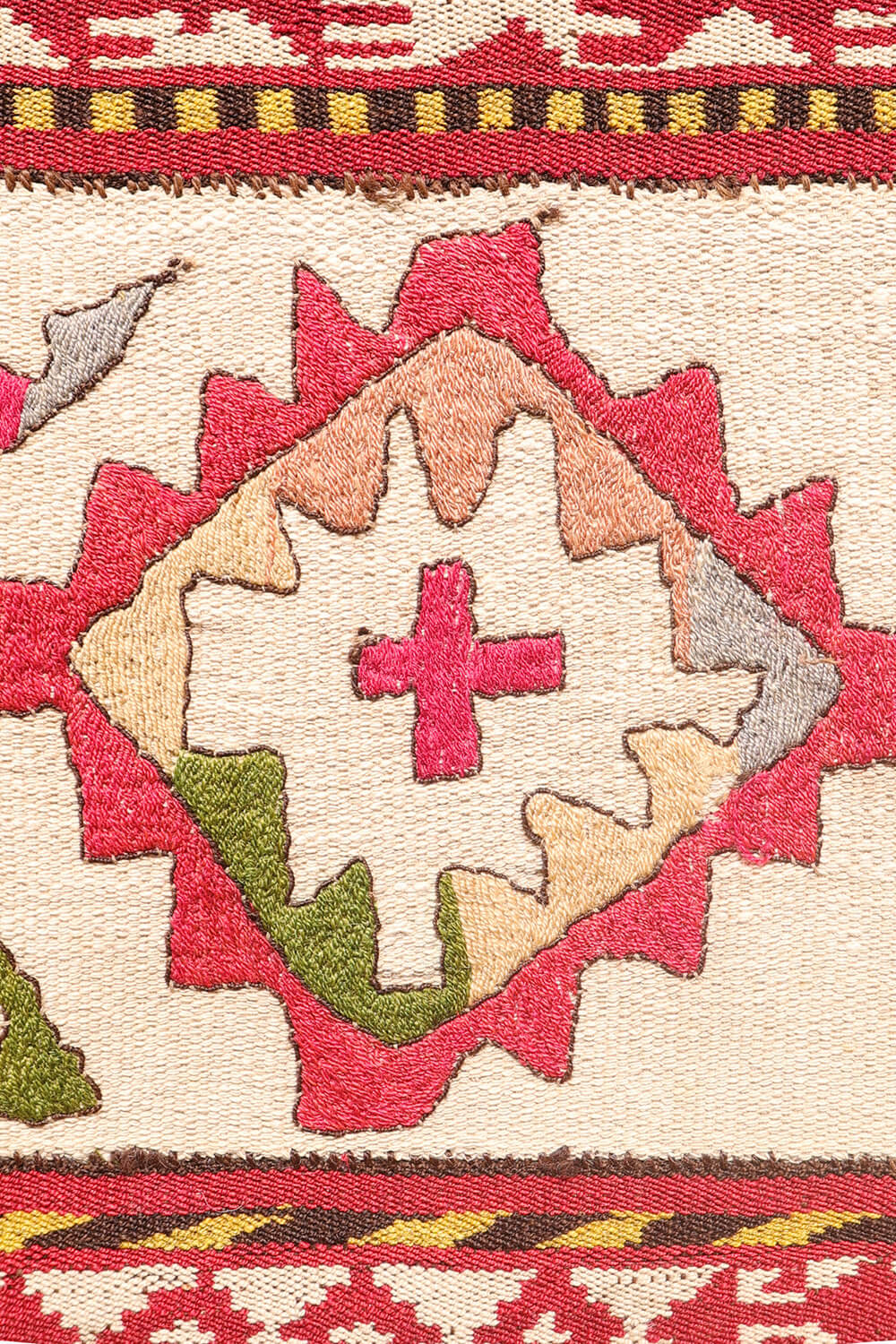
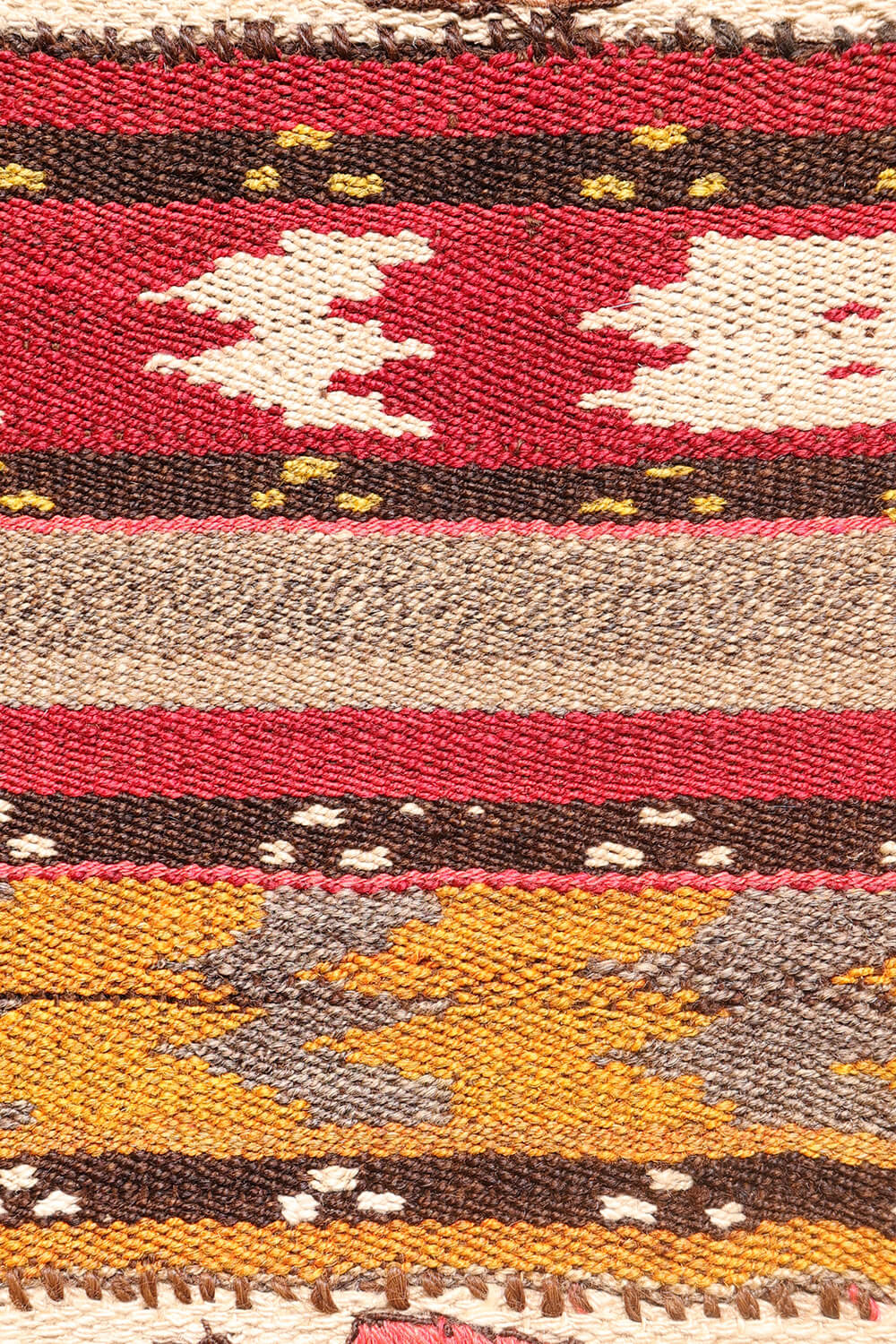
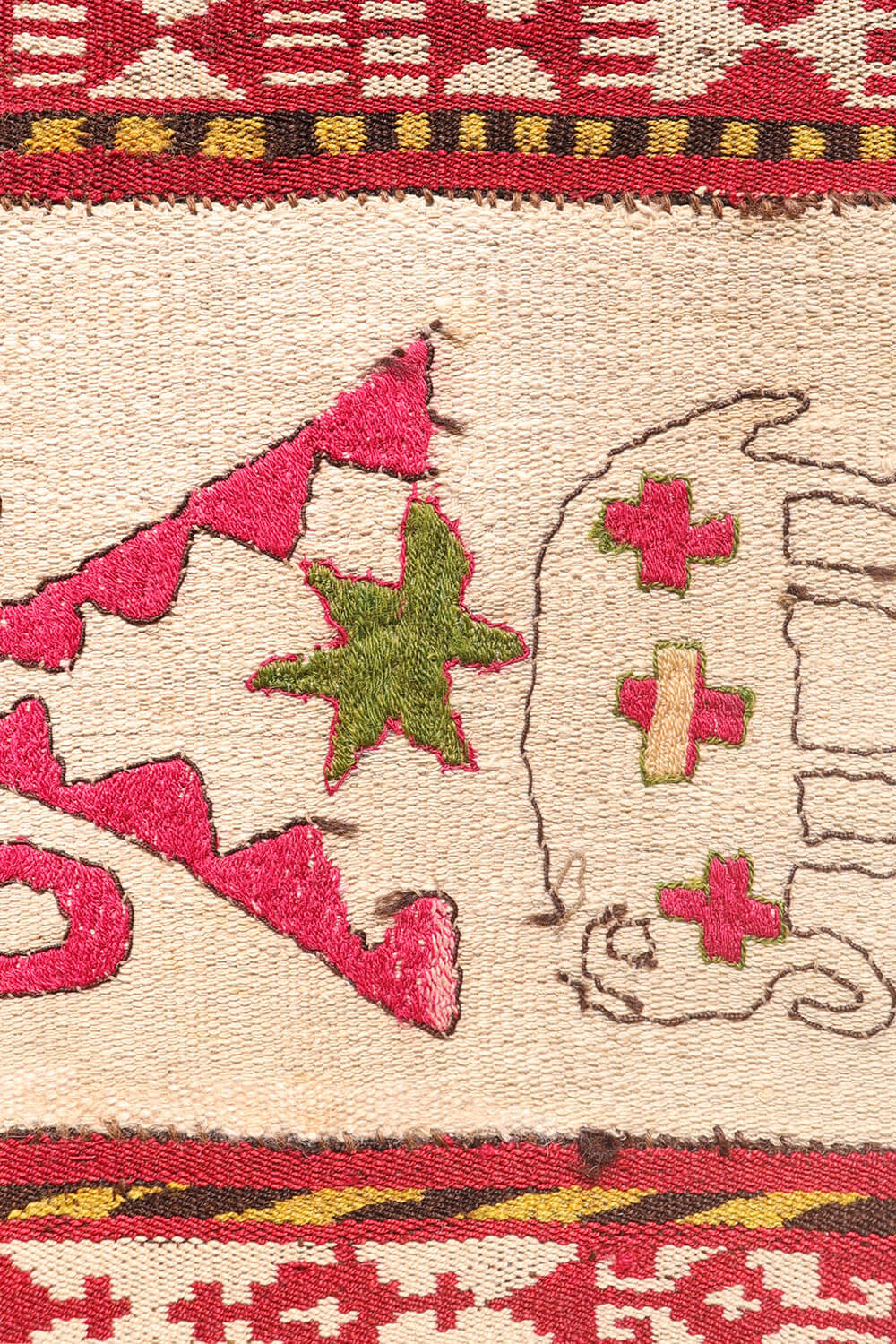
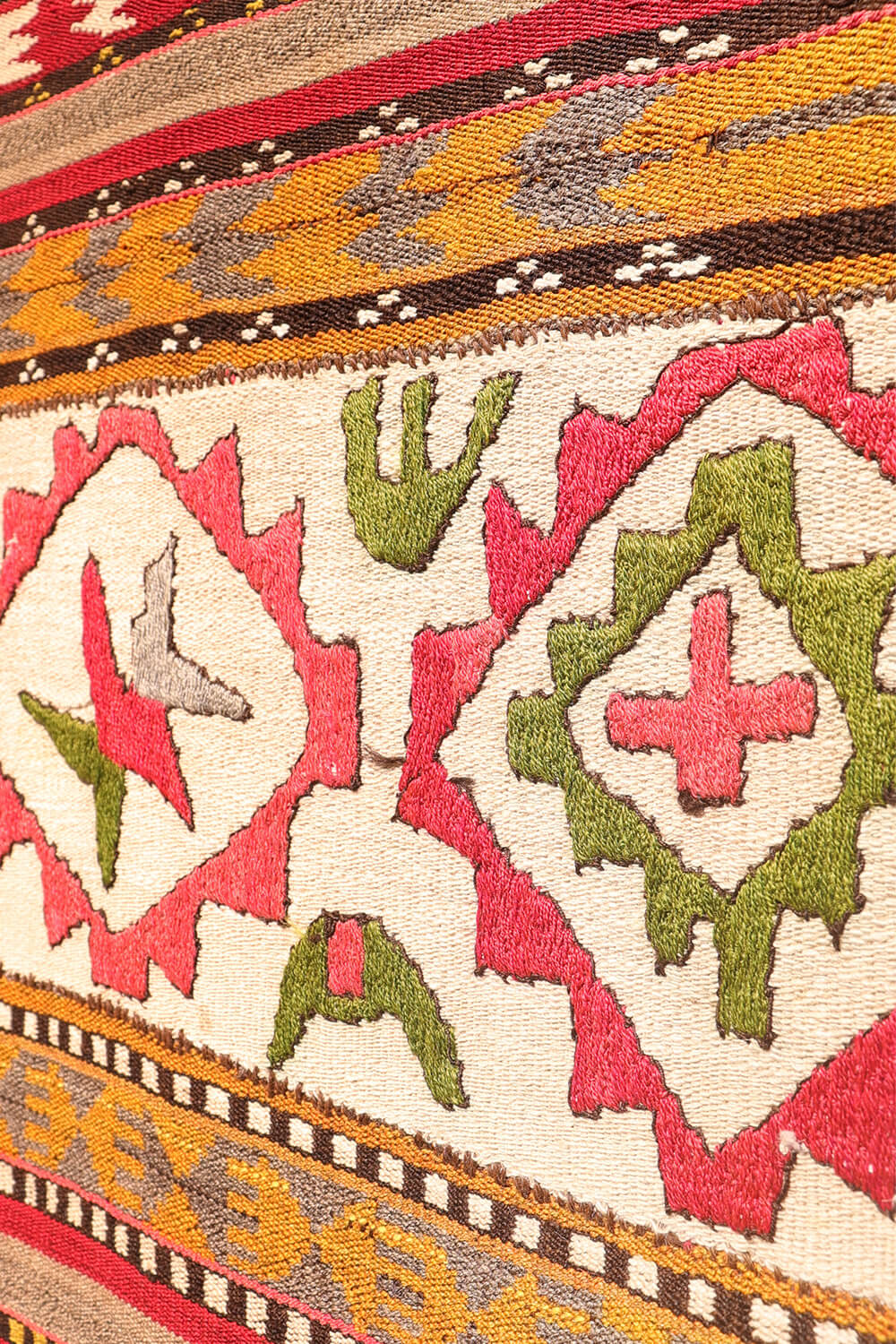
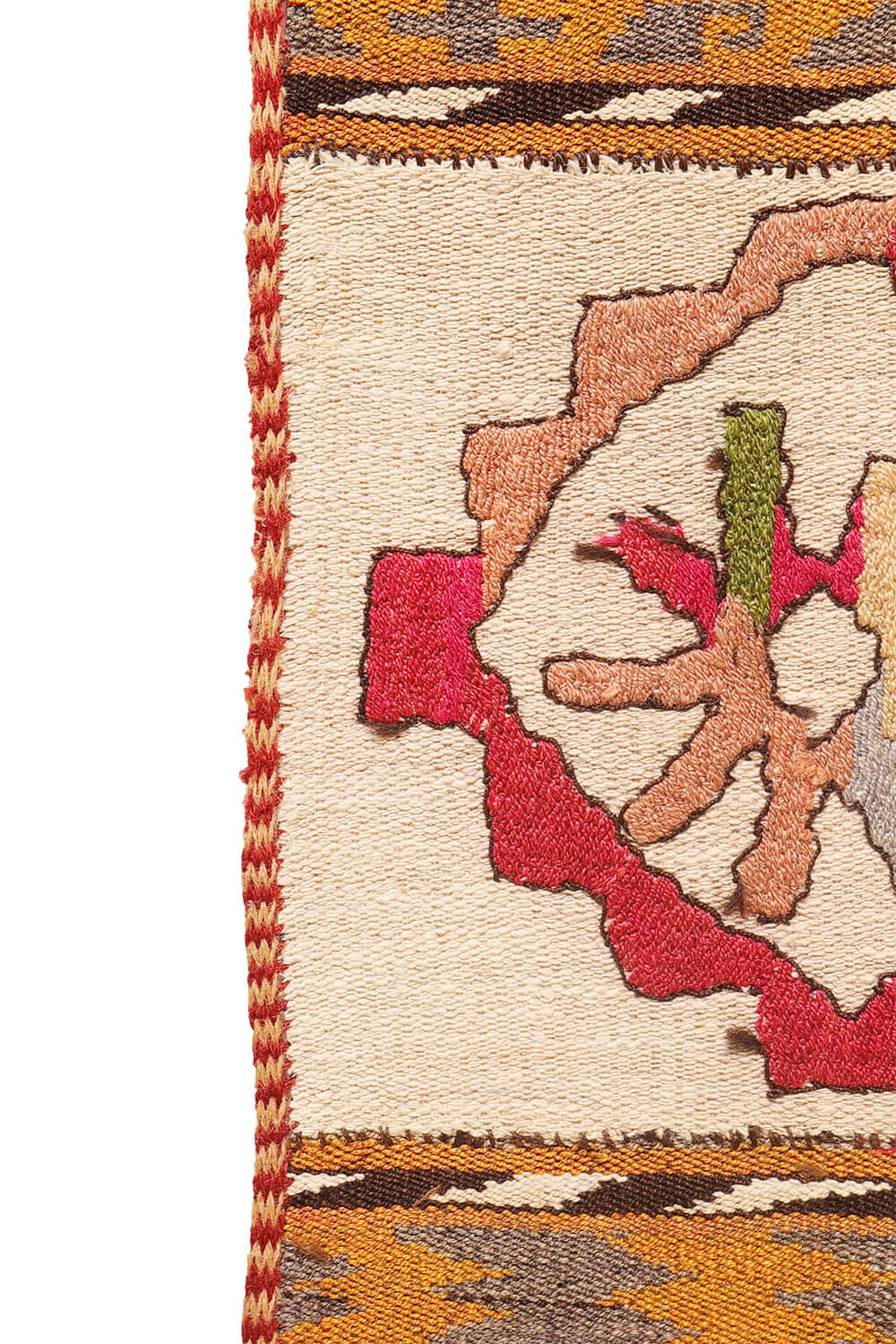
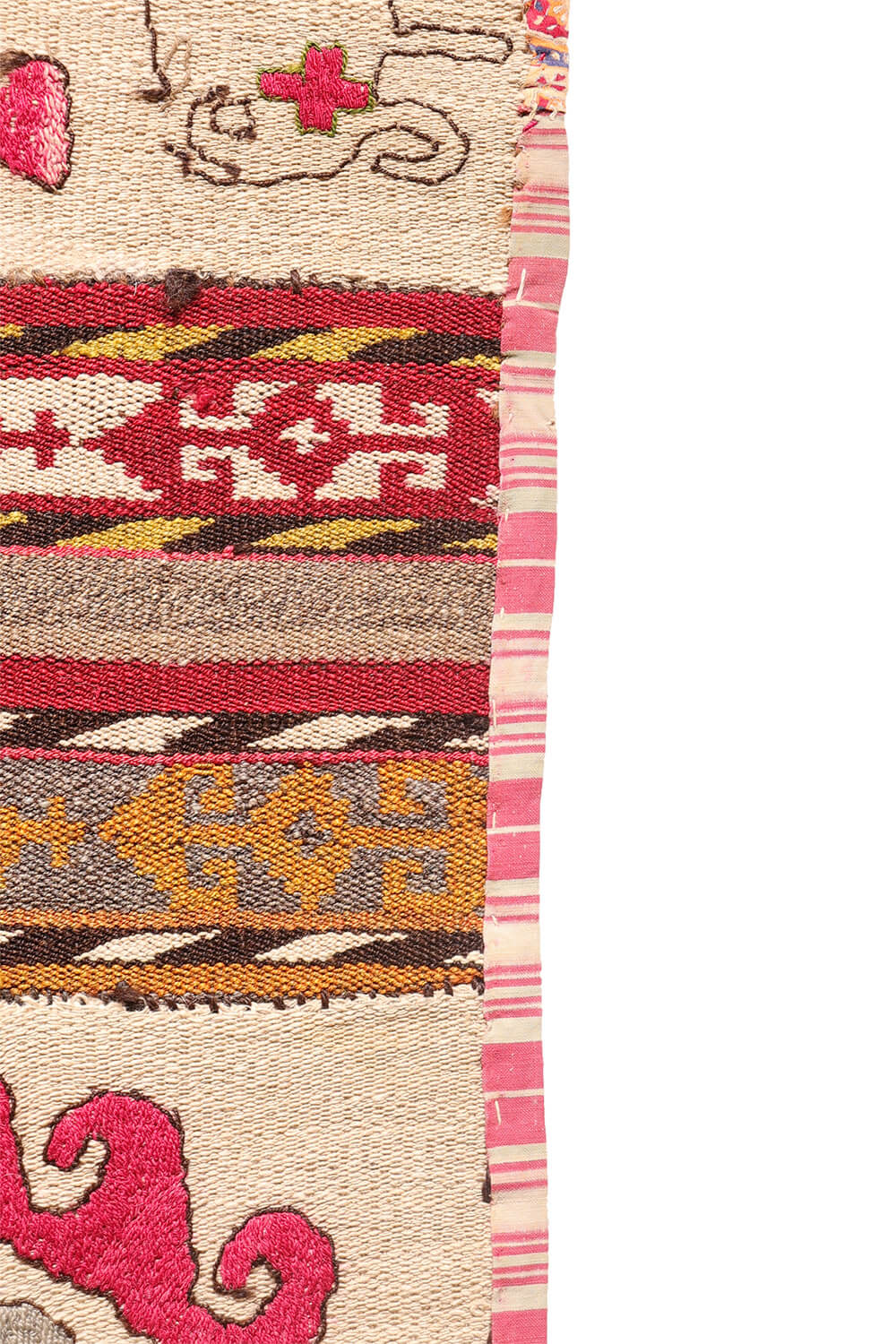
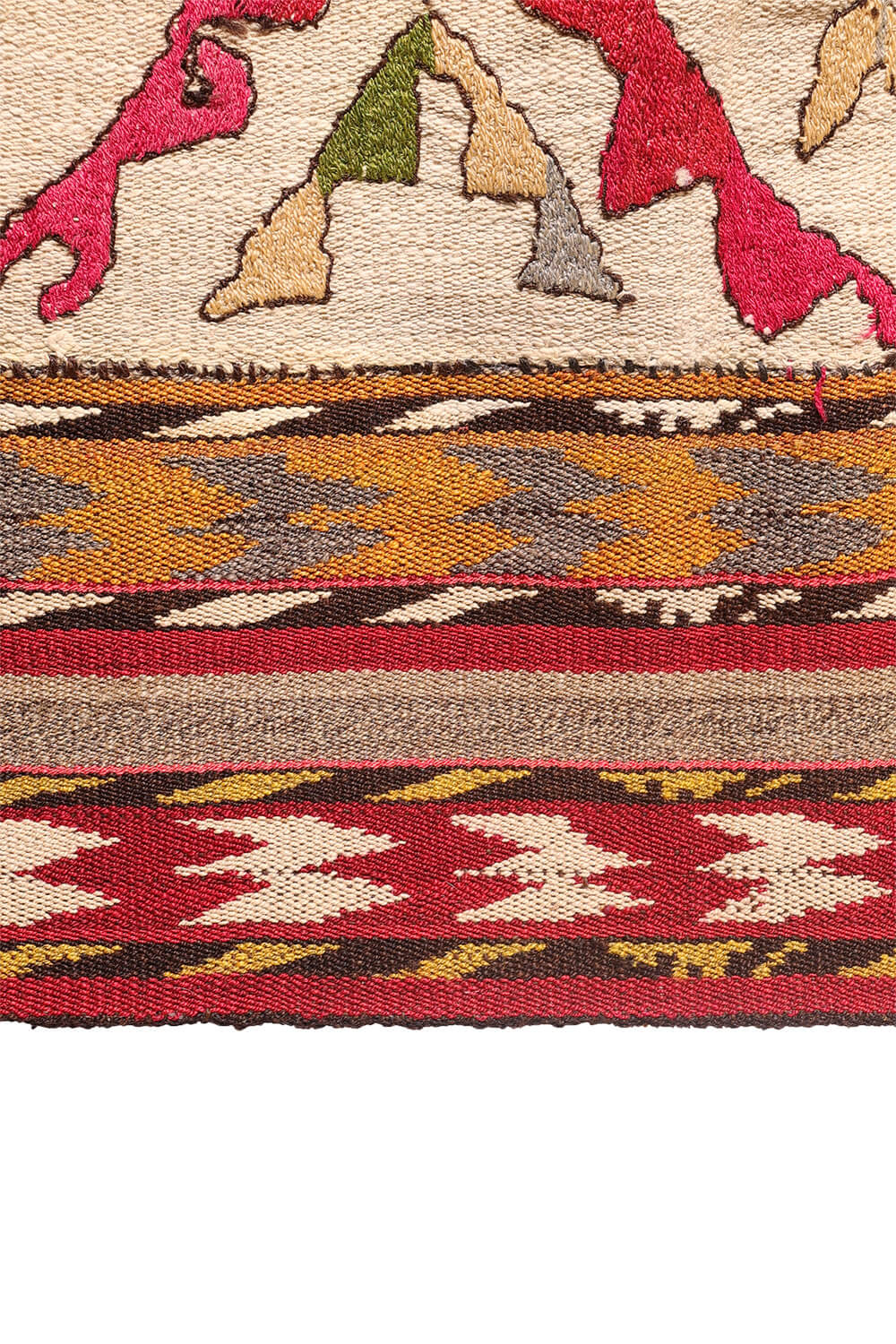
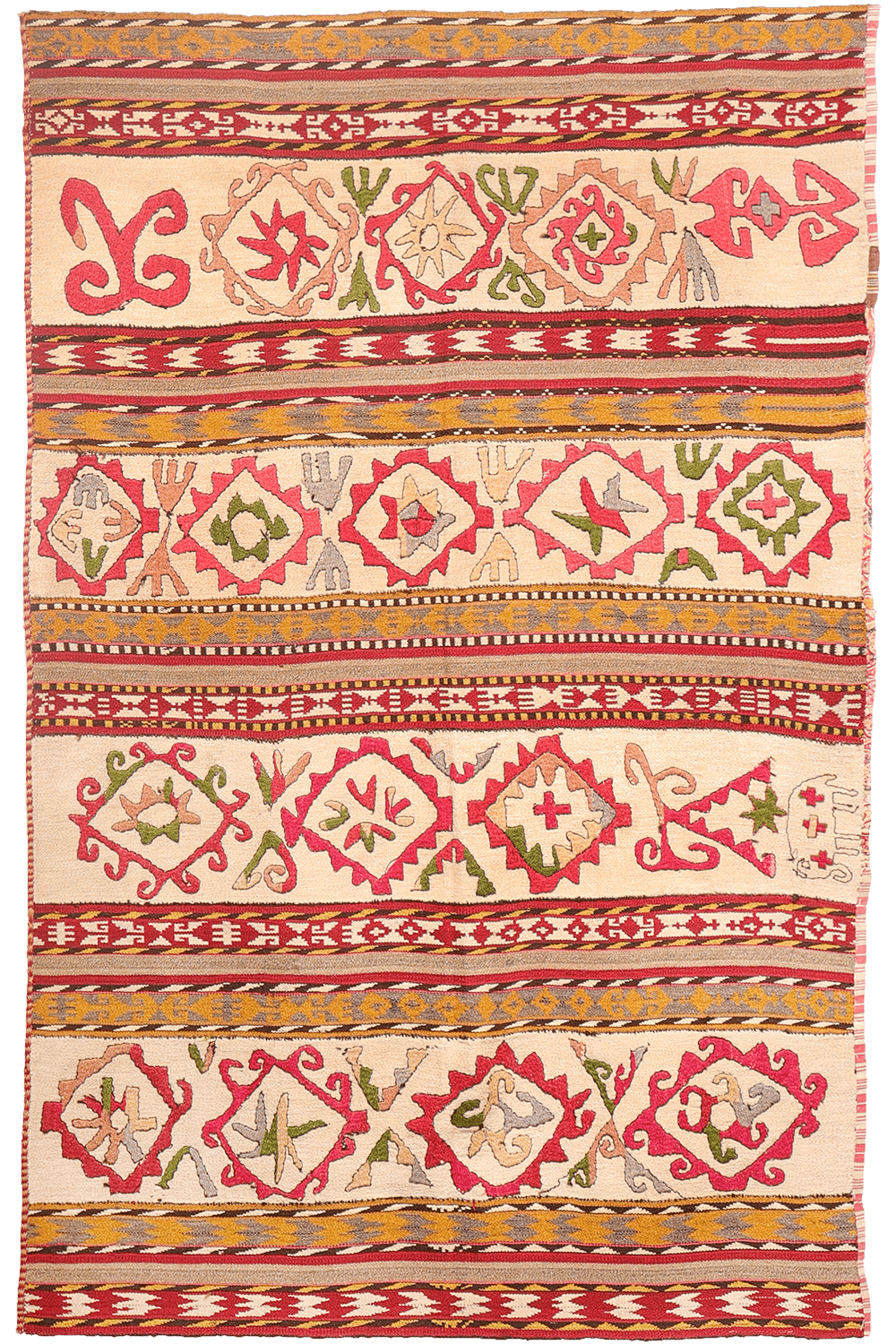
An antique Lakai gajeri or ghudjeri kilim from Uzbekistan that combines ghudjeri geometric strips with embroidered white suzani panels in a more free and organic spirit. The piece is formed by joining multiple pieces together and each of the bands is different from the others, including one that is particularly striking and portrays a female figure with an elephant below her. To complete this unique work of tribal art, the sides have been secured with old Russian cloth.
Material: 100% hand-spun sheep wool
Size: 214×143 cms
Origin: Lakai, Uzkekistan
Date of weaving: 1940s
The Uzbeks made warp-faced patterned rugs, known locally as ghudjeri. On narrow tripod looms, they weave very long strips some 8 cm (3″) to 23 cm. (9″) wide. The finished strips, packed with a multitude of complex, ancient motifs, are cut into equal lengths and sewn, selvedge to selvedge, creating a textile to whatever dimension is required. This time-consuming technique of manufacture produces kilims that are very finely patterned. These ghudjeri are traditionally woven in the Uzbek villages to the west of Mazar-i-Sharif, near Balkh and Ag Chah, but are also produced in most Uzbek communities. The Arabi people from Mazar-i-Sharif also weave ghudjeri that are more limited in pattern and colour, used as small eating cloths and horse blankets.
Another type of Uzbek flatweave is the kilim suzani, constructed of narrow bands of plainweave ivory-white wool, or sometimes cotton, sewn together and then over-embroidered with loosely sewn, brightly coloured wool in patterns that resemble those on felt namads – the floor rugs, door and roof covers of the traditional Uzbek tent, the yurt. The work on these kilim suzani is similar to that found on the long tent bands that hold the parts of the jurt together and bind loads on pack animals.
Additional information
| Weight | 4 kg |
|---|