2,450.00 €
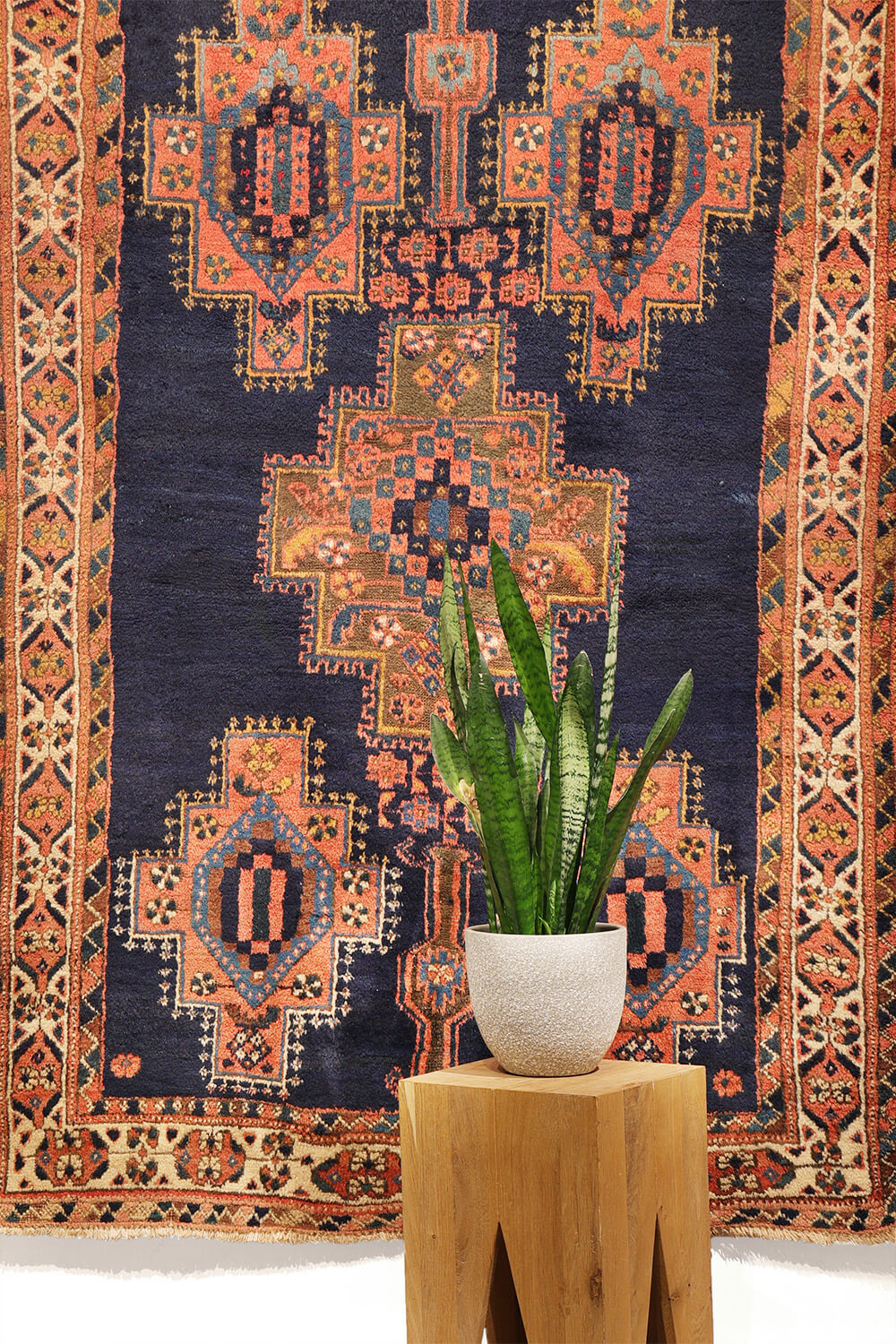
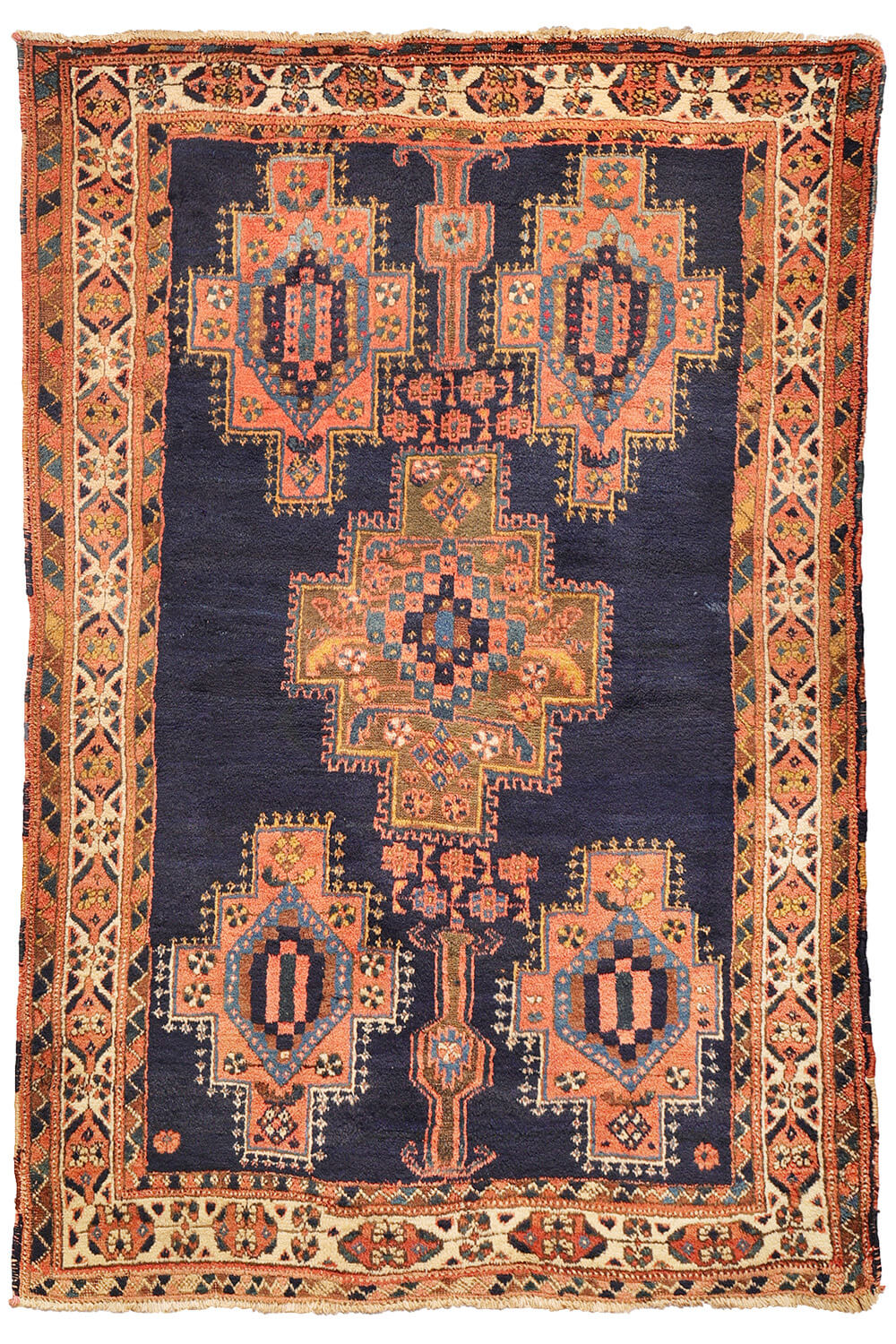
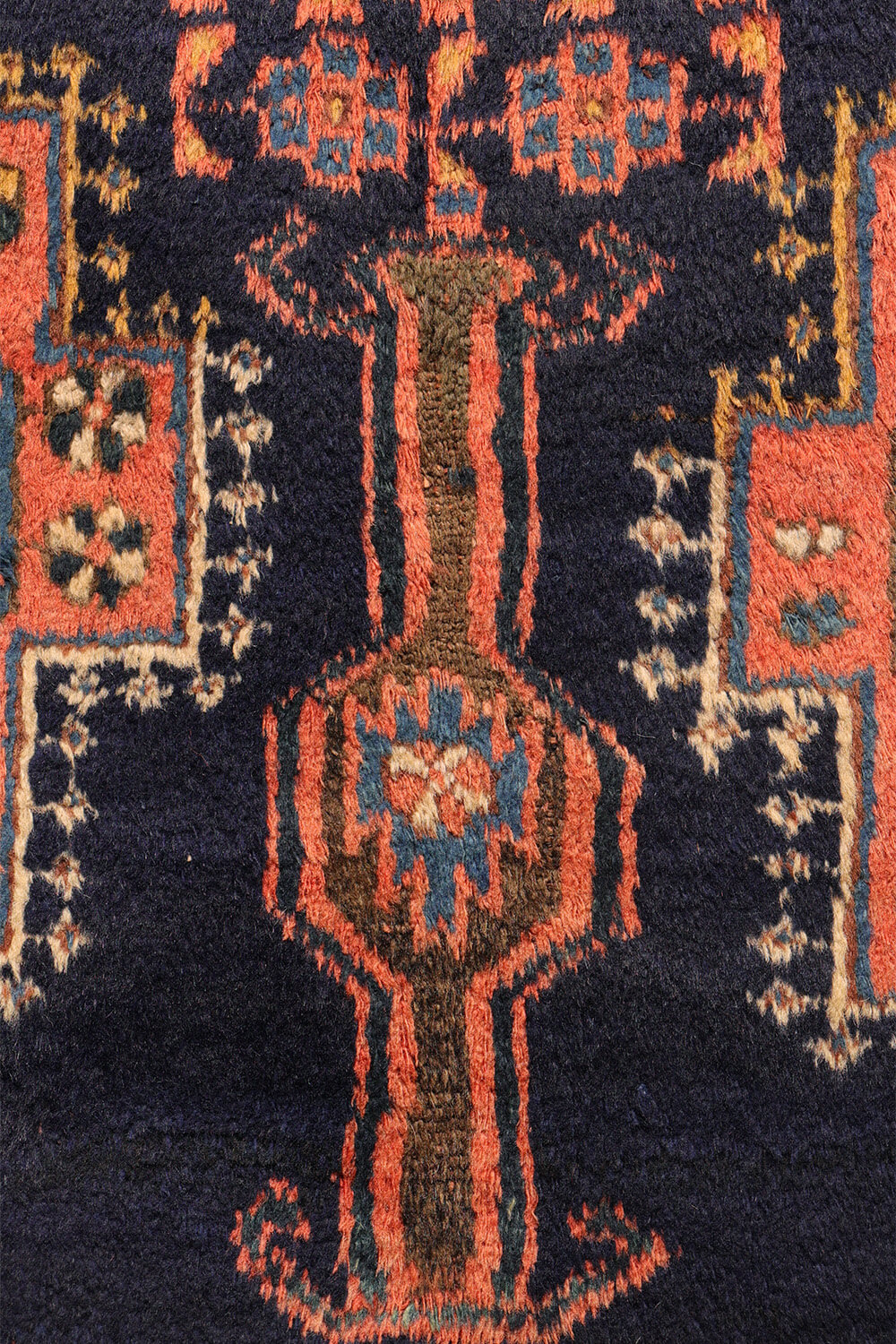
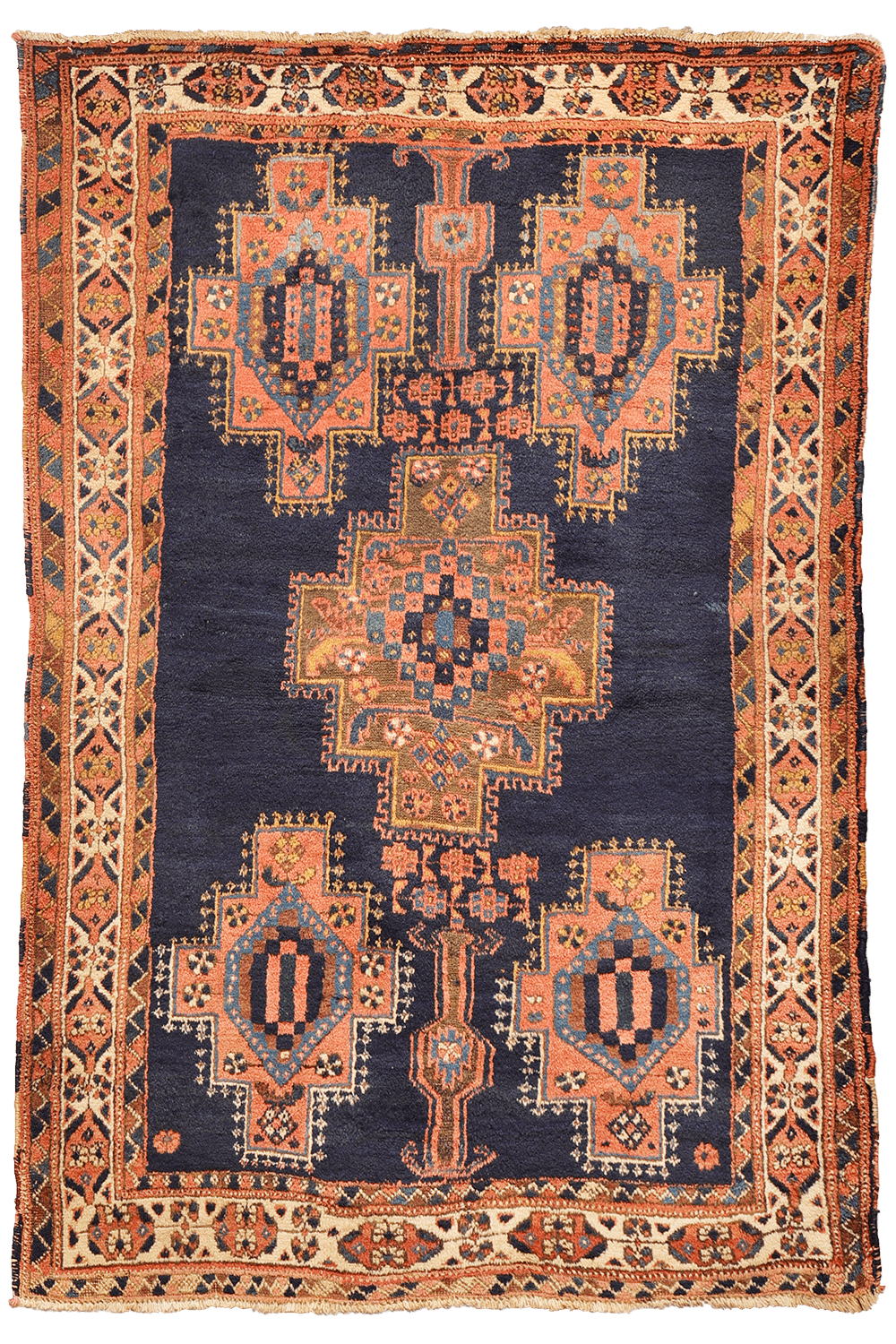
You know I have a particular fondness for antique rugs with blue, and this very elegant and sophisticated rug, most likely Afshar, is no exception.
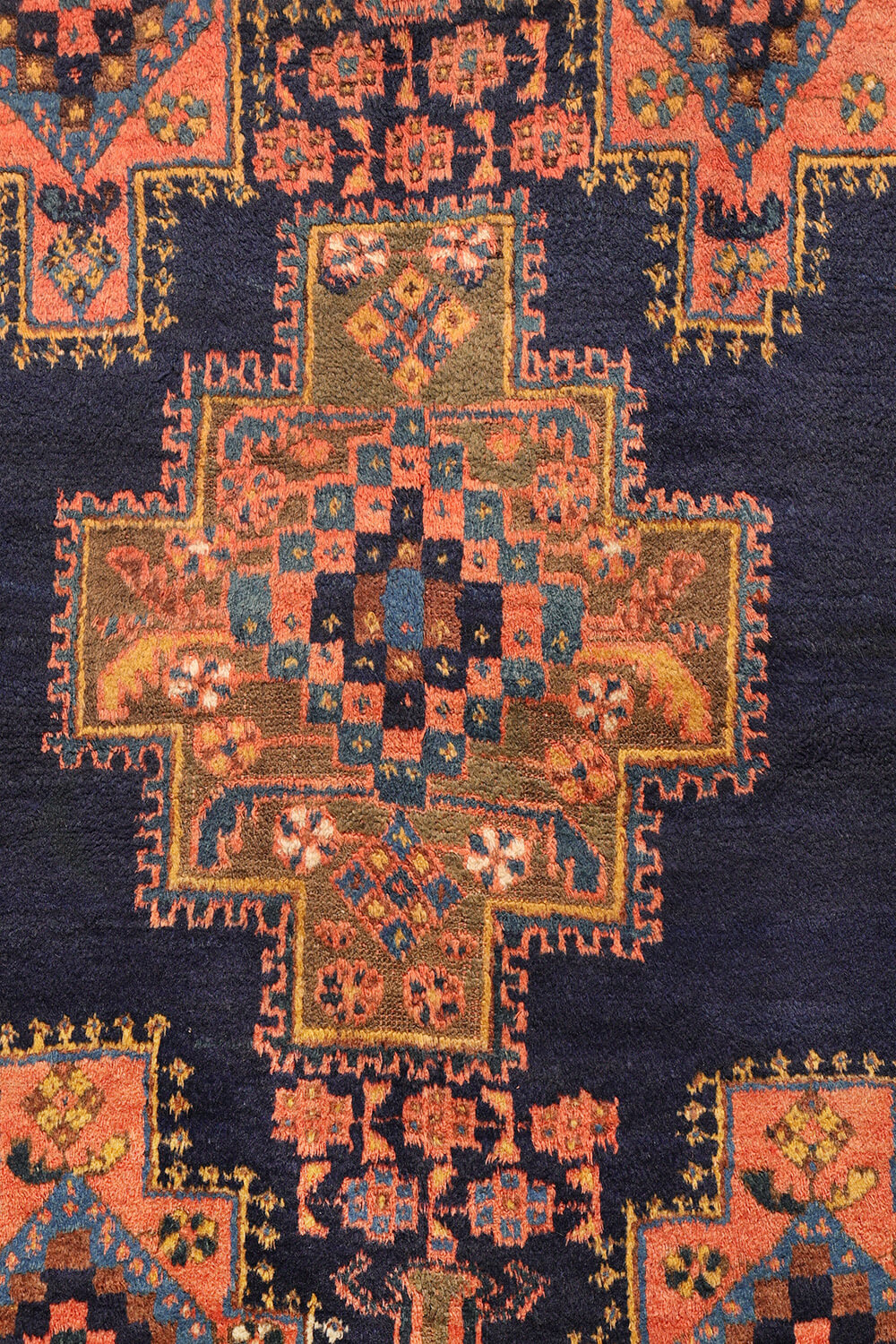
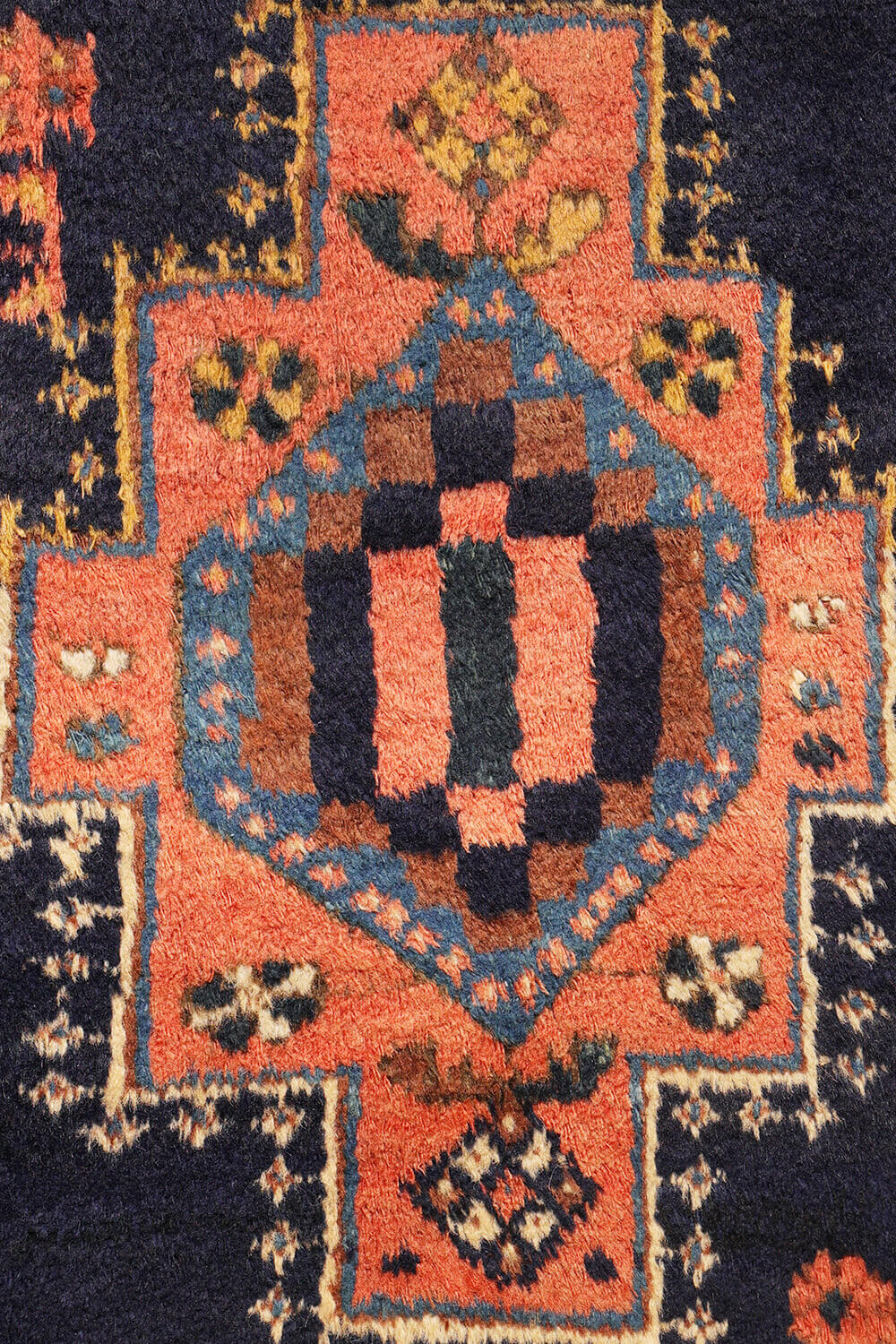
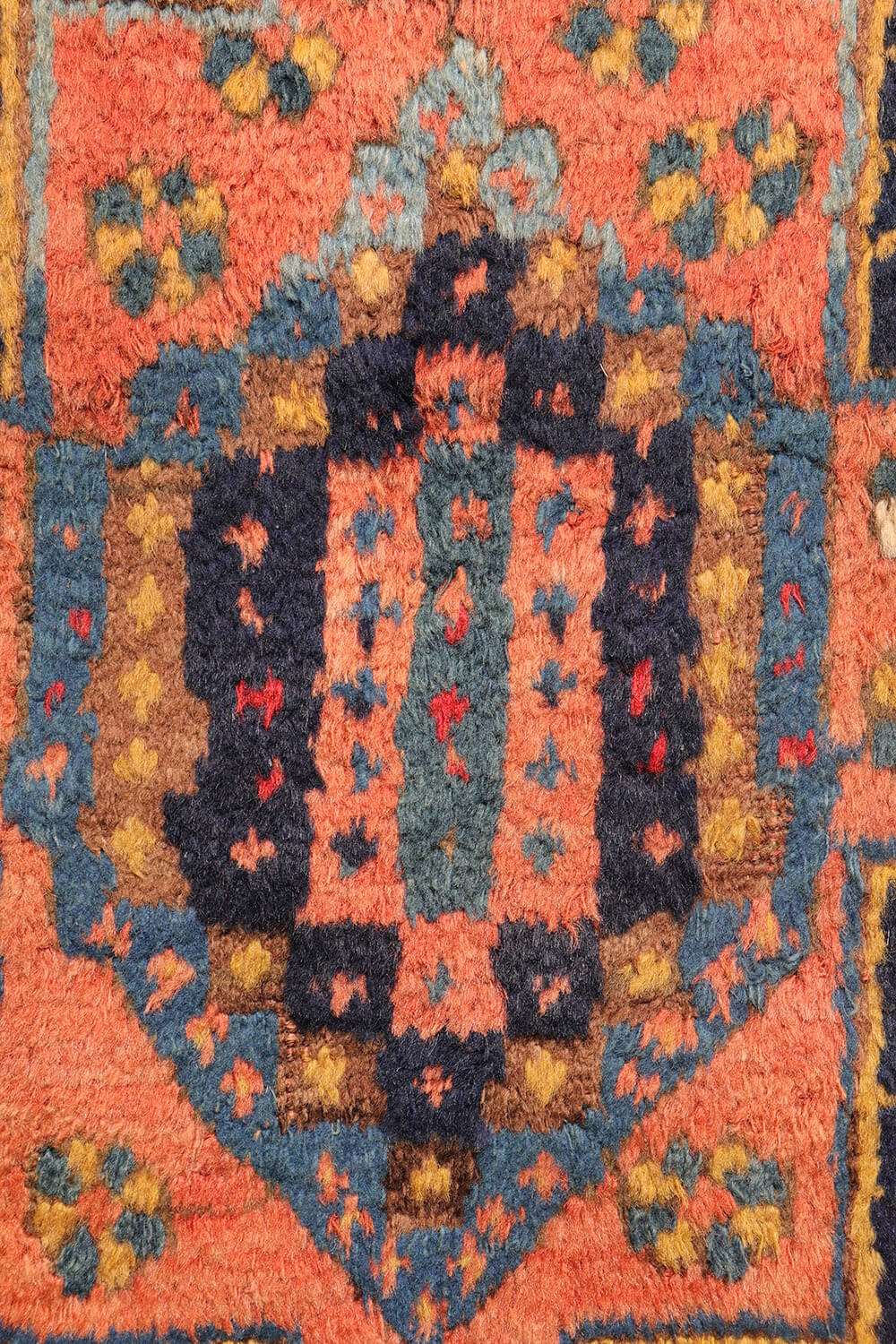
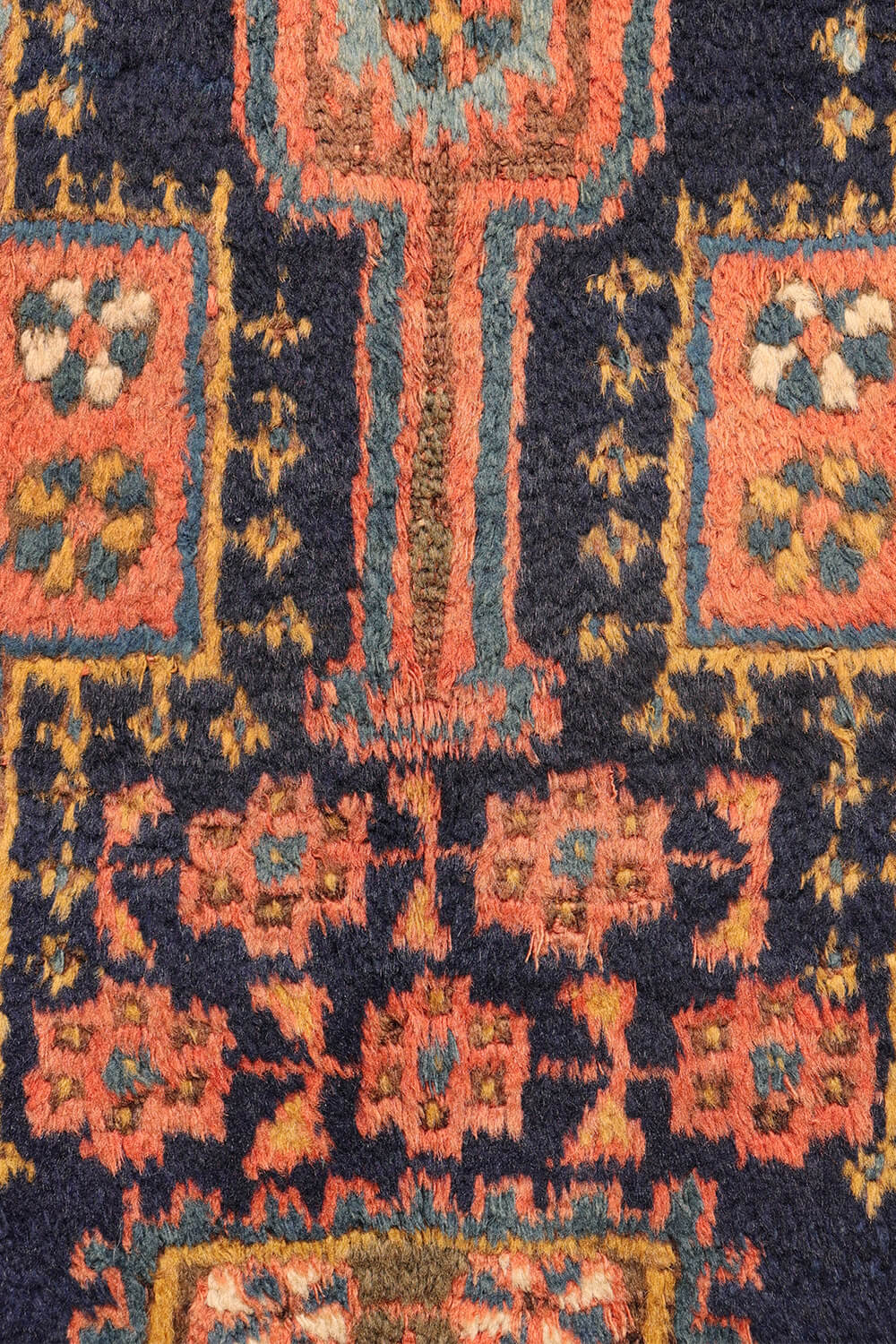
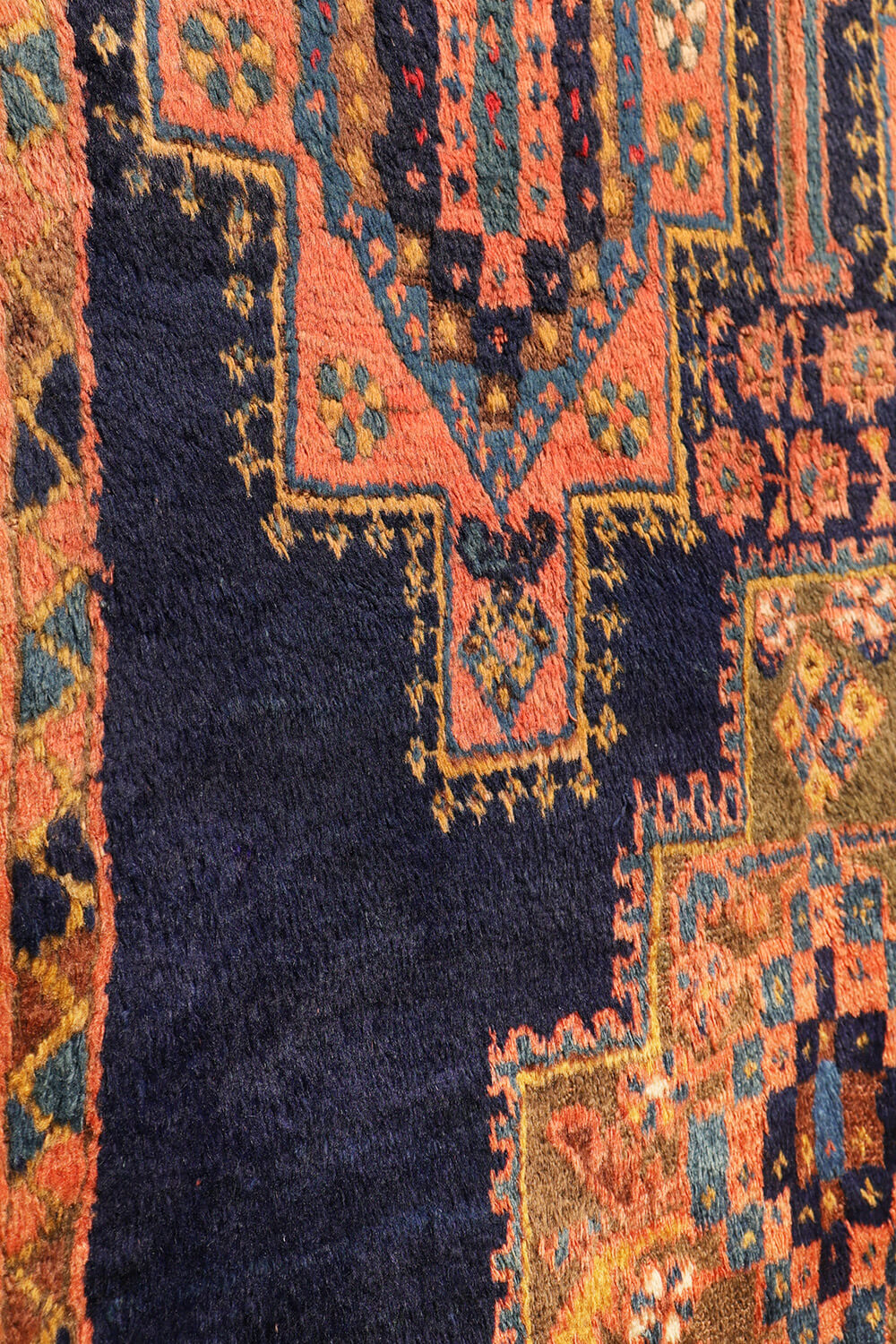
The deep indigo-blue field provides the perfect backdrop for the four medallions, woven in soft pastel colours that contrast beautifully with the dark ground. Although the medallions are drawn in a highly geometric manner, the tiny decorative motifs that embellish their outer sections soften the sharper angles, giving the design a more delicate and refined appearance.
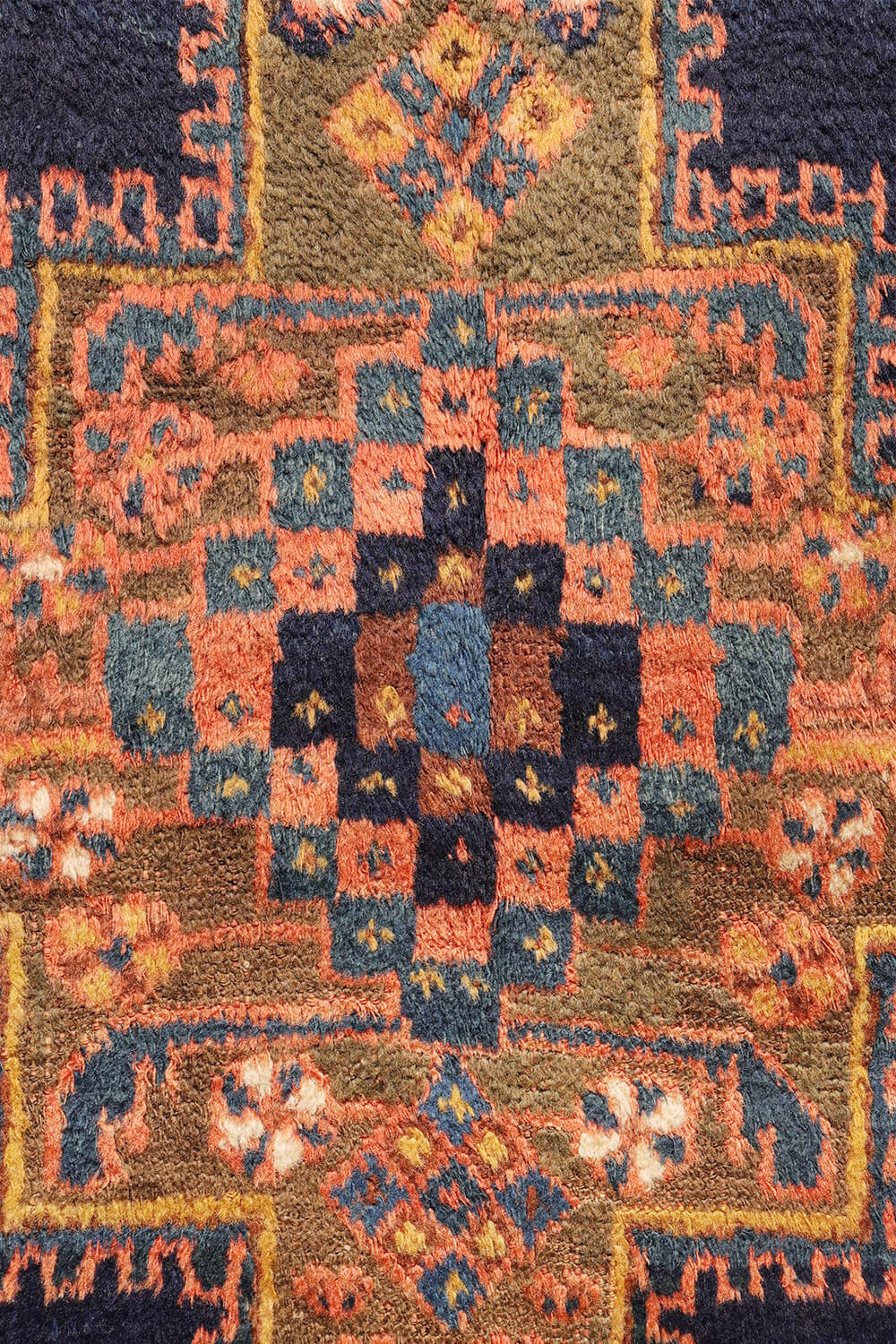
The interplay between the large-scale medallions and the minute motifs scattered within them and along their edges creates a wonderful sense of balance, softening the overall look of the rug while adding remarkable detail and visual interest.
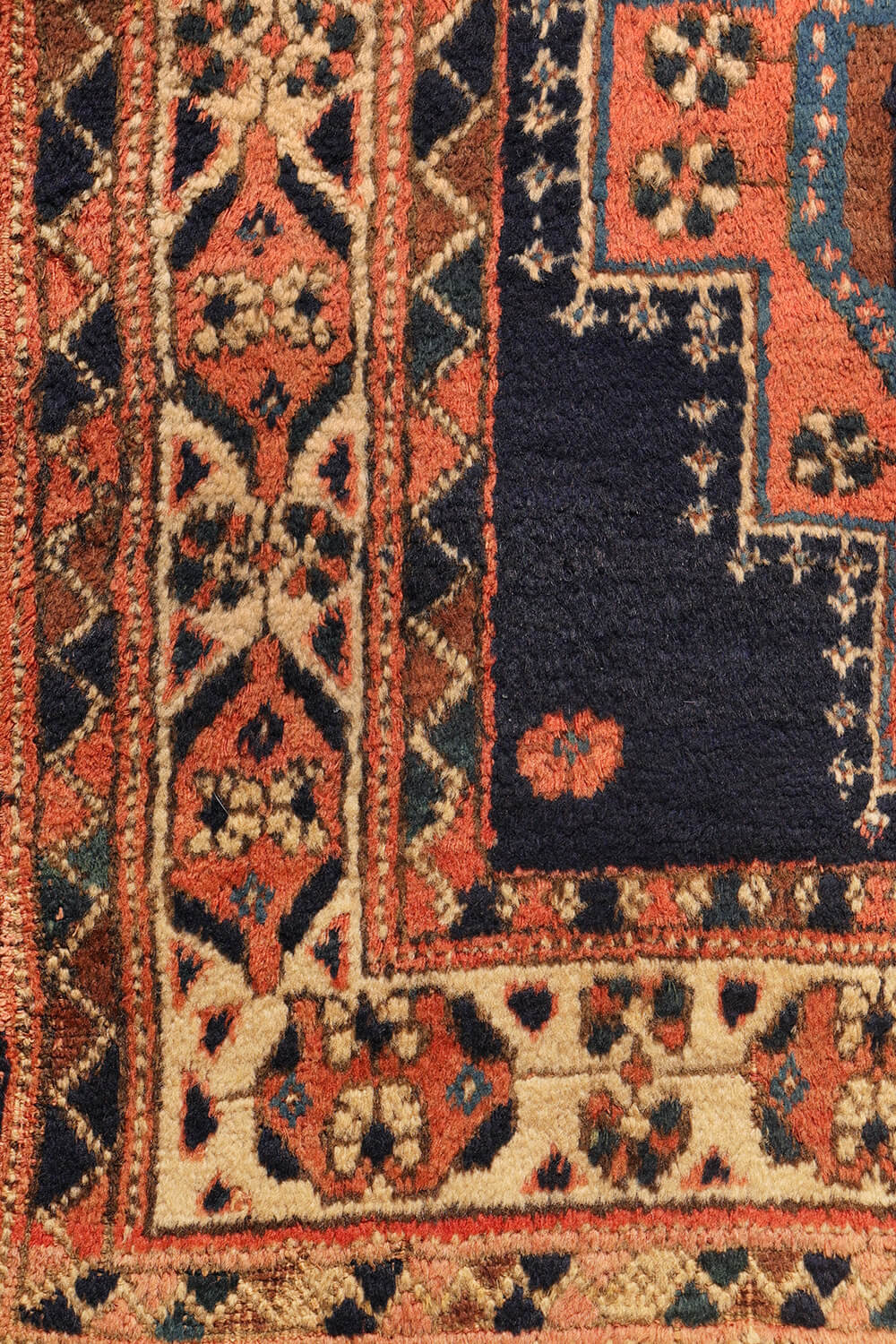
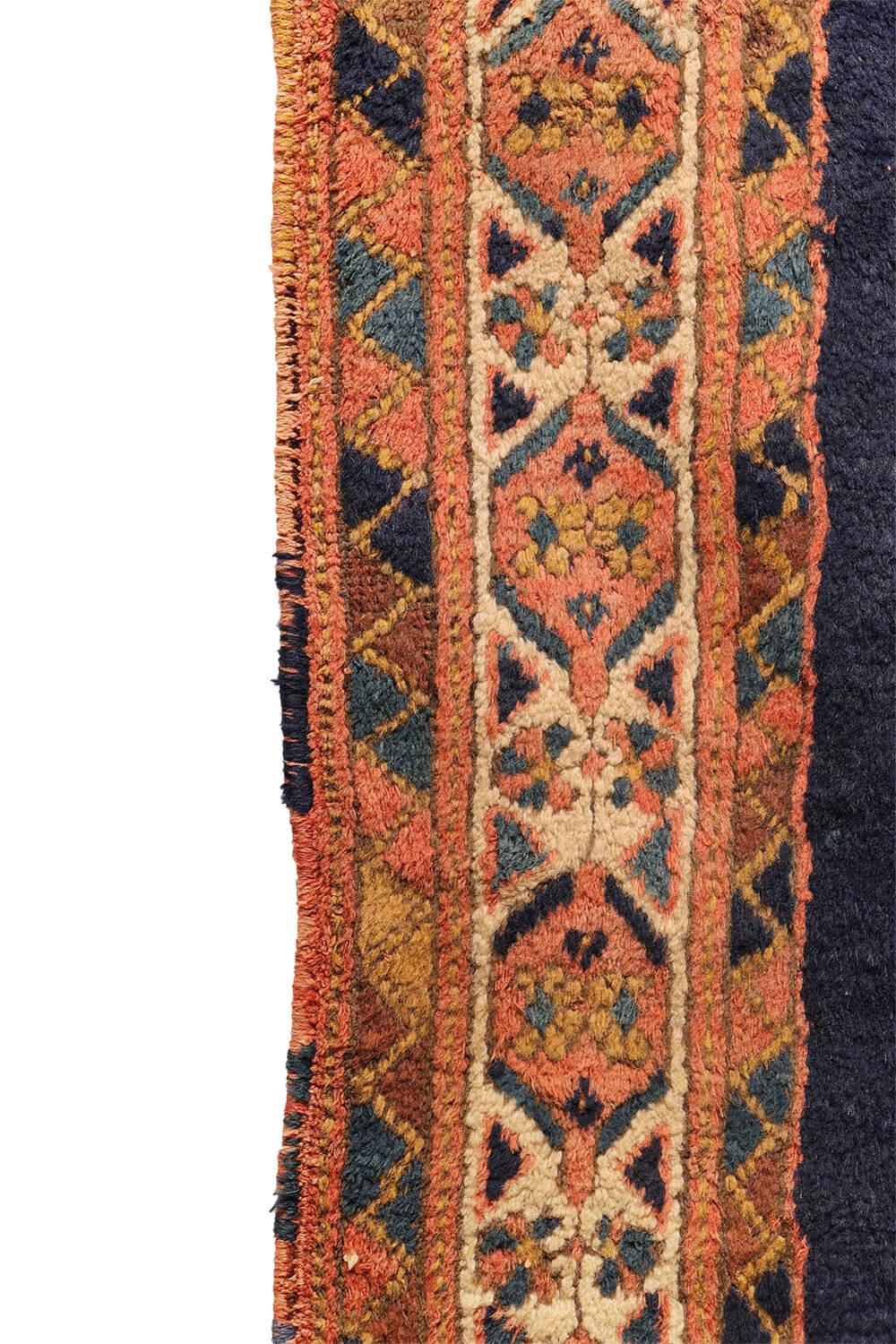
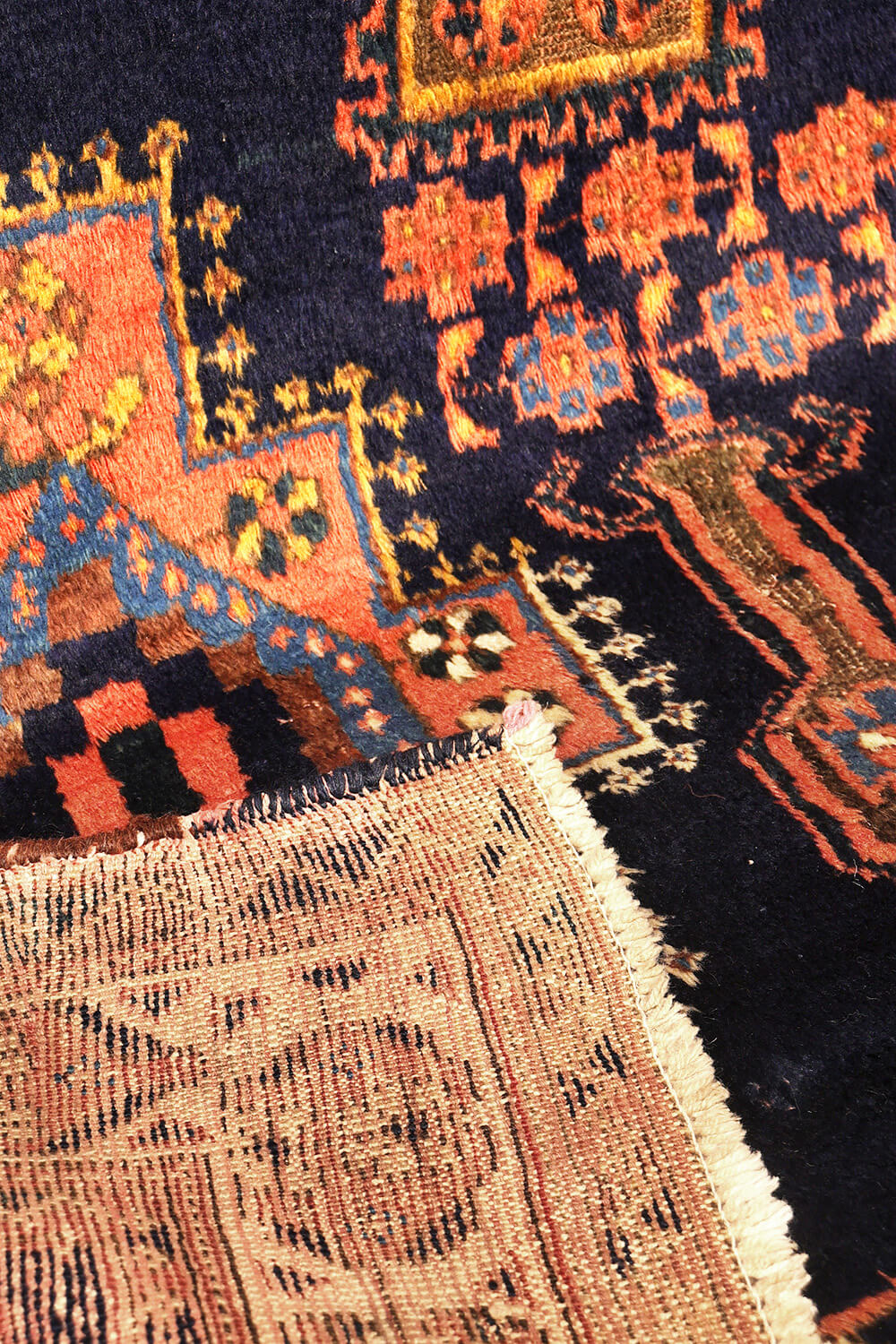
The rug retains its original side cords. It has mostly full pile throughout, with only a few areas of low pile. all the dyes are natural. Structurally, it remains sound and strong, and is ready to last for another hundred years.
Material: 100% hand-spun sheep wool
Size: 190×130 cms
Origin: Afshar tribe from Iran
Date of weaving: 1900s
Afshars live primarily in Southern Iran, east of Khamseh Confederacy territories. They are now largely sedentary; only a few thousands live as nomads. Most descendents of this tribe have mixed extensively with Persian people in hundreds of villages which dot the spacious territory south of the city of Kerman.
Whereas other south Persian tribes borrowed carpet designs from various distant urban workshops, Afshars were strongly influenced by those of a relatively nearby center, Kerman.
Nomadic Afshar pieces include salt bags, saddlebags, horse covers, soumak bags and an assortment of small tribal woven objects. Pieces for domestic use sometimes reveal urban influences but with qualities of verve and individuality that would never appear in items made in an urban workshop.Woolen warp and wefts predominated in Afshar work until cotton was adopted in the 1930s.
The task of identifying true nomadic Afshar work is complicated by the fact that related designs were woven in Persian-controlled villages as well as in those controlled by Afshars
Nomadic Afshar pieces include salt bags, saddlebags, horse covers, soumak rugs, and an assortment of small tribal woven objects. Pieces for domestic use sometimes reveal urban influences but with qualities of verve and individuality that would never appear in items made in an urban work- shop. Woolen warps and wefts predominated in Afshar work until cotton was adopted in the 1930s. Wool warps are almost invariably ivory in color, though minor admixtures of darker wool or goat hair are occasionally found. Foundation and pile wools tend to be soft, and the spin is not as tight as in Qashqa’i rugs. Wefts are commonly dyed red, sometimes with a decidedly orange tinge which distinguishes them from Khamseh work. Another help- ful identifying feature relates to size. Formats of approximately 4 by 5 feet were used so frequently that one can often correctly guess “Afshar” simply by seeing these familiar proportions.
Written material about Afshar rugs is modest but growing. Few tribes reveal such imaginative diversity of patterns, ranging from traditional medallions with Turkoman overtones to Kerman-inspired vase patterns. The various streams of influences in Afshar work account for the periodic discovery of yet another unidentified pattern, often tied to design sources far re- moved from the tribe’s nomadic origins.
1 in stock
Additional information
| Weight | 5.9 kg |
|---|