1,035.00 €
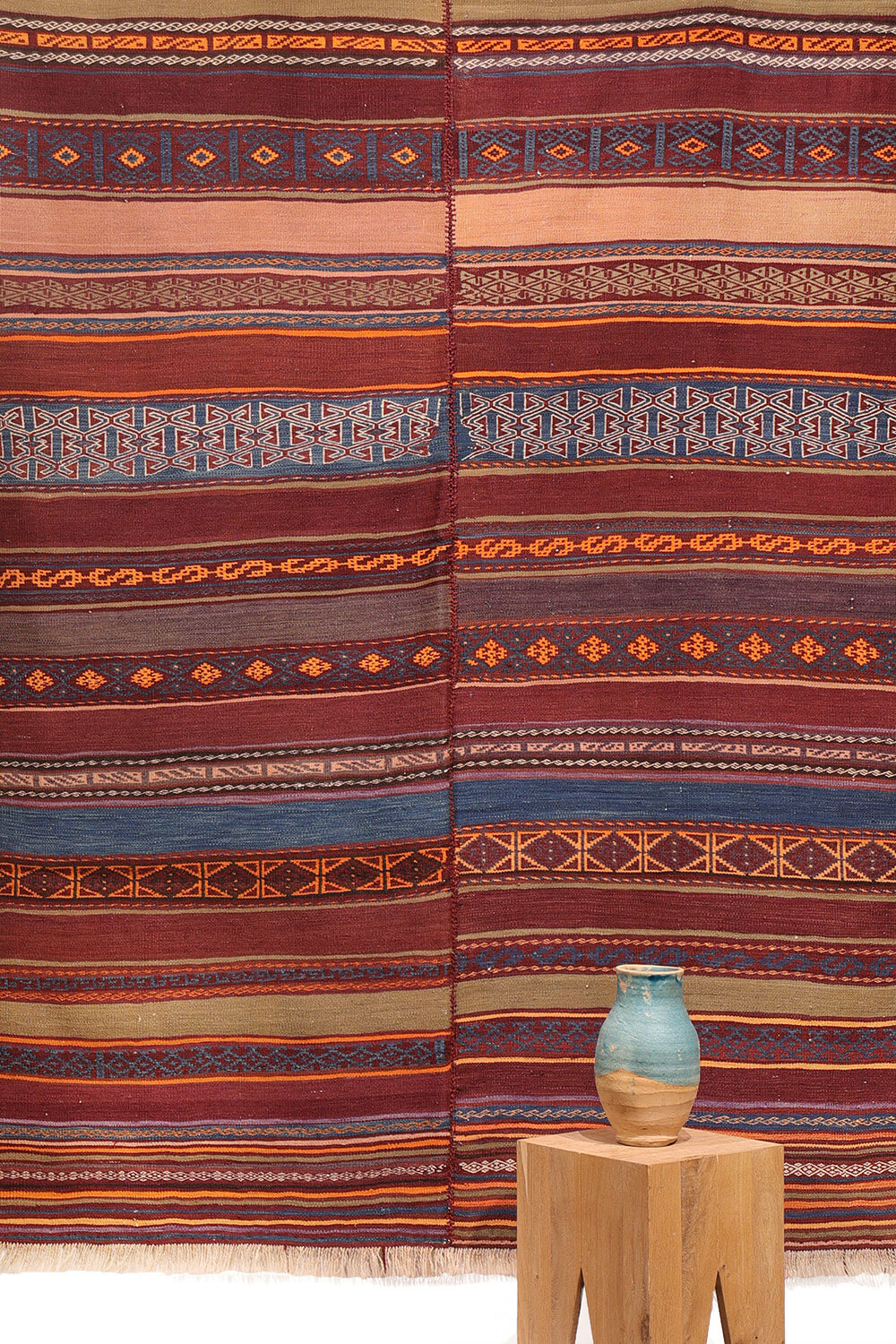
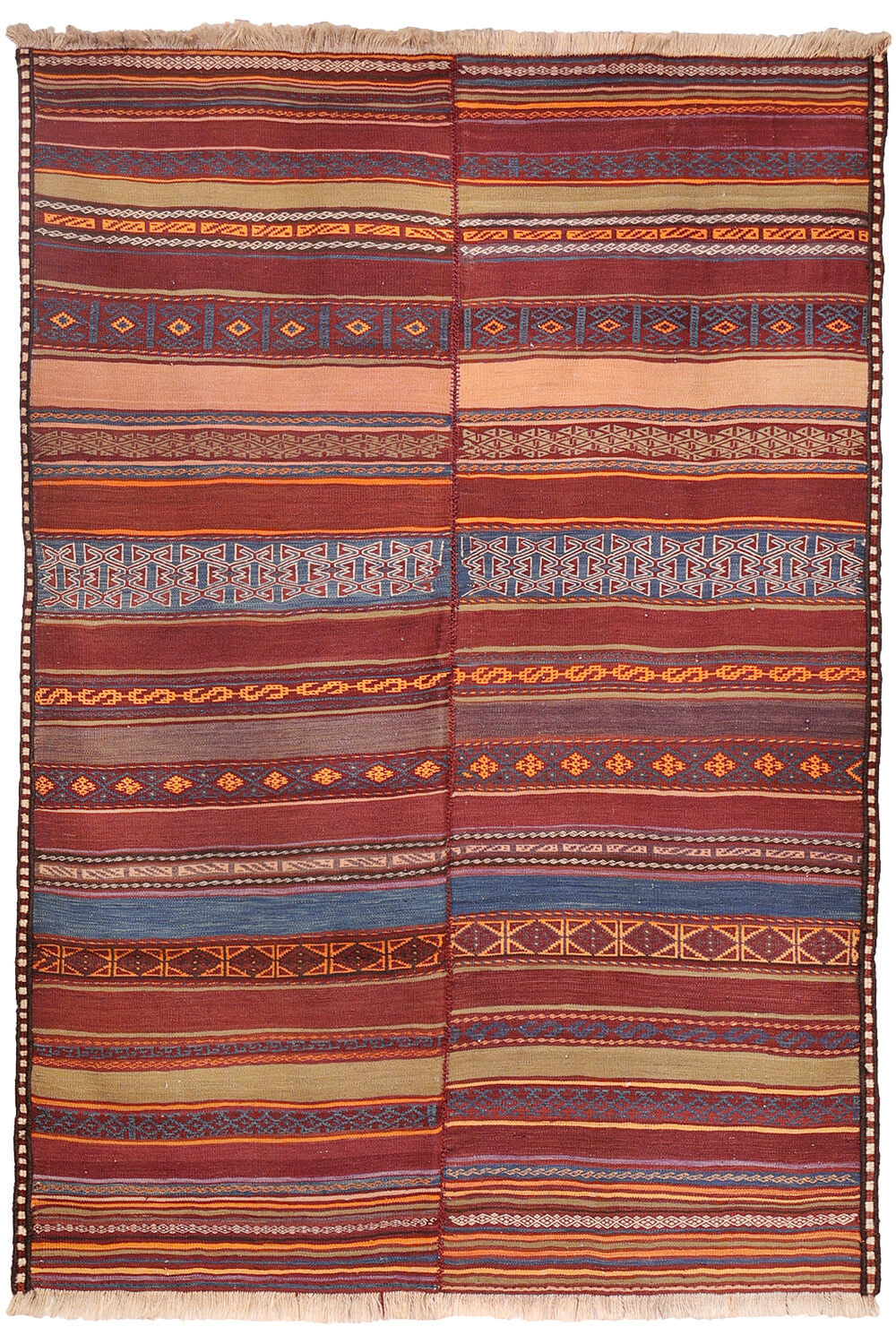
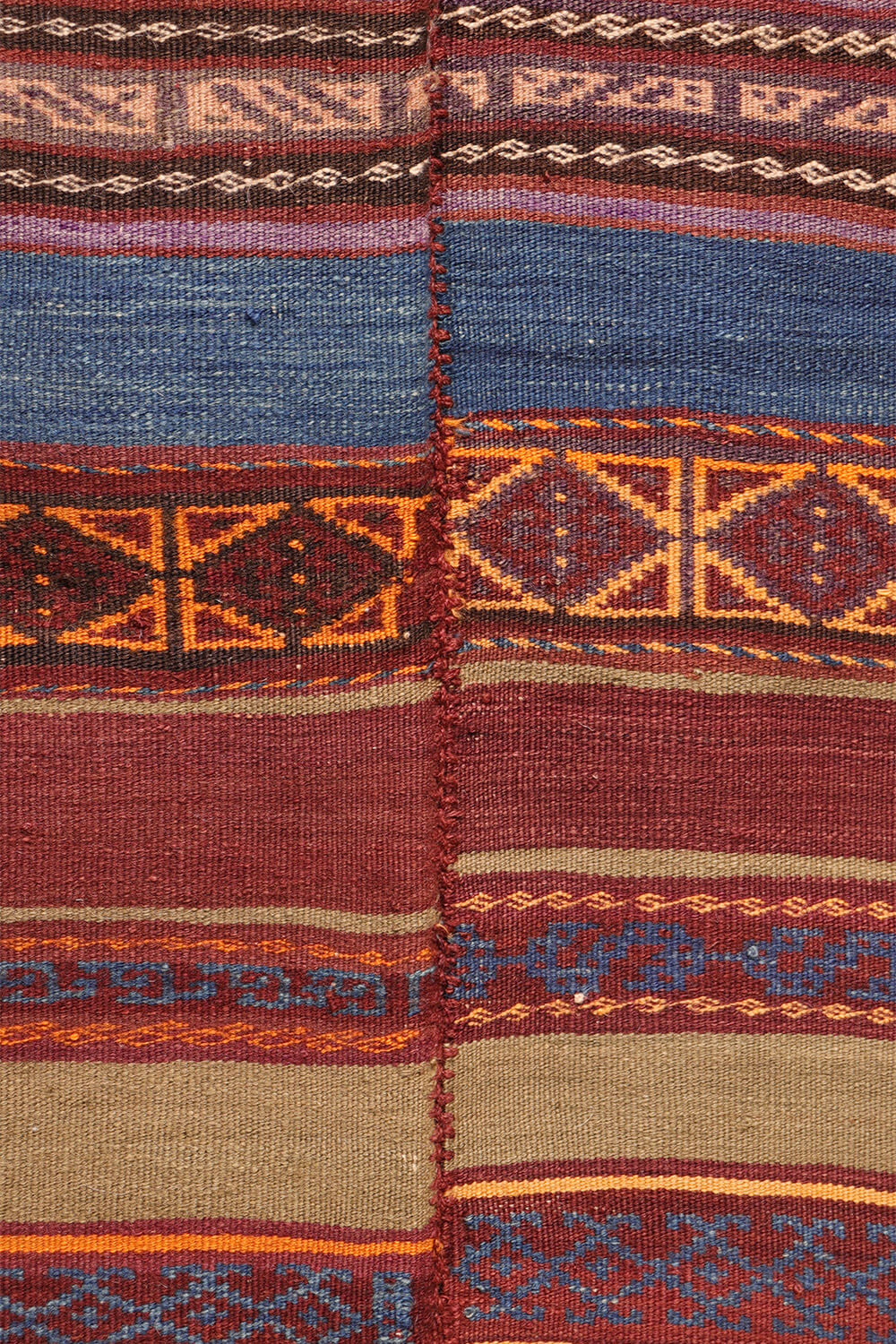
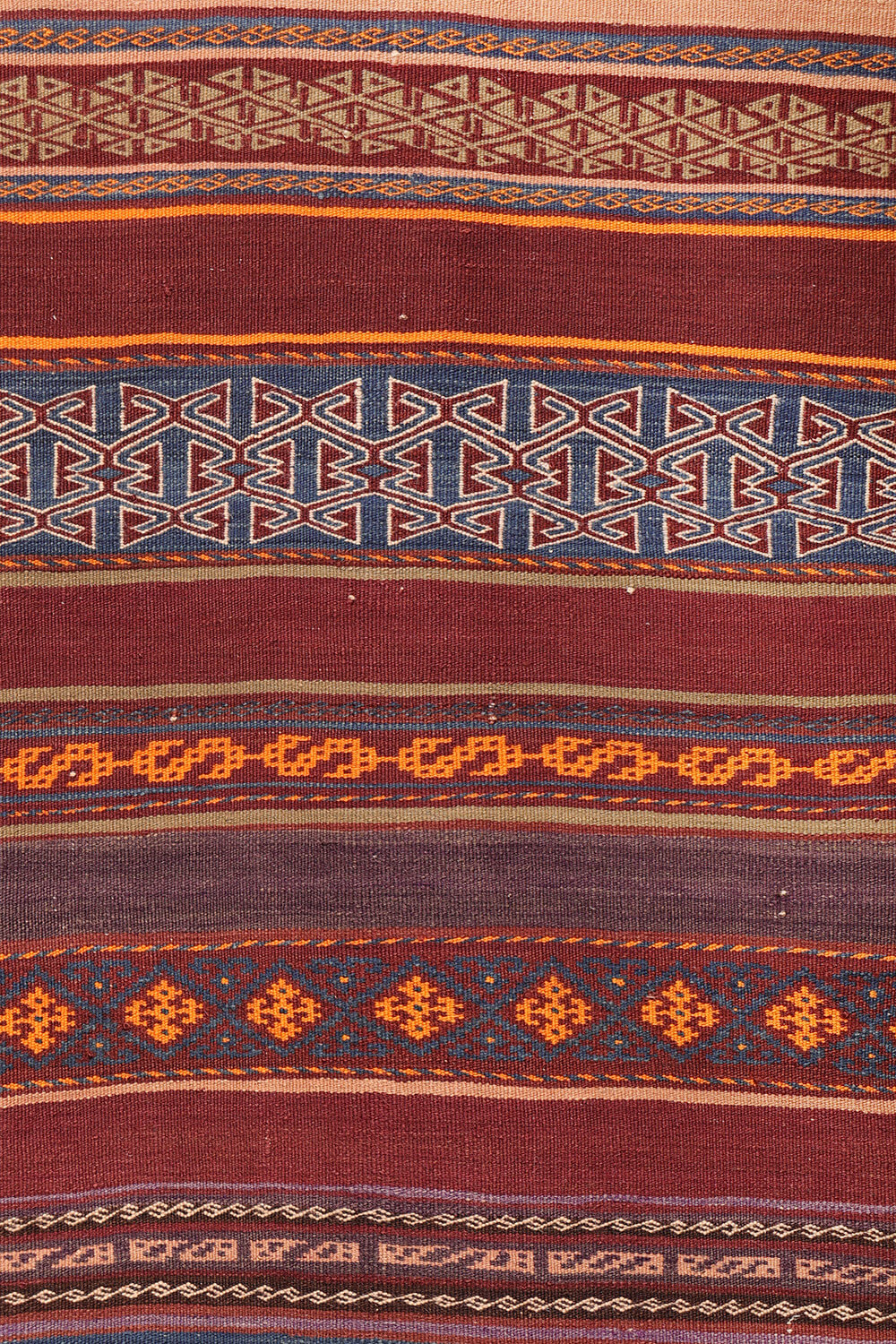
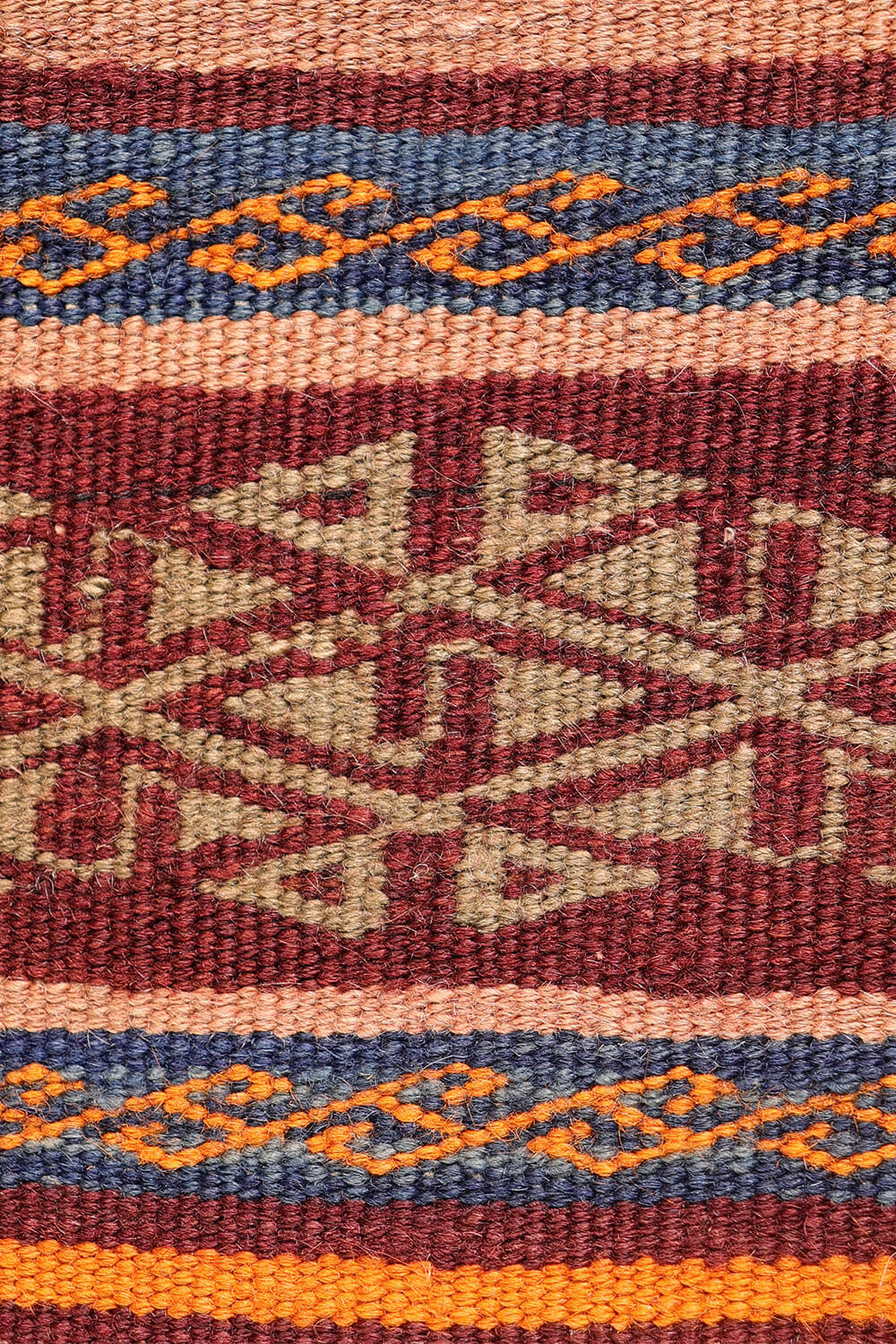
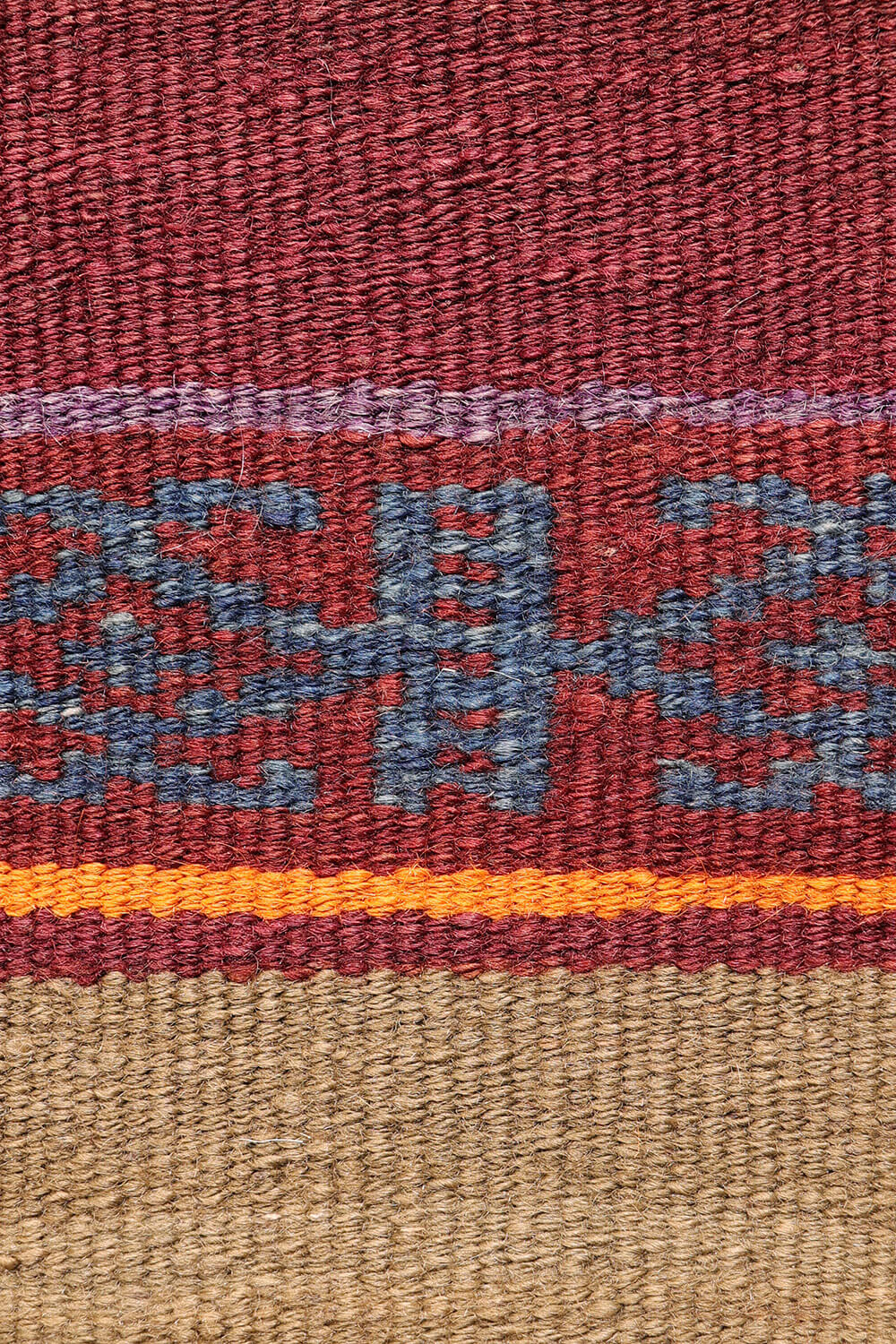
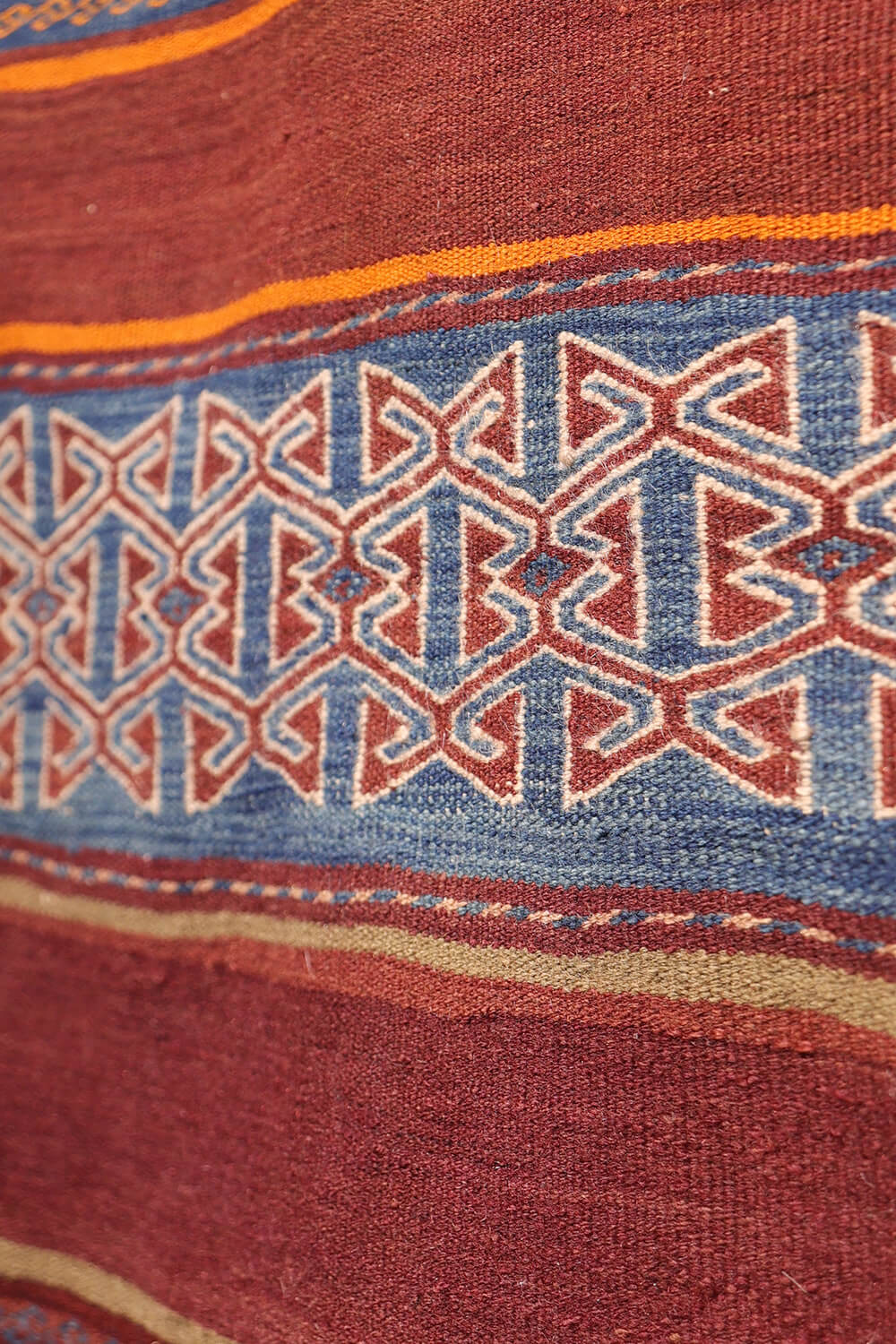
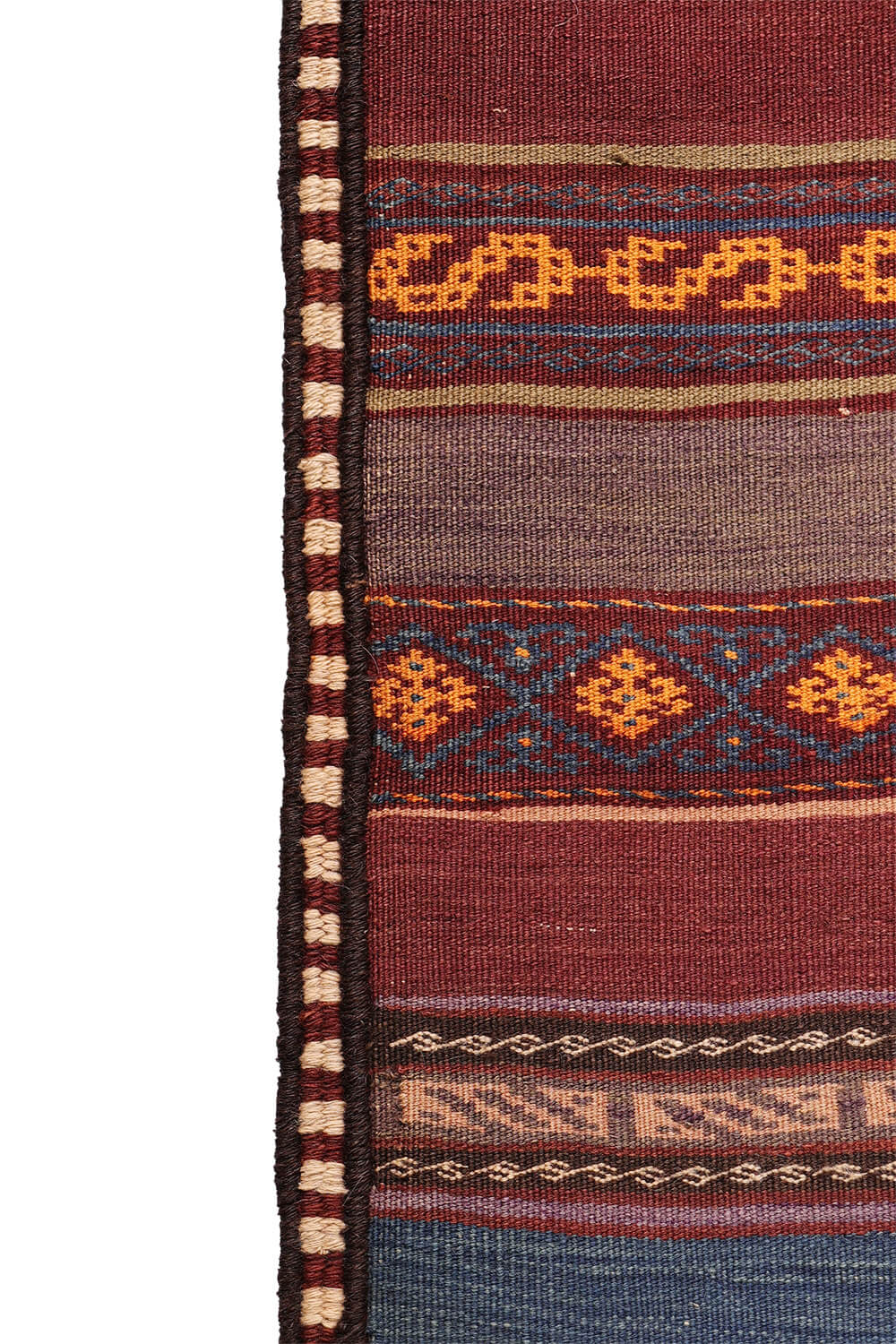
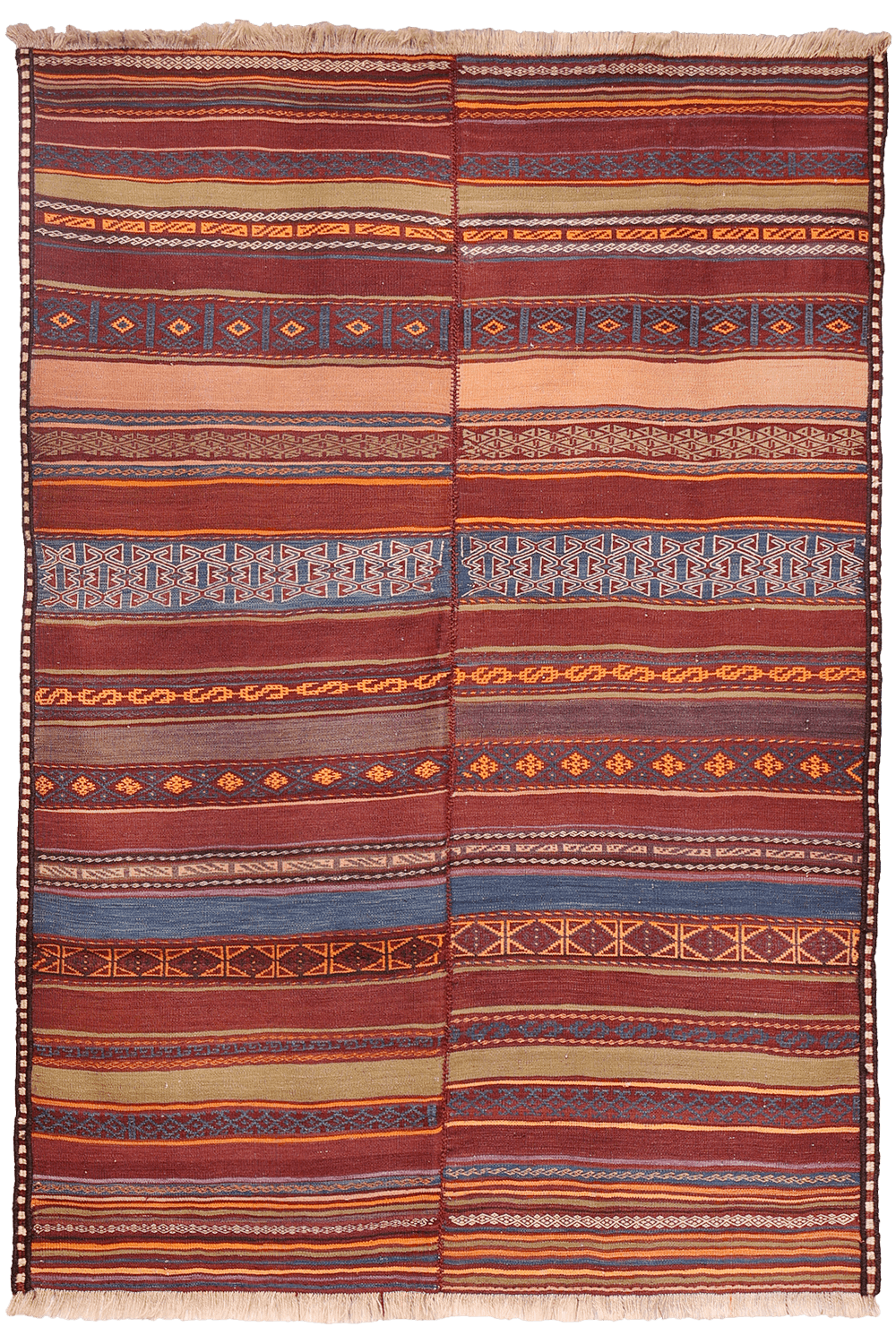
A stunning Taimani Aimaq Baluch kilim kilim from Afghanistan, distinguished by its beautiful and varied colour palette. The colours are predominantly natural dyes, including a deep indigo blue, a rich pistachio green, and a dark burgundy, although the orange tones may derive from early synthetic dyes.
The Aimaq
Known collectively as the Chahar Aimaq (chahar means ‘four’ and aimaq is a Mongolian word for nomad), these four tribes the Taimani, the Firozkohi, Jamshidi, and the Qala-i-Nau Hazara – are all Farsi-speaking semi-nomadic or sedentary farmers and traders. Predictably the Aimaq have widely mixed origins.
The Taimani Aimaq
The Taimani are by far the largest of the Chahar Aimaq group and there are about a dozen main clans and numerous sub-clans. They inhabit a vast area of west- central Afghanistan, especially around the market town of Charchagan in Ghor province.
he Taimani are semi-nomadic people, who move out of their mud-house villages after the spring planting in late March to take their flocks to the high summer pastures, and after returning briefly in May to plant melons, they go back to their summer encampment, the yalaq, until the September harvest begins. It is in these summer months that the women prepare the wool and do the weaving. The Taimani live in an encampment of distinctive square or rectangular felt-covered yurts, whereas the other Aimaq nomads are found in conventional, round and smaller-than-average Turkoman tents.
The kilims from the Charchagan region are very finely woven using soft Ghilzai wool, and the wefts are so densely compacted and beaten down on the loom that the kilims are very heavy and hard-wearing. This structural integrity is characteristic of their weft-faced patterning technique, and the compositions consist of banded designs of intricate interlocking motifs running across the rug in soft colours, such as browns, greens, gold, a gentle red and purple. There are no borders to these rugs, just a narrow band of extra-warp reinforcing the selvedge, often in loosely spun red and white wool, and the fringes are short and plain. The Charchagan Taimani kilims are unusually large for a rug woven in one piece, on a crude ground loom, in the complex technique of weft float. These kilims are also sometimes called samani or sarmanid, possibly derivatives of ‘Samanid’, the sophisticated dynasty who ruled from Bokhara, and claimed suzerainty over Ghor and large tracts of west Afghanistan, established the Ghaznavid dynasty and built the famous minaret of Jam in the twelfth century.
“Kilim: the complete guide”, Alistair Hull and José Luczyc-Wyhowska
1 in stock
Additional information
| Weight | 7.9 kg |
|---|