125.00 €
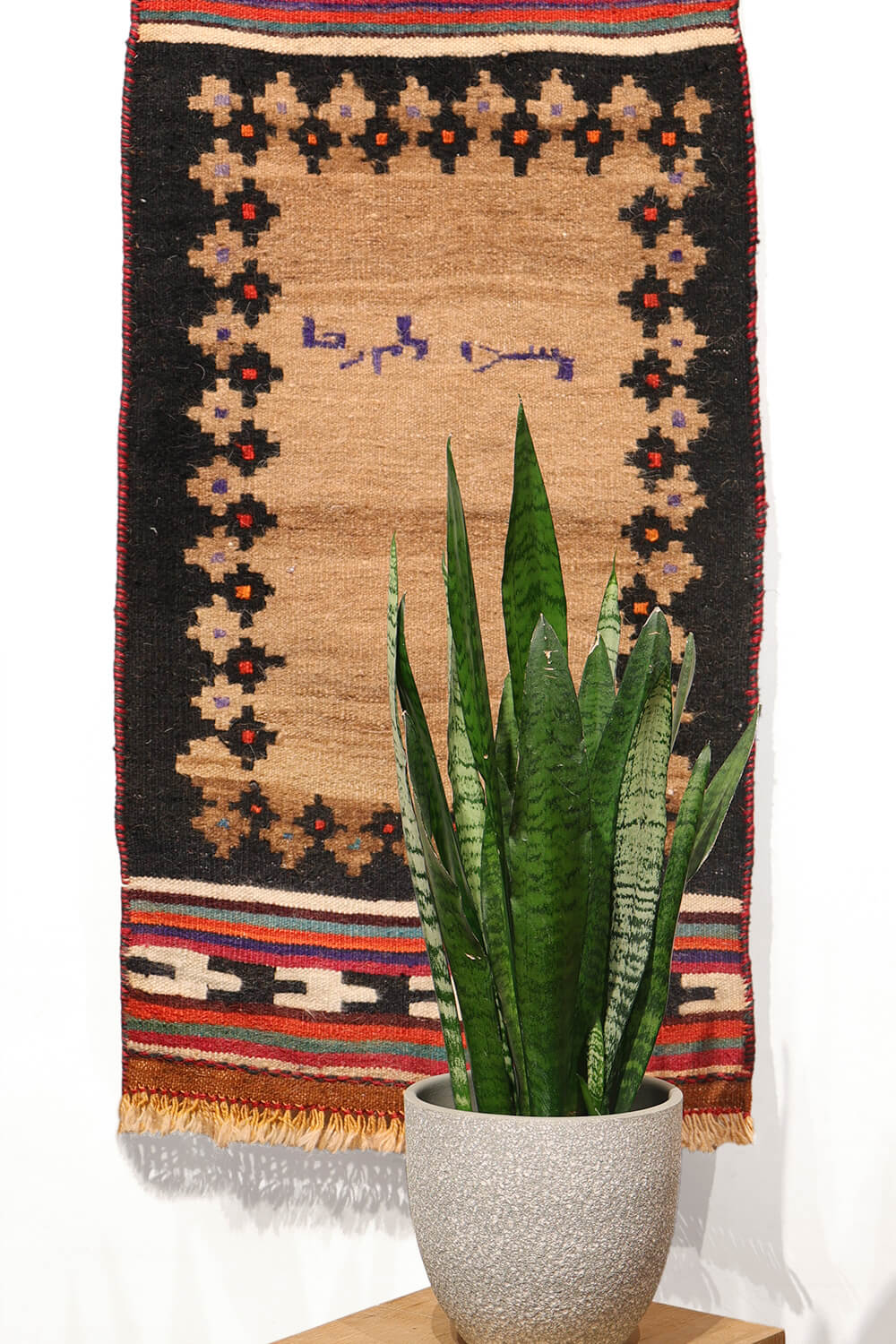
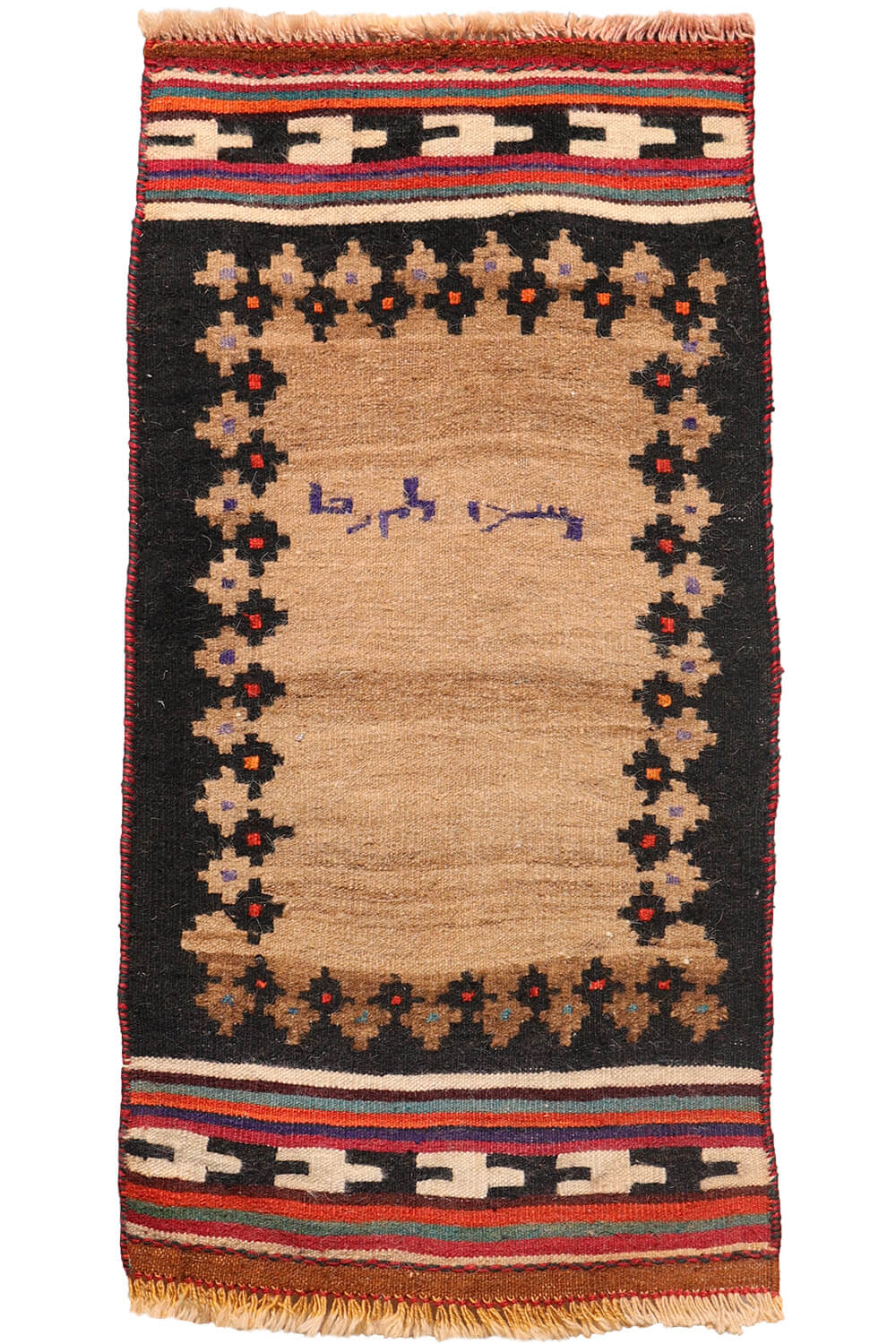
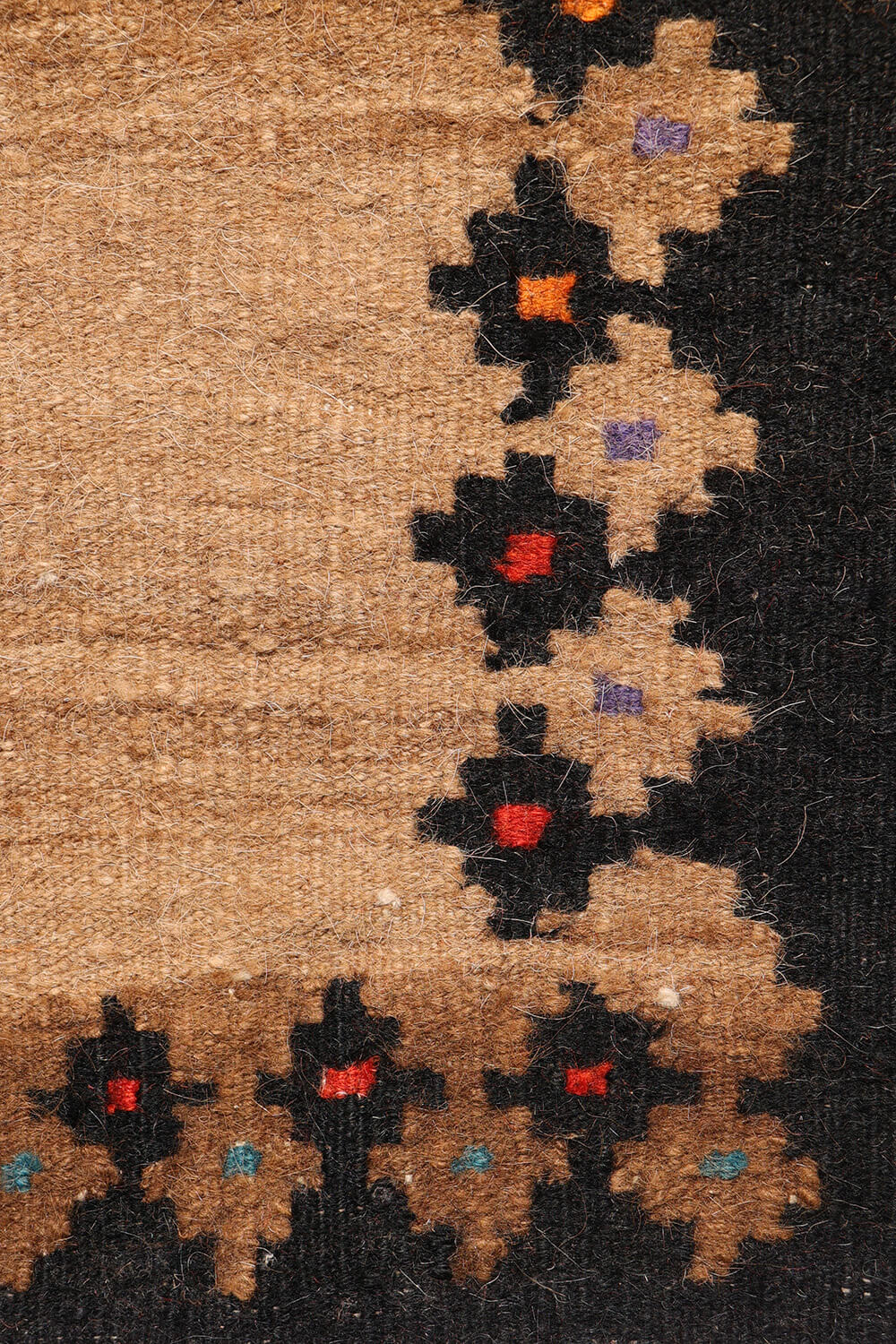
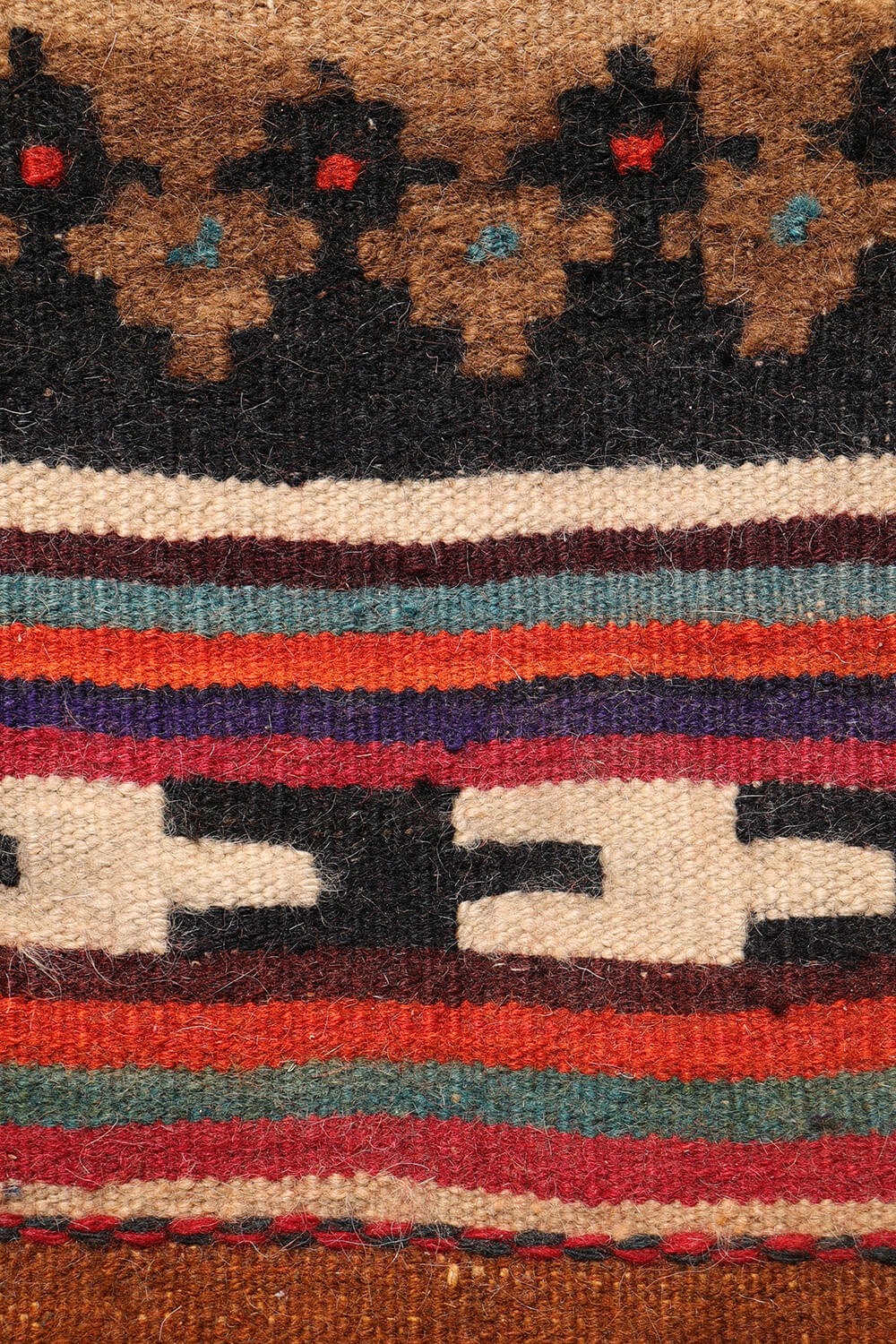
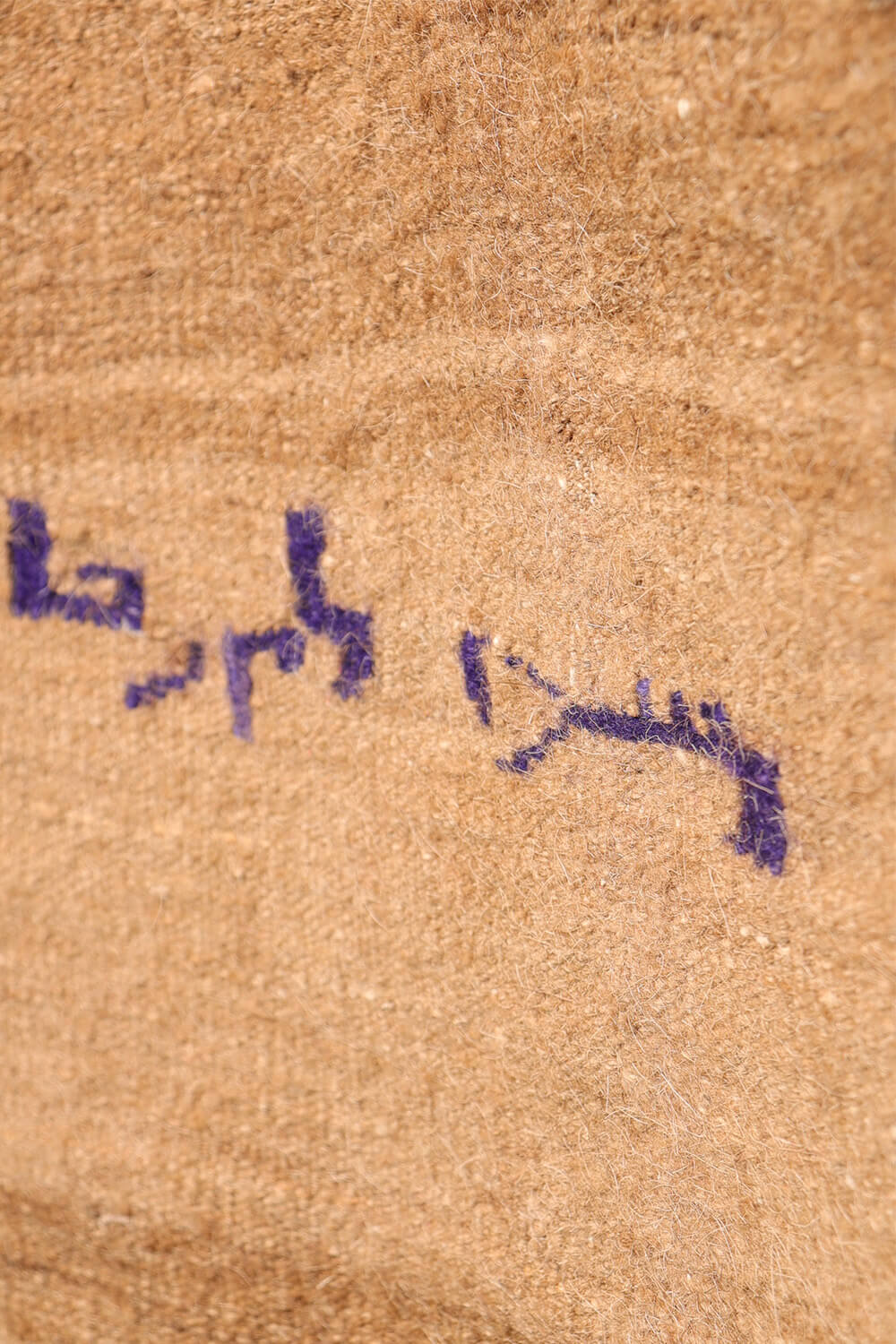
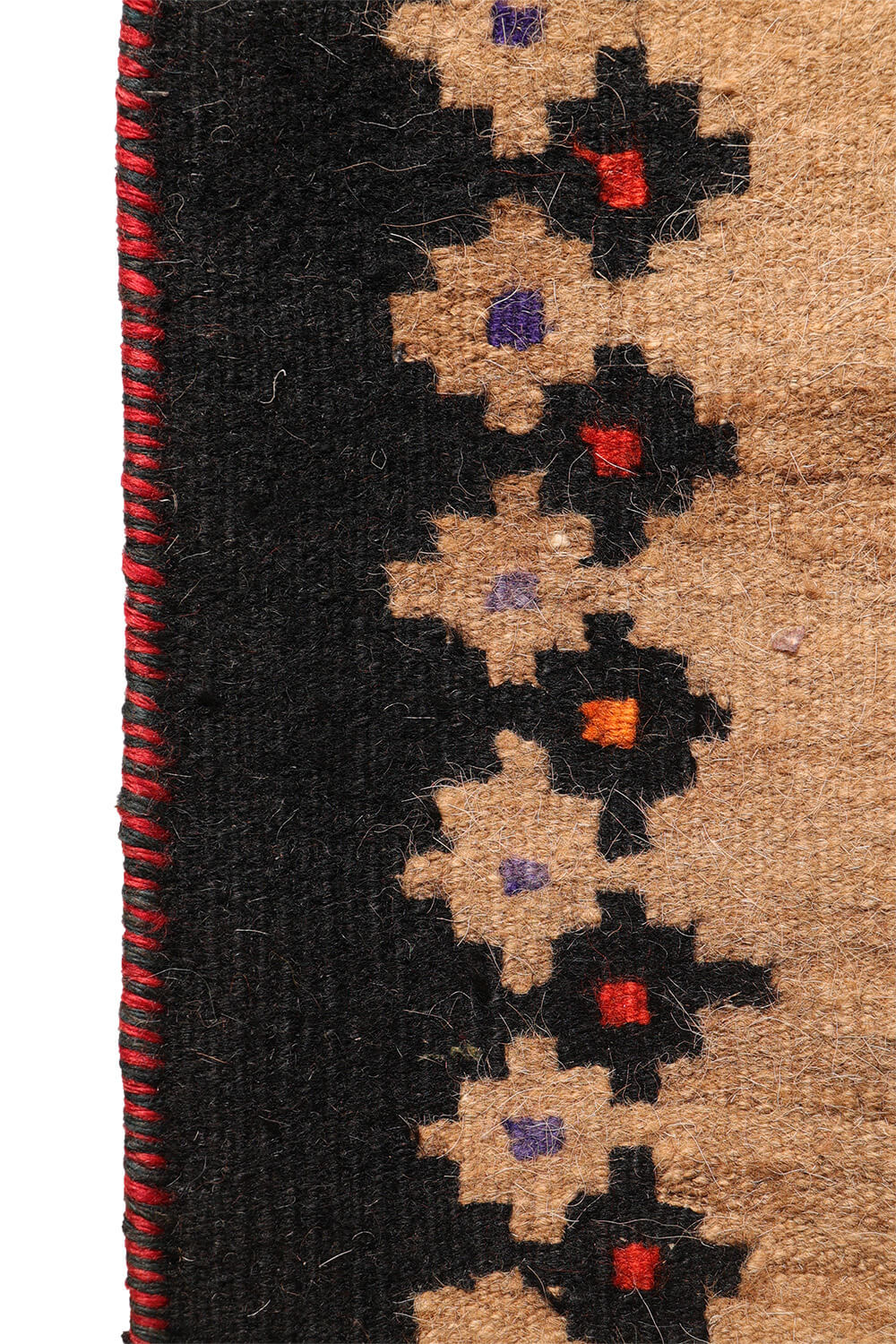
A vintage Shia prayer kilim or janamaz. Like most Shia janamaz, this kilim features the typical small size, an empty central field with undyed camel-colored wool, and a surrounding border. In this case, the border is more elaborate than usual, featuring a laleh abbassi motif typical of larger Qashqai kilims. However, the weaver has also inscribed the word “Mehrab”.
In Iran, Mehrab (مهراب) is traditionally a male name of Persian origin, historically associated with male figures, including a character in the Shahnameh, and while rare exceptions may exist, it is generally recognized as a masculine name in Iranian culture.
At the same time, the term mihrab (more commonly rendered as mehrab in Persian transliteration) also refers to the prayer niche in a mosque, the architectural element that indicates the direction of Mecca (qibla). The word has Arabic origins and is widely used in Islamic art and architecture.
In the context of a prayer kilim or rug, it is therefore more likely that “mehrab” refers to the mihrab design or motif rather than a personal name, and would indicate the position where the faithfull will place the head during prayer.
Material: 100% hand-spun sheep wool and camel wool
Size: 108×57 cms
Origin: Qashqai tribe, Iran
Date of weaving: 2000s
It is generally accepted that Shia Muslims, unlike Sunnis, do not use specifically designed kilims or prayer rugs as they pray directly on a rug, a cloth, the ground, a stone or on a Turbah (or Mohr in Persian), a cloth or on a rug.
However, during the last 27 years on my frequent trips to southern Iran, I have repeatedly found that Shia Muslims in southern Iran use a type of small kilim that acts as a Janamaz or prayer kilim. I have acquired some of these tiny kilims directly from the person who used them for prayer and have been confirmed on numerous occasions that this type of kilim is used during prayer.
The small size of these prayer kilims is due to their function of covering the ground only in the area where the faithful will rest their head. The material used is always wool, which, in most cases, is left in its natural undyed colour, representing the earth. It is also significant that many of these kilims have been woven from camel wool in the central field.
1 in stock
Additional information
| Weight | 1.5 kg |
|---|