Sale!


Original price was: 525.00 €.393.75 €Current price is: 393.75 €.
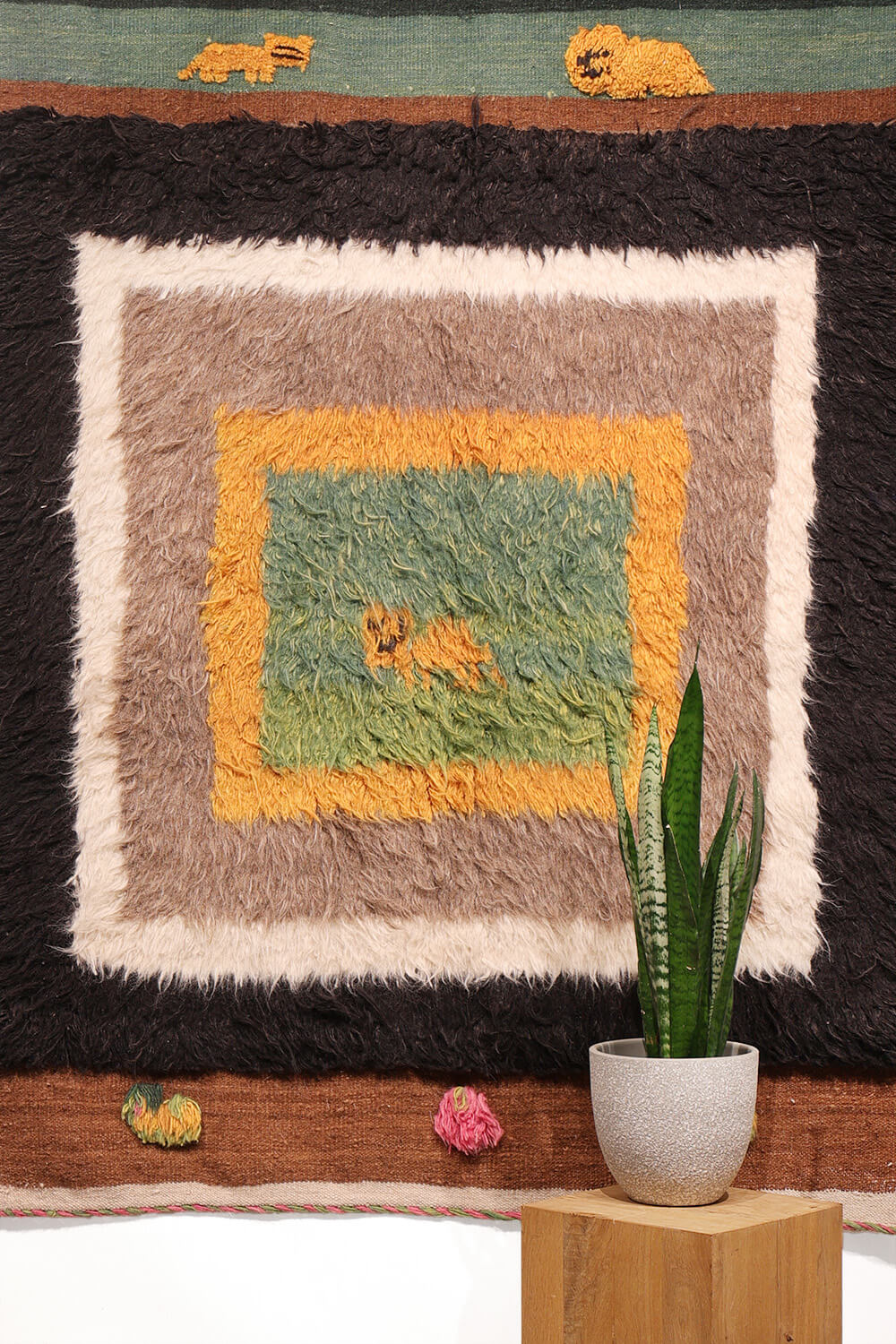
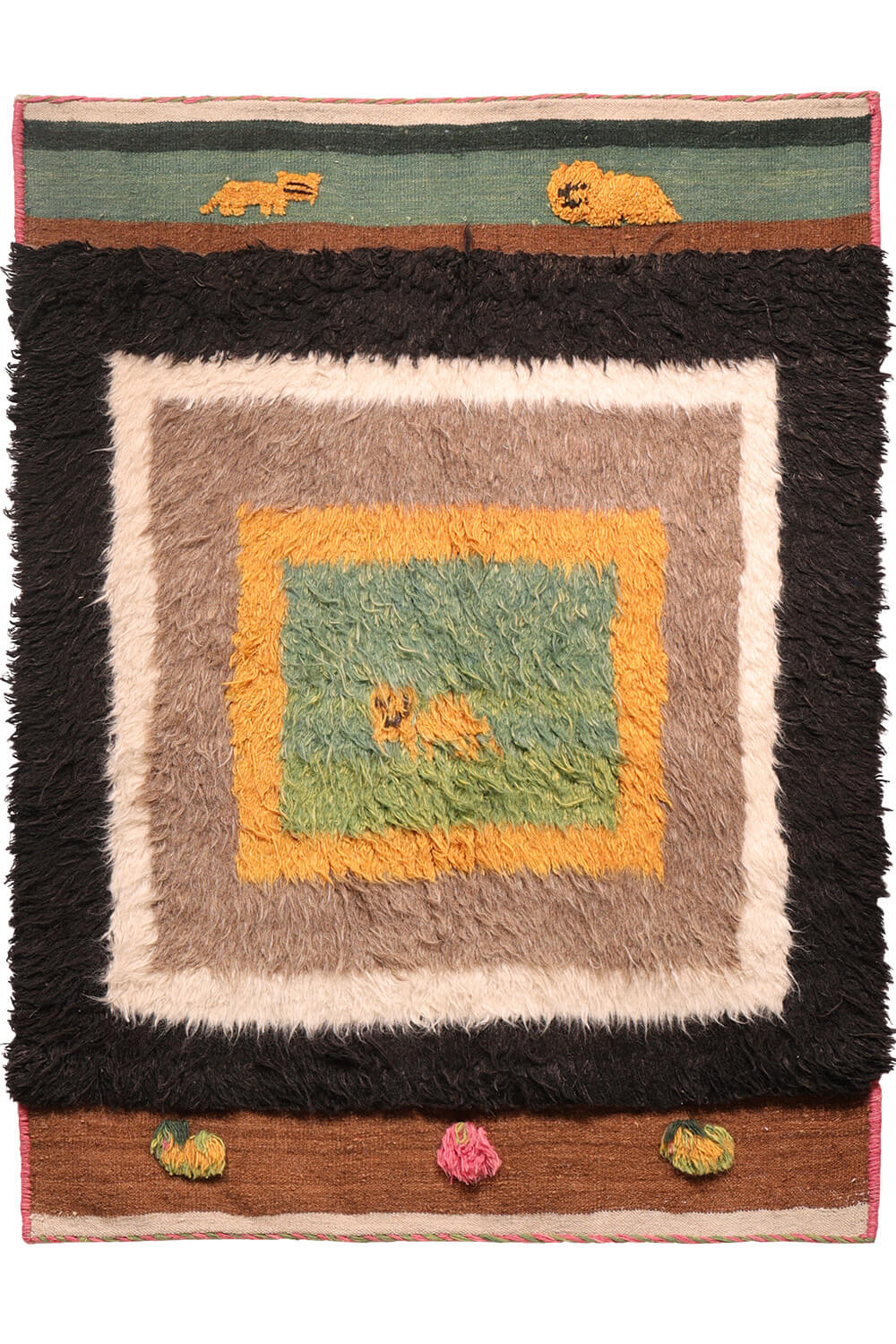
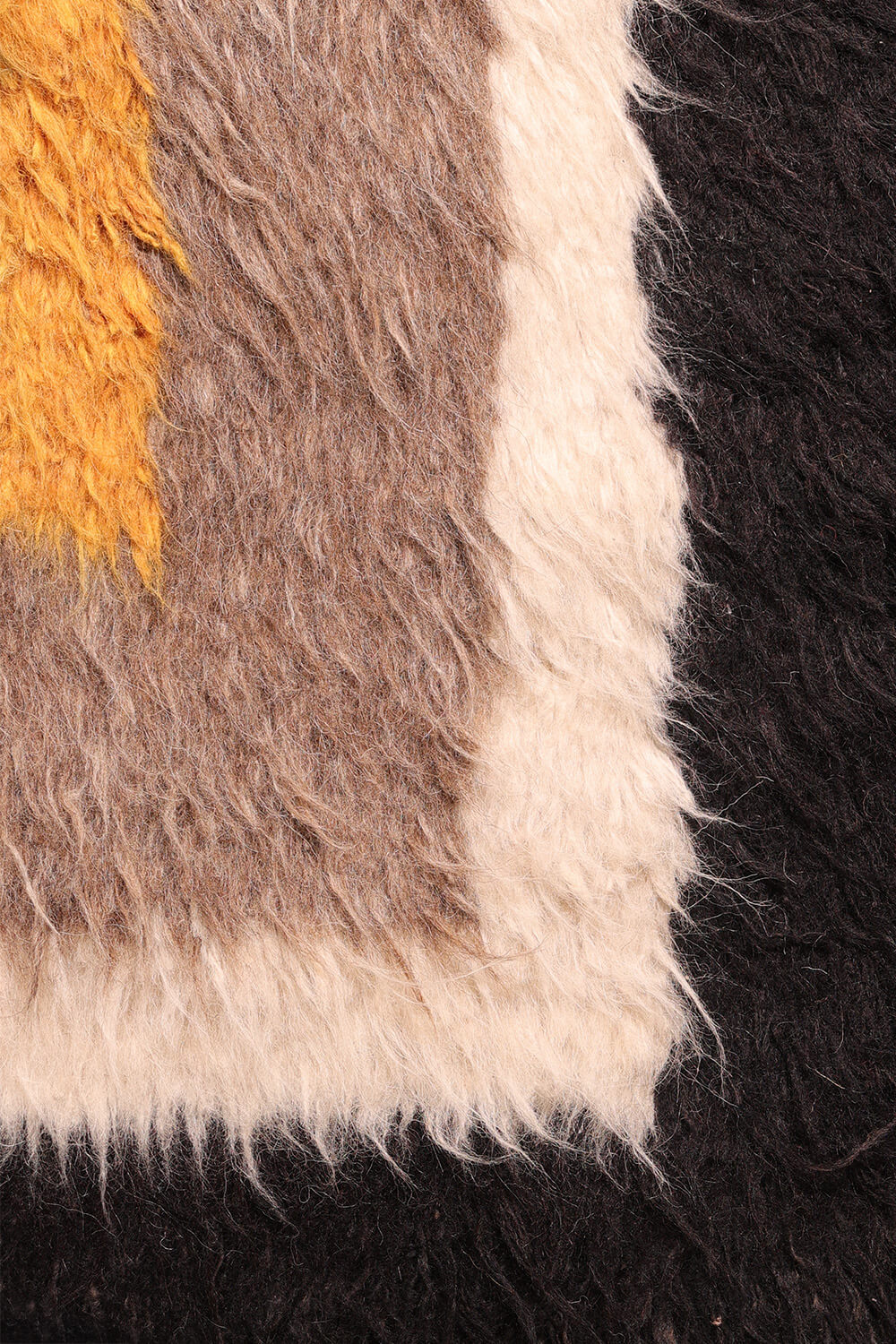
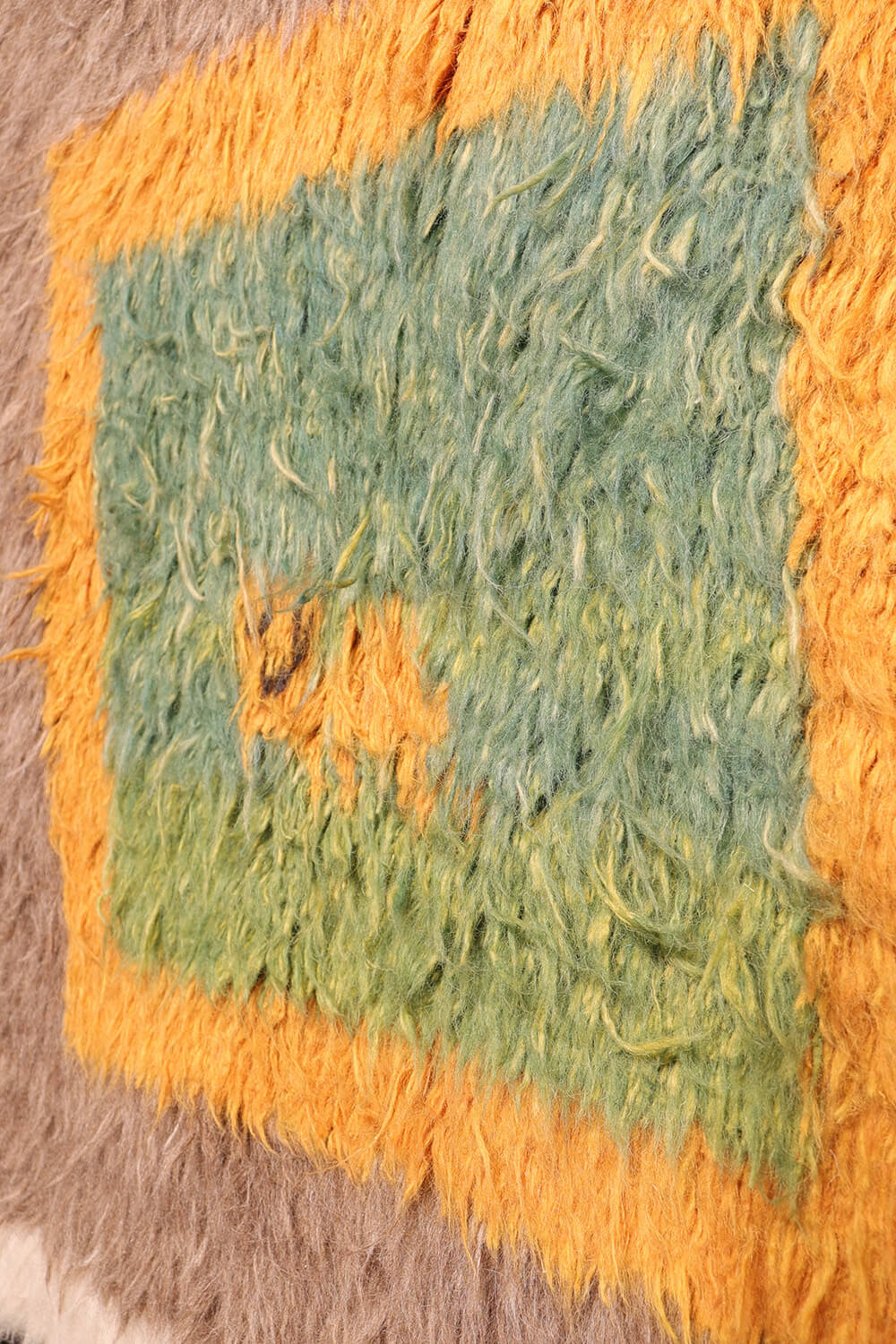
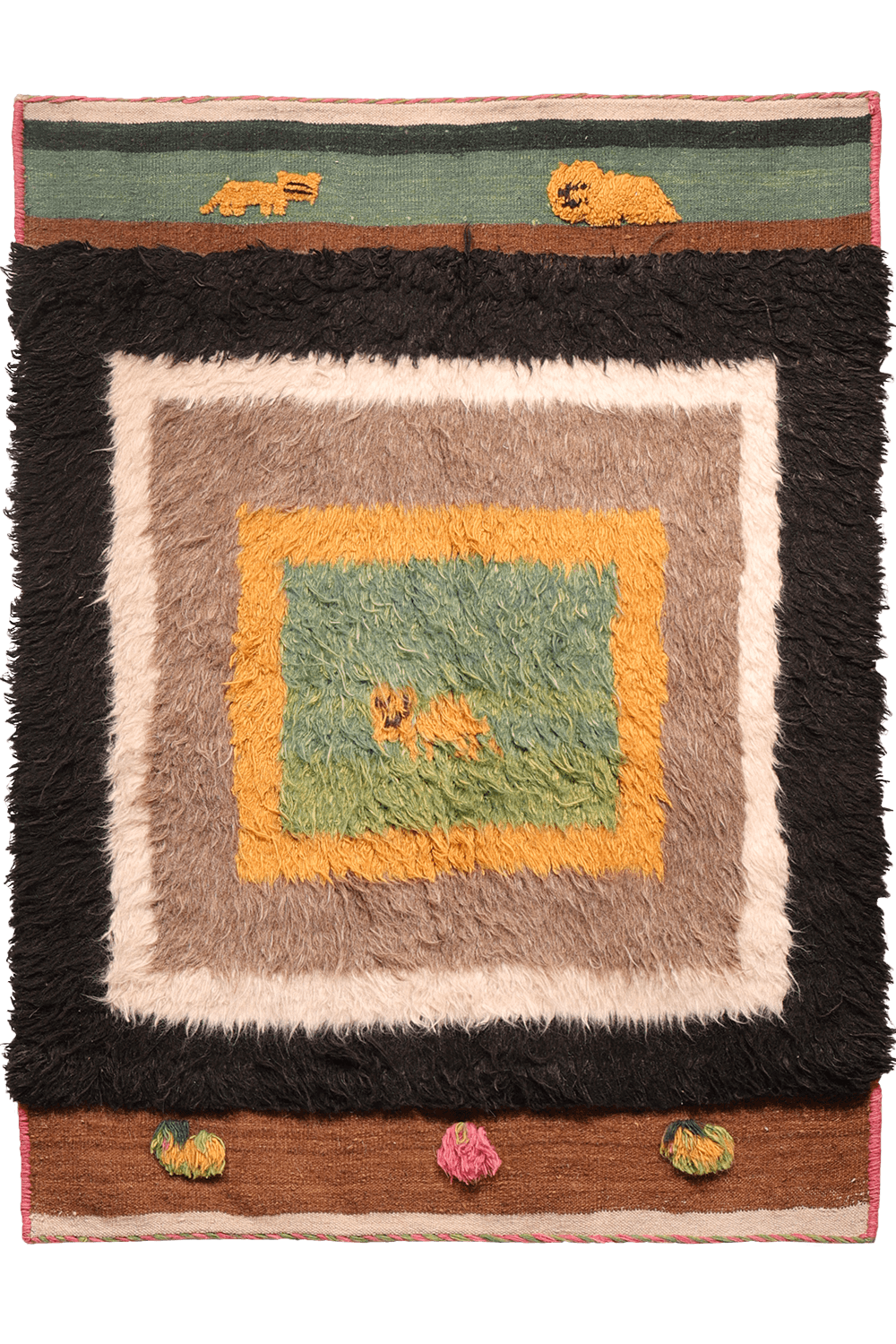
A very long (and wild!) shaggy Persian Qashqai lion Gabbeh. This rug features an exceptionally long pile, with a composition formed by concentric squares of varying widths.
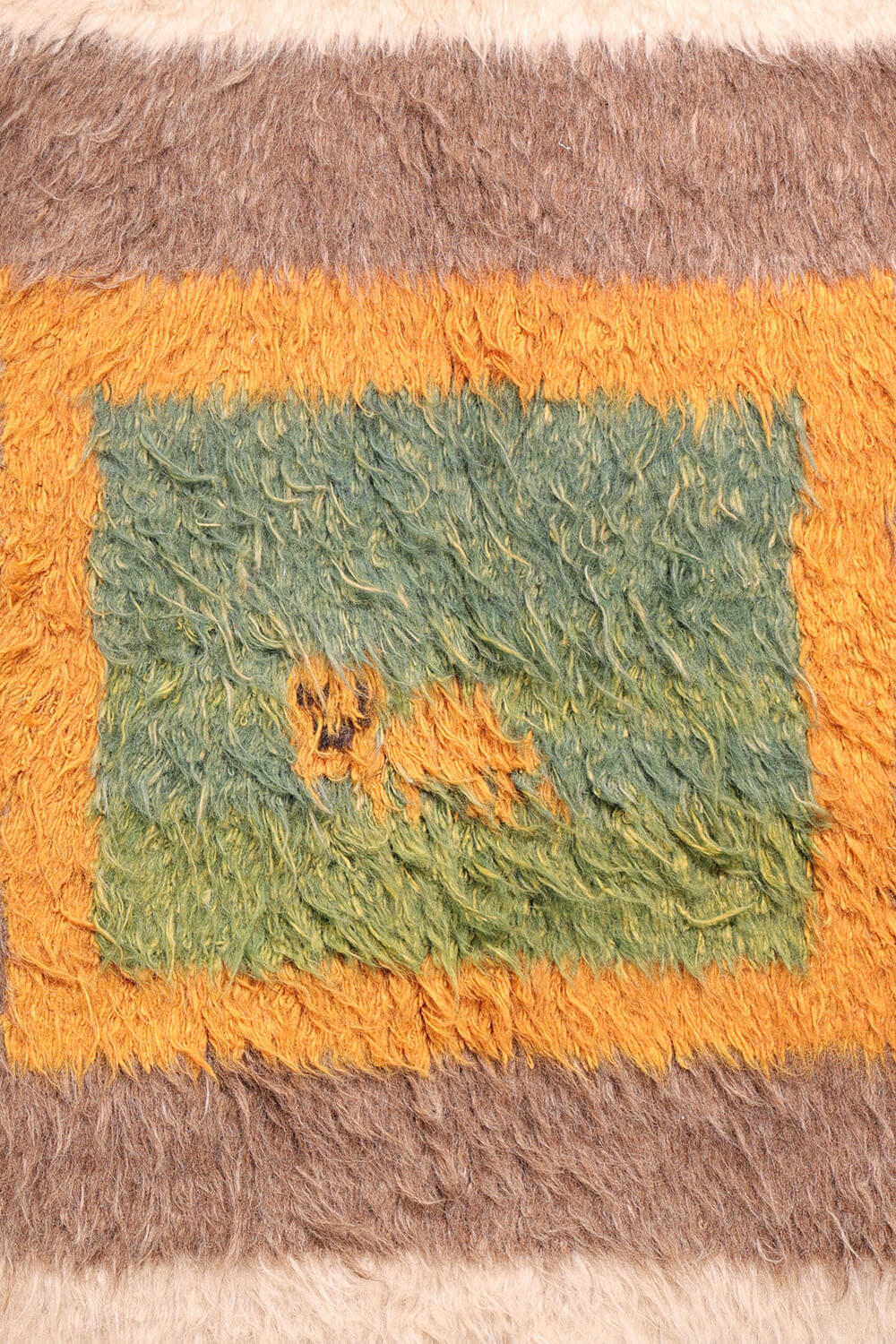
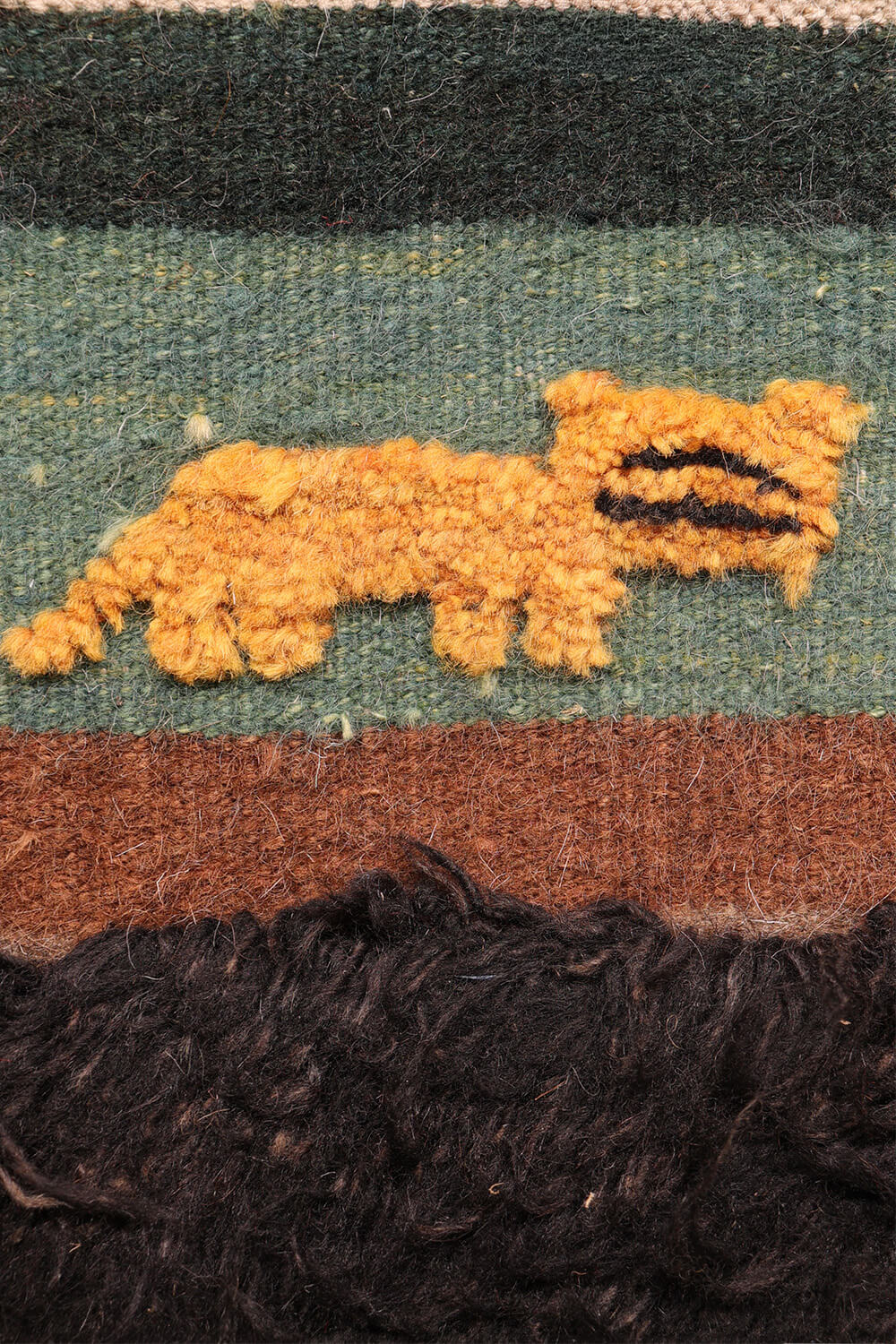
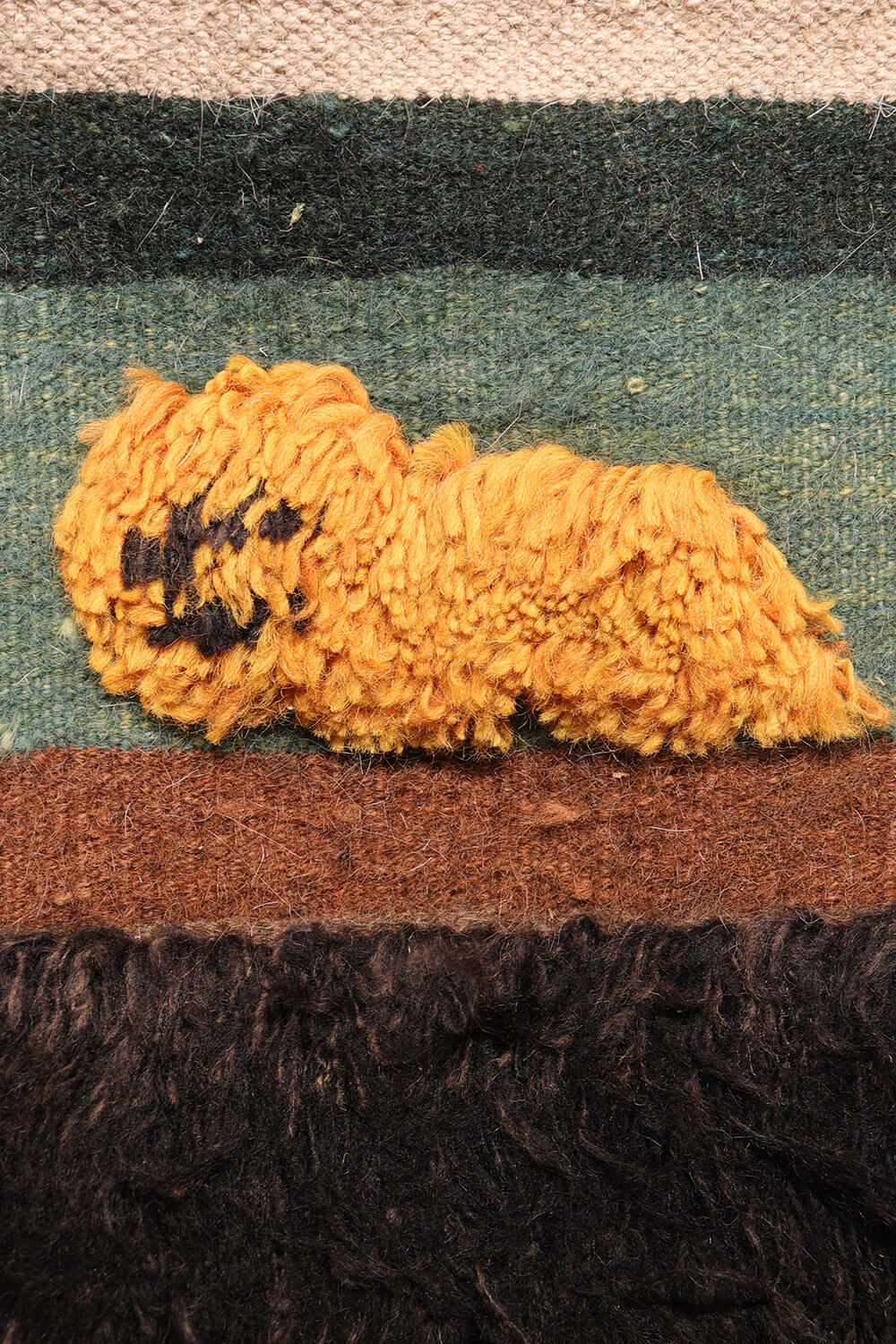
At the centre, a small lion has been woven into the design, serving as the focal point of the piece. The pile composition is framed by two oversized kilim ends, decorated with striped bands that contain unusual lion figures worked in knotted pile technique. These lions appear to emerge from the flatweave, creating a striking three-dimensional effect. In these areas, the pile is so long that the lion shapes become almost abstract and difficult to distinguish.
Overall, this is a highly interesting composition with a distinctly naive and modern aesthetic.
Material: 100% hand-spun sheep wool
Size: 165×118 cms
Origin: Qashqai tribe, Iran
Date of weaving: New
Gabbeh:
Traditionally a sleeping rug, a gabbeh is a hand-woven pile rug of coarse quality characterized by an abstract design that relies upon open fields of color and a playfulness with geometry. This type of rug is popular among the populations of the Zagros Mountains of Iran, including Kurdish, Luri and Qashqai people.The gabbeh is usually woven by women.
Gabbeh carpets are much thicker and coarser than other Persian carpets; sometimes they can be as much as one inch or 2.5 cm in depth. In fact, they are more a variety of kilim than carpet. The word “gabbeh” comes from the Persian گبه, meaning raw, natural, uncut. This is a rough and primitive carpet.
Gabbeh patterns are of a very basic kind with only a limited number of decorative, mostly rectangular objects, animals and vegetable motives. In a gabbeh usually bright colors, such as yellow and red, are used. Often undyed natural wool is used (brown, beige, black, white etc.). Although large fields of solid color are used in gabbeh designs, the color is variegated (the color varies throughout the rug, with the appearance of differently colored zones).
Qashqai:
Turkic-speaking pastoral nomadic tribal groups began entering central and southern Iran during the eleventh and twelfth centuries. The Qashqai, as a large tribal unit, dates back at least to the early eighteenth century, when some Turkish(Turki)-speaking tribal groups in the region existed under the name Qashqai.
Qashqai kilims are best known for their boldness and freedom in the way the pattern is drawn. An aesthetically pleasing geometry, the fineness of their wool and their clear, strong colours combine to ensure their reputation as superlative examples.
1 in stock
Additional information
| Weight | 9 kg |
|---|