Sale!


Original price was: 525.00 €.472.50 €Current price is: 472.50 €.
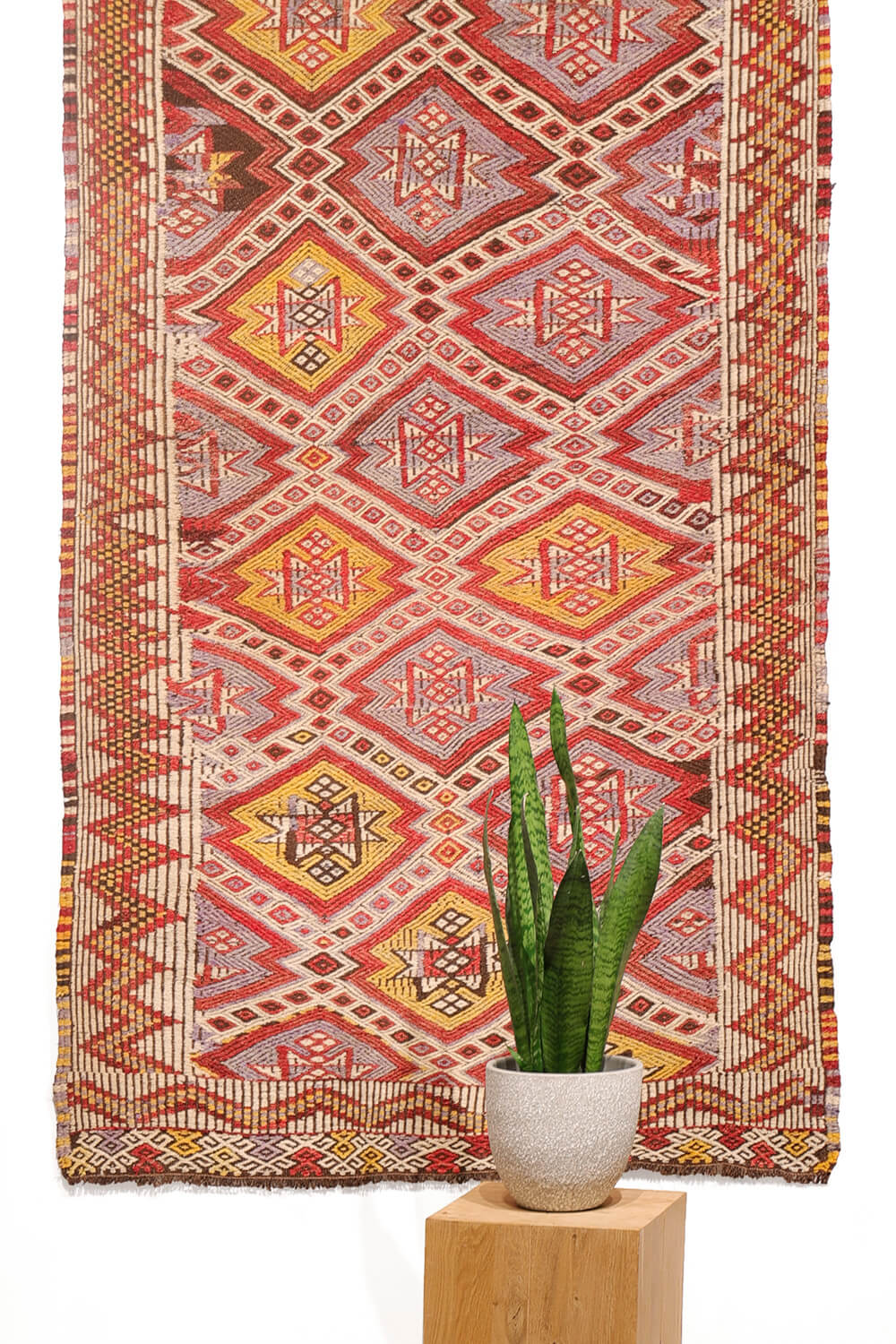
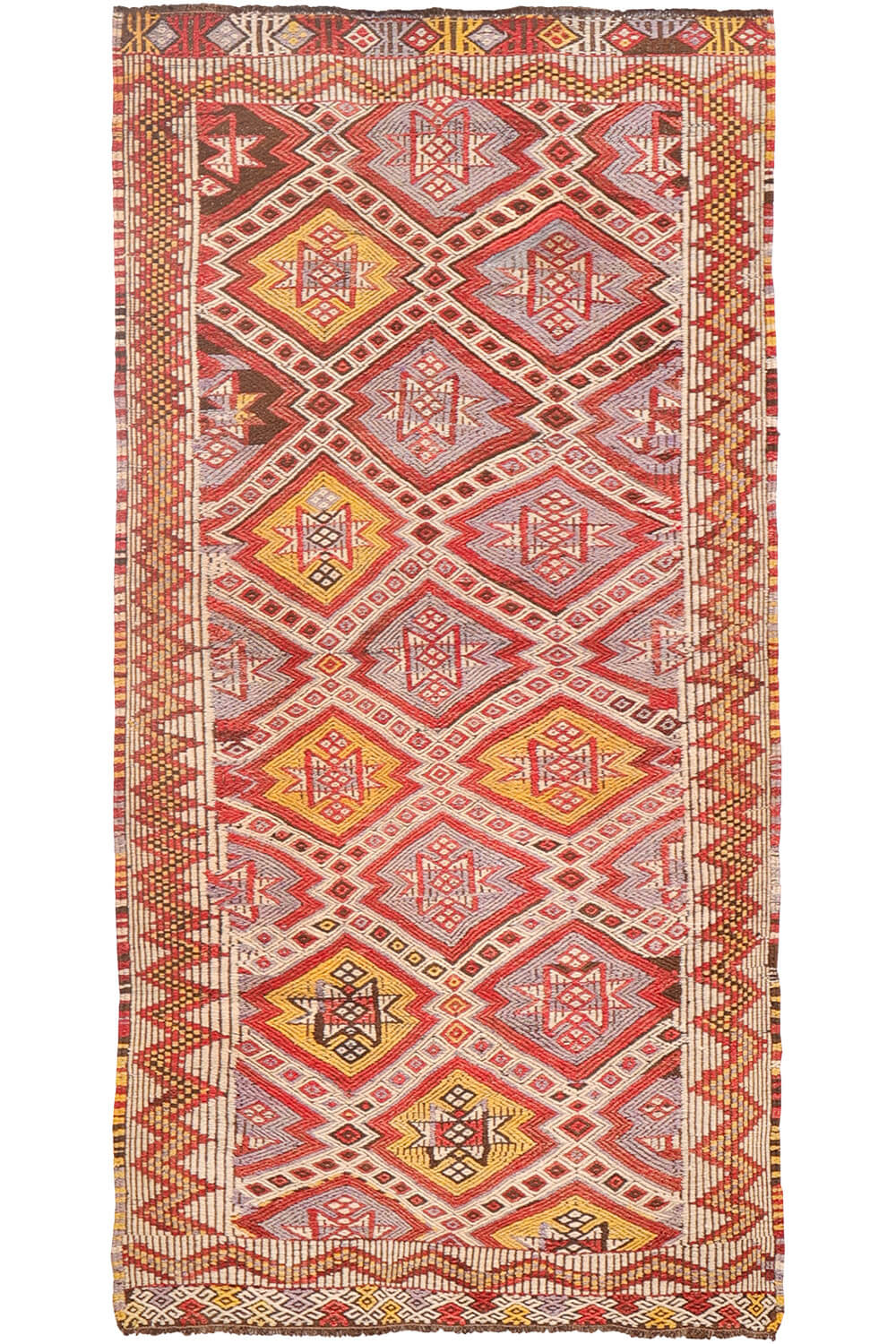
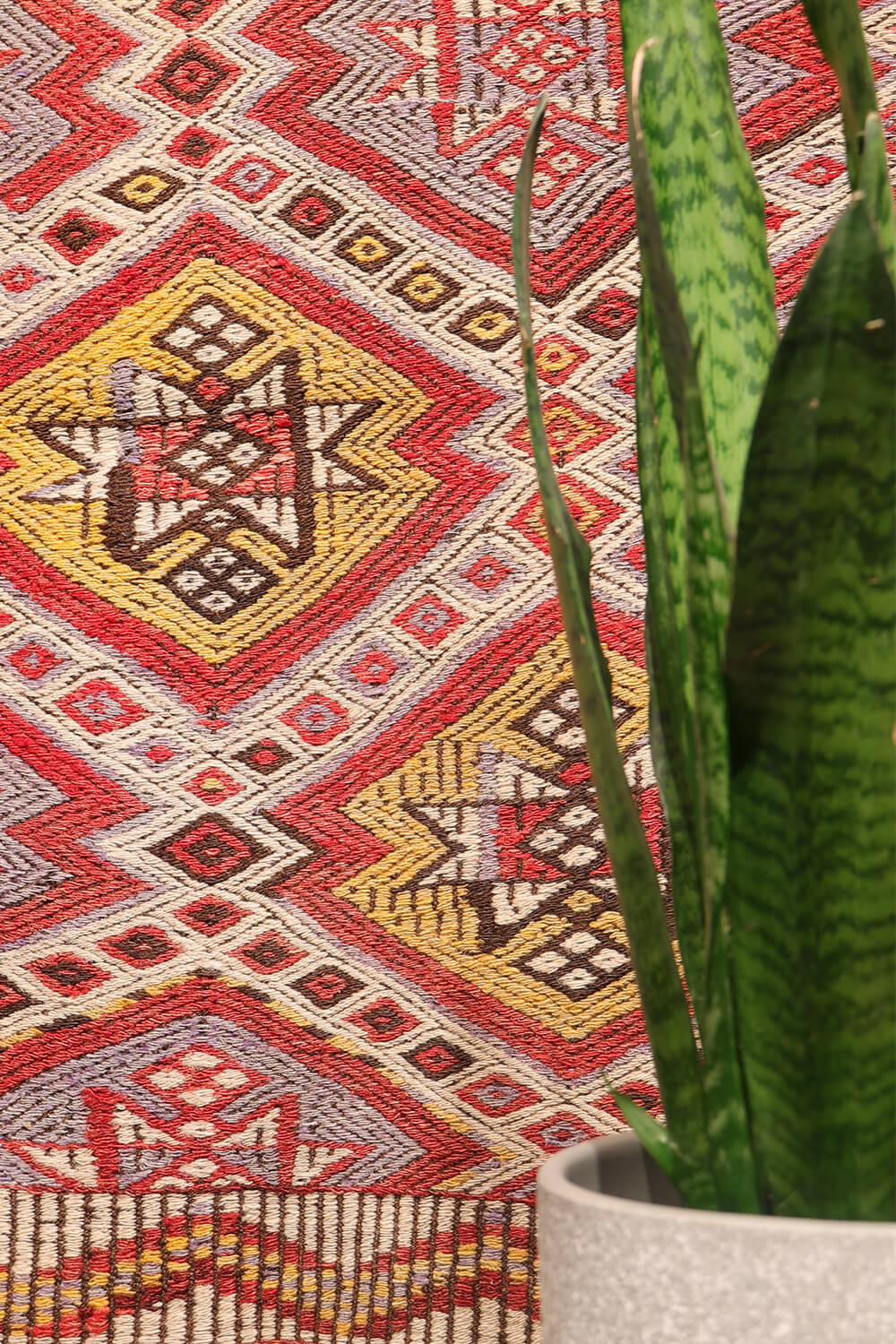
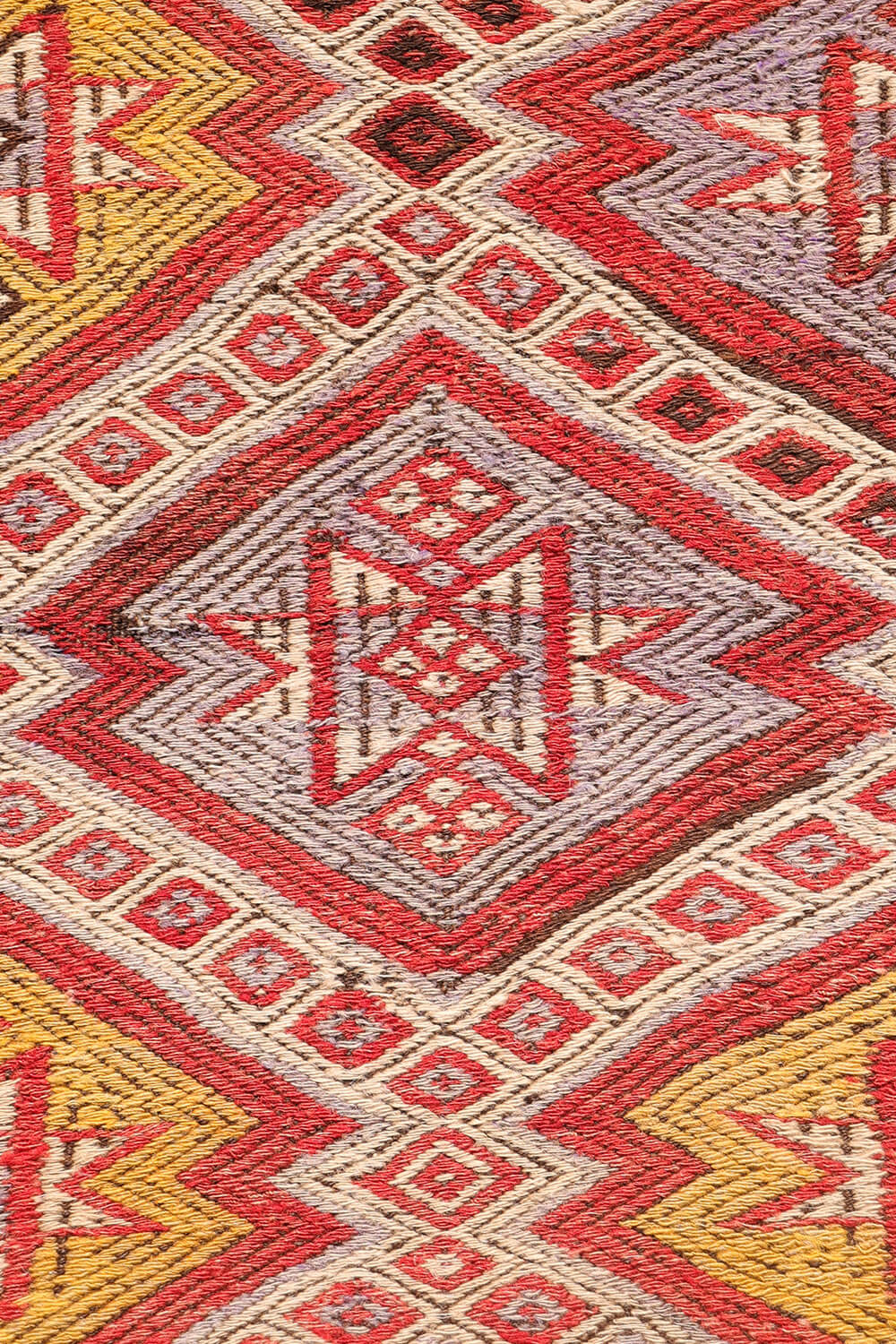
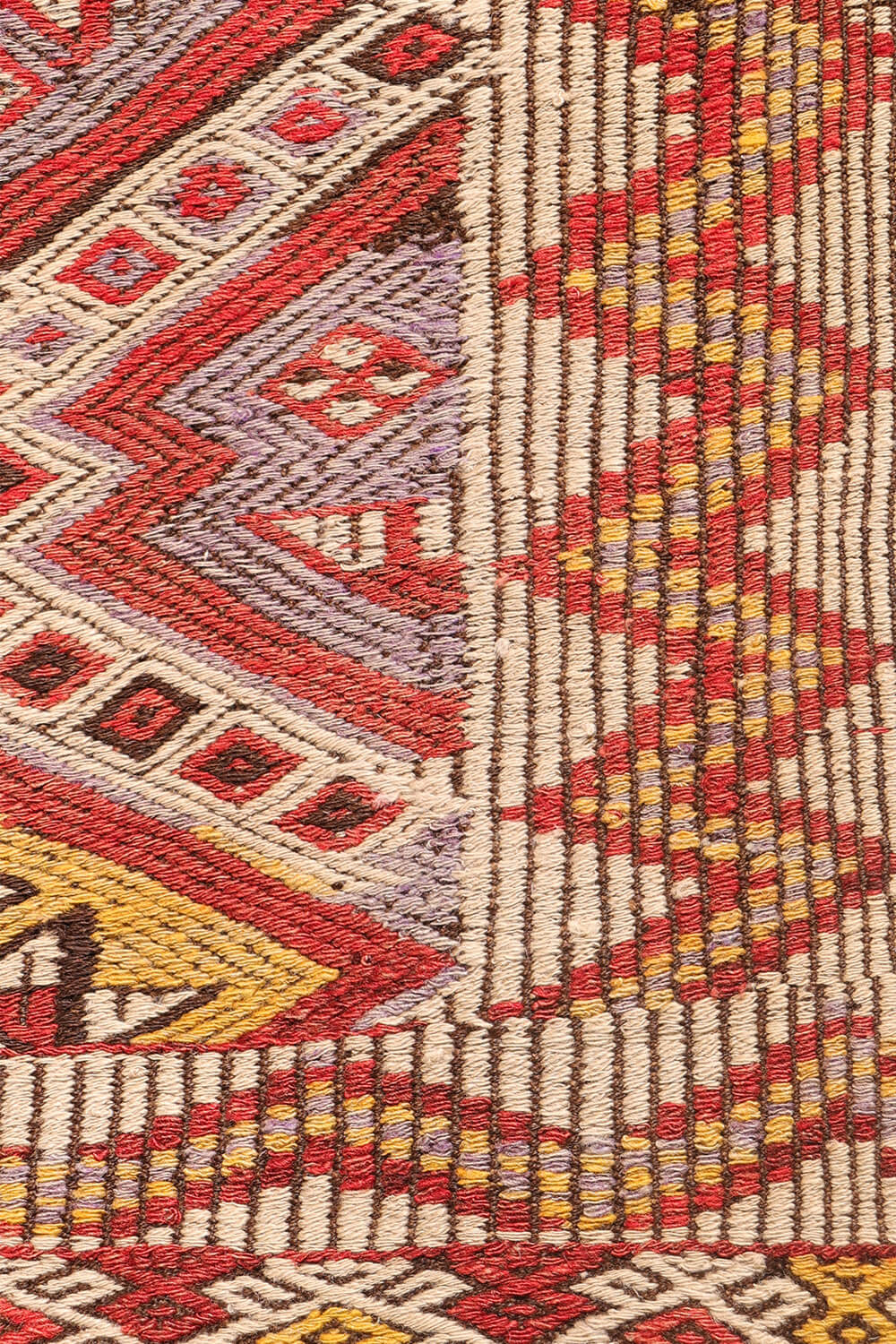
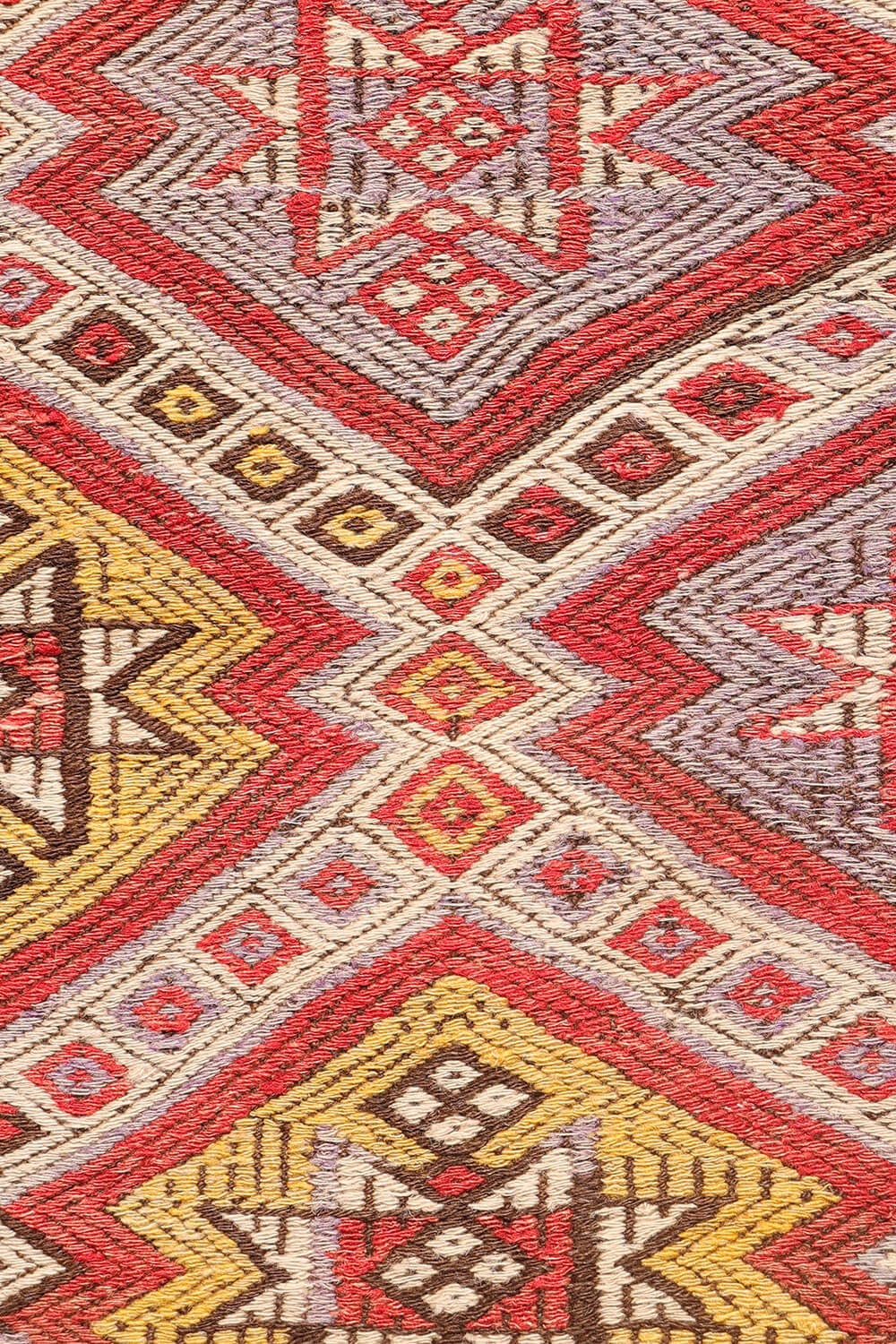
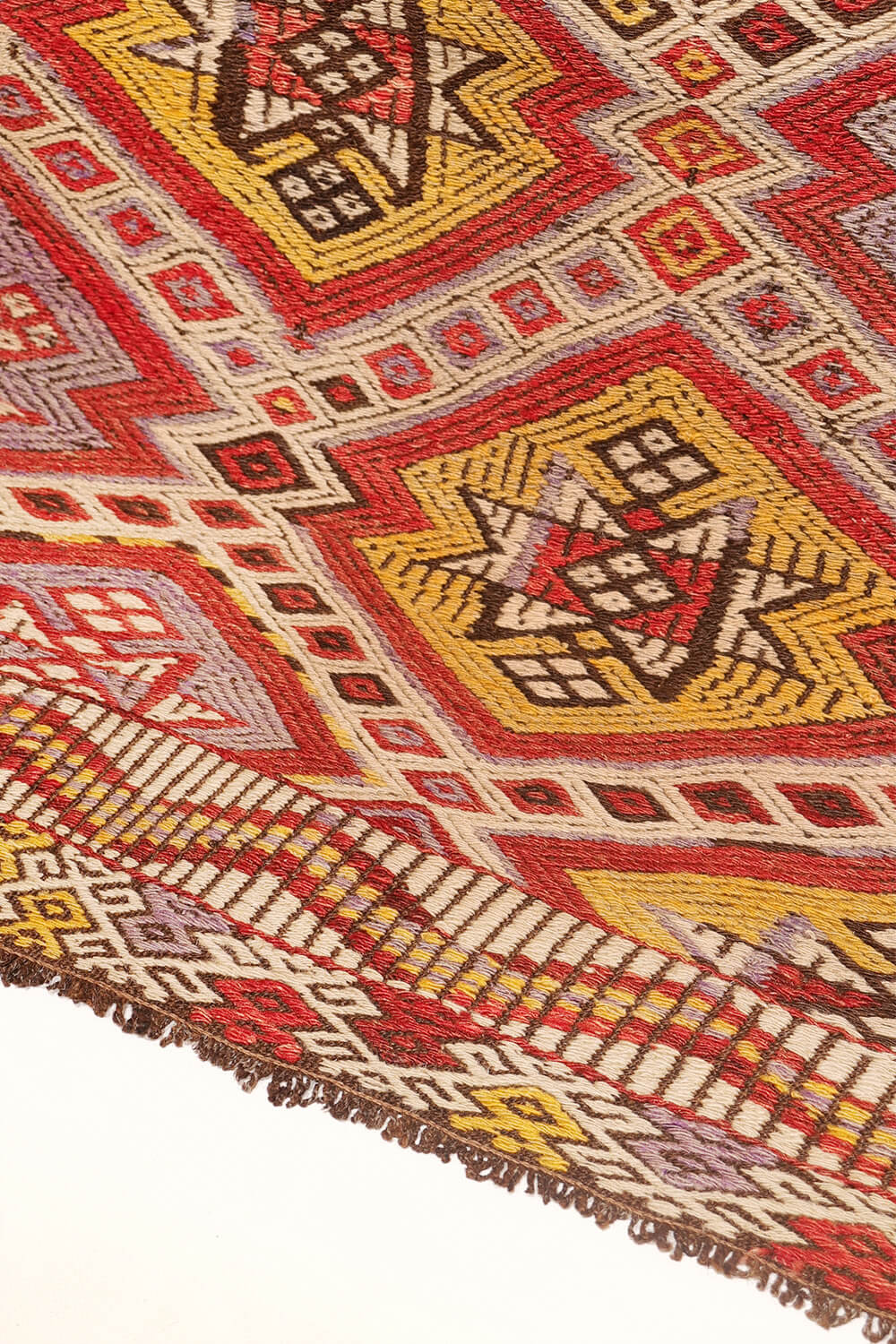
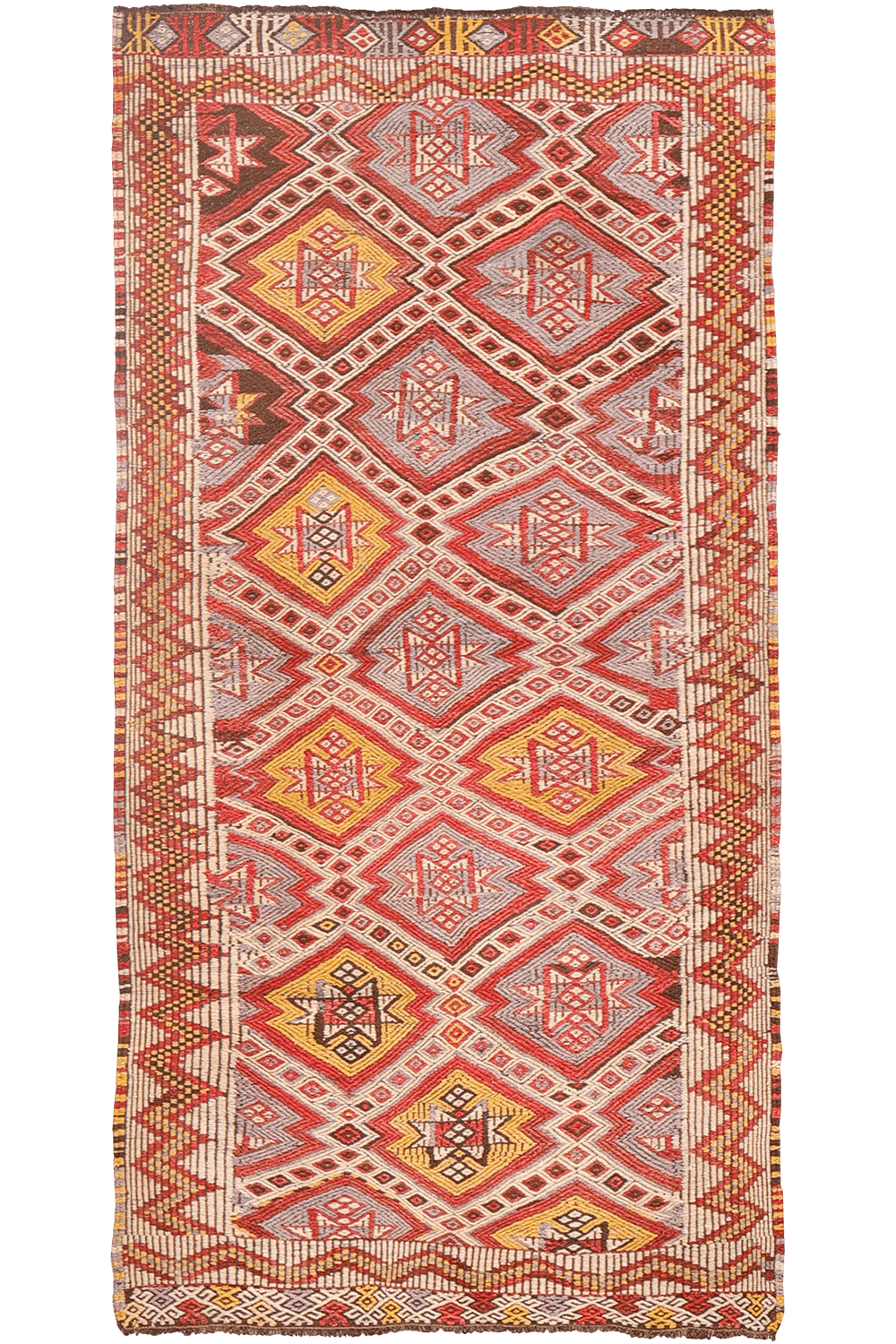
A very tribal feeling semi-antique Küçüklü kilim woven this kilim was woven with undyed dark brown goat´s hair. The pattern, woven with dyed sheep´s wool in the cicim technique, is made of a grid that covers the enlongated main field. within this grid the weaver introduced eight point stars. Although the weaver followed a symetric pattern, she introduced movement and dynamism by breaking the symetri by introducing random colours in part of the motifs.
The border is formed by a large scale zig zag.
Material: 100% hand-spun sheep wool
Size: 210×110 cms
Origin: Küçüklü tribe, Tauros Mountains, Turkey
Date of weaving: 1960s
The Küçüklü are a Yörük (Turkmen nomadic) tribe traditionally associated with the Taurus Mountains (Toros Dağları) in southern Anatolia, mainly in what is today Antalya, Mersin, and Konya provinces. They are part of the broader Oghuz–Turkmen cultural world that migrated into Anatolia from Central Asia starting in the medieval period.
Historically, the Küçüklü were semi-nomadic pastoralists practicing transhumance, spending summers in the high Taurus plateaus and winters in the lower coastal plains. Their economy revolved around sheep and goats, which directly shaped their textile production. Küçüklü women were highly skilled weavers, producing kilims, cicim, zili, and utilitarian textiles such as bags, covers, and tent furnishings. These textiles were made primarily for tribal use rather than trade, which explains their strong individuality and expressive, sometimes irregular designs.
Küçüklü weavings are known for bold, graphic compositions, often featuring wide bands or compartmentalized layouts, geometric motifs linked to protection, fertility, and identity, and a spontaneous, asymmetrical feel characteristic of Yörük aesthetics. Borders are often minimal or absent, reinforcing the free and open structure of the designs. Natural dyes dominate, including madder reds, indigo blues, and yellows from local plants, with strong yellows especially characteristic of Küçüklü work. Wool is usually handspun, medium to coarse, giving the textiles a robust, tactile presence, and cotton sometimes appears in warps in later pieces.
For the Küçüklü, weaving was a marker of tribal identity, part of a woman’s social and familial role, and a visual language carrying memory, belief, and status. Many Küçüklü groups settled during the late 19th and 20th centuries, making older textiles increasingly rare and highly valued for their authenticity and strong nomadic character.
1 in stock
Additional information
| Weight | 4.5 kg |
|---|