425.00 €
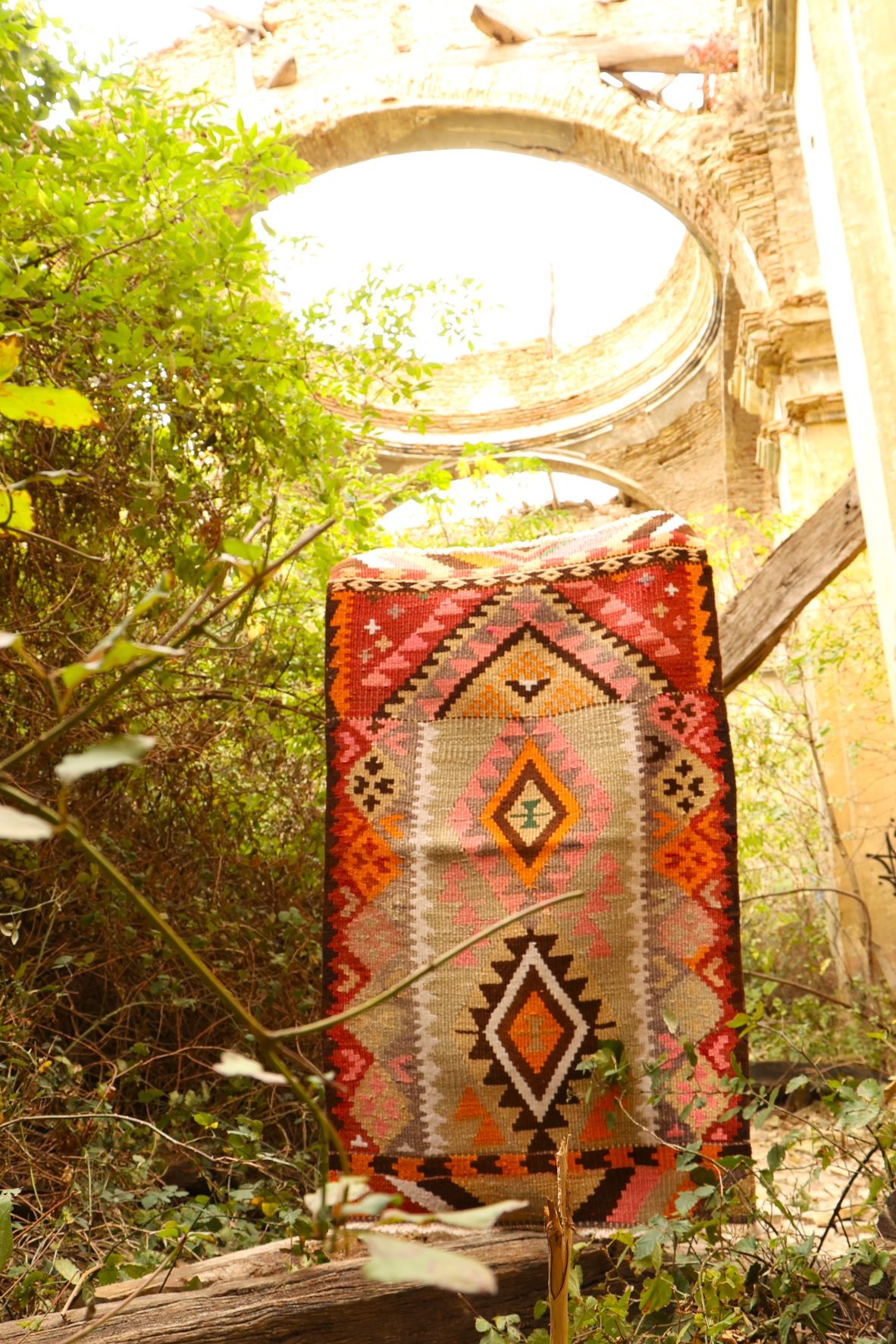
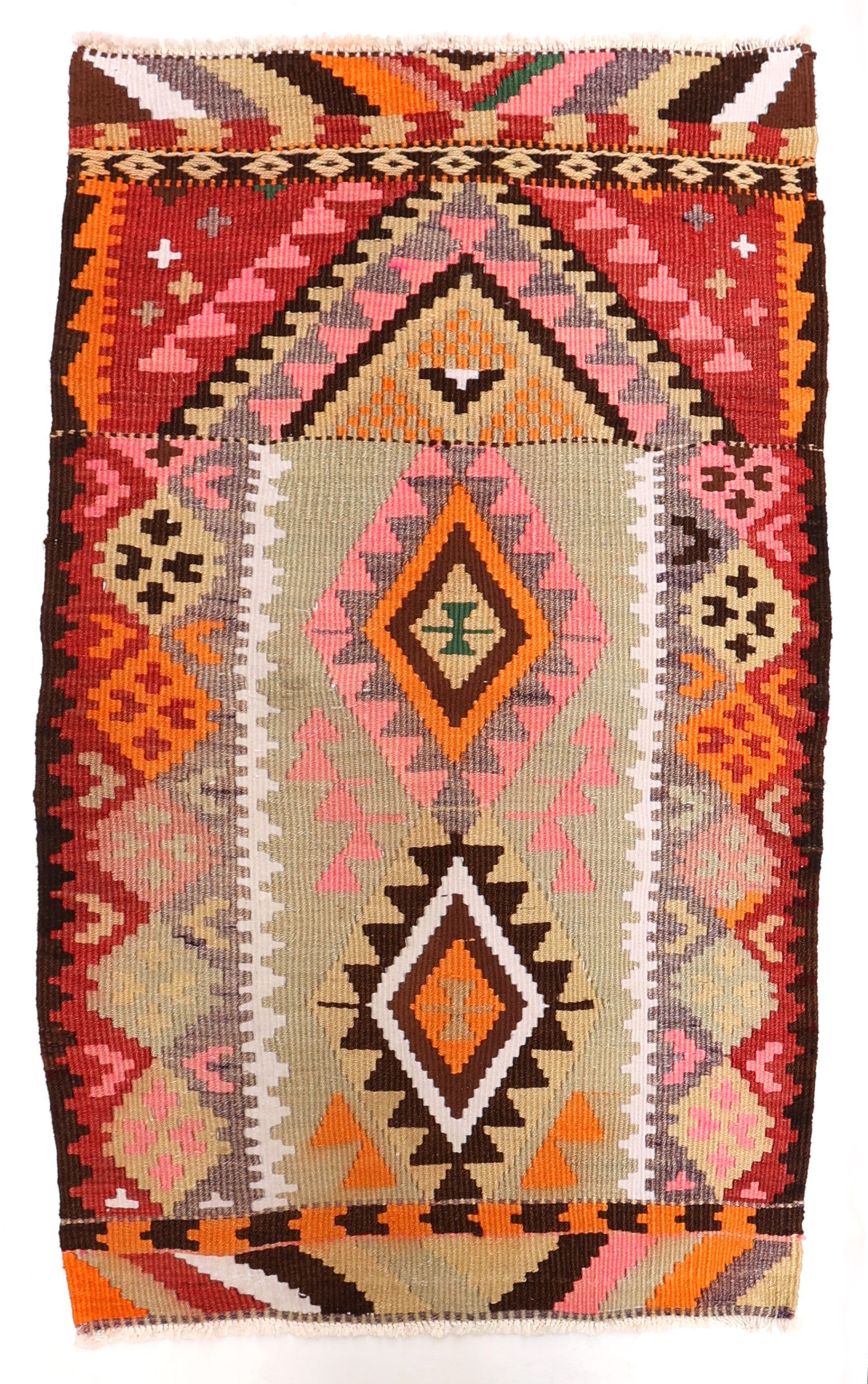
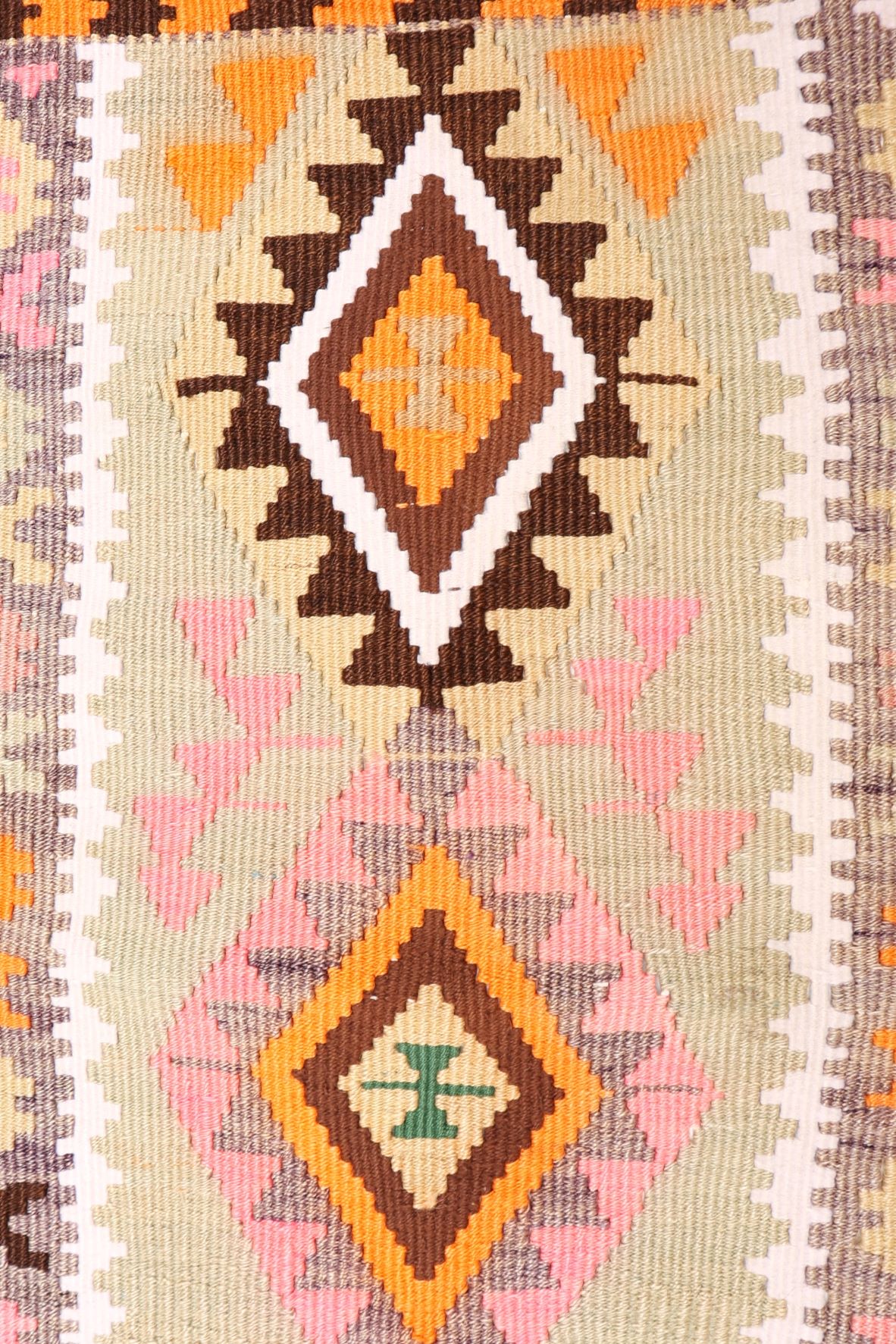
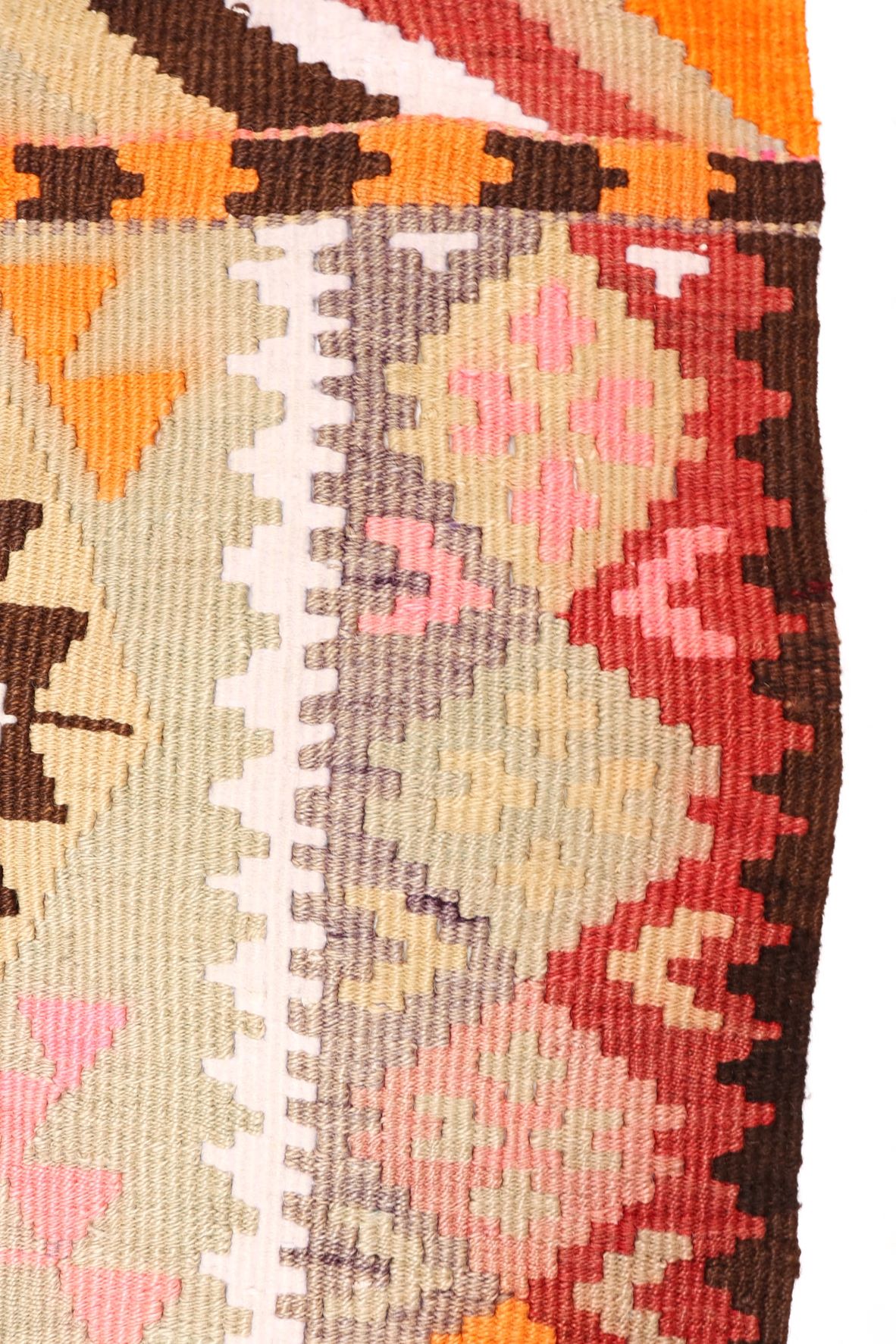
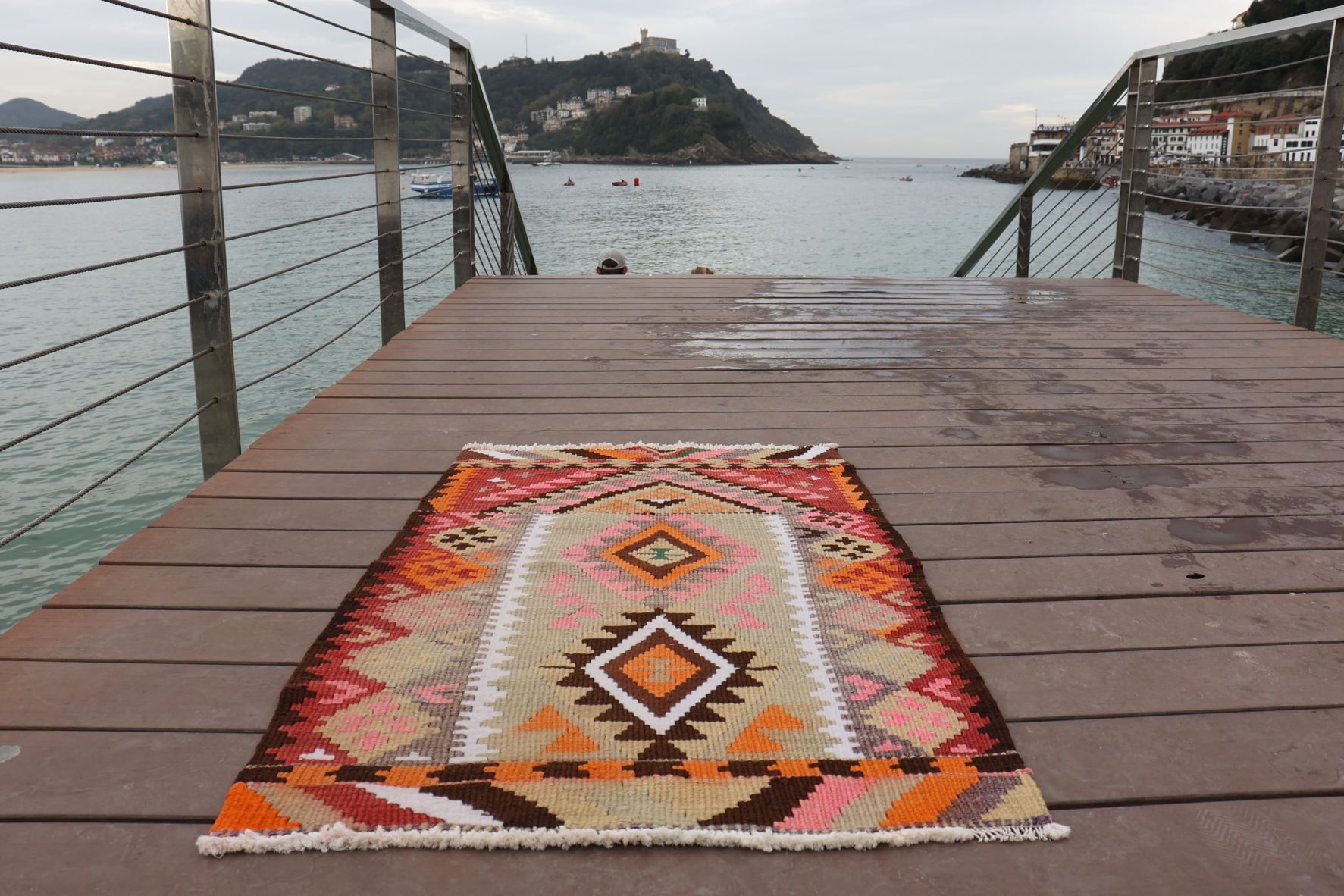
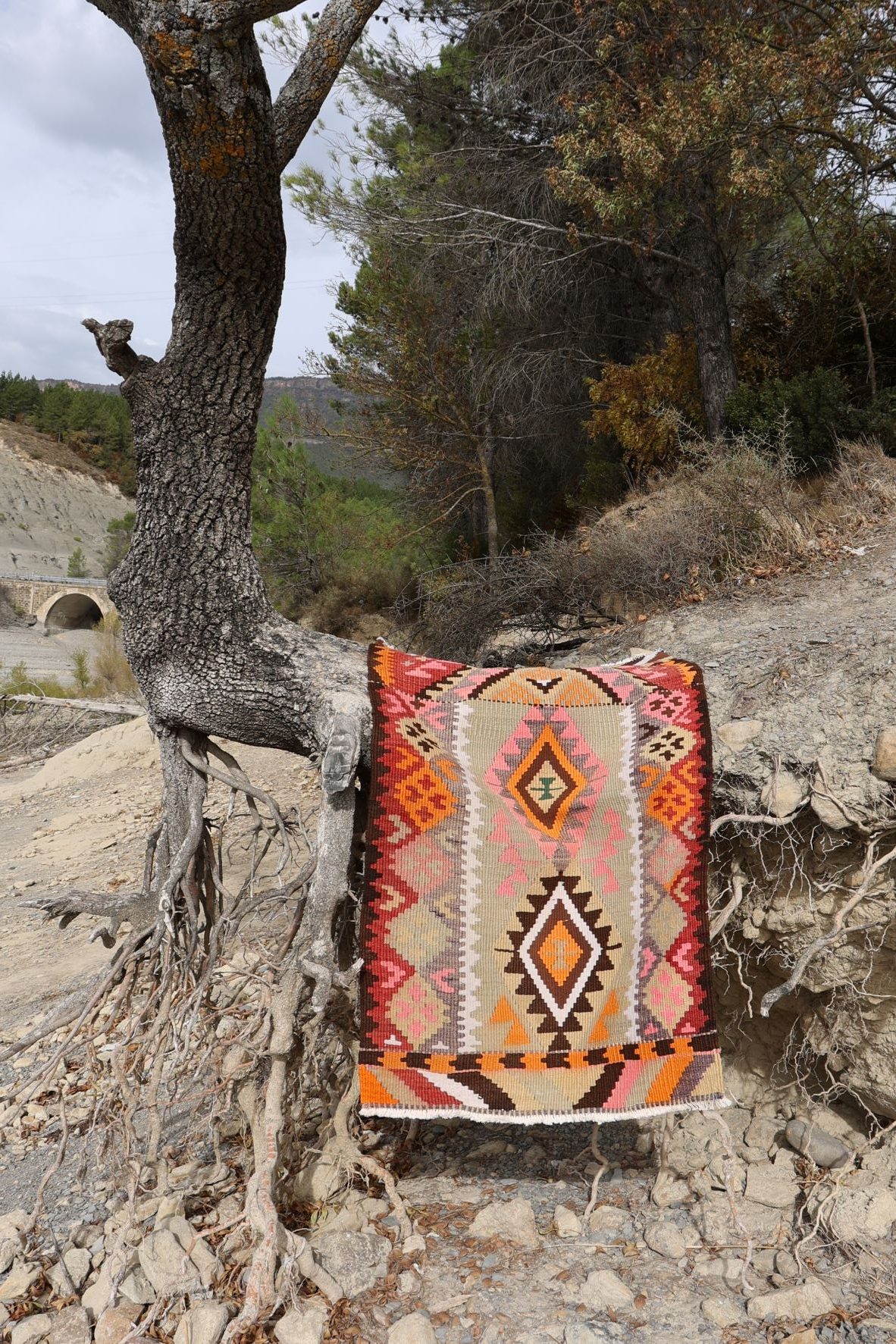
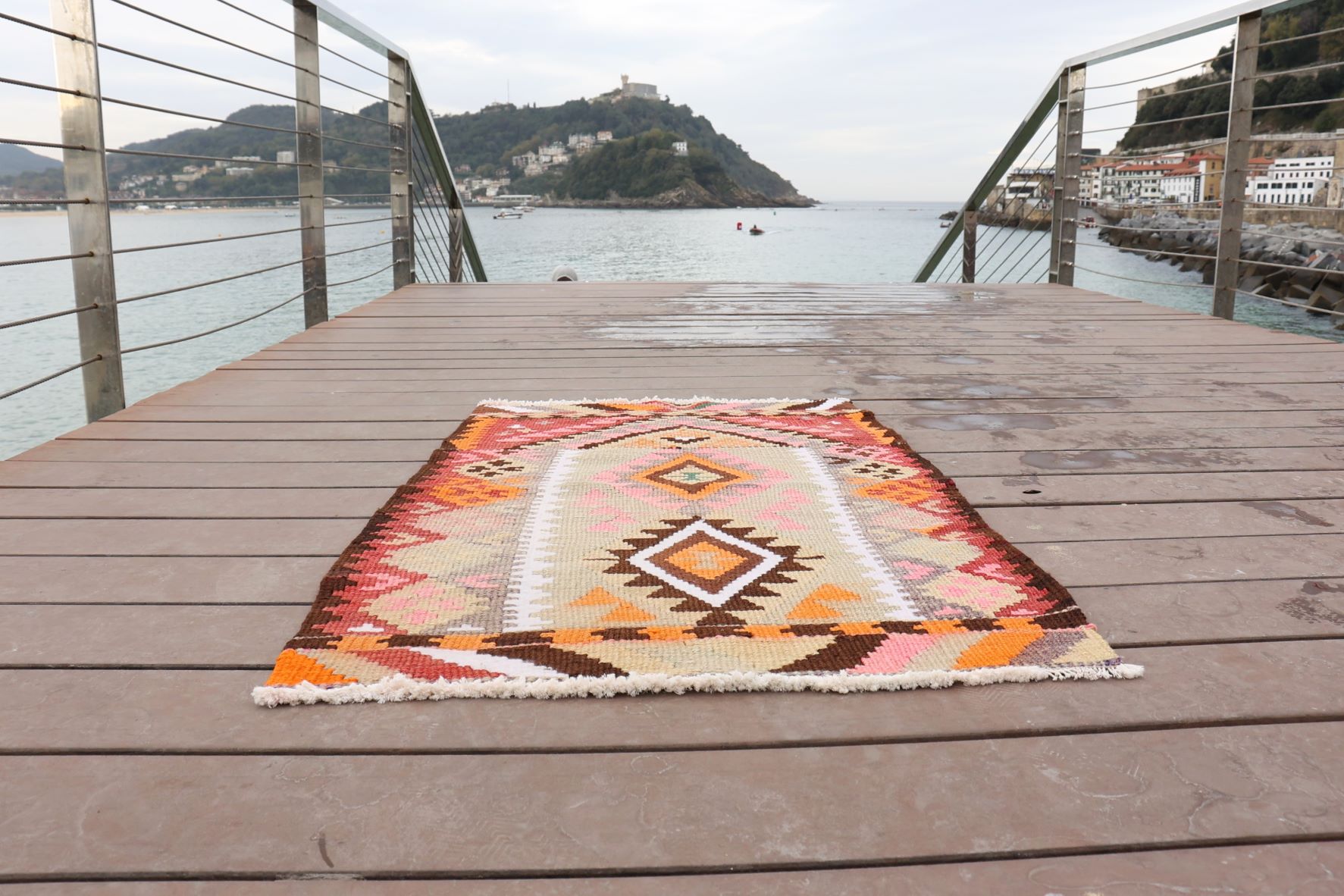
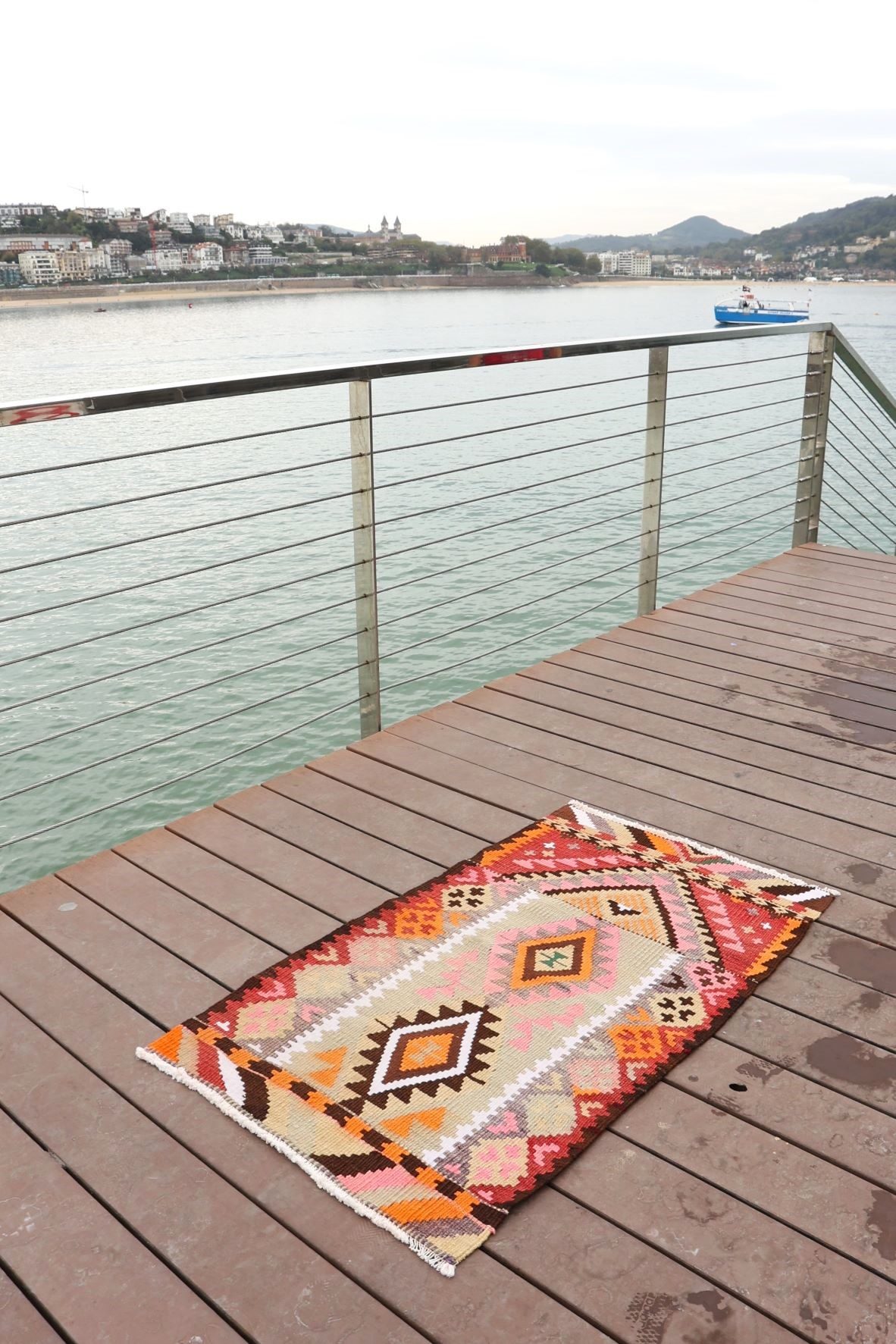
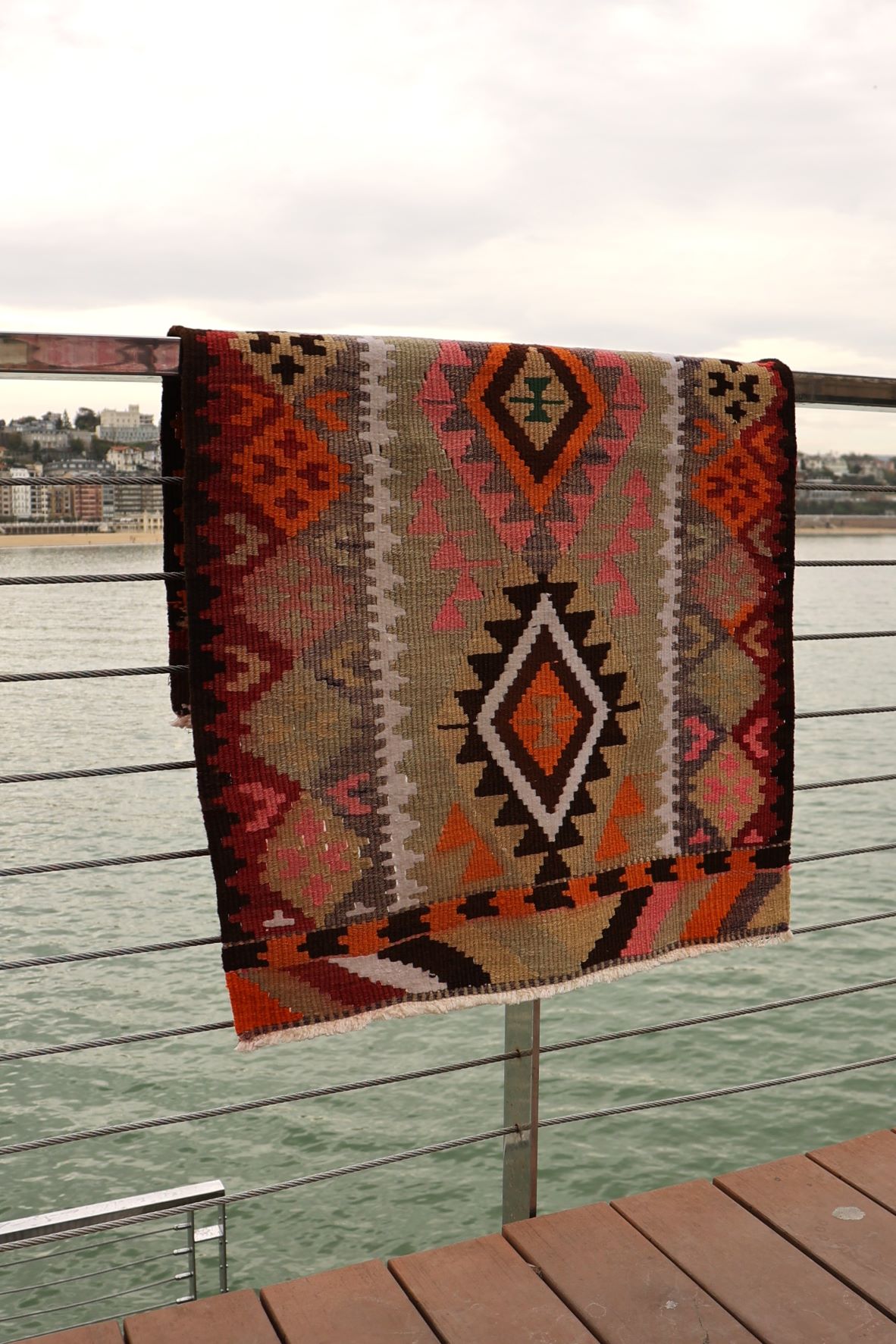
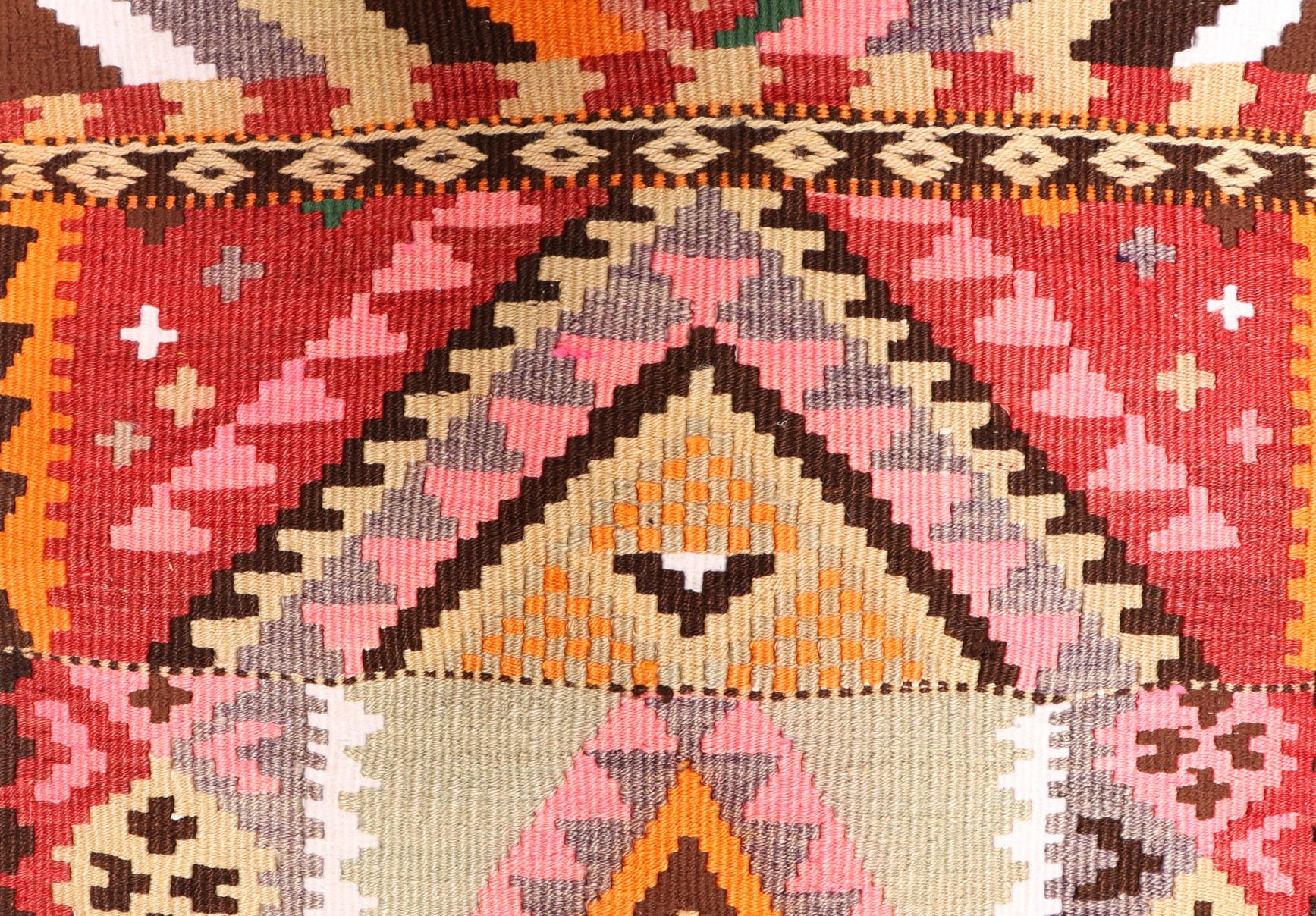
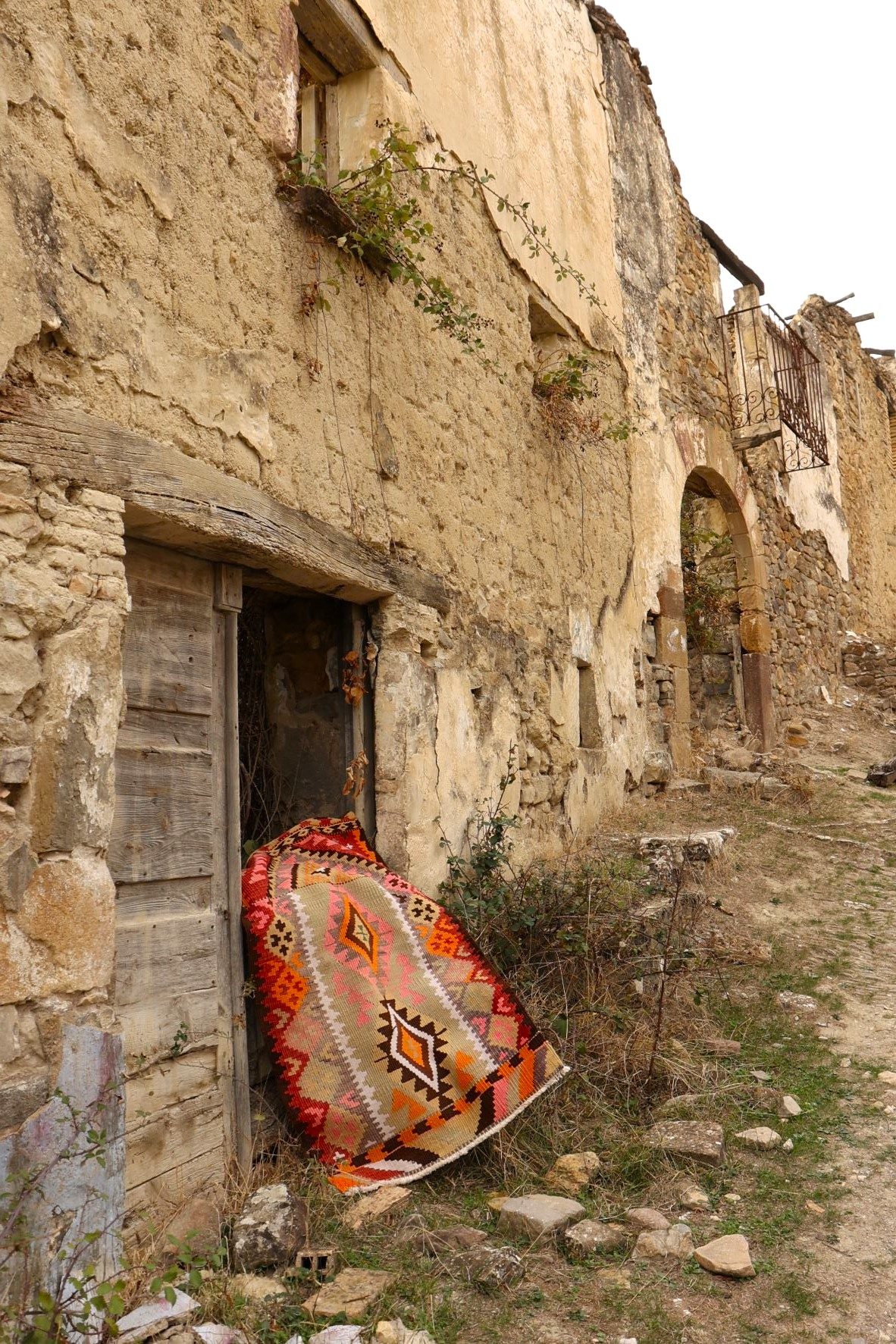
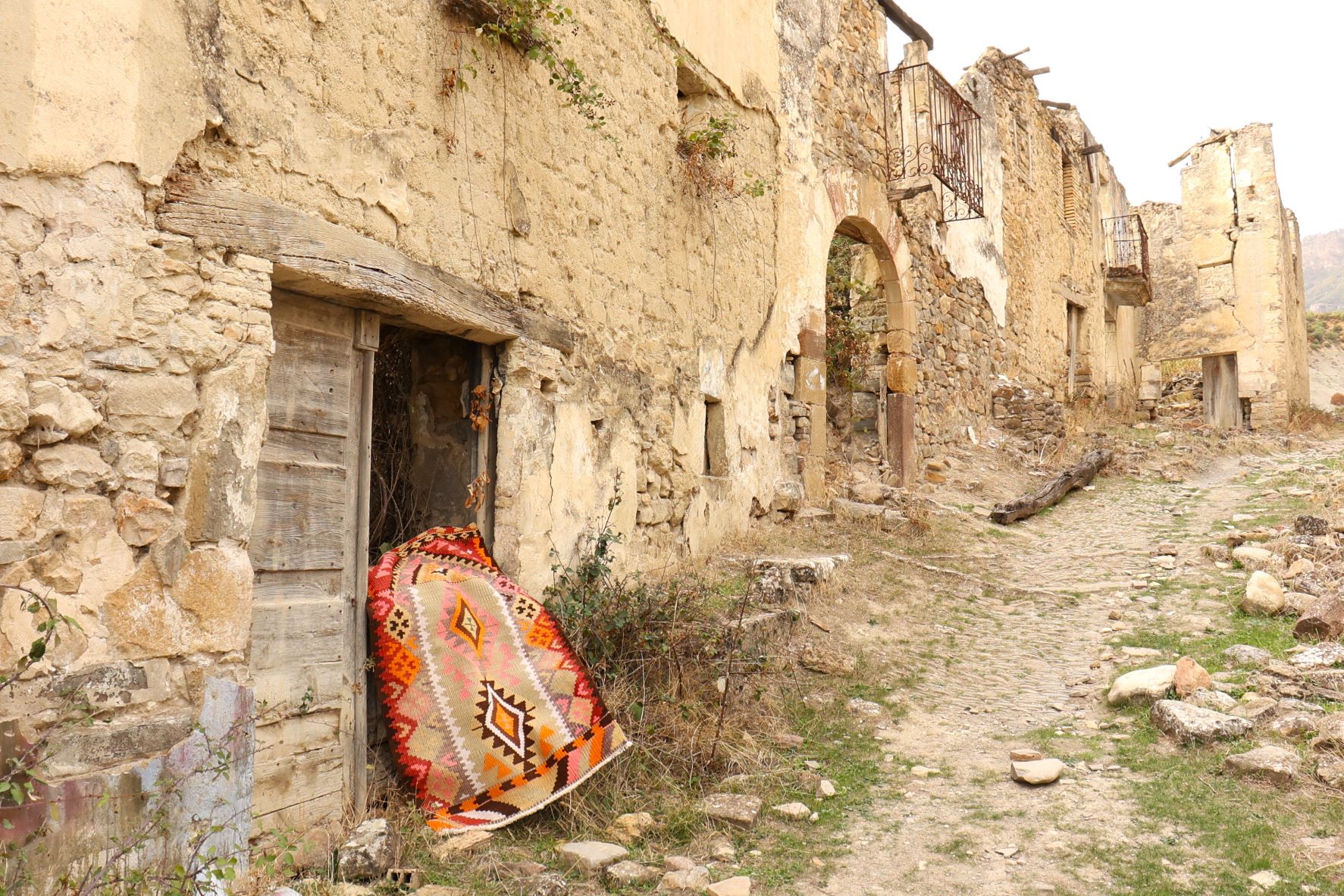
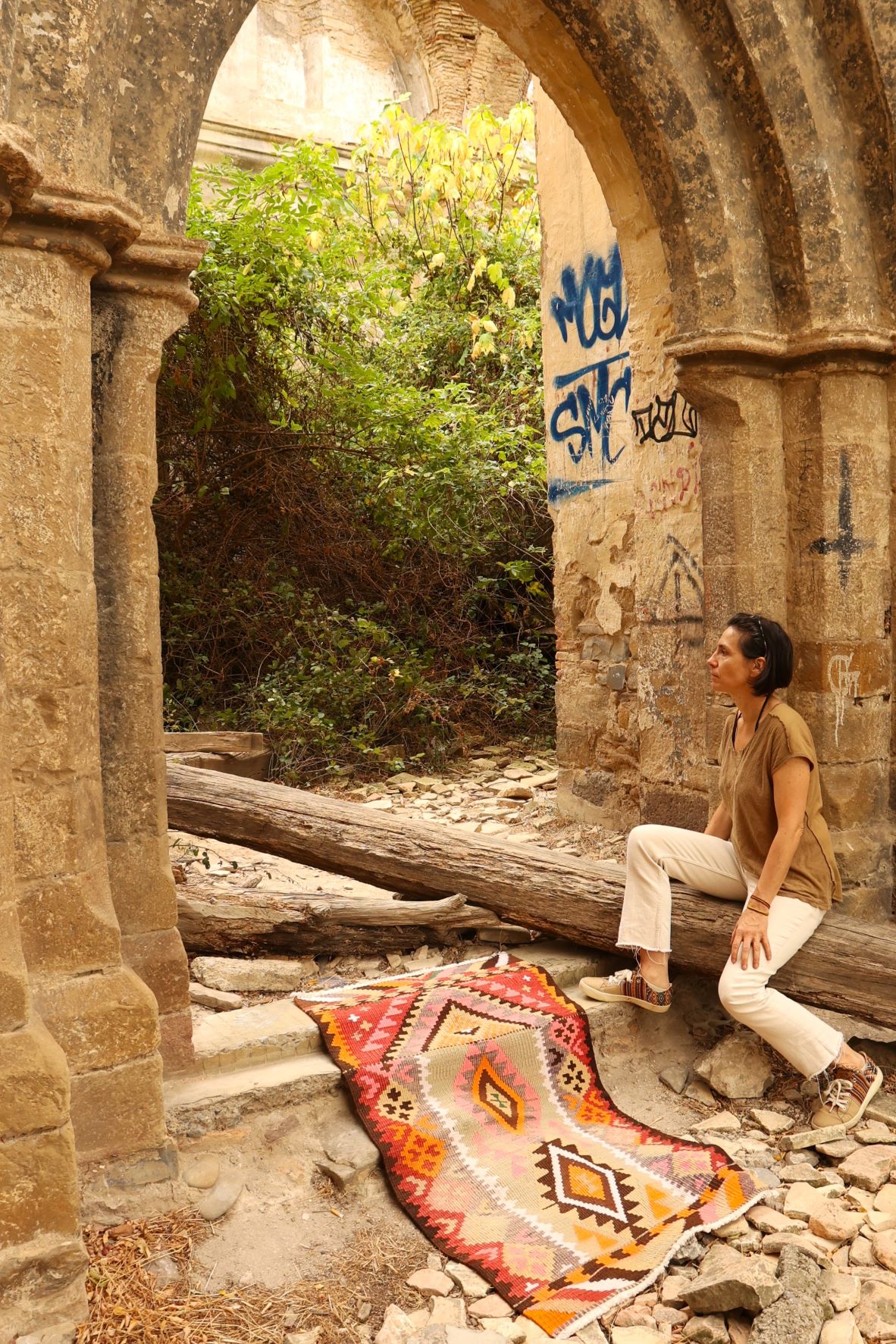
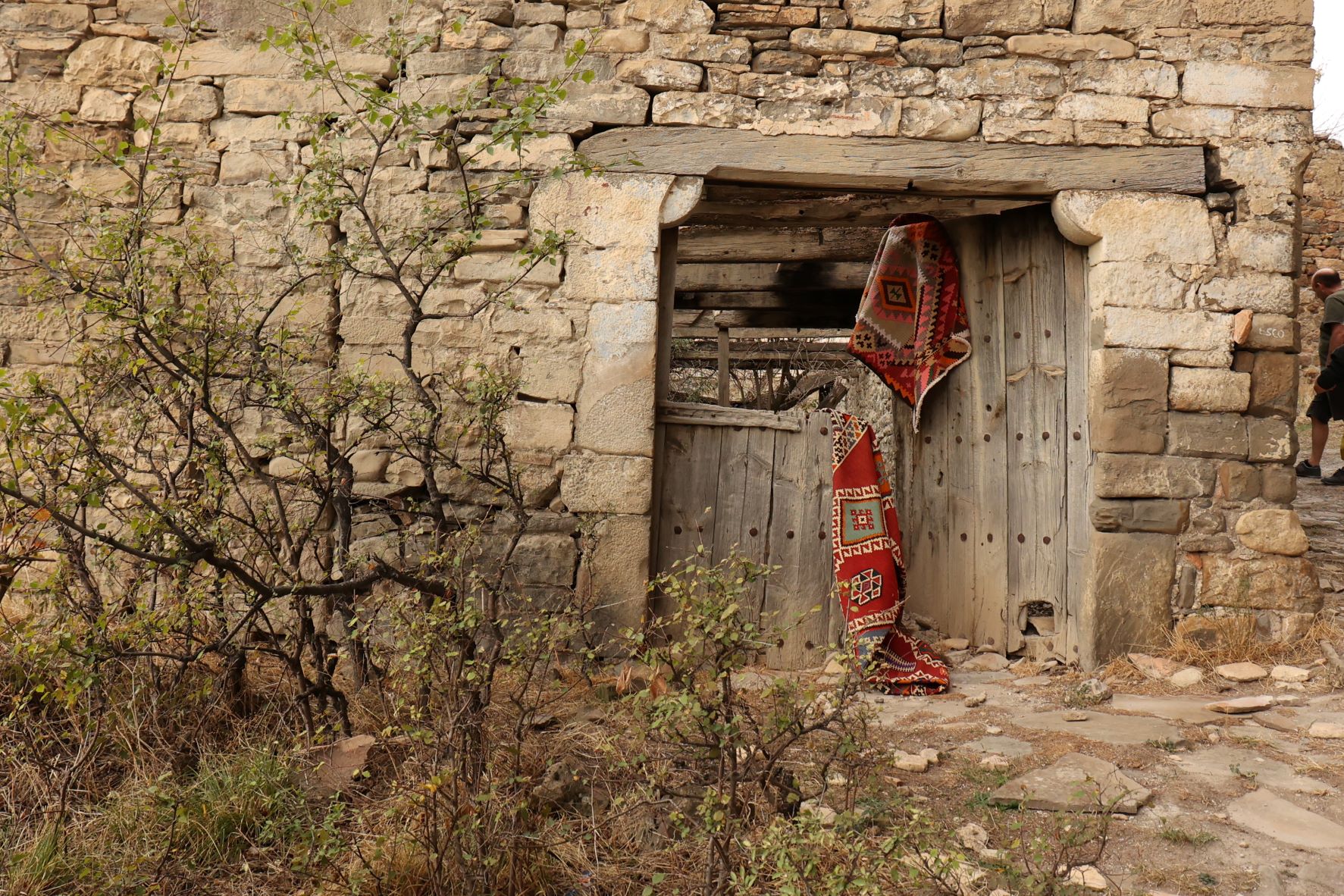
This vintage kilim from the Kars region is a prayer kilim, identifiable by the prayer niche (mihrab) in the upper section. The field features two large lozenges that dominate the composition, while the borders are adorned with smaller lozenge motifs in bright, cheerful colors.
Like many kilims from the Kars area, this piece is thick and durable, making it an excellent choice for high-traffic spaces.
Material: 100% hand-spun sheep wool
Size: 125×73 cms
Origin: Kars, Turkey
Date of weaving: 1970s
The Caucasian Turks of North-East Anatolia
Kilims from this area have a different look to those of their Turkish Kurd neighbours, for part of their design content is Caucasian in origin – the Kars/ Kagizman kilims, for example, are strongly influenced by Caucasian design. This area has also produced many prayer-arch kilims, the majority of which display an Erzurum/Byburt – Kurdish influence. Many prayer-arch kilims were woven in the nineteenth century in the Erzurum/Byburt area. Erzurum is a frontier town, a bulwark of Turkish defence first against the Persians and then the Russians. The only area in this region still producing kilims is Kars, although many carpets continue to be woven.
Kars and Kagizman
The old sector and newer southern districts of Kars are joined by a bridge built by the Seljuk Turks over the Kars Cayi River. The town was occupied by an independent Armenian group during the ninth and tenth centuries AD, by the Seljuks from the eleventh to the thirteenth century and by the Mongols for part of the thirteenth century. Incorporated into the Ottoman Empire in the early fifteenth century, the town saw many further rulers from the eighteenth century onwards, being invaded firstly by Iran, then by the Russians before being returned to Turkey in 1918. Despite suffering severe winters, the surrounding area is used for arable farming and raising livestock, and is well known for its cheese production.
Kilims woven since 1950 are distinctive for their natural brown wool warps and for their dull colouring of browns, oranges and pinks, as well as for their long and narrow shape. Because of their impractical size, many have ended up being made into fashion accessories in the West. Designs are geometric, and are woven in slitweave with thick warps that result in coarsely woven rugs with long fringes.
Many swal and yastiks are woven in Kars region. The older kilims from this area are usually attributed to Kagizman and are very different to the later weavings of Kars, as they were closer woven and used mainly natural dyes.
Kars and Kagizman kilims often feature geometric medallions, some of which are similar to Caucasian designs. Prayer kilims were also woven, although less so in recent years, and generally of a larger size than most. A pale blue ground is sometimes favoured for the niche itself. Kagizman kilims have a dark and rich palette of browns, reds, blues, green and yellow; prayer kilims are generally lighter in tone.-
“The kilim guide”. Alistair Hull
1 in stock
Additional information
| Weight | 2.5 kg |
|---|