
En Fieltros
685,00 €
Namad (Fieltro) Vintage Timori Baluch de Afganistán
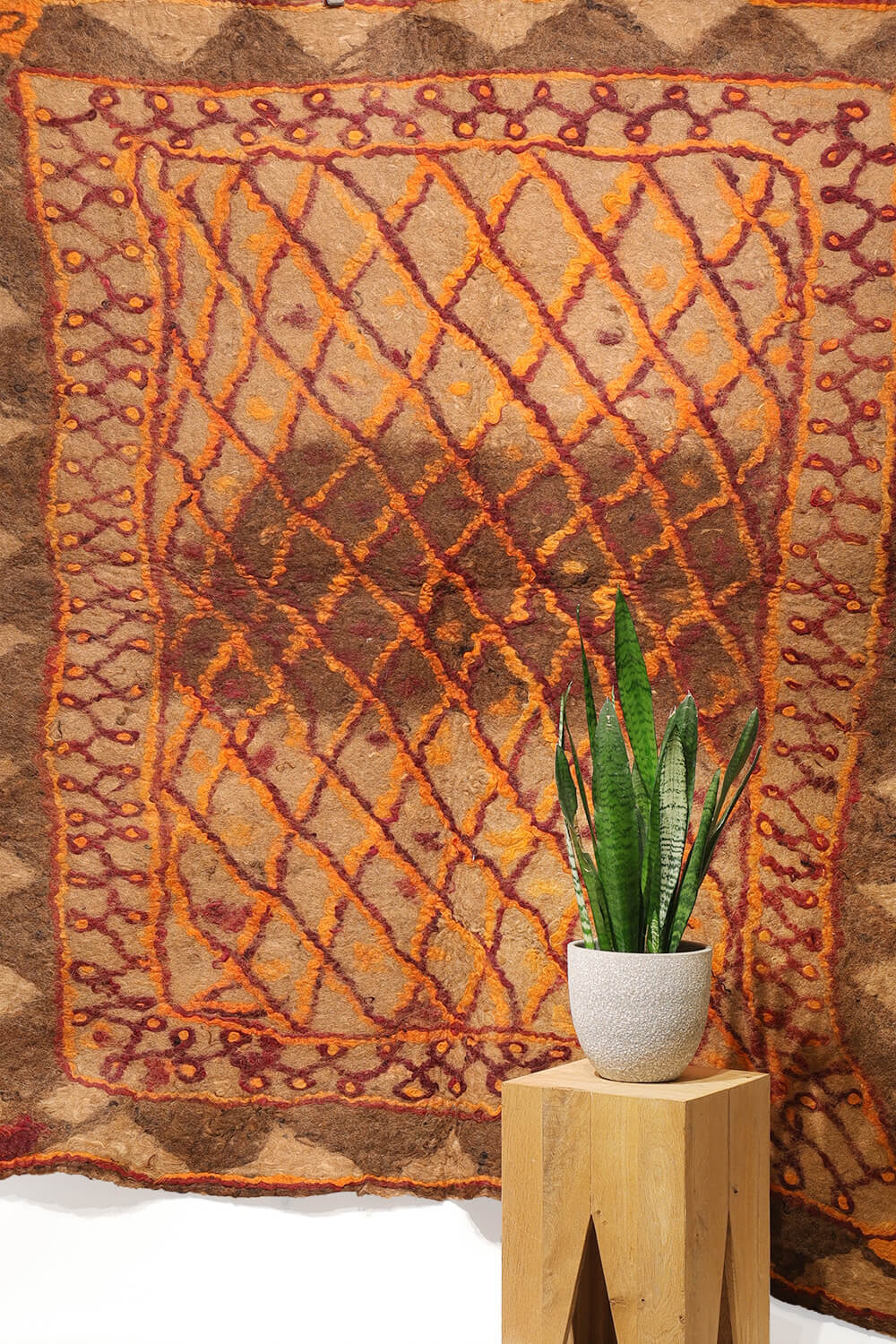
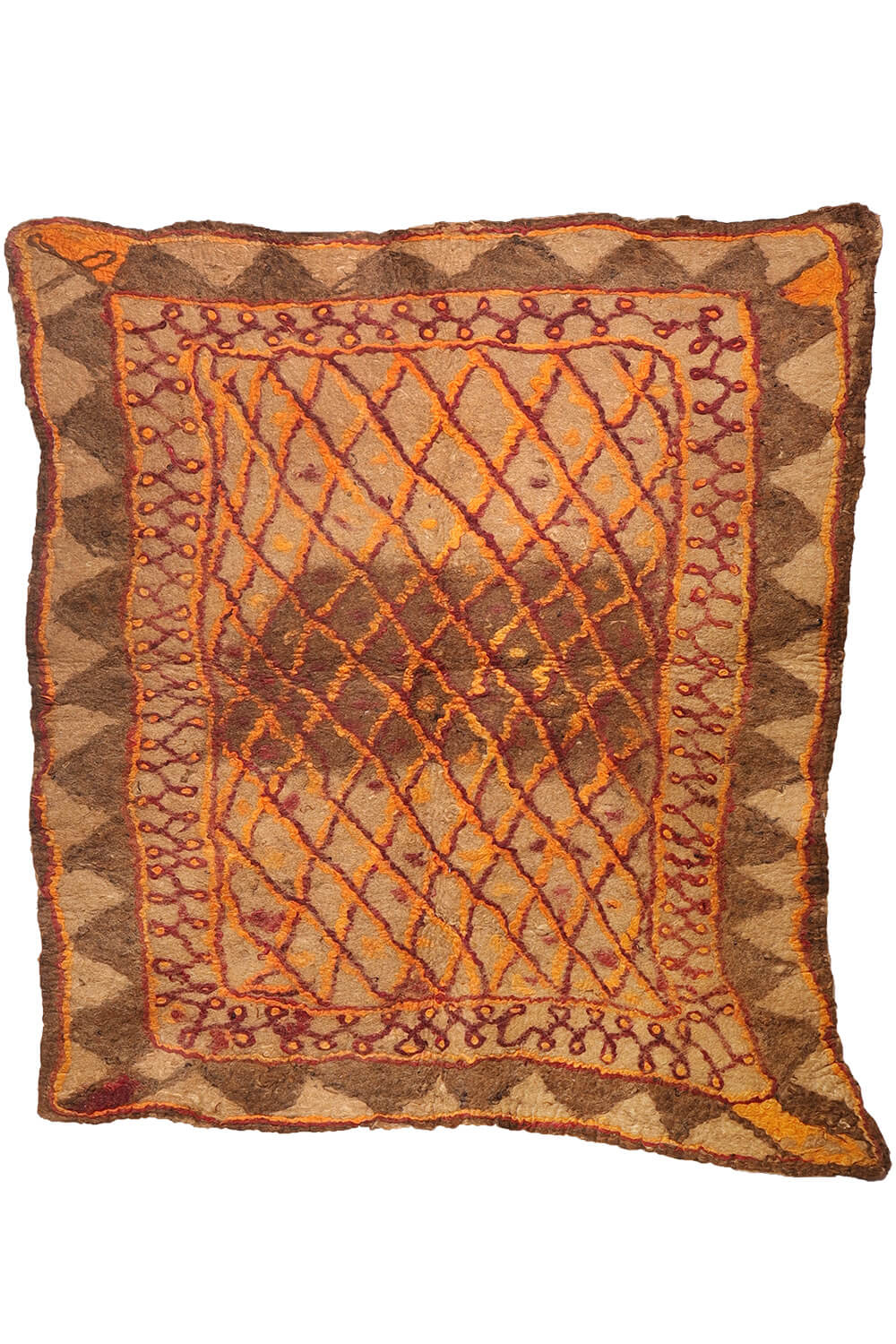
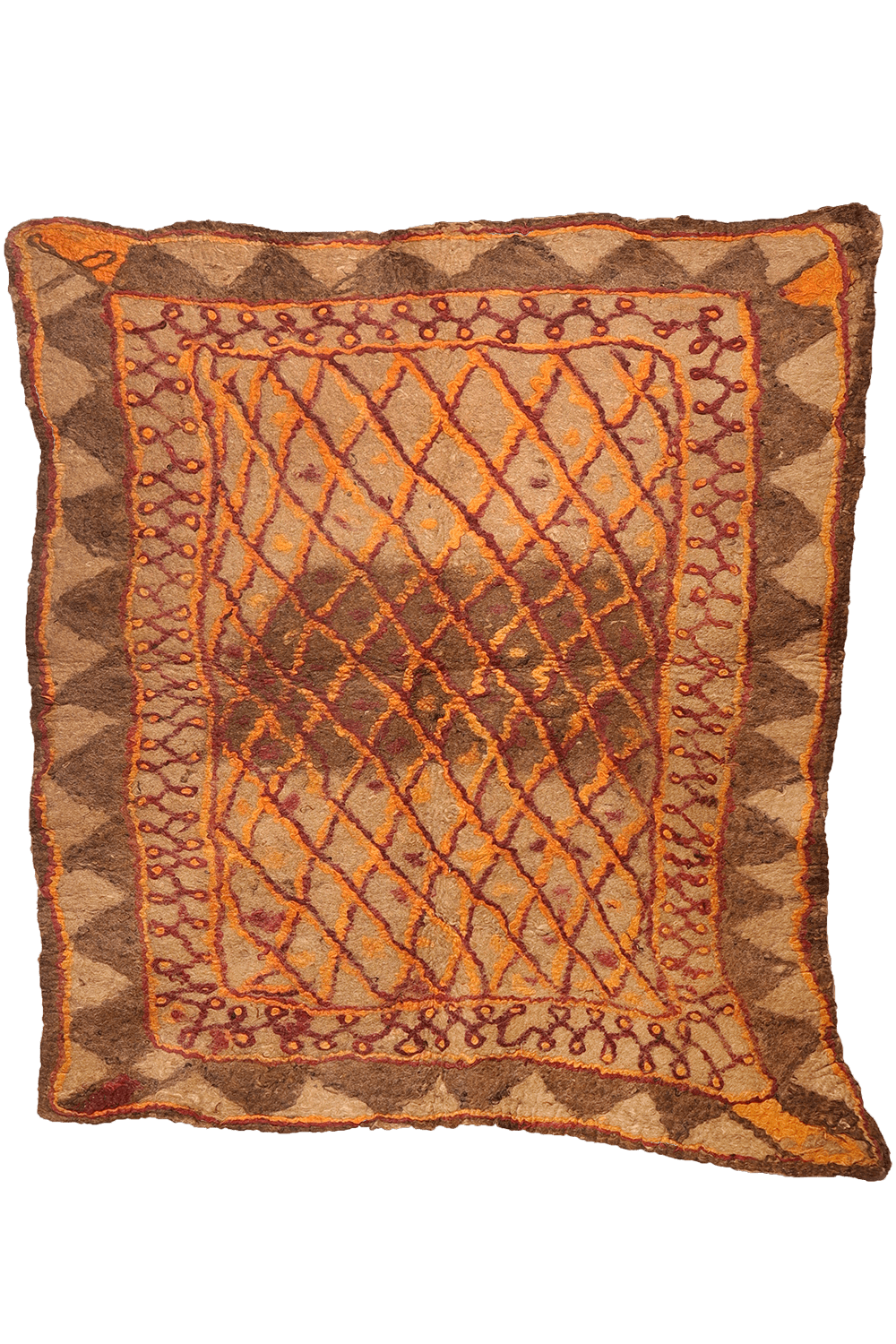
Este namad Timori Baluch vintage es para mentes abiertas: personas que disfrutan de las irregularidades, la libertad y la asimetría.
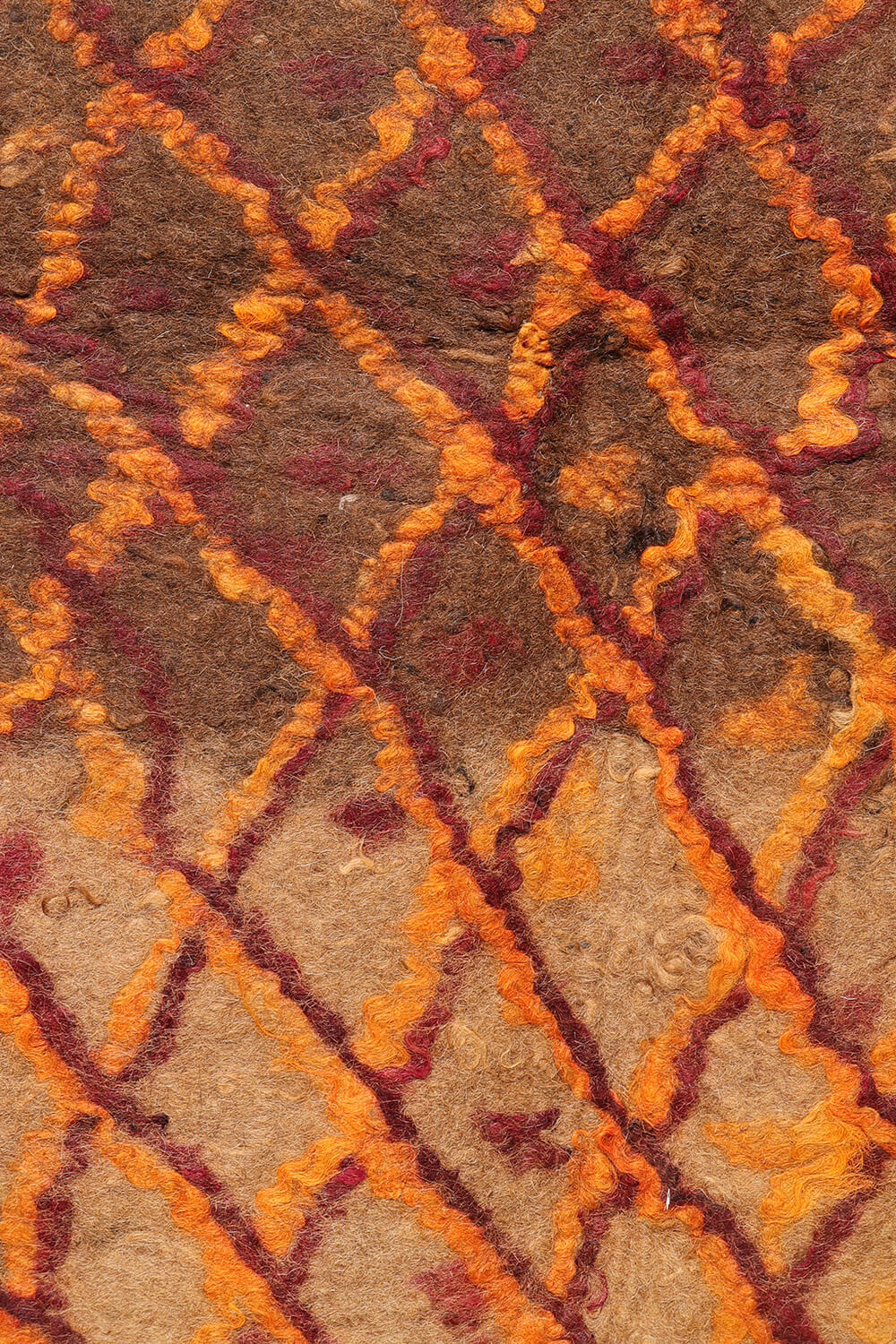
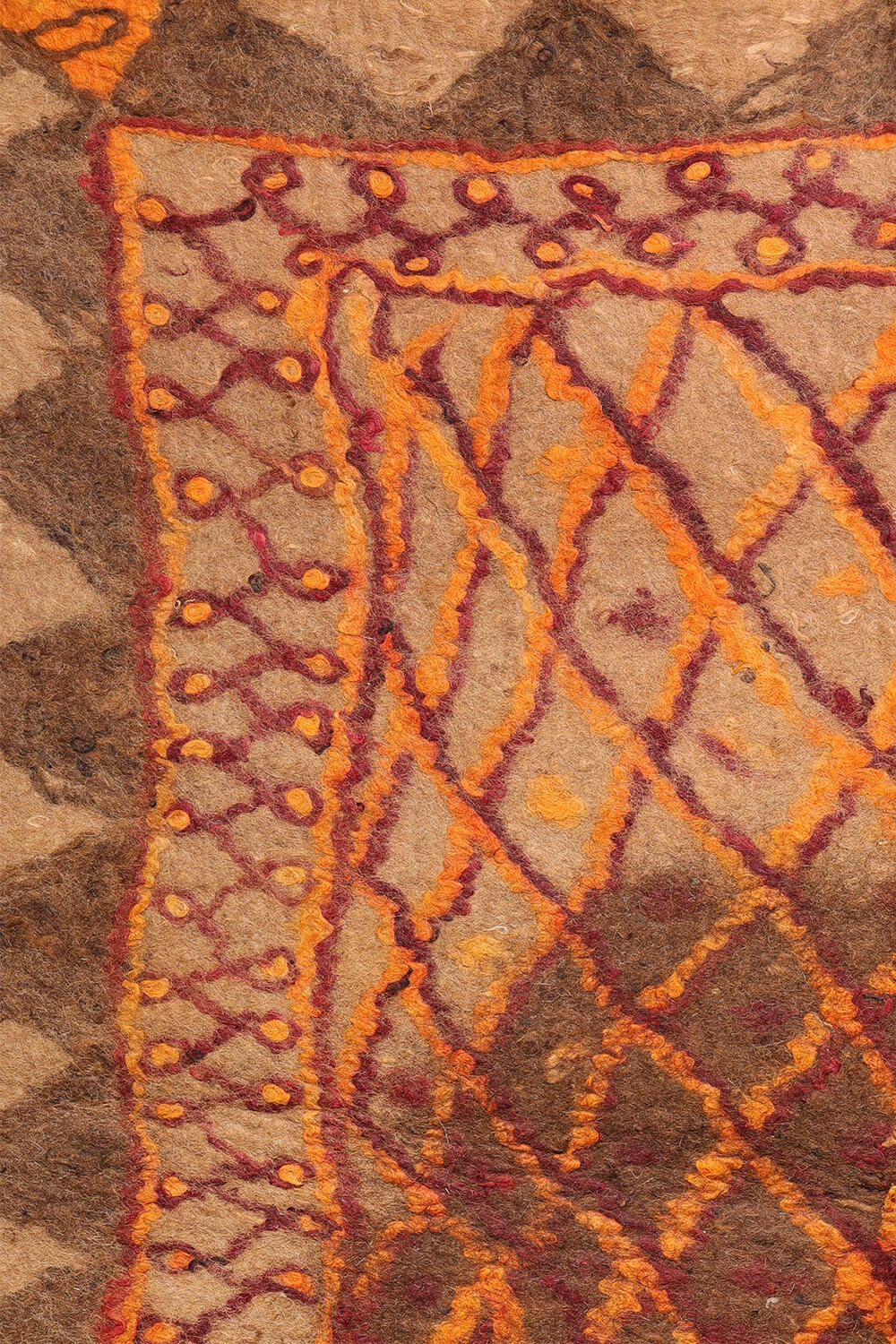
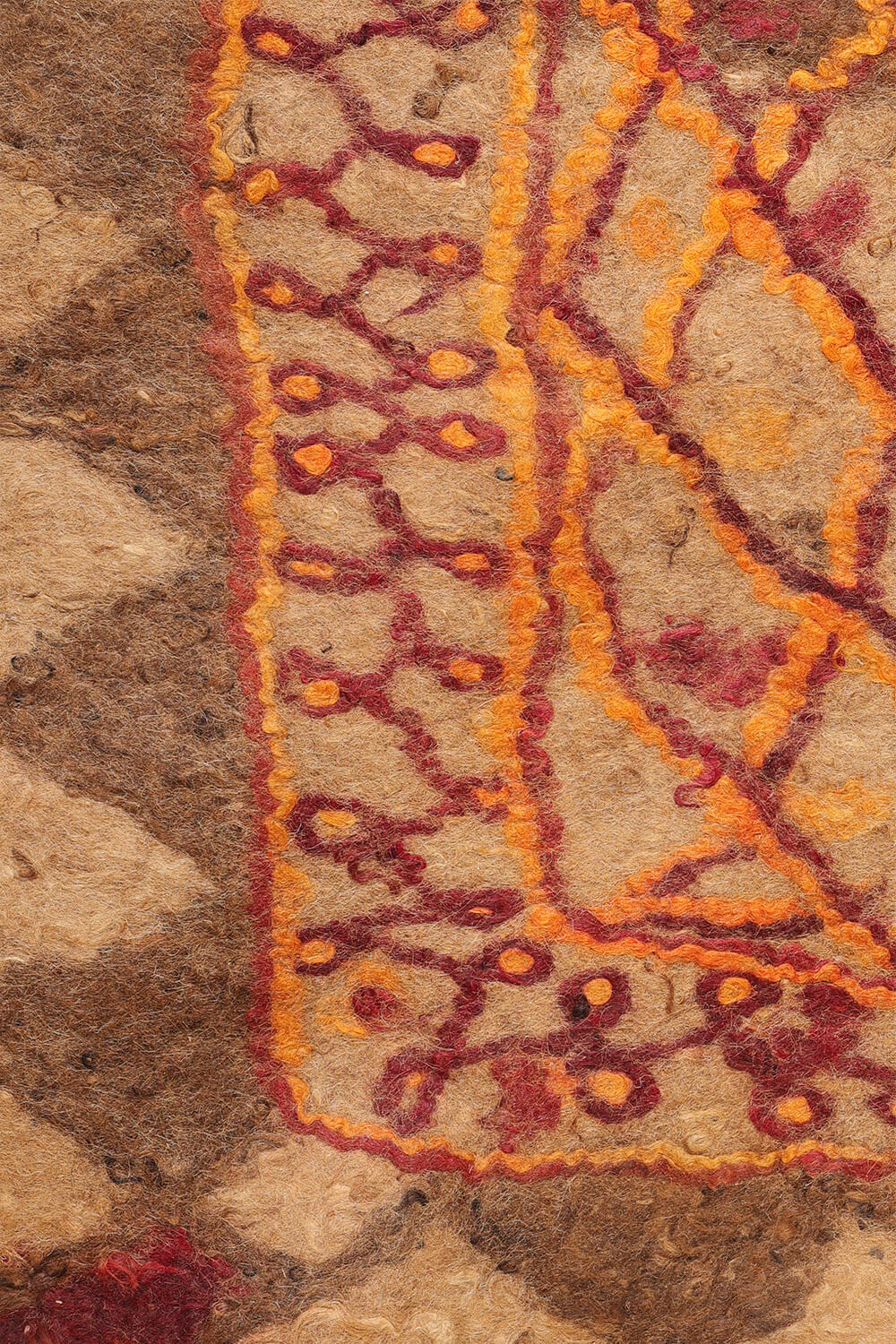
A primera vista, el fieltro puede parecer relativamente convencional, con una cuadrícula que cubre el campo principal y bordes bien estructurados. Pero, al observarlo de cerca, se revelan los toques creativos del artesano: una zona de lana más oscura en el centro, un triángulo naranja en tres de las esquinas (dejando una sin intervenir) y, sobre todo, su forma irregular. Durante el proceso de fieltrado, la pieza se estiró más en una de las esquinas, dándole una silueta orgánica y única.
Perfecta para artistas o amantes de la decoración peculiar y poco convencional, esta pieza convierte la imperfección en encanto y aporta carácter a cualquier espacio.
Material: 100% hand-spun sheep wool
Size: 187×177 cms
Origin: Timori Baluch tribe, Afghanistan
Date of weaving: 1970s
FELT (Mid. and New. Pers., namad), material produced by process of felting, the entanglement of animal fiber in all directions, appropriately done to form a soft and homogeneous mass. The technique was originally devised in nomadic communities of Central Asia, spreading toward China and the Greek world well before the 3rd century B.C.E., but for a long time confined to the Asian continent.
The method of felt-making, rather simple and uniform, constitutes the basis for a large number of products currently in use. As is often the case, the banality of the phenomenon have contributed to leading researchers astray; the techniques, usages, and aesthetics of felt appear, therefore, to be relatively unknown, particularly in comparison to those of what is perceived as the more “noble” craft of weaving.
Production. The main primary substances used in the production of felt are camel and sheep wool (preferably that of autumn, the second shearing season, and of lamb wool, which are finer), goat’s underhair taken from the animal by combing, which produces felt of a higher quality.
Most felts are made out of white, beige, brown, gray, or black natural wool. In addition, some types of light-colored felts can be more or less highly decorated. Several methods, applied at different stages of production, are available: before soaking, tufts of wool dyed in advance can be applied to achieve the desired motifs; before the felt has dried, designs can be made with dye; after drying the felt can be embroidered, decoratively cut, or embossed
Felt is produced to some extent everywhere, either within the household—a situation prevalent in rural areas, where men and women work together, generally under the direction of women—or in the context of exercising a craft: professional felt-makers, generally men, are grouped together in specialized neighborhoods or bāzārs, Their activity is often seasonal, and they may move from one town to another.
Felts (namad) are true artistic creations, born from the imagination and sensitivity of the women who make them. Unlike carpets or kilims, where the warp and weft impose a rigid structure, felt offers total freedom of form and composition.
In the felting process, wool is transformed through pressure, water, and movement — but also through the creative energy of women’s hands. The artists can draw directly with fiber, layer colors, improvise abstract or figurative motifs, and let the material speak for itself.
Thus, felts are not only functional objects but also spaces of personal and collective expression, where women give form to their inner world, their natural surroundings, and their cultural memory — free from the technical constraints of weaving.
Sin existencias
Información adicional
| Peso | 6,9 kg |
|---|